- Company Articles
- Products and Technology
- Product knowledge
- Flat Adjustable Swivel Castor Wheels for Material Handling: Cost-Benefit Analysis

Flat Adjustable Swivel Castor Wheels for Material Handling: Cost-Benefit Analysis
Related Product
Flat Adjustable Swivel Castor Wheel
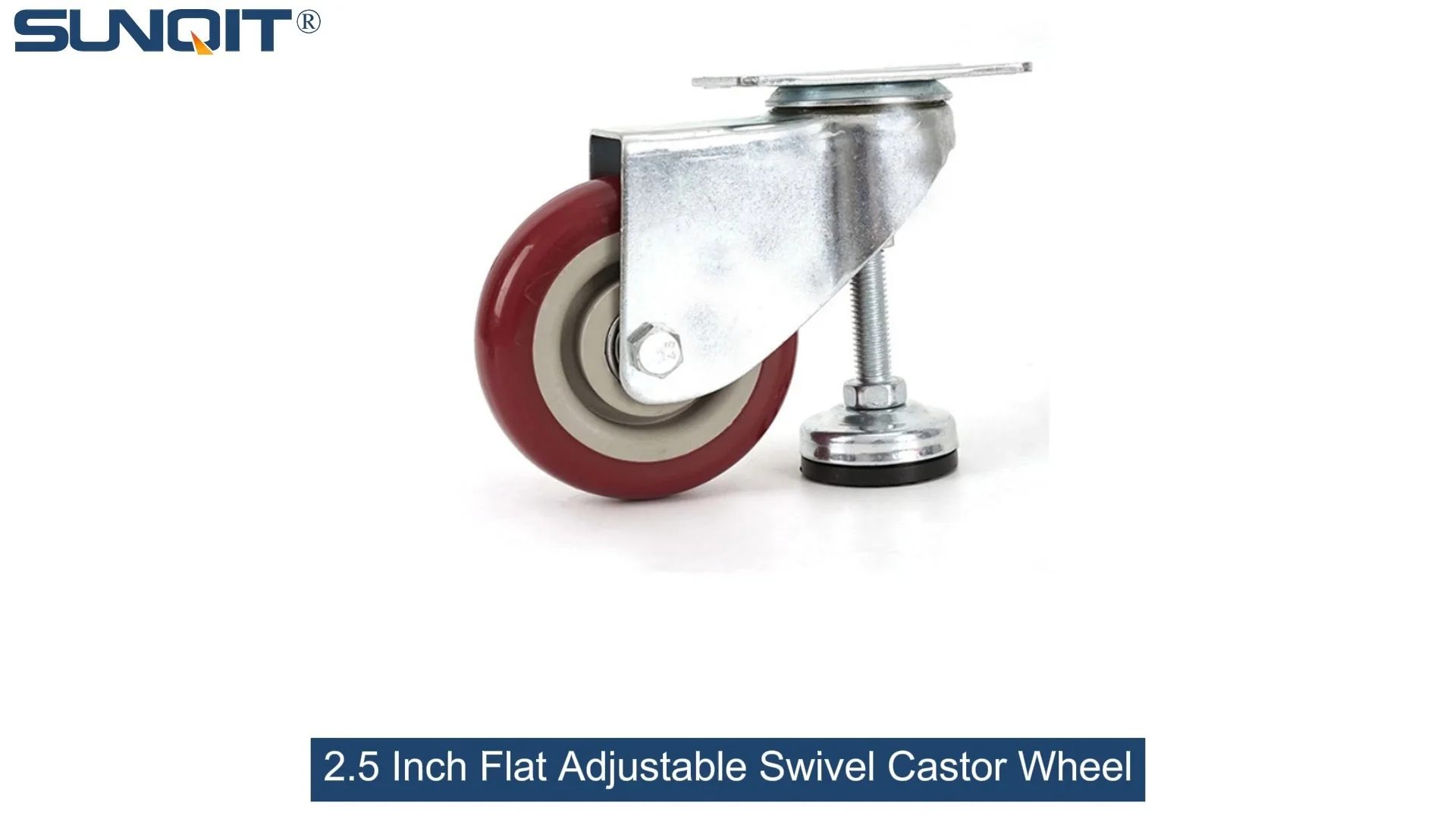
Swivel Chair Casters Ball Bearing Wheels Rubber Base with adjustable height function. Resistant to abrasion, impact and corrosion. Heavy payload can hold 80Kgs per pcs,which can make it works at a stable and smooth status.
In the world of material handling—whether in bustling factories, busy warehouses, or precision-focused workshops—every component plays a quiet but critical role. From the flow racks that keep inventory organized to the workbenches where assembly magic happens, the tools we rely on shape efficiency, safety, and ultimately, the bottom line. Yet, among these tools, there's one unsung hero that often goes unnoticed: the caster wheel. Specifically, flat adjustable swivel castor wheels. These small but mighty components are the difference between a clunky, frustrating workflow and a smooth, adaptable operation. Today, we're diving deep into what makes these caster wheels a game-changer, breaking down their costs, benefits, and why they might just be the smartest investment you make for your material handling setup.
What Are Flat Adjustable Swivel Castor Wheels, Anyway?
Let's start with the basics. Flat adjustable swivel castor wheels are exactly what their name suggests: caster wheels mounted on a flat base (no bulky brackets) that can swivel 360 degrees and be adjusted for height or stability. Unlike fixed casters that only roll forward and backward, or rigid casters that limit movement, these wheels offer a trifecta of flexibility: adjustability, maneuverability, and stability. They're designed to be mounted under carts, workbenches, flow racks, or just about any mobile structure, turning static equipment into something that can adapt to your needs—whether you're reconfiguring a production line for a new product or shifting inventory to meet seasonal demand.
But what really sets them apart is the "adjustable" part. Many models let you tweak the height by a few inches, ensuring your workbench sits at the perfect ergonomic level for operators, or that a flow rack lines up seamlessly with a conveyor belt. Some even come with built-in brakes or locking mechanisms, adding an extra layer of safety when you need equipment to stay put during loading or assembly. And because they're built with durability in mind—often using materials like polyurethane or rubber wheels paired with sturdy steel frames—they're built to handle the wear and tear of daily use, from warehouse floors to smooth factory surfaces.
The Features That Matter: Why "Flat Adjustable" Makes All the Difference
Not all caster wheels are created equal. To understand why flat adjustable swivel castor wheels stand out, let's break down their key features and how they translate to real-world benefits:
1. 360-Degree Swivel Action: Unlike fixed casters that force you to push in straight lines (and risk damaging floors or straining workers), swivel casters let you move equipment in any direction with minimal effort. This is a game-changer in tight spaces—think navigating a loaded cart through a crowded assembly line or positioning a workbench exactly where it's needed without having to backtrack.
2. Height Adjustability: Whether you're working with operators of different heights or need to align a trolley with a conveyor at a specific elevation, adjustability eliminates the guesswork. No more propping up workbenches with blocks of wood or struggling to load materials onto a rack that's an inch too high. Many models use simple bolt or lever systems, making adjustments quick and tool-free.
3. Flat Base Design: The flat mounting plate distributes weight evenly, reducing stress on both the caster and the equipment it's attached to. This not only extends the lifespan of your carts and workbenches but also minimizes the risk of tipping—critical when handling heavy loads like metal parts or bulk inventory.
4. Durable Wheel Materials: Most flat adjustable swivel casters come with wheels made from polyurethane, rubber, or even nylon. Polyurethane, for example, offers a balance of grip (to prevent sliding on smooth floors) and shock absorption (to protect delicate items during transport). Rubber wheels are ideal for quiet operation—perfect for environments where noise reduction is key, like labs or offices attached to production areas.
5. Compatibility with Caster Accessories: These casters aren't one-size-fits-all. They play well with caster accessories like locking brakes (to keep equipment stationary during use), mounting plates (for easy installation on different surfaces), and even replacement wheels (so you can swap out worn parts instead of buying new casters). This flexibility means you can customize your setup to fit your exact needs without overspending.

The Cost Side of the Equation: Short-Term Investment, Long-Term Gains
Let's get real: Any business decision comes down to cost. At first glance, flat adjustable swivel castor wheels might seem pricier than basic fixed casters. A standard fixed caster might cost $10–$15 per unit, while a high-quality flat adjustable swivel model could run $30–$50. But here's the thing: cost isn't just about the initial price tag. It's about total cost of ownership (TCO)—the sum of purchase price, maintenance, replacement, and even indirect costs like downtime or worker fatigue. To truly understand the value, we need to compare apples to apples over time.
| Cost Factor | Basic Fixed Caster | Flat Adjustable Swivel Caster |
|---|---|---|
| Initial Purchase (per unit) | $10–$15 | $30–$50 |
| Expected Lifespan | 1–2 years (with heavy use) | 5–7 years (with proper maintenance) |
| Maintenance Costs (per year) | $5–$10 (frequent wheel replacements, lubrication) | $2–$5 (minimal lubrication, occasional caster accessories like brake pads) |
| Downtime Due to Failures | High (wheels jam, brackets bend, requiring immediate replacement) | Low (durable materials, adjustable parts reduce strain) |
| Indirect Costs (Worker Fatigue, Efficiency Loss) | Significant (strained movement, ergonomic issues leading to slower work) | Minimal (easy maneuvering, adjustable height reduces strain) |
Let's crunch the numbers for a small workshop with 10 workbenches, each using 4 casters. With basic fixed casters, you'd spend $400–$600 upfront. But if they need replacement every 2 years, that's $400–$600 every 2 years, plus $200–$400 in annual maintenance. Over 5 years, that totals $1,800–$2,600. Now, with flat adjustable swivel casters: initial cost is $1,200–$2,000, but they last 5–7 years, with maintenance around $100–$200 annually. Over 5 years, that's $1,700–$3,000—similar to fixed casters, but with far fewer headaches. And that's before factoring in indirect savings, like reduced worker fatigue (which cuts down on sick days) or faster workflow (which boosts output).

The Benefits: More Than Just "Rolling Smoothly"
Cost aside, the real value of flat adjustable swivel castor wheels lies in the benefits they bring to your operation. Let's break down the most impactful ones:
1. Boosted Efficiency: Time is money, and nothing wastes time like struggling with uncooperative equipment. A workbench on fixed casters might take two people to move; with swivel casters, one person can glide it into place in seconds. In a lean system—where the goal is to eliminate waste—this efficiency adds up. Imagine a production line that needs to reconfigure for a new product run: with adjustable casters, you can shift workstations, flow racks, and carts in minutes instead of hours. That's less downtime and more time spent making products.
2. Improved Ergonomics: Worker safety and comfort aren't just "nice to have"—they're critical for retention and productivity. Adjustable height means operators can set their workbench to elbow level, reducing strain on shoulders and backs. Swivel action reduces the need to twist or overexert when moving equipment, cutting down on injuries like sprains or strains. Over time, this leads to happier, healthier teams and lower workers' compensation costs.
3. Adaptability to Changing Needs: The modern workplace isn't static. A small manufacturer might start with 5 workstations and grow to 15; a warehouse might shift from storing bulk goods to smaller, faster-moving items. Flat adjustable swivel casters make it easy to scale or pivot. Need to turn a static storage rack into a mobile cart for picking? Add casters. Want to adjust a flow rack to match a new conveyor height? Tweak the caster settings. This adaptability future-proofs your setup, so you don't have to buy new equipment every time your needs change.
4. Reduced Floor Damage: Cheap fixed casters with hard plastic wheels can scratch or scuff floors, leading to costly repairs. Flat adjustable swivel casters often use soft rubber or polyurethane wheels that glide smoothly without marking surfaces. This is especially important in environments with polished concrete or epoxy floors, where even small scratches can be an eyesore (or a safety hazard if they collect debris).
5. Enhanced Safety: Many flat adjustable models come with locking brakes, so equipment stays put during use. This is a lifesaver in busy areas—no more carts rolling away unexpectedly or workbenches shifting mid-assembly. Some even have dual-locking mechanisms that lock both the swivel and the wheel, adding an extra layer of security for heavy loads.

Real-World Applications: Where These Casters Shine
To put this in context, let's look at a few scenarios where flat adjustable swivel castor wheels have made a tangible difference:
Case Study 1: A Small Electronics Assembly Workshop A 20-person electronics shop was struggling with static workbenches. Operators often had to walk 10–15 feet to grab parts from flow racks, wasting steps. They added flat adjustable swivel casters to their workbenches and flow racks, allowing them to reposition equipment into U-shaped cells. Result? Travel time between tasks dropped by 30%, and daily output increased by 15%. The adjustable height also reduced reported back pain by 40% among operators.
Case Study 2: A Warehouse with Seasonal Demand A clothing warehouse saw huge spikes in inventory during holiday seasons, requiring extra storage racks. With fixed caster racks, setting up temporary storage took a full day of labor. After switching to adjustable swivel casters, they could roll racks into place in under an hour, redeploying workers to picking and packing instead of moving equipment. During peak season, this saved 20+ labor hours per week.
Case Study 3: A Lean Manufacturing Line A automotive parts manufacturer was implementing a lean system, aiming to reduce waste in their assembly process. They replaced fixed caster carts with adjustable swivel models, allowing them to create "cells" where materials flow directly to workers. The ability to adjust cart heights to match workbenches eliminated the need for lifting heavy parts, cutting down on errors and speeding up assembly time by 25%.
How to Choose the Right Flat Adjustable Swivel Castor Wheels
Not all flat adjustable swivel casters are created equal, so it's important to choose the right ones for your needs. Here's what to look for:
Load Capacity: Start by calculating the weight each caster will need to support. If a workbench weighs 500 lbs and uses 4 casters, each caster should handle at least 125 lbs (plus a 20% safety margin, so 150 lbs). Don't skimp here—overloading casters leads to premature failure.
Wheel Material: Match the wheel to your floor type. Rubber or polyurethane works best for smooth floors (concrete, tile), while harder materials like nylon are better for rough surfaces (asphalt, gravel). If noise is a concern, go for rubber—polyurethane is durable but can be louder.
Adjustment Range: How much height adjustment do you need? Most models offer 1–3 inches of range, which is enough for most workbenches or carts. If you're aligning with conveyors or other fixed equipment, measure the height difference first.
Locking Mechanism: Do you need brakes? Foot-operated brakes are easiest to use, but some models have hand brakes for extra security. Look for brakes that lock both the wheel and the swivel if you need maximum stability.
Compatibility with Caster Accessories: Check if the casters work with accessories like mounting plates, extension stems, or replacement wheels. This ensures you can repair or upgrade them later without replacing the entire unit.
Maintenance Tips: Making Your Casters Last Longer
Like any equipment, flat adjustable swivel castor wheels need a little TLC to perform their best. Here's how to extend their lifespan:
Clean Regularly: Dirt, debris, and grease can gum up swivel joints or damage wheels. Wipe wheels with a damp cloth weekly, and use a brush to clean out swivel bearings monthly.
Lubricate Moving Parts: Swivel joints and wheel bearings need lubrication to stay smooth. Use a silicone-based lubricant (avoid oil, which attracts dirt) every 3–6 months, depending on use.
Check for Wear: Inspect wheels for cracks, flat spots, or uneven wear. If a wheel is damaged, replace it immediately—using a worn wheel can strain the caster frame and lead to bigger issues.
Tighten Loose Parts: Bolts and nuts can loosen over time, especially on frequently moved equipment. Check mounting bolts and adjustment knobs monthly and tighten as needed.
Conclusion: Investing in the Future of Your Operation
Flat adjustable swivel castor wheels might not be the most glamorous part of your material handling setup, but they're one of the most impactful. They bridge the gap between cost and performance, offering the flexibility to adapt, the durability to last, and the efficiency to boost your bottom line. Whether you're running a lean system, managing a warehouse, or assembling products on a workbench, these casters turn static equipment into dynamic assets that grow with your business.
So, is the upfront cost worth it? If you value efficiency, safety, and adaptability—yes. In a world where every second and every dollar counts, flat adjustable swivel castor wheels aren't just an expense; they're an investment in a smoother, smarter, and more successful operation. And that's a return that's hard to beat.