- Company Articles
- Products and Technology
- Product knowledge
- Flat Adjustable Swivel Castor Wheels for Medical Equipment Carts: Maneuverability Tips

Flat Adjustable Swivel Castor Wheels for Medical Equipment Carts: Maneuverability Tips
Related Product
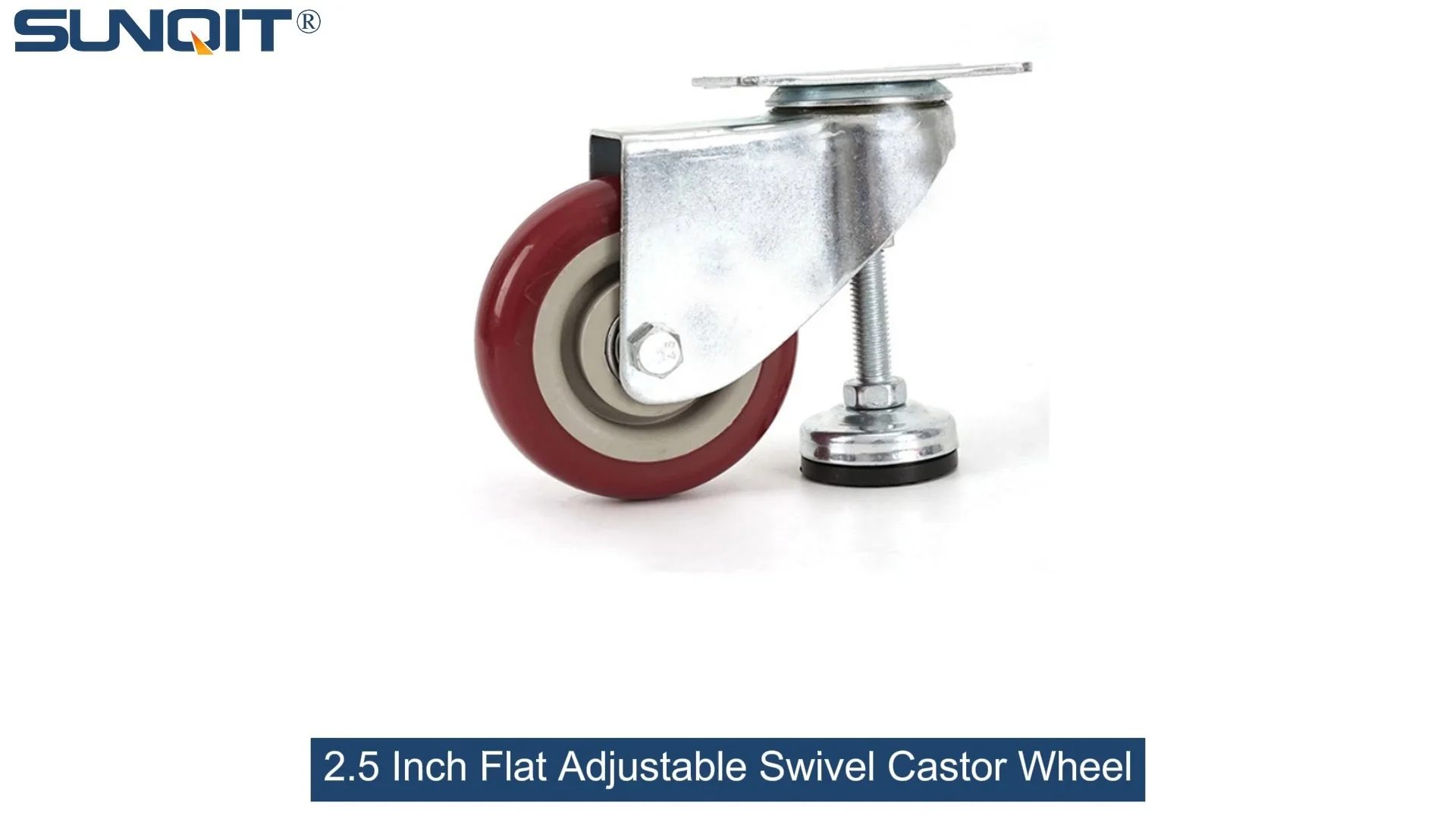
Flat Adjustable Swivel Castor Wheel
Swivel Chair Casters Ball Bearing Wheels Rubber Base with adjustable height function. Resistant to abrasion, impact and corrosion. Heavy payload can hold 80Kgs per pcs,which can make it works at a stable and smooth status.
In the fast-paced world of healthcare, every second counts. Whether it's a nurse rushing to deliver medication to a patient, a lab technician transporting samples to the analysis room, or a surgical team prepping tools for an emergency procedure, the mobility of medical equipment carts can make or break daily operations. A cart that glides smoothly through tight corridors, pivots easily around corners, and stays stable on uneven floors isn't just a convenience—it's a critical component of patient safety and staff efficiency. At the heart of this mobility lies a seemingly small but mighty component: the flat adjustable swivel castor wheel . In this article, we'll dive into how these specialized wheels enhance maneuverability, the role of complementary caster accessories , and why pairing them with adjustable leveling feet can transform even the most challenging hospital environments into spaces where carts move as seamlessly as the care they support.
Why Maneuverability Matters in Healthcare Settings
Let's start with a scenario we've all witnessed (or experienced): a busy hospital hallway during shift change. Nurses with medication carts weave through visitors, doctors hurrying to rounds, and stretchers being wheeled to imaging departments. In these moments, a cart that's hard to turn or gets stuck on a threshold isn't just frustrating—it can delay care. Studies show that healthcare staff spend up to 25% of their time moving equipment, and inefficient carts add unnecessary physical strain, increasing the risk of musculoskeletal injuries. For patients, delays in medication or treatment can have serious consequences. Maneuverability isn't just about speed, either; it's about precision. A cart that can be positioned exactly next to a patient's bed, without bumping into IV stands or monitors, reduces the risk of accidents and improves the quality of care.
Then there are the unique challenges of healthcare spaces themselves. Operating rooms require carts that can move in tight circles around surgical tables. Pediatric wards have smaller corridors and, demanding carts that pivot on a dime. Long-term care facilities often have older floors with uneven tiles or thresholds between rooms. Even something as simple as a slightly sloped hallway (common in hospitals for drainage) can make a poorly designed cart feel like it's fighting against gravity. In these environments, the right castor wheels aren't an afterthought—they're a lifeline.
Understanding Flat Adjustable Swivel Castor Wheels: More Than Just "Wheels on a Cart"
So, what makes a flat adjustable swivel castor wheel different from the generic wheels you might find on a office chair or a grocery cart? Let's break it down. First, the "swivel" feature: unlike fixed casters, which only roll forward and backward, swivel casters have a rotating joint at the top that allows the wheel to turn 360 degrees. This means the cart can be pushed or pulled in any direction without having to be dragged or lifted. For medical carts, which often need to change direction suddenly (like avoiding a child running into the hallway or navigating around a parked stretcher), this 360-degree movement is game-changing.
The "flat adjustable" part is equally important. "Flat" refers to the mounting plate—the part of the caster that attaches to the cart. Flat plates distribute weight evenly, reducing stress on the cart's frame and ensuring the wheel stays aligned, even with heavy loads (think: a medication cart stocked with dozens of vials and syringes). "Adjustable" means the height of the wheel can be tweaked, often via a threaded stem or a locking mechanism. Why does height matter? Imagine a cart that's slightly uneven because one wheel is worn down or the floor dips. An adjustable caster lets you level the cart, preventing it from wobbling as you move it. This adjustability also means the same cart can be used with different accessories—like adding a shelf or a drawer—without throwing off its balance.
But not all swivel casters are created equal. Medical-grade casters are designed with specific features to meet healthcare demands. For example, many have sealed bearings to prevent dust and debris from getting inside (critical in sterile environments like operating rooms). Others are made with non-marking rubber tires to protect expensive hospital floors from scuffs. Some even have brakes that lock both the wheel and the swivel joint, ensuring the cart stays put during patient interactions—no more chasing a cart that rolls away when you lean against it!

Key Features of Flat Adjustable Swivel Castor Wheels That Boost Maneuverability
To truly understand how these casters enhance movement, let's look at the features that matter most in real-world use:
1. Low-Profile Design for Tighter Turns
Medical carts often need to fit through doorways as narrow as 32 inches (standard in older hospitals). A low-profile caster (with a shorter distance between the mounting plate and the wheel) lowers the cart's center of gravity, making it less likely to tip when turning sharply. This is especially important for tall carts, like those used to store IV fluids or surgical instruments. A lower center of gravity also makes the cart feel lighter to push, reducing strain on staff.
2. Precision Ball Bearings for Smooth Rolling
Ever pushed a cart that feels "sticky"—like it takes extra effort to get it moving? Chances are, it has cheap bearings. High-quality flat adjustable swivel casters use precision ball bearings (or roller bearings for heavier loads) that reduce friction. This means the cart starts moving with minimal force and continues rolling smoothly, even over small bumps. In busy settings, this translates to less physical effort for staff and fewer stops to "unstick" the cart.
3. Swivel Locks for Controlled Movement
While 360-degree swiveling is great for tight spaces, there are times when you want the cart to move in a straight line—like down a long corridor. Many medical casters come with a swivel lock that "fixes" the wheel in one direction, turning the cart into a temporary fixed-caster setup. This is useful for transporting fragile items (like glass vials of medication) or when moving at higher speeds, as it reduces the risk of the cart veering off course.
4. Brake Systems That Balance Safety and Speed
No discussion of casters is complete without talking about brakes. The best medical casters have two types of brakes: wheel brakes (which stop the wheel from rolling) and swivel brakes (which lock the rotation of the caster itself). Wheel brakes are essential for keeping the cart stationary during use, but swivel brakes add an extra layer of control. For example, when loading a cart with heavy items, locking the swivel prevents the cart from spinning out from under you. When moving, releasing the swivel brake lets you pivot again—all with a simple foot pedal (no bending over required, which is a huge plus for staff in scrubs or lab coats).

Choosing the Right Caster Accessories to Enhance Performance
A great caster is only as good as the accessories that support it. Caster accessories might seem like minor additions, but they can significantly improve maneuverability and longevity. Let's explore a few must-haves for medical equipment carts:
Brake Extensions for Easy Access
Standard caster brakes are often mounted low to the ground, requiring staff to bend down to engage them. In a hurry, this is easy to forget—and a cart that isn't braked properly is a safety hazard. Brake extensions raise the brake pedal to knee height, so nurses or technicians can lock the cart with a quick tap of their leg. This small change reduces the risk of forgotten brakes and saves time during busy shifts.
Wheel Guards to Protect Against Debris
Hospital floors aren't always clean (despite best efforts!). Loose threads from surgical gowns, small pieces of tape, or even spilled liquids can get caught in caster wheels, causing them to jam. Wheel guards—plastic or metal shields that wrap around the wheel—keep debris out, ensuring smooth rolling even in messy environments. They're especially useful in ORs and emergency rooms, where time spent unjamming a wheel is time taken away from patients.
Replacement Tires for Cost-Effective Maintenance
Over time, caster tires wear down, especially in high-traffic areas. Instead of replacing the entire caster, many manufacturers offer replacement tires that can be swapped out in minutes. This not only saves money but also reduces downtime—critical for carts that are in use 24/7. Look for tires made from polyurethane, which offers a balance of durability (resists wear) and grip (prevents slipping on wet floors).

The Surprising Role of Adjustable Leveling Feet in Maneuverability
When we talk about moving carts, we often focus on wheels—but what about when the cart is stationary? Adjustable leveling feet might seem like a stability feature (and they are!), but they also play a hidden role in maneuverability. Here's why: A cart that wobbles when parked is more likely to be "handled roughly" when moving, as staff overcompensate for instability. Leveling feet let you adjust the cart's height on uneven floors, ensuring all four casters stay in contact with the ground. This not only prevents wobbling but also makes the cart easier to push, as weight is distributed evenly across all wheels.
Consider a typical scenario: a patient room with a floor that slopes slightly toward the door (to drain spills). Without leveling feet, the cart might rest on three wheels, with the fourth hovering an inch above the ground. When a nurse tries to push it, the cart tilts, making it hard to control. With adjustable leveling feet, the fourth wheel is lowered to meet the floor, so all four casters bear weight equally. The result? A cart that feels balanced and responsive, even on floors that weren't designed with mobility in mind.
Leveling feet also protect the casters themselves. When a cart is unbalanced, the weight shifts to the few casters that are touching the ground, causing uneven wear. Over time, this leads to wobbly wheels and reduced maneuverability. By keeping all casters in contact with the floor, leveling feet ensure even wear, extending the life of your casters and reducing replacement costs.
Comparing Caster Types: Which Is Best for Your Medical Cart?
Not all carts are created equal, and neither are their casters. To help you choose the right option, let's compare the most common types of casters used in healthcare, focusing on how they perform in real-world maneuverability tests:
| Caster Type | Maneuverability Rating (1-10) | Best For | Key Limitations |
|---|---|---|---|
| Flat Adjustable Swivel Caster with Brake | 9 | Medication carts, surgical instrument carts, lab sample transport | Higher cost than fixed casters; requires regular brake maintenance |
| Fixed Caster (Non-Swivel) | 5 | Heavy equipment carts (e.g., MRI contrast storage) that move in straight lines | Cannot pivot; requires more space to turn |
| Swivel Caster Without Brake | 7 | Light-duty carts (e.g., meal delivery) in low-traffic areas | Risk of rolling away; not suitable for patient interaction zones |
| Flat Adjustable Swivel Caster with Dual Lock (Wheel + Swivel) | 10 | Operating room carts, emergency response carts | Heavier than basic swivel casters; may be overkill for simple tasks |
As you can see, flat adjustable swivel casters with brakes (or dual locks) consistently top the list for maneuverability, especially in dynamic settings. They strike the perfect balance between flexibility (360-degree movement) and control (brakes that keep the cart stable when needed). For most medical carts, this is the gold standard.
Integration with Lean Systems: Moving Carts, Streamlining Workflows
Healthcare facilities are increasingly adopting lean system principles—focused on reducing waste and improving efficiency—to deliver better care with fewer resources. At first glance, casters might seem unrelated to lean, but they're actually a key part of the puzzle. Lean systems emphasize "flow"—the uninterrupted movement of people, materials, and information. When carts move smoothly, workflows flow too. For example, a medication cart with easy-to-maneuver casters reduces the time nurses spend fetching supplies, letting them spend more time with patients (a core lean goal: maximizing value-added activities).
Lean also encourages standardization. By equipping all carts with the same high-quality flat adjustable swivel casters, facilities ensure that staff can operate any cart with confidence, regardless of the department. This reduces training time and errors. Imagine a nurse floating to a different unit and struggling with a cart that moves differently than their usual one—that's waste. Standardized casters eliminate that problem.
Another lean principle is "5S" (Sort, Set in Order, Shine, Standardize, Sustain). A cart that's easy to move is easier to "set in order" (positioned correctly) and "shine" (cleaned regularly). When staff don't dread moving a cart, they're more likely to keep it organized and well-maintained—creating a cycle of efficiency that benefits everyone.
Common Maneuverability Challenges and How to Solve Them
Even with the best casters, challenges can arise. Let's troubleshoot some of the most common issues and how to fix them:
Problem: Cart "Drifts" When Pushed Straight
If your cart veers to the left or right when you try to push it straight, the casters might be misaligned. Check if the swivel joints are lubricated—dry joints can cause uneven movement. If lubrication doesn't help, inspect the mounting plates to ensure they're attached squarely to the cart. Loose bolts can shift the caster's position, throwing off alignment. Tightening the bolts or replacing worn washers usually solves the problem.
Problem: Caster Brakes Are Hard to Engage
Stiff brakes are often caused by dirt or debris in the brake mechanism. Remove the caster and clean the brake pad with a soft brush and mild soap. If the brake still sticks, apply a small amount of silicone lubricant (avoid oil-based lubricants, which attract dust). For persistent issues, consider upgrading to a brake extension, which adds leverage and makes braking easier.
Problem: Cart Wobbles on Uneven Floors
This is where adjustable leveling feet shine. If your cart has leveling feet, adjust them to ensure all four casters touch the ground. If not, adding a set of aftermarket leveling feet (many are designed to fit standard caster mounts) can stabilize the cart. For extremely uneven floors, look for casters with "shock-absorbing" tires, which cushion bumps and reduce wobbling.
Maintenance Tips to Keep Casters Rolling Smoothly
Like any piece of equipment, flat adjustable swivel casters need regular care to perform their best. Here's a simple maintenance routine to follow:
- Daily Checks: Inspect tires for debris (hair, string, or small objects) and remove them with a pick or tweezers. Test brakes to ensure they lock securely.
- Weekly Cleaning: Wipe casters with a damp cloth to remove dust and grime. For sterile environments, use a disinfectant wipe to kill bacteria.
- Monthly Lubrication: Apply a few drops of silicone lubricant to swivel joints and wheel bearings. This prevents rust and keeps movement smooth.
- Quarterly Inspections: Check mounting bolts for tightness, and replace any worn tires or brake pads. If a caster wobbles or makes unusual noises, replace it immediately—waiting can lead to damage to the cart or floors.
By sticking to this routine, you'll extend the life of your casters and ensure they continue to support your team's efforts for years to come.
Real-World Results: How One Hospital Improved Workflows with Better Casters
Let's wrap up with a story from a 300-bed community hospital in the Midwest that upgraded their medication carts to flat adjustable swivel casters with brake extensions and adjustable leveling feet. Before the upgrade, nurses reported spending an average of 12 minutes per shift struggling with carts that got stuck in doorways or rolled away during medication administration. Staff surveys showed 65% of nurses experienced wrist or back pain from pushing heavy, unresponsive carts.
After the upgrade, the results were striking: Time spent moving carts dropped by 40%, and medication delivery times improved by 15%. Nurse-reported pain decreased by 70%, and incident reports involving cart-related accidents (like tipping or rolling away) fell to zero. Perhaps most importantly, patient satisfaction scores rose—nurses had more time to answer questions and provide emotional support, thanks to carts that moved with them, not against them.
Conclusion: Small Wheels, Big Impact
At the end of the day, flat adjustable swivel castor wheels are more than just parts on a cart. They're tools that empower healthcare staff to do their jobs with confidence, efficiency, and care. When paired with the right caster accessories, adjustable leveling feet, and a commitment to lean principles, these small wheels become catalysts for better patient outcomes and happier, healthier teams. So the next time you see a nurse gliding a medication cart down a hallway, take a moment to appreciate the engineering that makes that movement possible—it's a testament to how even the smallest components can have the biggest impact on the future of healthcare.