- Company Articles
- Products and Technology
- Product knowledge
- Flat Adjustable Swivel Castor Wheels for Mobile Conveyor Systems: Smooth Movement

Flat Adjustable Swivel Castor Wheels for Mobile Conveyor Systems: Smooth Movement
Related Product
Flat Adjustable Swivel Castor Wheel
Swivel Chair Casters Ball Bearing Wheels Rubber Base with adjustable height function. Resistant to abrasion, impact and corrosion. Heavy payload can hold 80Kgs per pcs,which can make it works at a stable and smooth status.
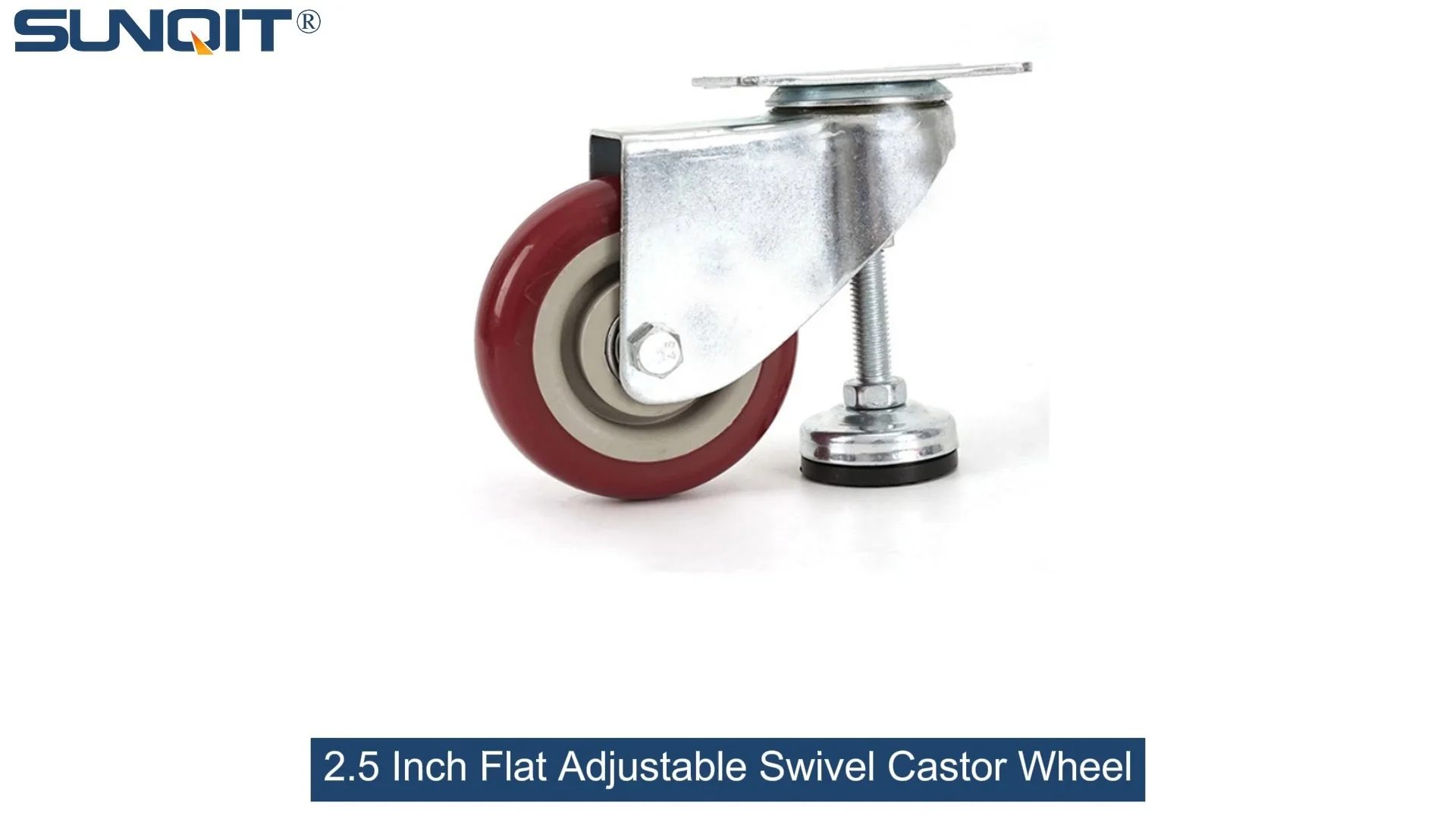
In the fast-paced world of manufacturing, warehousing, and logistics, the ability to move materials quickly, safely, and efficiently isn't just a luxury—it's the backbone of operational success. At the heart of this movement lies a critical, often overlooked component: the castor wheel. While fixed conveyor systems have long been industry staples, the demand for flexibility and adaptability has pushed mobile conveyor systems to the forefront. And among the unsung heroes making this mobility possible? Flat adjustable swivel castor wheels. These small but mighty components are transforming how businesses approach material handling, turning rigid production lines into dynamic, responsive workflows that can pivot with changing demands. In this article, we'll dive deep into what makes flat adjustable swivel castor wheels indispensable for mobile conveyor systems, explore their key features, real-world applications, and why they're a cornerstone of modern lean manufacturing practices.
Understanding Flat Adjustable Swivel Castor Wheels: More Than Just "Wheels"
Before we explore their role in conveyor systems, let's break down what flat adjustable swivel castor wheels actually are. At first glance, they might seem like simple wheels attached to a frame, but their design is a feat of engineering tailored to solve specific mobility challenges. Let's start with the basics:
The "Flat" in Flat Adjustable: Stability Meets Simplicity
The term "flat" refers to the mounting base of the castor. Unlike stem-mounted castors, which use a rod (stem) to attach to equipment, flat adjustable castors feature a flat, plate-like base with pre-drilled holes. This design offers two key advantages: stability and versatility . The flat base distributes weight evenly across the conveyor frame, reducing the risk of tipping—critical for systems carrying heavy loads. It also makes installation straightforward: simply bolt the castor directly to the conveyor's metal frame, no special tools or adapters required. This simplicity is a boon for busy maintenance teams who need to replace or adjust castors quickly.
Adjustable Height: Adapting to Every Workspace
The "adjustable" component is where these castors truly shine. Most models feature a threaded adjustment mechanism—often a bolt or screw—built into the mounting base. By turning this mechanism, operators can raise or lower the height of the castor by a few centimeters (typically 10-50mm, depending on the model). Why does this matter? Conveyor systems rarely operate in isolation; they need to align with other equipment like roller tracks, workbenches, or even other conveyors. Imagine a scenario where a mobile conveyor needs to feed parts into a roller track that sits 850mm off the ground. Without adjustable castors, the conveyor might sit at 820mm, creating a 30mm gap that jams parts or causes spills. With a quick turn of the adjustment bolt, the castor raises the conveyor to 850mm, ensuring a seamless transition. This adaptability eliminates downtime spent on shimming or modifying frames, making workflows smoother and more efficient.
Swivel Action: Maneuverability in Tight Spaces
The "swivel" feature is what turns a static wheel into a tool for agility. A swivel castor's wheel mount (the part holding the wheel) rotates 360° around a central axis, allowing the conveyor to move in any direction—forward, backward, sideways, or diagonally. This is a game-changer in crowded warehouses or manufacturing floors where space is limited. Fixed castors (which only roll forward/backward) force operators to "shuffle" conveyors into place, wasting time and risking damage to floors or equipment. Swivel castors, by contrast, let operators pivot the conveyor with minimal effort, even in tight corners. Many models also include a brake mechanism: a lever that locks the swivel action (keeping the wheel facing forward) or locks the wheel itself, preventing unintended movement during loading/unloading.
Why Mobile Conveyor Systems Need Flat Adjustable Swivel Castor Wheels
Fixed conveyor systems have their place—they're ideal for high-volume, long-term workflows with consistent layouts (think: a bottling plant that runs the same product 24/7). But in today's market, where product lifecycles are shorter, customization is king, and seasonal demand spikes are common, rigidity is a liability. Mobile conveyor systems solve this by allowing businesses to reconfigure their material handling setup on the fly. And flat adjustable swivel castors are the key to unlocking this mobility. Let's explore why they're non-negotiable for these systems:
1. Flexibility to Reconfigure Layouts in Minutes (Not Days)
Consider a electronics manufacturing facility that produces both smartphones and tablets. Smartphones require a conveyor line with 6 workstations, while tablets need 8. With fixed conveyors, reconfiguring for a product switch might take a team of engineers a full day, disassembling and reassembling sections. With mobile conveyors on flat adjustable swivel castors? The same switch takes 30 minutes: unbrake the castors, wheel the conveyors into the new layout, adjust heights to align with workbenches, and lock the brakes. This flexibility reduces downtime from days to minutes, letting businesses respond to production changes without missing deadlines.
2. Seamless Integration with Roller Tracks and Workbenches
Conveyor systems don't operate in a vacuum—they're part of a larger ecosystem that includes roller tracks (for gravity-fed material flow) and workbenches (where operators assemble, inspect, or package goods). For this ecosystem to work, everything must align. Roller tracks, for example, rely on a slight incline to move products forward; if a conveyor feeding into a roller track is too low, products will get stuck at the transition. If it's too high, they'll slide down too fast, risking damage. Flat adjustable castors solve this by letting operators tweak the conveyor's height to match the roller track's elevation exactly. Similarly, workbenches are typically set at 900-950mm (waist height) to reduce operator strain. With adjustable castors, a mobile conveyor can be raised or lowered to meet this height, ensuring workers don't have to bend or reach awkwardly to access materials. This alignment isn't just about efficiency—it's about ergonomics, too, reducing the risk of workplace injuries.
3. Handling Uneven Floors: A Common Workplace Challenge
Even the most well-maintained warehouses and factories have uneven floors. A small dip here, a cracked tile there—these imperfections can turn a "mobile" conveyor into a wobbly, inefficient mess. Fixed-height castors exacerbate this problem: if one corner of the conveyor sits lower than the others, the entire system tilts, causing products to slide off or jam. Flat adjustable castors eliminate this by letting operators "level" the conveyor. By adjusting individual castors, they can compensate for floor unevenness, ensuring the conveyor sits perfectly flat. This is especially critical for delicate operations, like transporting electronics or pharmaceutical products, where stability is non-negotiable.

Key Features to Look For: What Makes a Great Flat Adjustable Swivel Castor Wheel?
Not all flat adjustable swivel castors are created equal. To maximize performance in conveyor systems, you need to look beyond the basics and focus on features that align with your specific needs. Here's what to prioritize:
Load Capacity: Matching the Castor to the Job
First and foremost: load capacity . Conveyor systems carry everything from lightweight electronics (a few kg) to heavy automotive parts (hundreds of kg). A castor rated for 100kg won't cut it for a system carrying 500kg—it will wear out quickly, leading to breakdowns. Always check the castor's dynamic load capacity (the weight it can handle while moving) and static load capacity (weight when stationary). As a rule of thumb, choose a castor with a dynamic capacity of at least 120% of the maximum load per wheel. For example, if your conveyor weighs 800kg and carries 400kg of products, total weight is 1200kg. With 4 castors, each castor needs to handle 300kg. Opt for a model rated for 360kg+ to be safe.
Wheel Material: Balancing Grip, Durability, and Floor Protection
The wheel itself is just as important as the castor frame. Wheel materials vary, and each is suited to different environments:
- Polyurethane (PU): The most popular choice for general use. PU wheels are durable, quiet, and provide excellent grip on smooth floors (like concrete or vinyl). They also protect floors from scratches, making them ideal for warehouses with polished concrete or retail spaces.
- Rubber: Offers superior traction, making it great for uneven floors or outdoor use (e.g., loading docks). Rubber wheels absorb shocks, reducing noise and vibration—useful for delicate products.
- Nylon: Best for heavy loads and harsh environments. Nylon wheels are resistant to chemicals, oils, and high temperatures, making them suitable for factories with exposure to solvents or extreme heat.
- Steel: For ultra-heavy loads (1000kg+). Steel wheels are incredibly durable but can damage floors and are noisy—reserve them for industrial settings with rough concrete floors.
Swivel Mechanism: Smooth Rotation Without the Squeak
A swivel castor is only as good as its swivel mechanism. Look for models with precision ball bearings in the swivel head—these reduce friction, allowing the wheel to rotate smoothly with minimal effort. Cheap castors often use bushings (plastic or metal sleeves) instead of bearings, which wear quickly and start to squeak or stick over time. Also, check for a sealed swivel head : this prevents dust, dirt, and debris from entering the mechanism, extending the castor's lifespan. In dusty environments, like woodworking shops or grain warehouses, a sealed design is a must.
Brake Options: Stopping Power When You Need It
Mobility is great, but sometimes you need your conveyor to stay put. Most flat adjustable swivel castors come with brake options:
- Wheel brakes: Lock the wheel itself, preventing rotation. Simple and effective for most applications.
- Swivel locks: Lock the swivel head, keeping the wheel facing a fixed direction (e.g., forward). Useful for conveyor systems that need to move in straight lines most of the time.
- Dual locks: Lock both the wheel and swivel head for maximum stability. Ideal for heavy loads or when the conveyor is stationary for extended periods.
Choose a brake type based on how you'll use the conveyor. For example, a conveyor that moves frequently between workstations might only need wheel brakes, while one that stays in place for hours at a time could benefit from dual locks.

Real-World Applications: Where Flat Adjustable Swivel Castor Wheels Make a Difference
To truly understand the impact of these castors, let's look at how they're transforming operations across different industries. From automotive plants to e-commerce warehouses, their versatility shines in every scenario.
Automotive Manufacturing: Adapting to Model Changes
Automotive factories produce multiple models on the same assembly line, each with unique parts and workflows. For example, a SUV requires larger door panels than a sedan, and these panels are transported via conveyor from the stamping shop to the assembly line. With fixed conveyors, reconfiguring for a model switch means stopping production for hours. With mobile conveyors on flat adjustable swivel castors, the process is seamless: workers wheel the "SUV-sized" conveyor out, roll in the "sedan-sized" one, adjust the height to align with the assembly line, and lock the brakes. This agility lets factories produce multiple models in a single shift, increasing output without expanding floor space.
E-Commerce Warehouses: Handling Seasonal Peaks
E-commerce warehouses face extreme seasonal fluctuations—think Black Friday or holiday rushes. During peak times, they need to double or triple their order-processing capacity. Fixed conveyors can't keep up, but mobile conveyors on adjustable castors can. For example, a warehouse might add temporary conveyor lines to handle extra orders, then disassemble them once the rush is over. The flat adjustable castors make it easy to move these lines into storage, freeing up space for other operations. They also align with existing roller tracks that feed packages to shipping stations, ensuring a smooth flow even during the busiest times.
Food and Beverage: Hygiene and Flexibility
Food and beverage facilities have strict hygiene requirements, and equipment must be easy to clean. Mobile conveyors with stainless steel frames and polyurethane wheels (resistant to water and chemicals) are a staple here. Flat adjustable castors play a key role: they're easy to wipe down, and their sealed swivel heads prevent food particles from getting trapped. During deep cleaning, operators can wheel the conveyors out of the production area, clean the floors thoroughly, then roll them back in—no disassembly required. The adjustable height also helps: conveyors can be raised to allow cleaning underneath, ensuring no dirt or bacteria build up in hard-to-reach spots.

Flat Adjustable Swivel Castors vs. Other Caster Types: A Comparison
With so many caster types on the market, how do flat adjustable swivel castors stack up? Let's compare them to two common alternatives: fixed castors and stem-mounted swivel castors.
| Feature | Flat Adjustable Swivel Castors | Fixed Castors | Stem-Mounted Swivel Castors |
|---|---|---|---|
| Mobility | 360° swivel + adjustable height; highly maneuverable. | Only rolls forward/backward; limited mobility. | 360° swivel, but no height adjustment; moderate maneuverability. |
| Stability | Flat base distributes weight evenly; very stable for heavy loads. | Stable in straight lines but tips easily if moved sideways. | Stem can bend under heavy loads; less stable than flat-mount. |
| Installation | Bolt-on; simple, no special tools needed. | Bolt-on or welded; simple but permanent. | Requires a hole in the frame to insert the stem; more complex. |
| Best For | Mobile conveyors, workbenches, and equipment needing height alignment. | Fixed machinery or equipment that only moves in straight lines. | Lightweight equipment (e.g., office chairs, small carts). |
| Load Capacity | High (up to 2000kg per castor). | High, but limited by fixed direction. | Low to medium (up to 500kg per castor). |
The takeaway? For mobile conveyor systems, flat adjustable swivel castors are the clear winner. They combine the maneuverability of swivel castors with the stability of flat mounting and the adaptability of height adjustment—three features no other caster type offers in one package.
Installation and Maintenance: Keeping Your Castors Rolling Smoothly
Even the best castors will underperform if installed or maintained poorly. Here's a step-by-step guide to getting the most out of your flat adjustable swivel castor wheels:
Installation: Getting It Right the First Time
- Check the load capacity: Double-check that the castors are rated for your conveyor's total weight (conveyor + maximum load). Overloading is the number one cause of castor failure.
- Clean the mounting surface: Remove dirt, rust, or paint from the conveyor frame where the castor will mount. A clean surface ensures a tight, secure fit.
- Align the castors: For a conveyor with four castors, position them near the corners (not too close to the edges, as this increases tipping risk). Use a spirit level to ensure the frame is flat before tightening bolts.
- Tighten bolts evenly: Use a torque wrench to tighten the mounting bolts to the manufacturer's specifications. Tighten them in a "star" pattern (like changing a car tire) to ensure even pressure.
- Test the adjustment mechanism: After installation, adjust each castor up and down to ensure the mechanism works smoothly. Lock and unlock the brakes to confirm they engage properly.
Maintenance: Extending Lifespan and Performance
With proper maintenance, flat adjustable swivel castors can last 5-10 years. Here's what to do:
- Clean regularly: Wipe down the castors with a damp cloth to remove dirt and debris. Pay special attention to the swivel head and wheel bearings—build-up here can cause sticking or squeaking.
- Lubricate moving parts: Apply a light machine oil or silicone spray to the swivel head bearings every 3-6 months (more often in dusty or wet environments). This keeps rotation smooth and prevents rust.
- Inspect for wear: Check the wheels for cracks, flat spots, or uneven wear. If the wheel is worn down by more than 10%, replace it. Also, inspect the swivel head for looseness—if it wobbles, the bearings may need replacing.
- Retighten bolts: Over time, vibration can loosen mounting bolts. Check them monthly and retighten as needed.
- Adjust height as needed: If the conveyor starts to wobble or alignment with other equipment is off, readjust the castor heights. Don't wait for small issues to become big problems!
The Role in Lean Manufacturing: Eliminating Waste, Boosting Efficiency
Lean manufacturing is all about eliminating waste—whether it's time, materials, or effort. Flat adjustable swivel castor wheels align perfectly with this philosophy, helping businesses streamline workflows and reduce inefficiencies. Here's how:
Reducing Downtime (Waste of Time)
In lean terms, "downtime" is a form of waste. Mobile conveyors with adjustable castors minimize downtime by allowing quick reconfigurations, as we discussed earlier. Instead of spending hours moving fixed equipment, teams can adjust or relocate conveyors in minutes, keeping production running smoothly.
Optimizing Space (Waste of Space)
Lean systems prioritize efficient use of space. Mobile conveyors with castors can be moved out of the way when not in use, freeing up floor space for other operations. During slow periods, they can be stored compactly, reducing clutter and improving workflow.
Improving Ergonomics (Waste of Effort)
Ergonomic waste occurs when workers exert unnecessary effort (e.g., bending, reaching, or pushing heavy equipment). Adjustable castors reduce this by letting conveyors be positioned at the optimal height and distance, minimizing strain. This not only improves efficiency but also reduces the risk of injuries, lowering absenteeism and workers' compensation costs.
Supporting Continuous Improvement (Kaizen)
Kaizen, the lean principle of continuous improvement, encourages small, incremental changes to processes. Mobile conveyors with adjustable castors make it easy to test new layouts or workflows. For example, a team might experiment with a U-shaped conveyor line (instead of straight) to reduce walking time. With castors, they can try the new layout for a week, measure results, and adjust again if needed—all without major investments in new equipment.
Choosing the Right Supplier: What to Look For
Not all castor suppliers are created equal. To ensure you're getting high-quality flat adjustable swivel castors, look for these qualities in a supplier:
- Range of options: A good supplier will offer castors in various sizes, load capacities, and wheel materials to suit different applications.
- Customization: If your conveyor has unique requirements (e.g., extra height adjustment, specialized wheel materials), the supplier should be able to customize castors to meet your needs.
- Technical support: They should provide detailed installation guides, load capacity charts, and responsive customer service to help with questions or issues.
- Quality certifications: Look for suppliers whose castors meet industry standards, such as ISO 9001 (quality management) or RoHS (for electronics manufacturing, ensuring no hazardous substances).
- Warranty: A solid warranty (1-5 years) is a sign the supplier stands behind their products. Avoid suppliers with no warranty or vague return policies.
Conclusion: The Unsung Hero of Modern Material Handling
Flat adjustable swivel castor wheels may not be the most glamorous part of a conveyor system, but they're undoubtedly one of the most critical. They transform rigid, fixed equipment into dynamic, adaptable tools that can keep up with the demands of modern manufacturing, warehousing, and logistics. From aligning with roller tracks and workbenches to handling uneven floors and enabling quick reconfigurations, their impact on efficiency, safety, and lean operations is undeniable.
As businesses continue to prioritize flexibility and productivity, the role of these castors will only grow. So the next time you see a mobile conveyor gliding smoothly across a factory floor, take a moment to appreciate the small but mighty component making it all possible: the flat adjustable swivel castor wheel. It's not just a wheel—it's the key to a more agile, efficient, and successful operation.