- Company Articles
- Products and Technology
- Product knowledge
- Flat Adjustable Swivel Castor Wheels for Mobile Turnover Carts in Warehouses

Flat Adjustable Swivel Castor Wheels for Mobile Turnover Carts in Warehouses
Related Product
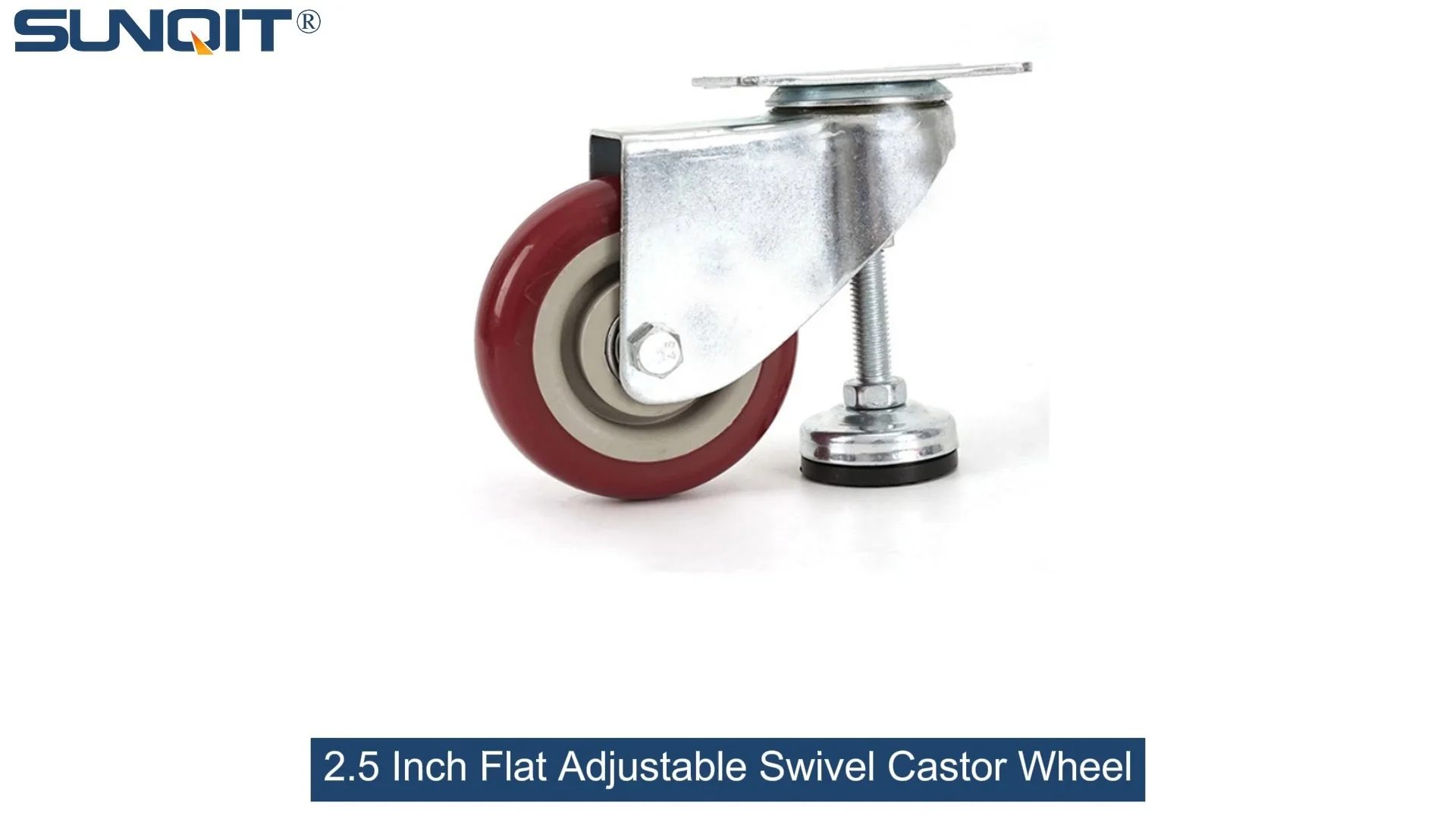
Flat Adjustable Swivel Castor Wheel
Swivel Chair Casters Ball Bearing Wheels Rubber Base with adjustable height function. Resistant to abrasion, impact and corrosion. Heavy payload can hold 80Kgs per pcs,which can make it works at a stable and smooth status.
The Pulse of Modern Warehouses: Why Mobility Matters
Walk into any thriving warehouse today, and you'll notice a symphony of movement: workers bustling between stations, packages gliding along conveyor belts, and carts weaving through aisles loaded with goods. At the heart of this orchestration is one critical principle: efficiency. In an era where customer expectations demand faster delivery times and businesses strive to cut operational waste, the ability to move materials quickly, safely, and smoothly isn't just a luxury—it's the backbone of success. Yet, for many warehouses, a silent bottleneck often goes unnoticed: the carts and racks that carry the load. When these tools lack the right mobility, even the most well-trained teams can struggle to keep up.
Consider the scenario: A distribution center handling electronics components relies on static shelves and heavy, hard-to-maneuver carts. Workers spend precious minutes wrestling with carts that get stuck on uneven floor tiles, or they waste time rearranging loads because the cart's height doesn't align with the workbench. Over a day, these small delays add up—delaying order fulfillment, increasing labor fatigue, and chipping away at profit margins. This is where the humble caster wheel steps in, and not just any caster: the flat adjustable swivel castor wheel. These unassuming components are quietly revolutionizing how warehouses operate, turning clunky, static setups into agile, responsive systems that keep pace with modern demands.
In this article, we'll dive deep into the world of flat adjustable swivel castor wheels, exploring how they transform mobile turnover carts, support lean system principles, and become a game-changer for warehouse efficiency. We'll also touch on their integration with turnover trolley and rack setups, the role of caster accessories in enhancing performance, and why choosing the right components can mean the difference between a warehouse that merely functions and one that thrives.
Lean Systems and the Rise of Mobile Material Handling
Before we zoom in on the specifics of casters, let's take a step back to understand the bigger picture: lean systems. Originating from Toyota's production philosophy, lean management focuses on eliminating waste—whether it's time, materials, or effort—to create value for customers. In warehouses, this translates to streamlining workflows, reducing unnecessary movement, and ensuring that every tool and process serves a clear purpose. Mobile turnover carts are a cornerstone of this approach. Unlike fixed shelving or static racks, turnover trolley and rack setups are designed to move materials exactly where they're needed, when they're needed—cutting down on trips to storage areas and minimizing idle time.
But here's the catch: a mobile cart is only as good as its ability to move. A cart with poor-quality casters becomes a liability. It might get stuck, tip over under heavy loads, or fail to align with workbenches, forcing workers to bend, lift, or reposition items manually. This not only slows down operations but also increases the risk of workplace injuries—a cost no business can afford. Enter the flat adjustable swivel castor wheel: a component engineered to address these pain points and turn mobile carts into true lean system allies.

What Are Flat Adjustable Swivel Castor Wheels, Anyway?
At first glance, a caster wheel might seem like a simple part: a wheel attached to a mounting plate. But flat adjustable swivel castor wheels are anything but basic. Let's break down their anatomy. The "flat" refers to the mounting plate—a broad, stable base that attaches securely to the bottom of a cart or rack, distributing weight evenly to prevent wobbling. The "adjustable" feature allows users to tweak the wheel's height, often via a threaded stem or a lever, ensuring the cart sits level even on uneven floors. And "swivel" means the wheel can rotate 360 degrees, letting the cart turn on a dime without needing to be dragged or lifted.
Compare this to older, fixed casters, which lock into a single direction, or non-adjustable swivel casters that can't adapt to floor inconsistencies. Fixed casters force carts to move in straight lines, requiring workers to backtrack or maneuver awkwardly around obstacles. Non-adjustable swivel casters, while more flexible, leave carts vulnerable to tilting if the floor dips or rises, risking spills or damage to fragile goods. Flat adjustable swivel castor wheels solve both problems, offering the best of mobility, stability, and adaptability.

Key Features That Make Flat Adjustable Swivel Castor Wheels Stand Out
What sets these casters apart from the rest? Let's unpack the features that make them indispensable for modern warehouses:
1. Height Adjustability: Conquering Uneven Floors and Misaligned Workbenches
Warehouse floors are rarely perfect. Years of heavy traffic, dropped tools, or uneven concrete pouring can leave small bumps, dips, or cracks. For a cart with fixed-height casters, these imperfections become major hurdles. A wheel might get stuck in a crack, or the cart might lean to one side, making it hard to push or risking load instability. Flat adjustable swivel castor wheels eliminate this issue with their height-adjustable design. Most models let users raise or lower the wheel by up to 20mm, ensuring the cart stays level regardless of the floor's condition.
This adjustability also shines when aligning carts with workbenches. Imagine a worker assembling circuit boards: the ideal setup is for the cart's surface to sit flush with the workbench, allowing materials to slide smoothly from cart to bench without lifting. With adjustable casters, this alignment is possible in seconds, reducing strain on the worker's back and arms and speeding up the assembly process.
2. 360-Degree Swivel: Maneuverability in Tight Spaces
Warehouse aisles are often narrow, especially in facilities optimized for storage density. A cart with rigid, fixed-direction casters would require multiple turns or backing up to navigate tight corners—wasting time and increasing the risk of collisions. Flat adjustable swivel castor wheels, with their 360-degree swivel heads, let carts pivot smoothly. A gentle push is all it takes to change direction, even when the cart is fully loaded. This is particularly useful in busy areas, like near packing stations or loading docks, where quick, precise movements are critical.
3. Heavy-Duty Load Capacity: Built to Handle Real-World Weights
Warehouse carts don't just carry light packages. They're often loaded with bulk materials, heavy machinery parts, or stacked boxes weighing hundreds of kilograms. A flimsy caster can buckle under this pressure, leading to breakdowns, delays, or even accidents. Flat adjustable swivel castor wheels are engineered for strength. Most models are rated to carry 150–300kg per wheel, with some heavy-duty variants handling up to 500kg. This robust capacity ensures they can keep up with the demands of industrial environments, from automotive parts warehouses to retail distribution centers.
4. Durable Materials: Withstanding the Wear and Tear of Daily Use
Warehouse floors are tough on equipment. Casters face constant friction from concrete, exposure to oils, cleaning chemicals, and occasional impacts from forklifts or pallet jacks. To survive this, flat adjustable swivel castor wheels are built with durability in mind. The wheels themselves are often made from polyurethane or rubber, materials that resist abrasion, absorb shocks, and provide a smooth roll. The swivel heads use precision ball bearings to reduce friction, ensuring the caster rotates freely even after months of heavy use. The mounting plates are typically made from galvanized steel or aluminum, protecting against rust and corrosion in humid or dusty environments.

Turnover Trolley and Rack: The Perfect Pair for Flat Adjustable Casters
While flat adjustable swivel castor wheels are powerful on their own, their true potential is unlocked when paired with the right turnover trolley and rack systems. Turnover trolleys—also known as material handling carts—are designed to transport goods between storage, assembly, and shipping areas. When equipped with these casters, they transform from basic carts into multi-functional tools that adapt to the warehouse's changing needs.
Consider a typical turnover trolley used in a food distribution warehouse. It needs to carry crates of produce from cold storage to packing stations, then to loading trucks. The cold storage floor might be smooth concrete, while the packing area has slightly uneven tiles, and the loading dock has a small lip where the truck meets the warehouse. With flat adjustable swivel castor wheels, the trolley glides seamlessly across all these surfaces. Workers adjust the caster height to clear the dock lip, swivel around tight corners in the cold storage, and align the trolley with packing tables for easy unloading. The result? Faster, safer, and more efficient material flow.
Racks mounted on casters offer similar benefits. In a retail warehouse, seasonal inventory fluctuates dramatically—think back-to-school supplies in August or holiday decorations in November. Fixed racks can't keep up with these changes, leading to wasted space or overcrowded aisles. Mobile racks with flat adjustable swivel castor wheels can be repositioned in minutes, allowing managers to reorganize storage layouts to match demand. Need to create more space for holiday stock? Simply roll the racks to a new location. Want to group similar products together for a promotion? Adjust the rack positions without heavy lifting.
Caster Accessories: Enhancing Performance and Safety
A great caster system isn't complete without the right accessories. Caster accessories might seem like small additions, but they play a big role in boosting functionality, safety, and longevity. Here are some must-have accessories for flat adjustable swivel castor wheels:
1. Brake Mechanisms: Locking in Place When Stability Matters
Mobility is key, but there are times when a cart needs to stay put—like when loading/unloading, or when parked at a workbench. Brake-equipped casters solve this by letting workers lock the wheel in place with a simple foot pedal or lever. Some advanced models even offer dual-locking brakes, which lock both the wheel and the swivel head, preventing the cart from rolling OR turning. This is critical for safety: a cart that accidentally rolls away could injure a worker or damage goods.
2. Swivel Locks: Controlling Direction in High-Traffic Areas
In wide aisles or open spaces, 360-degree swivel is a blessing. But in narrow corridors or when moving in straight lines over long distances, too much swivel can make the cart hard to control. Swivel locks let users fix the caster in a straight-ahead position, turning the cart into a stable, easy-to-push platform that moves in a straight line without wobbling. This is especially useful for transporting heavy loads over long distances, reducing worker fatigue.
3. Bearing Covers: Protecting Against Dust and Debris
Warehouses are dusty places. Sawdust, metal shavings, or food particles can work their way into a caster's swivel bearings, causing friction, rust, or jamming. Bearing covers—simple plastic or metal shields—keep debris out, extending the caster's lifespan and reducing maintenance needs. For warehouses with particularly harsh environments (like those handling chemicals or metalworking fluids), sealed bearings paired with covers offer even more protection.
How Flat Adjustable Swivel Casters Support Lean System Goals
At their core, lean systems aim to eliminate waste—whether it's time, effort, or resources. Flat adjustable swivel castor wheels align perfectly with this mission by addressing three common types of waste in warehouses:
1. Waste of Motion: Reducing Unnecessary Movement
Workers shouldn't have to walk extra steps or exert extra force to move materials. A cart with poor casters might require two people to push, or force workers to take longer routes to avoid obstacles. Flat adjustable swivel castor wheels reduce this waste by making carts easy to maneuver with minimal effort. A single worker can push a fully loaded cart through tight aisles, and the swivel feature means fewer turns and backtracking.
2. Waste of Waiting: Keeping Workflows Moving
When a cart gets stuck, or when workers have to stop to adjust a load, the entire workflow grinds to a halt. Adjustable casters minimize waiting by ensuring carts move smoothly and loads stay stable. For example, in an assembly line, if a cart carrying parts gets stuck, the line stops until the cart is freed. With reliable casters, this delay never happens—parts arrive on time, and the line keeps moving.
3. Waste of Defects: Preventing Damage to Goods
A wobbly cart or a sudden jolt from a stuck wheel can damage fragile goods, leading to defects and rework. Flat adjustable swivel castor wheels' stability and smooth ride reduce the risk of damage. Delicate items like electronics, glassware, or medical supplies stay safe during transport, cutting down on costly replacements and quality control issues.
Comparing Caster Types: Why Flat Adjustable Swivel Casters Come Out on Top
Not all casters are created equal. Let's compare flat adjustable swivel castor wheels with other common types to see why they're the best choice for mobile turnover carts:
| Caster Type | Maneuverability | Height Adjustment | Load Capacity | Best For | Drawbacks |
|---|---|---|---|---|---|
| Flat Adjustable Swivel | 360° swivel, easy to turn | Yes (up to 20mm) | 150–500kg per wheel | Mobile turnover carts, workbenches, racks in uneven or tight spaces | Higher initial cost than basic casters |
| Fixed Caster | Only moves forward/backward | No | 100–300kg per wheel | Straight-line transport (e.g., conveyor carts) | Hard to maneuver; can't turn in tight spaces |
| Non-Adjustable Swivel | 360° swivel, good maneuverability | No | 100–400kg per wheel | Smooth floors, light to medium loads | Unstable on uneven floors; can't align with workbenches |
| Heavy-Duty Rigid | Fixed direction, very stable | No | 500–1000kg per wheel | Extremely heavy loads (e.g., machinery transport) | Impossible to turn; requires multiple people to push |
The table tells a clear story: while other casters have their uses, flat adjustable swivel castor wheels offer the best balance of maneuverability, adaptability, and load capacity—making them ideal for the dynamic needs of modern warehouses.
Real-World Impact: Case Studies from the Warehouse Floor
Numbers and features tell part of the story, but real-world examples show the true impact of these casters. Let's look at two hypothetical but realistic scenarios where flat adjustable swivel castor wheels transformed warehouse operations:
Case Study 1: Electronics Manufacturing Plant Cuts Labor Costs by 15%
A mid-sized electronics manufacturer was struggling with slow assembly lines. Workers spent 20% of their time moving parts between storage and workbenches, using old, non-adjustable swivel casters that often got stuck on the factory's slightly uneven concrete floor. The carts also didn't align with workbenches, forcing workers to lift heavy component boxes, leading to fatigue and occasional back injuries.
After switching to mobile turnover carts equipped with flat adjustable swivel castor wheels, the results were striking: Workers adjusted the caster height to align carts with workbenches, eliminating lifting. The swivel casters made carts easy to push, cutting movement time by 30%. Over six months, labor costs dropped by 15%, and injury reports fell to zero. The plant manager noted, "It's amazing how a small change like better casters can ripple through the entire operation. Our teams are faster, happier, and more productive."
Case Study 2: E-Commerce Warehouse Boosts Order Fulfillment by 25%
An e-commerce warehouse handling fashion apparel faced seasonal peaks, with order volumes doubling during holiday periods. The warehouse used static racks and fixed-direction carts, which led to bottlenecks: workers had to walk long distances to retrieve items, and carts couldn't navigate the crowded, narrow aisles during peak times.
The solution? Retrofitting all turnover trolley and rack systems with flat adjustable swivel castor wheels and adding swivel locks for straight-line transport. During peak season, workers could now push carts through tight aisles, adjust heights to match picking stations, and lock carts in place while packing. Order fulfillment speed increased by 25%, and the warehouse was able to handle the holiday rush with no extra hires. "We used to dread peak season," said the operations director. "Now, with these casters, our carts feel like extensions of our workers—fast, flexible, and reliable."
Maintaining Your Flat Adjustable Swivel Castor Wheels: Tips for Longevity
Like any equipment, flat adjustable swivel castor wheels perform best with regular maintenance. Here's how to keep them rolling smoothly for years:
1. Clean Regularly to Prevent Debris Buildup
Dust, dirt, and small debris can get trapped in the swivel head or around the wheel axle, causing friction and jamming. At least once a week, wipe down the casters with a dry cloth or brush to remove buildup. For greasy or oily environments (like auto repair shops), use a mild degreaser and a rag to clean the wheels and bearings.
2. Lubricate Moving Parts to Reduce Wear
The swivel head and wheel bearings need lubrication to move freely. Every 3–6 months, apply a few drops of lubricating oil (like 3-in-1 oil) to the swivel joint and axle. Avoid over-lubricating, as excess oil can attract more dirt. For food-grade warehouses, use NSF-approved lubricants to meet safety standards.
3. Inspect for Damage or Loose Parts
Before each shift, do a quick visual inspection: Check for cracks in the wheel, bent mounting plates, or loose bolts. If a wheel is worn unevenly or the swivel head feels stiff, replace the caster immediately. Ignoring small issues can lead to bigger problems—like a wheel failing mid-transport and causing an accident.
4. Adjust Heights as Needed for Changing Conditions
Warehouse floors can shift over time due to temperature changes or heavy loads. Periodically check that all casters on a cart are adjusted to the same height to prevent wobbling. If a new area of the warehouse is added (like a mezzanine or a new concrete slab), adjust the casters to match the new floor level.
Choosing the Right Supplier: What to Look For
Investing in flat adjustable swivel castor wheels is a smart move, but the quality of the product depends on the supplier. Here's what to look for when selecting a supplier:
1. Quality Materials and Testing
A reputable supplier will use high-grade materials: polyurethane or rubber wheels, galvanized steel mounting plates, and precision bearings. Ask about testing standards—do they test load capacity, swivel smoothness, or durability under repeated use? Look for suppliers who provide certificates or test reports to back up their claims.
2. Range of Options and Customization
Warehouses have diverse needs: some need heavy-duty casters for 500kg loads, others need lightweight ones for delicate goods. A good supplier offers a range of sizes, load capacities, and wheel materials (e.g., rubber for quiet operation, polyurethane for chemical resistance). They should also offer customization—like adding brake mechanisms or bearing covers—to meet your specific requirements.
3. Technical Support and After-Sales Service
Even the best casters can have issues. Choose a supplier that offers responsive technical support—whether you need help with installation, troubleshooting, or ordering replacement parts. Look for suppliers with a clear warranty policy (at least 1 year) and fast shipping for replacements.
Conclusion: The Small Wheel That Drives Big Change
In the fast-paced world of warehouse operations, success often hinges on the smallest details. Flat adjustable swivel castor wheels might not grab headlines, but they're a testament to how innovation in even the most basic components can drive massive improvements in efficiency, safety, and profitability. By combining mobility, adjustability, and durability, these casters turn mobile turnover carts and racks into powerful tools that adapt to the warehouse's ever-changing needs.
Whether you're running a small distribution center or a large manufacturing plant, investing in quality flat adjustable swivel castor wheels is an investment in your team's productivity and your business's future. As warehouses continue to evolve, one thing is clear: the ability to move materials quickly, safely, and smoothly will always be at the heart of success. And with these casters, you'll be ready to roll with whatever the future brings.