- Company Articles
- Products and Technology
- Product knowledge
- Flat Adjustable Swivel Castor Wheels for Warehouse Material Racks: Efficiency Boost

Flat Adjustable Swivel Castor Wheels for Warehouse Material Racks: Efficiency Boost
Related Product
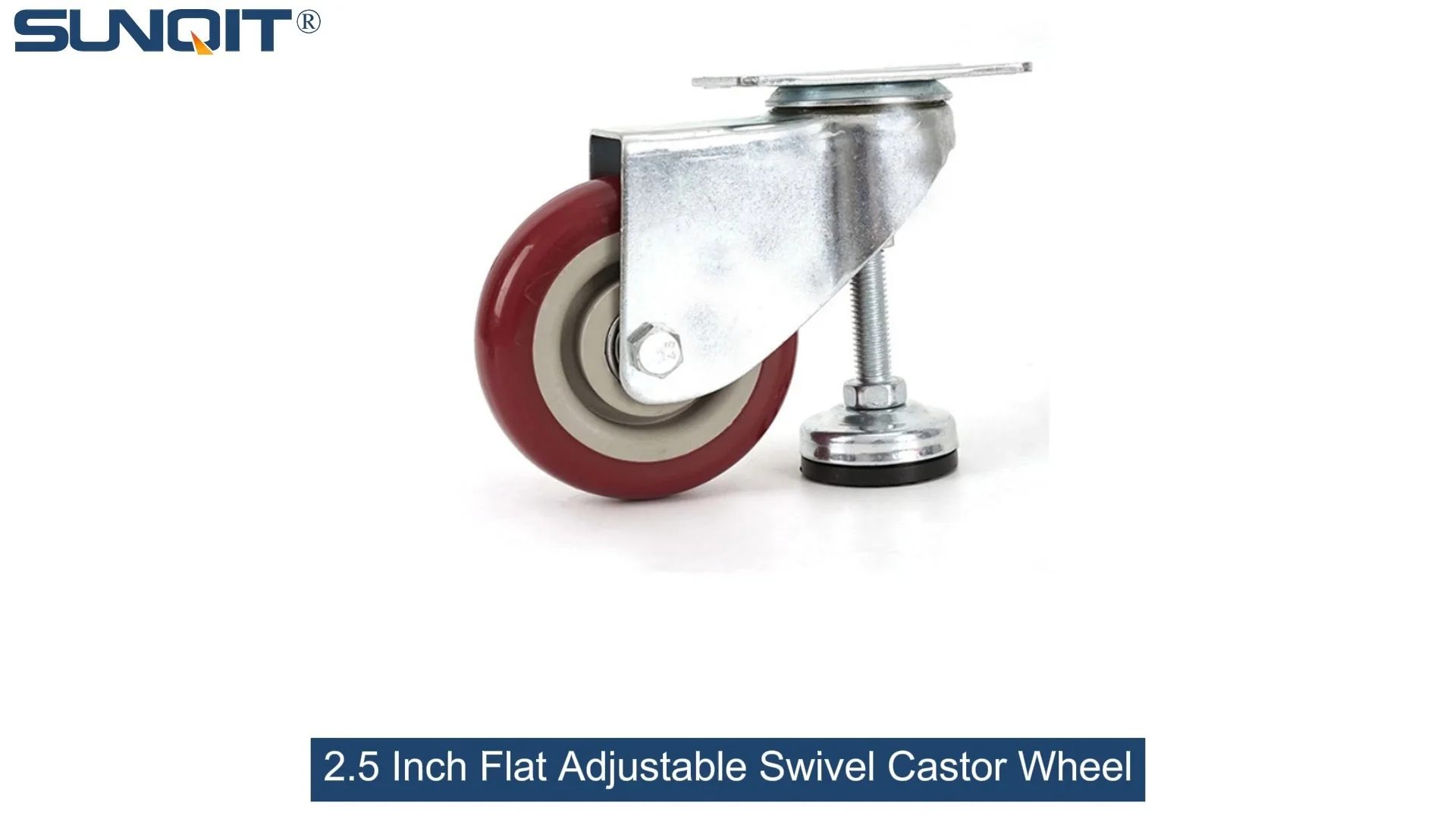
Flat Adjustable Swivel Castor Wheel
Swivel Chair Casters Ball Bearing Wheels Rubber Base with adjustable height function. Resistant to abrasion, impact and corrosion. Heavy payload can hold 80Kgs per pcs,which can make it works at a stable and smooth status.
Walk into any busy warehouse, and you'll notice a common rhythm: workers moving materials, machines humming, and racks standing tall—some static, some on wheels. But what if the difference between a good day and a chaotic day on the warehouse floor came down to something as small as the wheels under those racks? For years, warehouses have relied on fixed material racks, treating mobility as an afterthought. But in today's fast-paced manufacturing and logistics world, that's a costly oversight. Enter flat adjustable swivel castor wheels: the unsung heroes that turn clunky, immovable storage units into dynamic tools for efficiency. In this article, we'll dive into how these small but mighty components are revolutionizing warehouse operations, with a focus on their impact when paired with workhorses like the material rack b (3 row and 3 floor), and why top lean system suppliers are making them a cornerstone of their solutions.
The Hidden Cost of Static Warehouse Racks
Let's start with the obvious: static racks don't move. That might sound like a non-issue until you consider the daily reality of warehouse work. Imagine a team needing to retrieve a pallet of components from the back of a fixed rack. They grab a forklift, navigate tight aisles, carefully maneuver around other racks, and finally lift the pallet—only to realize the next batch of materials is on the opposite side of the warehouse. Now multiply that by dozens of similar tasks each day. Time ticks away, labor hours add up, and frustration builds. Static racks force workers into rigid workflows, limiting flexibility and slowing down response times to sudden changes in demand.
Then there's the problem of space. Fixed racks lock warehouses into permanent layouts, making it nearly impossible to reconfigure for seasonal peaks or new product lines. A lean system thrives on adaptability, but static storage turns that principle on its head. Over time, these inefficiencies don't just affect productivity—they eat into profits. A 2023 study by the Material Handling Industry (MHI) found that warehouses with rigid storage systems spend 15-20% more on labor costs due to time wasted on material retrieval alone. That's where mobility becomes more than a convenience; it's a strategic advantage.
The Game-Changer: Flat Adjustable Swivel Castor Wheels Explained
Flat adjustable swivel castor wheels might sound technical, but their purpose is simple: to make heavy things easy to move, precisely when and where you need them. Unlike standard fixed casters, these wheels combine three key features: a low-profile, flat mounting base (so racks sit stable and close to the ground), height adjustability (to level racks on uneven floors), and a 360-degree swivel mechanism (for effortless maneuvering in tight spaces). Let's break that down.
First, the "flat" design. Traditional casters often have bulky mounting plates that raise racks higher off the ground, increasing instability. Flat adjustable casters, by contrast, sit flush against the rack's base, keeping the center of gravity low. This is critical for safety, especially when racks are fully loaded with heavy parts or products. Next, adjustability. Warehouses rarely have perfectly smooth floors—cracks, uneven concrete, or worn patches are common. These casters come with built-in height adjustment (usually via a threaded stem or bolt), allowing workers to tweak each wheel by a few millimeters to ensure the rack sits perfectly level. No more wobbling, no more items sliding off, and no more strain on the rack's structure.
But the real magic is in the swivel. A high-quality swivel castor uses precision bearings and a reinforced raceway to let the wheel rotate freely, even under heavy loads. This means a single worker can push a fully loaded material rack b (3 row and 3 floor) around corners, through narrow aisles, or up to a production line with minimal effort. Compare that to wrestling a static rack with a pallet jack or forklift, and the time savings become immediately clear.

Beyond Mobility: Key Features That Drive Efficiency
Mobility is just the starting point. The best flat adjustable swivel castor wheels are engineered with warehouse demands in mind, packing features that address specific pain points. Let's explore the ones that matter most:
Load Capacity: Built for the Toughest Jobs
Warehouse racks don't carry featherweights. A standard material rack b (3 row and 3 floor) can hold hundreds of kilograms of parts, tools, or finished goods. That's why these casters are tested to handle loads far beyond daily needs. Most industrial-grade options start at 300kg per wheel, with heavy-duty models topping 500kg. This over-engineering isn't just about durability; it's about safety. A caster that's rated for 500kg but only carries 300kg will last longer, perform better, and reduce the risk of failure—critical in environments where a collapsed rack could mean damaged inventory or injured workers.
Brake Systems: Stopping Power When You Need It
Mobility is useless if the rack won't stay put when you need it to. That's where caster accessories like integrated brakes come in. The best flat adjustable swivel casters feature dual-lock brakes: one that locks the wheel from rotating (swivel lock) and another that stops the wheel from rolling (wheel lock). This double security ensures the rack stays stable during loading/unloading or when positioned at a workstation. Imagine a worker loading boxes onto a rack—without brakes, a slight bump could send the rack rolling, risking injury. With brakes engaged, they can work confidently, knowing the rack is anchored in place.
Floor Protection: Gentle on Surfaces, Tough on Wear
Warehouse floors take a beating, but that doesn't mean casters should make it worse. Many flat adjustable swivel casters come with non-marking polyurethane wheels, which glide smoothly over concrete, tile, or epoxy floors without leaving scuffs or scratches. This is a small detail that adds up: fewer floor repairs, cleaner workspaces, and less time spent buffing out marks. For warehouses with sensitive flooring (like those in electronics manufacturing), some models even offer soft rubber wheels that absorb vibrations, protecting both the floor and delicate items on the rack.

Pairing with Material Rack B (3 Row and 3 Floor): A Match Made for Productivity
To truly understand the impact of these casters, let's look at a real-world example: the material rack b (3 row and 3 floor). This rack is a staple in factories and warehouses, designed to hold multiple layers of small parts, tools, or finished products in a compact footprint. With three rows and three floors, it maximizes vertical storage while keeping items organized and accessible. But when mounted on fixed legs, its utility is limited to a single spot. Add flat adjustable swivel castor wheels, and everything changes.
Consider a automotive assembly line. In the morning, the material rack b is loaded with wiring harnesses, bolts, and gaskets needed for the day's production. Instead of workers walking back and forth to a fixed storage area, the rack is wheeled directly to the line, positioned next to the assembly station, and locked in place with the casters' brakes. As the shift progresses, the rack can be easily moved to the next station or reloaded without disrupting workflow. At the end of the day, it's rolled to a storage area, freeing up floor space for cleaning or night shifts.
The numbers back this up. A mid-sized electronics manufacturer in Ohio recently upgraded 20 of their material rack b units with flat adjustable swivel casters. Within three months, they reported a 28% reduction in time spent on material retrieval, and assembly line workers noted a 40% decrease in physical strain (measured via ergonomic assessments). "It used to take two people to move a loaded rack a few feet," said the plant manager. "Now one person can wheel it across the shop floor with one hand. That's game-changing."

The Role of Caster Accessories: Small Parts, Big Impact
A castor is only as good as its accessories. While the wheel itself gets the spotlight, components like brakes, mounting hardware, and replacement parts ensure long-term performance and safety. Let's take a closer look at the caster accessories that make a difference:
Brake Upgrades: From Basic to Heavy-Duty
Standard casters often come with simple foot brakes, but in high-traffic warehouses, those might not cut it. Heavy-duty brake kits—like dual-lock brakes or lever-operated brakes—offer better control, especially for racks carrying fragile or high-value items. Some lean system suppliers even offer brake extensions, allowing workers to engage the brakes without bending down, reducing strain and saving time.
Replacement Wheels: Extending Lifespan
Wheels wear out, especially in warehouses with rough floors or heavy loads. Instead of replacing the entire caster, modular designs let you swap out just the wheel. Polyurethane wheels are ideal for general use, but for extreme conditions (like cold storage or chemical plants), options like stainless steel or heat-resistant rubber are available. Having a stock of replacement wheels on hand means minimal downtime when a wheel finally gives out.
Mounting Plates and Hardware: Ensuring a Secure Fit
A castor is only secure if it's mounted properly. High-quality mounting plates are made from thick steel, with pre-drilled holes that align with standard rack bases (including the material rack b). For custom racks, adjustable mounting brackets allow for a perfect fit, preventing wobbling or loosening over time. Stainless steel bolts and nuts resist rust in humid or corrosive environments, ensuring the casters stay attached even after years of use.
Why Lean System Suppliers Prioritize These Castors
Lean manufacturing is all about eliminating waste—whether it's time, labor, or space. That's why top lean system suppliers are increasingly integrating flat adjustable swivel castor wheels into their solutions. For these suppliers, the casters align perfectly with core lean principles:
Waste Reduction (Muda): By making racks mobile, workers spend less time moving materials and more time on value-added tasks. This directly cuts down on "transportation waste," one of the seven deadly wastes in lean methodology.
Flexibility (Heijunka): Lean systems thrive on balanced production flows. Mobile racks let warehouses adjust layouts quickly, adapting to changes in order volume or product mix without expensive renovations.
Standardization: Reputable lean system suppliers offer casters with consistent sizing and performance, ensuring compatibility across different rack models (like the material rack b and workbenches). This standardization simplifies maintenance and training.
John Chen, operations director at a leading lean system supplier in Michigan, puts it this way: "We don't just sell racks and casters—we sell efficiency. A customer might come to us needing a better storage solution, but what they really need is to move materials faster, with less effort. Flat adjustable swivel casters are the bridge between static storage and a lean workflow. We've seen clients reduce their warehouse footprint by 15% just by making their racks mobile—because they can reconfigure on the fly instead of needing extra space for fixed aisles."
Real-World Results: Efficiency Metrics That Matter
At the end of the day, warehouse managers care about results. Let's look at the tangible benefits of upgrading to flat adjustable swivel castor wheels, using data from real implementations:
| Metric | Static Racks | Racks with Flat Adjustable Swivel Casters | Improvement |
|---|---|---|---|
| Time per Material Retrieval | 8-10 minutes | 2-3 minutes | 60-75% reduction |
| Labor Hours per Day (Material Handling) | 12-15 hours | 5-7 hours | ~50% reduction |
| Floor Space Utilization | 60-70% | 85-90% | 25-30% improvement |
| Worker Fatigue Reports | 12-15 per month | 3-5 per month | ~70% reduction |
These numbers aren't just impressive—they're transformative. A warehouse saving 5-10 labor hours per day can reallocate those workers to more critical tasks, like quality control or process improvement. Improved floor space utilization means more room for production or additional storage, delaying the need for expensive facility expansions. And fewer fatigue reports? That translates to lower turnover, fewer workers' compensation claims, and a happier, more productive team.
Choosing the Right Castors for Your Warehouse
Not all casters are created equal. To maximize efficiency, you'll need to consider your specific needs. Here's a quick checklist to guide your decision:
Load Capacity: Calculate the maximum weight your rack will carry (including the rack itself) and choose casters rated for 1.5x that weight (to account for dynamic loads during movement).
Floor Type: Smooth concrete? Go with polyurethane wheels. Rough or uneven floors? Opt for rubber or steel wheels with shock absorption.
Environment: Wet or corrosive environments (like food processing or chemical plants) need stainless steel casters. Cleanrooms require non-marking, low-dust wheels.
Mobility Needs: Do you need to move racks long distances, or just a few feet? Heavy-duty swivel bearings are a must for frequent, long moves.
When in doubt, consult a lean system supplier. They can assess your workflow, recommend the right casters and accessories, and even provide samples for testing. Remember: the cheapest casters might save money upfront, but they'll cost more in replacements and downtime later. Investing in quality pays off.
Conclusion: The Wheel That Drives Warehouse Evolution
In the grand scheme of warehouse operations, flat adjustable swivel castor wheels might seem small. But as we've explored, their impact is anything but. They turn static material racks into dynamic tools, reduce labor costs, improve safety, and unlock the flexibility that modern lean systems demand. When paired with workhorses like the material rack b (3 row and 3 floor) and supported by quality caster accessories, they become the foundation of an efficient, adaptable warehouse.
The message is clear: mobility isn't a luxury—it's a necessity. Warehouses that embrace flat adjustable swivel castor wheels aren't just keeping up with the competition; they're setting new standards for productivity. So the next time you walk through your warehouse, take a look at the wheels under your racks. Are they holding you back, or driving you forward? The answer could be the key to your next efficiency breakthrough.