- Company Articles
- Products and Technology
- Product knowledge
- Flat Adjustable Swivel Castor Wheels: Improving Flexibility in Lean Production Lines

Flat Adjustable Swivel Castor Wheels: Improving Flexibility in Lean Production Lines
Related Product
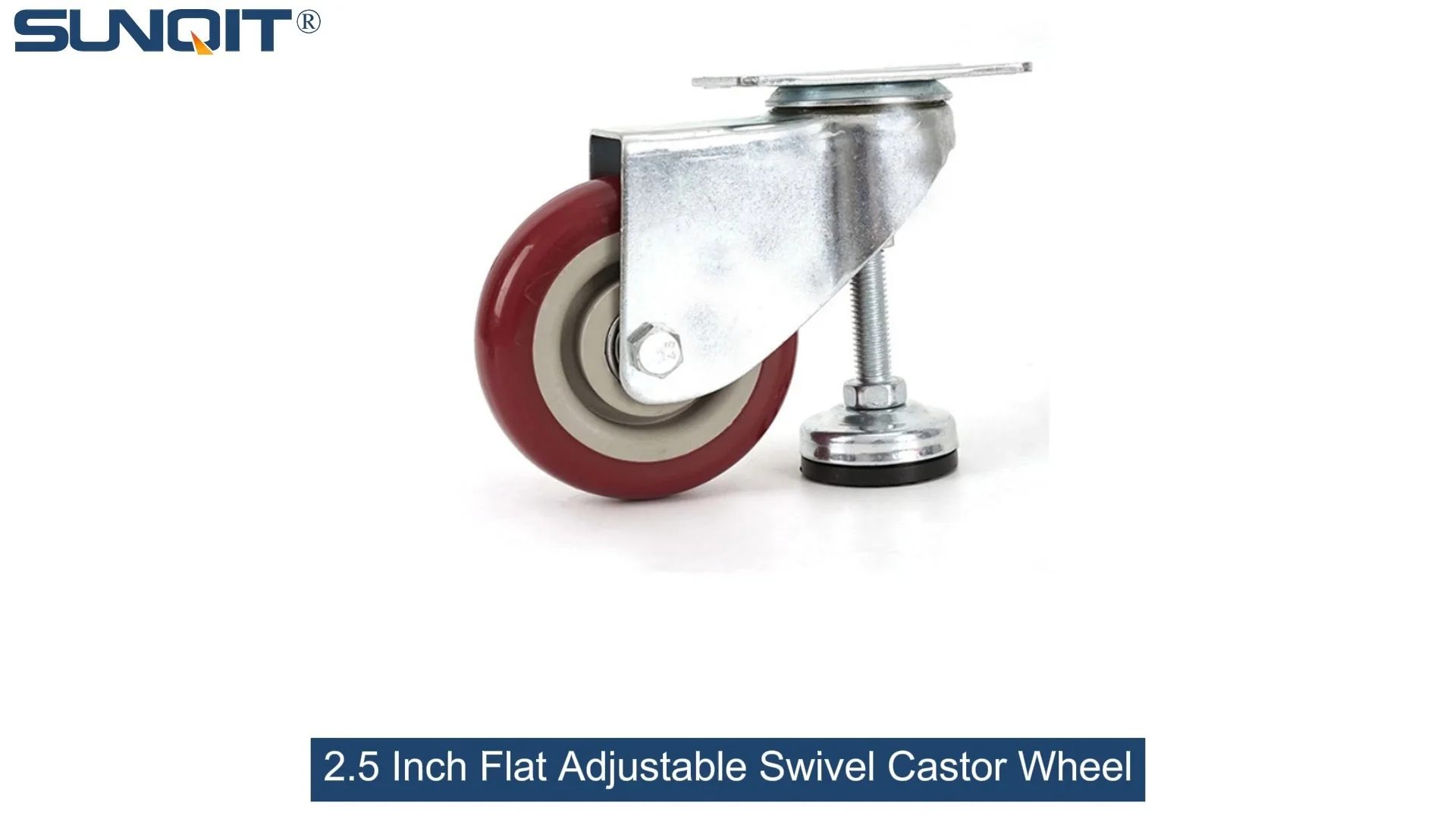
Flat Adjustable Swivel Castor Wheel
Swivel Chair Casters Ball Bearing Wheels Rubber Base with adjustable height function. Resistant to abrasion, impact and corrosion. Heavy payload can hold 80Kgs per pcs,which can make it works at a stable and smooth status.
Walk through any manufacturing facility, and you'll quickly sense the rhythm of production—machines humming, teams coordinating, parts moving from station to station. In the world of lean manufacturing, this rhythm isn't just about speed; it's about harmony. Every step, every tool, every surface is designed to eliminate waste, boost efficiency, and keep the flow of work uninterrupted. Yet, for all the focus on high-tech machinery and complex workflows, some of the most impactful innovations are the ones that quietly keep things moving: the small, unassuming components that turn static workspaces into dynamic, adaptable environments. Enter the flat adjustable swivel castor wheel —a humble but powerful player in the quest for leaner, more flexible production lines.
Understanding Lean Production: Why Flexibility Matters
Before diving into the specifics of castor wheels, let's ground ourselves in what makes lean production tick. At its core, lean is a philosophy built on five key principles: defining value from the customer's perspective, mapping the value stream to identify waste, creating seamless flow, establishing pull-based production, and striving for continuous improvement. What ties these principles together? Adaptability . In a market where customer demands shift overnight and product lifecycles grow shorter, rigid, one-size-fits-all production setups become liabilities. A line that can't adjust to new part sizes, revised workflows, or sudden rushes will quickly accumulate waste—whether in the form of idle time, overstocked inventory, or strained labor.
Flexibility, in this context, isn't just about being able to "change" but about changing efficiently . It means reconfiguring a workbench in minutes instead of hours, rerouting a material cart without disrupting adjacent stations, or leveling a workstation on an uneven factory floor to keep assembly precise. These might sound like small tasks, but multiplied across a shift, a day, or a quarter, they add up to significant gains in productivity and cost savings. And that's where the right mobility solutions—like flat adjustable swivel castor wheels—come into play.
What Are Flat Adjustable Swivel Castor Wheels?
At first glance, a castor wheel might seem simple: a wheel mounted on a bracket, designed to make objects mobile. But flat adjustable swivel castors are engineered with lean principles in mind, packing functionality that addresses the unique challenges of modern production lines. Let's break down their key features:
Design Basics: More Than Just a Wheel
A flat adjustable swivel castor wheel consists of three main components: a flat mounting plate, a swivel head, and an adjustable wheel assembly. The flat mounting plate is critical—it sits flush against the bottom of equipment (like a workbench or turnover trolley), distributing weight evenly and ensuring stability. The swivel head allows the wheel to rotate 360 degrees, making it easy to maneuver tight corners or reposition equipment with minimal effort. Finally, the adjustable wheel assembly lets users tweak the height of the castor, often via a threaded stem or bolt, to level equipment on uneven surfaces or align workbenches with adjacent stations.
Materials matter too. These castors are built to withstand the demands of industrial environments: wheels are often made from polyurethane (for floor protection and quiet operation), rubber (for grip on slippery surfaces), or steel (for heavy loads). Brackets and mounting plates are typically forged from high-grade steel or aluminum to resist corrosion and wear, ensuring they hold up under daily use.
Key Features for Lean Environments
- 360-Degree Swivel: Unlike fixed castors, which only roll forward and backward, swivel castors pivot freely, allowing equipment to be moved in any direction. This is a game-changer for tight spaces—imagine a turnover trolley loaded with fragile components that needs to navigate around a sudden obstacle or a workbench that must be shifted 90 degrees to align with a new assembly line.
- Height Adjustability: Factory floors are rarely perfectly level. Even small dips or bumps can throw off precision work, leading to errors or increased fatigue for operators. Adjustable castors let teams fine-tune the height of workbenches, racks, or trolleys by a few millimeters, ensuring surfaces stay flat and stable.
- Locking Mechanisms: Mobility is useless if equipment slides around during use. Most flat adjustable swivel castors come with built-in brakes (often called "total lock" or "side lock" brakes) that engage both the wheel and swivel head, securing the equipment in place. This is critical for safety—no one wants a workbench to shift mid-assembly—or for maintaining consistent workflow alignment.
- Load-Bearing Capacity: Lean production often involves moving heavy loads, from steel components to fully assembled subparts. These castors are rated for specific weight limits (ranging from 100kg to over 1,000kg per wheel), ensuring they can handle the demands of everything from lightweight tool carts to heavy-duty material racks.

Integrating Flat Adjustable Swivel Castors into Lean Systems
Now, let's connect the dots: how do these castors actually enhance a lean system ? Let's look at three common scenarios where their flexibility transforms workflows.
1. Workbenches: From Static to Dynamic
The workbench is the heart of many assembly operations—a surface where operators spend hours piecing together components, inspecting parts, or packing finished goods. Traditionally, workbenches are bolted to the floor or fixed in place, limiting their use to one specific task. But with flat adjustable swivel castors, a single workbench becomes a multi-tool.
Consider a electronics manufacturer that produces both small circuit boards and larger control panels. With fixed workbenches, the team might need two separate stations: one low and narrow for boards, another tall and wide for panels. This takes up valuable floor space and requires operators to switch locations, wasting time. With castor-equipped workbenches, however, they can adjust the height of a single bench to accommodate both tasks. Need to shift from panel assembly to board testing? Unlock the castors, roll the bench to the testing area, adjust the height to match the test equipment, lock the brakes, and get to work. No more duplicate stations, no more walking between setups—just seamless flow.
Adjustability also plays a role in ergonomics. A study by the Occupational Safety and Health Administration (OSHA) found that poorly positioned work surfaces are a leading cause of musculoskeletal injuries in manufacturing. By letting operators tweak the height of their workbench to match their posture, castors reduce strain on backs, shoulders, and wrists, lowering absenteeism and boosting focus—both key to lean's "continuous improvement" principle.
2. Turnover Trolleys and Racks: Smoothing Material Flow
In lean production, "flow" refers to the uninterrupted movement of materials from receiving to shipping. When materials get stuck—sitting idle on a cart, waiting for a forklift, or blocked by a stationary rack—flow breaks down, and waste piles up. Turnover trolley and rack systems are designed to keep materials moving, but their effectiveness hinges on how easily they can be maneuvered.
Flat adjustable swivel castors shine here. Unlike standard castors, which can bind or "scrub" when turning, their 360-degree swivel and smooth-rolling wheels let operators push even fully loaded trolleys with minimal effort. This is especially valuable in high-traffic areas, where a cart that's hard to steer might collide with other equipment or slow down nearby workers. For example, a food packaging plant using turnover racks to transport delicate pastries can rely on swivel castors to navigate around mixers and ovens without jostling the goods, reducing waste from damaged inventory.
Height adjustability adds another layer of utility. In many facilities, material racks need to align with conveyor belts or storage shelves to allow easy loading/unloading. A rack with fixed castors might sit an inch too low or high, forcing workers to lift heavy boxes or risk dropping items. With adjustable castors, the rack can be leveled to match the conveyor, turning a strenuous, time-consuming task into a quick, smooth transfer.
3. Adapting to Layout Changes: The "Quick Reconfig" Advantage
One of the biggest challenges in lean production is responding to sudden layout changes. A new product launch might require adding a quality control station; a supply chain delay might demand rerouting materials to a backup line; or a seasonal rush might call for doubling down on a high-demand product. In each case, the ability to reconfigure the production floor quickly can mean the difference between meeting deadlines and falling behind.
Flat adjustable swivel castors turn "quick reconfig" from a buzzword into reality. Without castors, rearranging equipment often involves heavy lifting, disassembly, or even hiring external contractors—all of which eat into time and budget. With castors, a team of two can move a row of workbenches, reposition a flow rack, or shift a conveyor support in under an hour. For example, an automotive parts supplier facing a last-minute order for a new sensor might need to add three assembly stations overnight. With castor-equipped workbenches, they can roll the stations into place, adjust their heights to match existing lines, lock the brakes, and start production by morning—no downtime, no extra labor costs.

Beyond Flexibility: Additional Benefits for Lean Operations
While flexibility is their primary selling point, flat adjustable swivel castors offer other advantages that align with lean goals:
Reduced Maintenance and Longevity
Lean isn't just about eliminating workflow waste—it's about minimizing waste in resources, too. Cheap, low-quality castors might save money upfront, but they'll wear out quickly, requiring frequent replacements and causing unplanned downtime. Flat adjustable swivel castors, built with durable materials and precision bearings, last longer and require less maintenance. Many models feature sealed bearings to keep out dust and debris, and replaceable wheels, so you don't have to swap out the entire castor when the wheel wears down. Over time, this reduces the total cost of ownership and keeps production lines running smoothly.
Safety First
A lean system can't function if workers are injured or equipment is damaged. Flat adjustable swivel castors enhance safety in several ways: their locking brakes prevent accidental movement, their smooth-rolling wheels reduce the force needed to push trolleys (lowering strain injuries), and their height adjustability ensures workbenches are stable, reducing the risk of tip-overs. In environments where ESD (electrostatic discharge) protection is critical—like electronics manufacturing—some castors even come with conductive wheels to dissipate static, protecting sensitive components from damage.
Compatibility with Lean Pipe and Accessories
Many lean systems rely on modular setups, using lean pipe and accessories (like aluminum pipes, joints, and brackets) to build custom workbenches, racks, and trolleys. Flat adjustable swivel castors are designed to integrate seamlessly with these systems. Their flat mounting plates attach easily to standard lean pipe frames, and their load capacities align with the weight limits of typical lean pipe structures. This modularity means you can upgrade existing equipment with castors without overhauling your entire setup—another win for cost-effective, waste-free improvement.

Choosing the Right Flat Adjustable Swivel Castors for Your Needs
Not all castors are created equal, and selecting the right ones depends on your specific workflow, environment, and load requirements. Here are key factors to consider:
- Load Capacity: Start by calculating the total weight of the equipment plus its typical load. Divide that by the number of castors (most equipment uses 4–6 castors) to get the minimum load rating per castor. Err on the side of caution—overloading castors leads to premature failure.
- Floor Type: Smooth concrete floors work well with polyurethane or rubber wheels, which absorb shock and reduce noise. Rough surfaces (like unfinished concrete or gravel) may require steel wheels for durability. For sensitive floors (like polished concrete or tile), soft rubber wheels prevent scratches.
- Environment: Wet or corrosive environments (e.g., food processing, chemical plants) need stainless steel castors to resist rust. Cleanrooms may require non-marking, low-particulate wheels. ESD-sensitive areas benefit from conductive or static-dissipative wheels.
- Adjustment Range: Measure the maximum height variation in your facility. Castors with a wider adjustment range (e.g., 30–50mm) are better for uneven floors, while those with smaller ranges (10–20mm) suffice for relatively flat surfaces.
- Brake Type: Choose between "wheel-only" brakes (which stop rolling but allow swiveling) or "total lock" brakes (which stop both rolling and swiveling). Total lock brakes are safer for stationary work, while wheel-only brakes may be sufficient for carts that need to pivot but not roll.
| Feature | Flat Adjustable Swivel Castors | Fixed Castors | Standard Swivel Castors (Non-Adjustable) |
|---|---|---|---|
| Mobility | 360-degree swivel + adjustable direction | Only forward/backward | 360-degree swivel (no height adjustment) |
| Height Adjustment | Yes (typically 10–50mm) | No | No |
| Load Capacity (per castor) | 100–1,000+ kg | 100–800 kg | 100–800 kg |
| Ideal Use Case | Workbenches, turnover trolleys, adjustable racks | Heavy, straight-line transport (e.g., conveyor bases) | Light carts, mobile shelves (even floors only) |
| Key Lean Benefit | Flexibility + stability + quick reconfig | Cost-effective for fixed paths | Basic mobility (limited adaptability) |
Conclusion: Small Wheels, Big Impact on Lean Success
In the grand scheme of lean production, flat adjustable swivel castor wheels might not grab headlines like AI-powered quality control systems or automated conveyor belts. But their impact is undeniable. By turning static workspaces into dynamic, adaptable environments, they address one of the biggest barriers to lean success: rigidity. They let teams reconfigure lines in minutes, keep materials flowing smoothly, and adapt to changing demands without sacrificing safety or precision.
At the end of the day, lean is about seeing value in the details. It's about recognizing that a wheel that swivels smoothly, adjusts easily, and locks securely isn't just a "nice-to-have"—it's a tool that empowers workers, reduces waste, and keeps production lines in harmony with customer needs. So the next time you walk through a manufacturing facility, take a moment to look down. The wheels beneath those workbenches and trolleys? They might just be the unsung heroes keeping the lean dream alive.