- Company Articles
- Products and Technology
- Application Cases
- Flat Adjustable Swivel Castor Wheels in Aerospace Manufacturing: Application Insights

Flat Adjustable Swivel Castor Wheels in Aerospace Manufacturing: Application Insights
Related Product
Flat Adjustable Swivel Castor Wheel
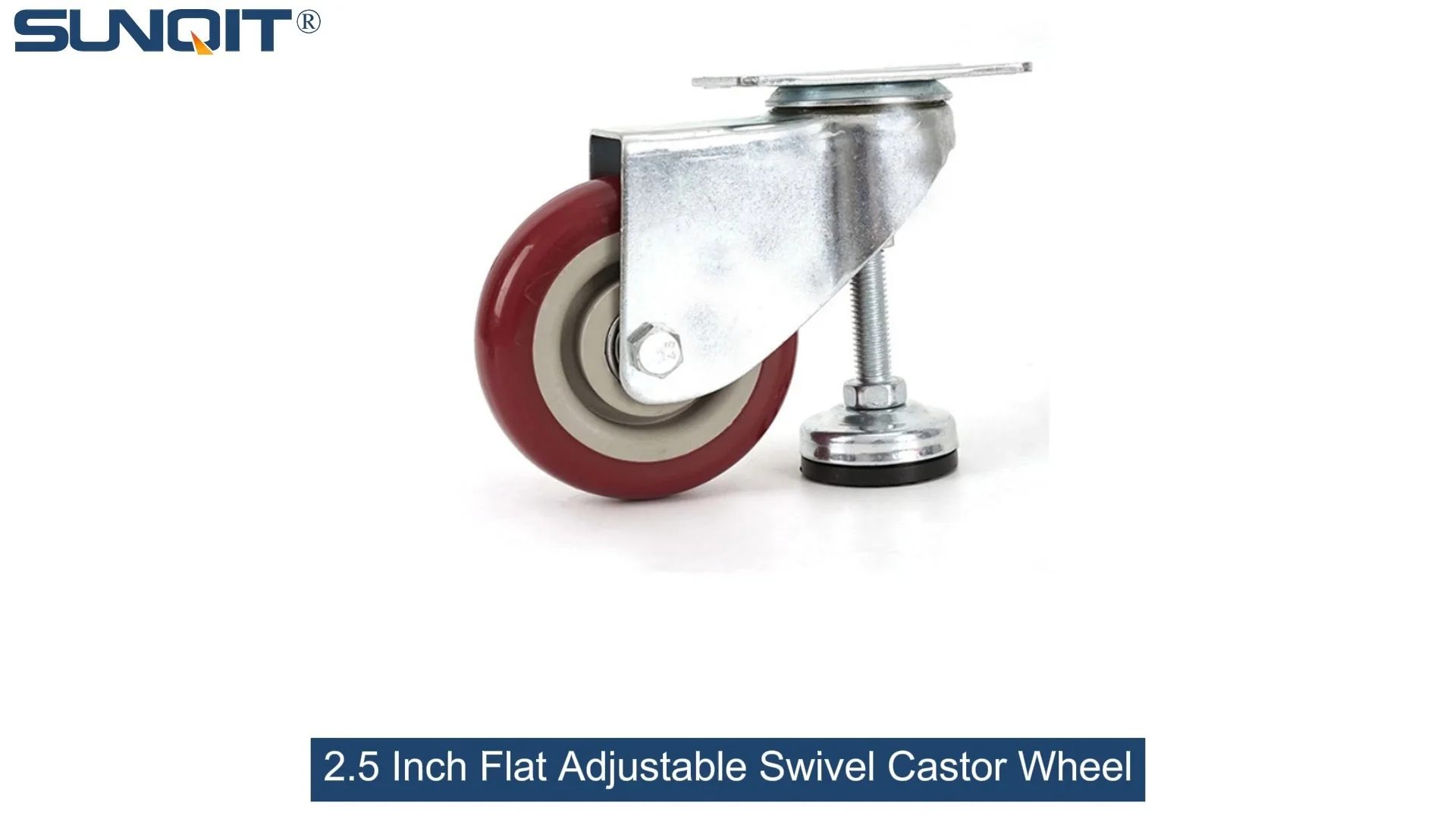
Swivel Chair Casters Ball Bearing Wheels Rubber Base with adjustable height function. Resistant to abrasion, impact and corrosion. Heavy payload can hold 80Kgs per pcs,which can make it works at a stable and smooth status.
Aerospace manufacturing is a realm where precision isn't just a goal—it's the foundation of safety, reliability, and innovation. Every nut, bolt, and component must adhere to tolerances, and even the smallest inefficiency can ripple into costly delays or compromised quality. Yet, amid the focus on high-tech avionics, lightweight alloys, and advanced robotics, there's a quieter hero shaping the industry: the equipment that keeps production moving. Enter the flat adjustable swivel castor wheel —a deceptively simple tool that's revolutionizing how aerospace teams build, assemble, and maintain the machines that defy gravity.
In this article, we'll dive into why these unassuming casters have become indispensable in aerospace facilities. We'll explore their design, functionality, and real-world applications, from assembly workbenches to material handling trolleys. We'll also examine how they integrate with lean systems to reduce waste and boost efficiency, and why their compatibility with aluminum profiles makes them a cornerstone of modular manufacturing setups. By the end, you'll understand why the right caster isn't just a "nice-to-have"—it's a critical component in the quest to build better, safer, and more efficient aircraft.
The Aerospace Manufacturing Challenge: Precision Meets Mobility
Aerospace production floors are a study in controlled chaos. Technicians assemble intricate components like turbine blades or wiring harnesses, often weighing hundreds of pounds, while adhering to strict cleanroom standards. Parts must be moved seamlessly between stations—from 3D printing labs to inspection areas to final assembly lines—without damage or contamination. Workstations need to adapt to different tasks: one day, a bench might host a small avionic sensor; the next, a section of fuselage. And through it all, ergonomics can't be overlooked: repetitive motion, awkward postures, and heavy lifting are leading causes of workplace injuries in manufacturing, costing companies millions in lost productivity and workers' compensation.
Traditional solutions often fall short. Fixed workbenches trap technicians in one spot, forcing them to overreach or strain. Heavy-duty trolleys with rigid casters struggle to maneuver in tight spaces, damaging floors or jostling sensitive parts. And casters that lack adjustability wobble on uneven surfaces, compromising precision during assembly. For aerospace, where a 0.001-inch misalignment can have catastrophic consequences, these issues aren't just inconveniences—they're barriers to excellence.
This is where flat adjustable swivel castor wheels step in. Designed to balance stability, mobility, and adaptability, they address the unique demands of aerospace manufacturing head-on. Let's break down what makes them so effective.
Anatomy of a Flat Adjustable Swivel Castor Wheel: Key Features for Aerospace
Not all casters are created equal. In aerospace, where performance is non-negotiable, the flat adjustable swivel castor wheel stands out for its thoughtful engineering. Here's a closer look at its defining features:
1. Flat, Low-Profile Design for Stability
Unlike bulky industrial casters with large, protruding wheels, flat adjustable casters sit close to the ground, with a low center of gravity. This design minimizes wobble, even when supporting heavy loads—critical when assembling delicate parts like circuit boards or fuel lines. The flat top plate also ensures a secure connection to workbenches , trolleys, or aluminum profile frames, reducing the risk of shifting during use.
2. Height Adjustability: Perfect Alignment, Every Time
Aerospace floors are rarely perfectly level, and workstations often need to align with conveyors, lifts, or inspection tables of varying heights. Flat adjustable casters solve this with a threaded stem or bolt mechanism that lets users tweak the height by fractions of an inch. Imagine a technician assembling a wing panel: with a quick turn of a wrench, they can raise or lower the workbench to match their waist height, reducing back strain, or align the bench with a conveyor to slide parts seamlessly into place. This adjustability also compensates for uneven concrete, ensuring the workstation remains stable and the part stays level during assembly.
3. Smooth Swivel Action for Maneuverability
In tight production spaces—think between rows of aircraft wings or inside hangars—mobility is key. These casters feature precision ball bearings in the swivel head, allowing 360-degree rotation with minimal effort. A technician can reposition a 500-pound workbench with a gentle push, pivoting around corners or squeezing into narrow gaps without jostling the parts on top. This agility cuts down on "motion waste," a common target in lean manufacturing, by letting workers bring the tools to the job instead of the other way around.
4. Heavy-Duty Construction for Aerospace Loads
Aerospace parts aren't light. A single engine component can weigh 200 pounds, and a fully loaded material trolley might carry 1,000 pounds or more. Flat adjustable swivel casters are built to handle this, with reinforced steel or aluminum frames, heat-treated axles, and high-capacity wheels (often made of polyurethane or rubber). Many models support 200–500 pounds per caster, meaning a four-caster setup can safely manage 800–2,000 pounds—more than enough for most aerospace applications.
5. Integrated Brakes: Safety When It Matters Most
Mobility is useless without control. These casters often include dual-locking brakes: one to lock the wheel (preventing rolling) and another to lock the swivel head (preventing rotation). When a technician is working on a critical assembly, they can engage both brakes, turning the mobile workstation into a rock-solid platform. This is especially important in cleanrooms or areas with vibration, where even a small movement could ruin hours of precise work.
6. Compatibility with Aluminum Profiles and Modular Systems
Modern aerospace manufacturing relies on modular setups—flexible systems that can be reconfigured as production needs change. Flat adjustable swivel casters are designed to work seamlessly with aluminum profiles , the lightweight, T-slot frames used to build workbenches, trolleys, and racks. Their flat top plates bolt directly to profile extrusions, and adjustable stems fit into T-slot channels, making it easy to swap out casters or reposition them as needed. This modularity aligns with lean principles, letting teams adapt quickly to new aircraft models or production schedules without rebuilding entire workstations.

Applications in Aerospace: Where Flat Adjustable Casters Shine
Now that we understand their features, let's explore how flat adjustable swivel castor wheels are transforming day-to-day operations in aerospace facilities. From the factory floor to maintenance hangars, these casters are proving their worth in four key areas:
1. Assembly Workstations: Ergonomics Meets Precision
Assembly is the heart of aerospace manufacturing, and workbenches are its beating pulse. Whether building a cockpit instrument panel or a satellite antenna, technicians need benches that are stable, adjustable, and mobile. Flat adjustable casters turn ordinary benches into "smart workstations" that adapt to the task at hand.
Consider a team assembling wiring harnesses for a commercial airliner. These harnesses can be 50 feet long and weigh over 100 pounds, requiring multiple technicians to collaborate. A bench equipped with flat adjustable casters can be moved to the center of the workspace, then adjusted to waist height for each team member, reducing bending and stretching. When the harness is complete, the bench can be rolled to the testing area, where brakes lock it in place for inspection. No more lifting, no more straining—just smooth, efficient work.
In cleanrooms, where contamination is a constant threat, these casters also shine. Their sealed bearings prevent dust and debris from escaping, and non-marking polyurethane wheels won't scratch or leave residue on sensitive flooring. This makes them ideal for assembling optics or semiconductor components for satellite systems, where even a single particle can cause failure.
2. Material Handling Trolleys: Safe, Smooth Transport
Moving parts between stations is a daily challenge in aerospace. Delicate components like composite panels or avionic sensors need to be transported without vibration, while heavy parts like landing gear require trolleys that can handle the weight without damaging floors. Flat adjustable casters solve both problems.
Trolleys equipped with these casters glide over uneven concrete or grated floors, thanks to their adjustable stems. If a floor dips slightly, a quick twist of the caster raises that corner of the trolley, keeping the load level. Swivel action makes it easy to navigate around equipment or tight corners, while brakes ensure the trolley stays put during loading and unloading. For example, a trolley carrying a jet engine turbine blade can be wheeled from the machining center to the inspection booth, then locked in place for X-ray testing—all without jostling the blade or risking damage.
3. Conveyor Systems: Flexibility in Material Flow
Conveyors are the arteries of production, moving parts from one process to the next. But traditional fixed conveyors are rigid: if a new part requires a different path, the entire system must be reconfigured. Flat adjustable casters add a layer of flexibility by turning sections of conveyor into "mobile segments" that can be rearranged as needed.
For instance, during the production of a small drone, a team might need to add a quality control check midway through the line. Instead of building a new conveyor section, they can wheel a mobile conveyor (equipped with flat adjustable casters) into place, adjust its height to match the existing line, and lock it down. When the drone project ends, the mobile segment can be repurposed for another product. This adaptability reduces lead times and capital costs, aligning with lean manufacturing's focus on eliminating waste.
4. Maintenance and Repair: Bringing the Tools to the Aircraft
Aerospace doesn't stop at manufacturing—maintenance and repair are critical, too. In hangars, technicians often need to access hard-to-reach areas of aircraft, from the undercarriage to the tail section. Mobile tool carts and workbenches, outfitted with flat adjustable casters, let them bring tools, parts, and diagnostic equipment directly to the aircraft, instead of hauling heavy components across the hangar.
Imagine a maintenance crew repairing a commercial jet's landing gear. A tool cart with adjustable casters can be rolled under the plane, then raised to the exact height of the gear assembly, giving technicians easy access without kneeling or climbing. The casters' brakes keep the cart steady, even when technicians lean on it for support. After the repair, the cart can be lowered, unlocked, and moved to the next job—saving time and reducing physical strain.

Integrating with Lean Systems: Reducing Waste, Boosting Efficiency
Aerospace manufacturers are increasingly adopting lean systems to streamline operations, cut costs, and improve quality. Lean is built on the idea of eliminating "muda" (waste) in seven forms: overproduction, waiting, transportation, processing, inventory, motion, and defects. Flat adjustable swivel castor wheels directly target two of these: motion waste and transportation waste.
Eliminating Motion Waste: "The Work Comes to You"
Motion waste occurs when workers spend time walking, reaching, or bending unnecessarily. In traditional setups, a technician might walk 100 feet multiple times a day to retrieve tools or parts—a hidden cost that adds up. With mobile workstations on flat adjustable casters, the opposite happens: the work comes to the worker.
For example, a team assembling aircraft seats can have a "floating bench" equipped with all necessary tools and parts. As each seat is completed, the bench is wheeled to the next station, where the seat is installed in the fuselage. Technicians stay in one spot, reducing steps and fatigue. Over a year, this can save hundreds of miles of walking and thousands of hours of labor—time better spent on precision work.
Reducing Transportation Waste: Smarter Material Flow
Transportation waste refers to unnecessary movement of materials, which increases the risk of damage and delays. Flat adjustable casters make material handling more efficient by enabling "point-of-use" delivery. Instead of storing parts in a central warehouse and transporting them via forklift (a slow, energy-intensive process), teams can use mobile trolleys to keep parts at the assembly line, replenishing them as needed.
This "milk run" system—where a single trolley delivers parts to multiple stations—cuts down on transportation time and reduces the number of forklifts on the floor, lowering accident risks. And because the trolleys are adjustable, they can be tailored to different part sizes: a small trolley for avionics, a larger one for structural components. This flexibility aligns with lean's "just-in-time" inventory principle, minimizing stockpiles and freeing up floor space.
Supporting 5S: A Place for Everything, Everything in Its Place
5S—Sort, Set in Order, Shine, Standardize, Sustain—is a cornerstone of lean systems, focusing on workplace organization. Flat adjustable casters help maintain 5S by making it easy to "set in order" and "standardize" workstations. When a shift ends, mobile benches can be wheeled to designated storage areas, keeping floors clear. When a new shift starts, they're rolled back to their exact positions, thanks to adjustable heights that ensure consistency across workstations. This reduces setup time and ensures every technician has the same tools and layout, minimizing errors.

The Benefits: Why Aerospace Manufacturers Are Investing
The impact of flat adjustable swivel castor wheels goes beyond convenience. For aerospace manufacturers, these casters deliver tangible, bottom-line benefits:
- Reduced Ergonomic Injuries: Adjustable heights and smooth mobility lower the risk of strains, sprains, and back injuries, cutting workers' compensation claims and improving employee retention.
- Faster Setup Times: Modular workstations with casters can be reconfigured in minutes, not hours, letting teams adapt to new production runs or design changes quickly.
- Improved Quality: Stable, adjustable workbenches reduce errors caused by wobbling or awkward positioning, leading to fewer defects and reworks.
- Lower Costs: By reducing waste (motion, transportation) and extending the life of workstations (modular design), casters deliver a strong return on investment—often paying for themselves within a year.
- Enhanced Safety: Brakes, non-marking wheels, and sealed bearings make these casters safe for cleanrooms, high-traffic areas, and sensitive environments, reducing accidents and contamination risks.
How Flat Adjustable Casters Compare to Other Options
To truly appreciate their value, let's compare flat adjustable swivel castor wheels to three common alternatives in aerospace manufacturing:
| Feature | Flat Adjustable Swivel Casters | Fixed Casters | Large-Diameter Industrial Casters | Swivel Casters Without Adjustment |
|---|---|---|---|---|
| Mobility | 360° swivel, easy to maneuver in tight spaces | Only rolls forward/backward; hard to pivot | Good over rough terrain but bulky; poor in tight spaces | Swivels but may bind in heavy loads |
| Stability | Low profile, adjustable height for uneven floors | Stable but immobile; can't adapt to floor changes | Stable but high center of gravity; risk of tipping with heavy loads | Unstable on uneven floors; wobbles during assembly |
| Ergonomics | Adjustable height reduces bending/straining | Fixed height; requires workers to adapt to the bench | Often too tall for comfortable work; requires steps or platforms | Fixed height; same issues as fixed casters |
| Compatibility with Aluminum Profiles | Designed for T-slot mounting; easy integration | Limited; often requires custom brackets | Heavy; may damage lightweight profiles | May fit but lacks adjustability for profile setups |
| Best For | Assembly workbenches, mobile trolleys, cleanrooms, lean systems | Stationary storage racks, heavy machinery (rarely in aerospace) | Outdoor use, rough terrain, extremely heavy loads | Light-duty carts, non-precision tasks |
The table makes clear: for precision, mobility, and adaptability—three hallmarks of aerospace manufacturing—flat adjustable swivel casters outperform the competition.
Case Study: How a Leading Aerospace Supplier Cut Injuries by 40% with Adjustable Casters
Names have been changed for confidentiality.
A major supplier of aircraft engine components was struggling with high ergonomic injury rates among assembly technicians. Workers were reporting back pain and shoulder strains from bending over fixed workbenches and pushing heavy trolleys with rigid casters. The company also faced delays when reconfiguring workstations for new engine models, as benches had to be disassembled and rebuilt.
In 2023, the supplier partnered with a caster manufacturer to upgrade 30 assembly workbenches and 20 material trolleys with flat adjustable swivel castor wheels. The results were striking:
- Ergonomic injuries dropped by 40% in the first six months, as technicians adjusted bench heights to their comfort level and pushed trolleys with minimal effort.
- Setup time for new production runs fell from 8 hours to 2 hours, as workstations could be wheeled into place and adjusted instead of rebuilt.
- Defect rates decreased by 15%, attributed to more stable work surfaces and reduced technician fatigue.
"We used to think of casters as an afterthought," said the plant manager. "Now, they're part of our lean strategy. The adjustability and mobility have transformed how we work."
Future Trends: What's Next for Flat Adjustable Casters in Aerospace?
As aerospace manufacturing evolves—with the rise of electric aircraft, additive manufacturing, and Industry 4.0—flat adjustable swivel castor wheels are poised to evolve with it. Here are three trends to watch:
1. Smart Casters with IoT Sensors
Imagine casters equipped with sensors that track load weight, wheel wear, or even temperature. These "smart casters" could alert maintenance teams when wheels need lubrication or brakes need adjustment, preventing unexpected failures. In aerospace, where downtime is costly, predictive maintenance could be a game-changer.
2. Lightweight Materials for Electric Aircraft Production
Electric aircraft require lighter, more energy-efficient manufacturing processes. Casters made from advanced composites or carbon fiber could reduce trolley weight, making them easier to maneuver and lowering energy use in automated systems.
3. Integration with Collaborative Robots (Cobots)
Cobots are increasingly working alongside humans in aerospace assembly. Flat adjustable casters could enable "mobile cobot stations," where robots on wheeled platforms move between workbenches, assisting with tasks like lifting heavy parts or applying adhesives. The casters' precision and stability would ensure the cobots operate accurately, even on the move.
Conclusion: The Unsung Hero of Aerospace Manufacturing
Flat adjustable swivel castor wheels may not grab headlines like a new jet engine or a breakthrough in composite materials, but their impact on aerospace manufacturing is undeniable. By blending stability, mobility, and adaptability, these casters are helping manufacturers build safer, more efficient, and more precise aircraft. They support lean systems, reduce waste, and prioritize the well-being of the technicians who bring these marvels of engineering to life.
As aerospace continues to push the boundaries of innovation, the tools that keep production moving will only grow more important. Flat adjustable swivel castor wheels are more than just "wheels on a bench"—they're a testament to the idea that even the smallest components can make a big difference in the quest to reach new heights.