- Company Articles
- Products and Technology
- Application Cases
- Flat Adjustable Swivel Castor Wheels in Automotive Manufacturing: Application Cases

Flat Adjustable Swivel Castor Wheels in Automotive Manufacturing: Application Cases
Related Product
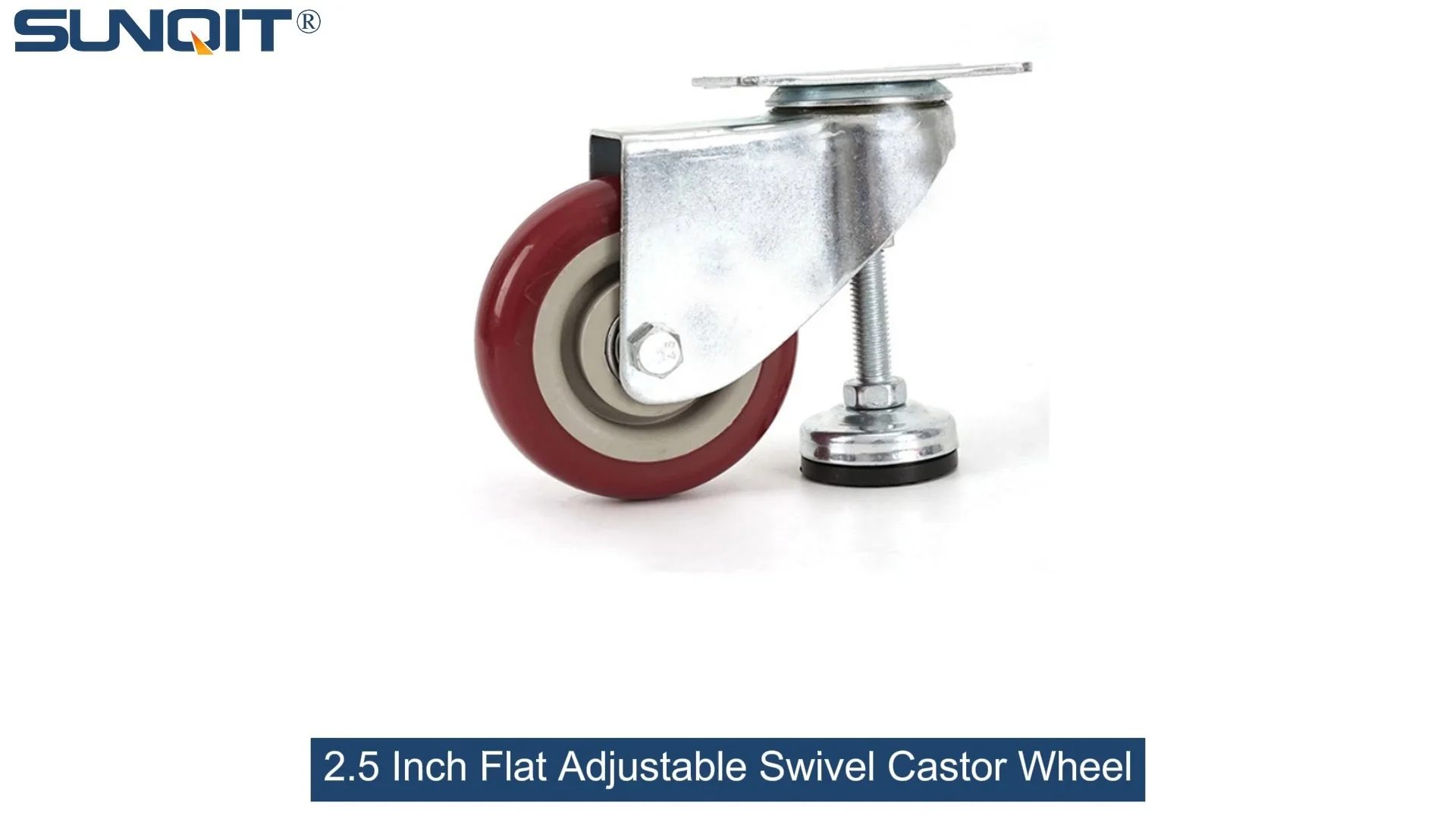
Flat Adjustable Swivel Castor Wheel
Swivel Chair Casters Ball Bearing Wheels Rubber Base with adjustable height function. Resistant to abrasion, impact and corrosion. Heavy payload can hold 80Kgs per pcs,which can make it works at a stable and smooth status.
In the fast-paced world of automotive manufacturing, where precision, efficiency, and adaptability are non-negotiable, every component—no matter how small—plays a critical role in keeping production lines moving. Among these unsung heroes are flat adjustable swivel castor wheels: humble yet powerful tools that quietly enhance mobility, flexibility, and safety across factory floors. This article explores how these castors have become indispensable in automotive settings, with real-world application cases that highlight their impact on lean systems, workbench operations, and roller track integration.
Understanding Flat Adjustable Swivel Castor Wheels: More Than Just "Wheels"
Before diving into their applications, let's take a moment to appreciate what makes flat adjustable swivel castor wheels unique. Unlike standard fixed casters, these are designed with three key features that set them apart in automotive environments: adjustability, swivel capability, and a low-profile "flat" design.
First, adjustability allows users to tweak the height of the castor—often by rotating a threaded stem or using a locking lever—to compensate for uneven factory floors, align work surfaces with conveyor belts, or adapt to different worker heights. This is a game-changer in settings where precision alignment can mean the difference between smooth production flow and costly delays.
Second, the swivel mechanism lets the wheel rotate 360 degrees, making it easy to maneuver heavy loads—like tool cabinets, material carts, or even entire workbenches—in tight spaces, such as between assembly stations or around bulky machinery. This agility is crucial in automotive plants, where floor plans are often dense with equipment.
Finally, the flat design refers to the castor's low mounting height, which keeps equipment stable and minimizes the risk of tipping, even when carrying heavy loads (think engine blocks or transmission components). Many models also include built-in brakes, allowing operators to lock the castors in place once a position is set—preventing accidental movement during critical tasks like component assembly or quality inspections.
Materials matter too. Most automotive-grade flat adjustable swivel castors feature wheels made from polyurethane or rubber, which offer excellent grip on concrete floors, reduce noise (a big plus in busy plants), and resist damage from oil, grease, and chemicals—common hazards in automotive manufacturing. The housings are often constructed from aluminum or steel for durability, ensuring they can withstand the daily wear and tear of factory life.
Application Case 1: Assembly Line Workbenches – Ergonomics Meets Mobility
Scenario: A Mid-Size Automotive Plant's Dashboard Assembly Station
Imagine a typical morning at a automotive assembly plant. In the dashboard assembly area, teams of workers are tasked with mounting intricate components—airbags, infotainment systems, wiring harnesses—to plastic dash frames. Each worker has a specialized workbench equipped with tools, bins for small parts, and a surface to hold the dash frame. For years, these workbenches were fixed to the floor, bolted down to ensure stability. But as the plant expanded its product line to include electric vehicles (EVs) with larger, heavier dashboards (thanks to built-in battery management systems), problems arose.
First, fixed workbenches limited flexibility. When switching between assembling dashboards for gas-powered cars and EVs, workers had to reconfigure tools and bins manually, eating up 15–20 minutes per shift—time that added up to hundreds of lost production hours annually. Second, ergonomics suffered: taller workers hunched over low benches, while shorter ones strained to reach higher components, leading to increased fatigue and even repetitive strain injuries (RSIs).
The solution? Retrofitting the workbenches with flat adjustable swivel castor wheels . Here's how it transformed operations:
- On-Demand Mobility: With a quick release of the brakes, workers could now push the workbench to a staging area during model changes, where a separate team pre-configured tools and parts for the next dashboard type. This cut setup time from 20 minutes to under 5, aligning perfectly with the plant's lean system goals of eliminating waste.
- Height Adjustability: Each workbench's castors featured a 30mm height adjustment range. Workers could now tweak their bench's height to match their waist level, reducing hunching and stretching. Within three months, reported RSIs dropped by 35%, and worker surveys showed a 40% improvement in job satisfaction.
- Stability When Needed: The castors' flat design and locking brakes ensured the workbench stayed rock-steady during assembly. Even when workers applied force to secure tight-fitting components (like wiring connectors), the bench didn't shift—critical for avoiding misalignments that could compromise the final product's quality.
Today, the plant's dashboard assembly line runs 12% more efficiently, and workers often joke that their "magic wheels" have made the job feel "like working at a custom desk, not a factory bench."

Application Case 2: Material Handling Trolleys – Keeping Lean Systems Flowing
Scenario: A Tier-1 Supplier's Engine Component Distribution
Tier-1 suppliers play a vital role in automotive manufacturing, producing parts like engine blocks, cylinder heads, and transmission gears that feed into carmakers' assembly lines. One such supplier, specializing in aluminum engine blocks for luxury vehicles, faced a challenge common in lean manufacturing: how to move heavy, bulky components from machining centers to the shipping area without creating bottlenecks or damaging parts.
The supplier's existing process relied on manual carts with fixed, non-adjustable casters. These carts were sturdy but cumbersome: they weighed 80kg empty, and when loaded with four engine blocks (each 25kg), the total weight hit 180kg. Maneuvering them through narrow aisles between machining stations was a two-person job, and the fixed casters made turning nearly impossible without scraping walls or bumping into equipment. Worse, the factory floor had slight unevenness—leftover from years of heavy machinery vibrations—causing the carts to wobble, which risked scratching the precision-machined engine blocks (a $500+ loss per damaged block).
The supplier turned to flat adjustable swivel castor wheels with a 300kg load capacity per caster (four castors per cart, totaling 1,200kg capacity—way more than needed, but ensuring durability). The results were transformative:
- One-Person Operation: The swivel castors' 360-degree rotation allowed a single worker to navigate the carts through tight aisles with ease. A worker could now push a loaded cart from the machining area to shipping in 5 minutes, down from 12 minutes with the old two-person team. This freed up 140 labor hours per week—hours redirected to more skilled tasks like quality inspection.
- Adjustable Stability: The castors' height adjustment feature let workers level the carts on uneven floors. By raising or lowering individual castors by up to 15mm, the carts stayed perfectly flat, eliminating wobbling and reducing block damage to zero. "I used to hold my breath every time I pushed a cart over that bump near the CNC machines," said one material handler. "Now, I just twist the castor and keep going—no more heart attacks."
- Compatibility with Lean Systems: The supplier had recently adopted a lean system focused on "just-in-time" (JIT) delivery of parts to the carmaker. With mobile, stable carts, they could now schedule smaller, more frequent deliveries of engine blocks, reducing inventory buildup in the shipping area by 25%. This not only saved warehouse space but also minimized the risk of parts becoming obsolete if the carmaker changed specifications.
Today, the supplier's material handling team refers to the castor-equipped carts as their "lean machines," a testament to how even small upgrades can drive big wins in efficiency.

Application Case 3: Roller Track Systems – Bridging Fixed and Mobile Conveyance
Scenario: A Large Automotive Plant's Transmission Assembly Line
Transmissions are among the most complex components in a car, with hundreds of precision parts that must align perfectly to ensure smooth gear shifts. At a major automotive plant in the Midwest, transmission assembly relied on a fixed roller track system: a series of metal rollers mounted to the floor, designed to slide transmission housings from one workstation to the next. While efficient for high-volume production, the fixed track had a critical flaw: it couldn't adapt to short-run specialty transmissions, like those for performance cars or hybrid models, which required different assembly steps.
For example, assembling a transmission for a sports car required an extra step—installing a limited-slip differential—something the fixed roller track couldn't accommodate without building an entirely new track (a $200,000 investment). Instead, workers resorted to manually lifting the 45kg transmission housings off the track and placing them on a separate, temporary table—a process that risked dropping the housing (costing $3,000 per unit) and strained workers' backs.
The plant's engineering team proposed a hybrid solution: modular roller track sections mounted on mobile frames with flat adjustable swivel castor wheels . These "mobile roller tracks" could be wheeled into place alongside the fixed track, creating a temporary extension for specialty transmission assembly. Here's how it worked:
- Seamless Alignment: The castors' height adjustment allowed workers to raise or lower the mobile roller track to match the fixed track's height exactly (within ±2mm). This eliminated gaps between the two tracks, ensuring transmission housings slid smoothly from the fixed to the mobile section without getting stuck—a common issue with unaligned tracks that had previously caused 2–3 production stops per day.
- Quick Setup and Removal: Each mobile roller track section weighed 120kg but, thanks to the swivel castors, could be moved by two workers in under 10 minutes. When specialty transmission production ended, the sections were wheeled to a storage area, freeing up floor space for other tasks. This flexibility let the plant handle short runs of 50–100 specialty transmissions without disrupting the main assembly line.
- Durability in Harsh Environments: Transmission assembly involves lubricants and metal shavings, which can damage standard casters. The plant chose castors with sealed bearings and polyurethane wheels resistant to oil and abrasion. After six months of use, the castors showed no signs of wear, even in areas where metal shavings were common.
The mobile roller track system became so popular that the plant expanded its use to other areas, including battery pack assembly for EVs. As one engineer put it: "We used to think of roller tracks as permanent fixtures. Now, with these castors, they're just another tool we can rearrange like Lego blocks."

Choosing the Right Flat Adjustable Swivel Castor Wheels for Automotive Use
Not all flat adjustable swivel castor wheels are created equal, and selecting the right model for your automotive plant depends on several factors. To help, we've compiled a quick guide based on the most common needs in automotive manufacturing:
| Need | Key Feature to Look For | Example Use Case |
|---|---|---|
| Heavy Loads (e.g., engine blocks, transmissions) | Load capacity ≥ 300kg per castor; steel or aluminum housing | Material handling trolleys moving engine components |
| Precision Alignment (e.g., workbenches, roller tracks) | Adjustment range ≥ 20mm; fine-threaded stem for precise tweaking | Assembly line workbenches switching between model types |
| Harsh Environments (oil, grease, metal shavings) | Sealed bearings; polyurethane or rubber wheels resistant to chemicals | Transmission or engine assembly areas |
| Ergonomics (worker comfort) | Easy-to-use adjustment mechanism (e.g., hand crank vs. tool-required) | Workbenches for workers of varying heights |
| Safety (preventing accidental movement) | Dual-lock brakes (locks both swivel and wheel rotation) | Mobile maintenance stations during vehicle repairs |
It's also worth consulting with a lean system supplier or castor specialist who understands automotive workflows. Many suppliers offer on-site assessments, helping you identify pain points (e.g., bottlenecks, ergonomic issues) and recommend castor models tailored to your specific needs. For example, a supplier might suggest low-profile castors for workbenches in tight spaces or heavy-duty swivel castors for outdoor loading docks (where uneven pavement is common).
Beyond the Factory Floor: The Future of Castor Technology in Automotive Manufacturing
As automotive manufacturing evolves—with the rise of EVs, automation, and "smart factories"—flat adjustable swivel castor wheels are evolving too. Here are two trends to watch:
1. IoT-Enabled Castors: Imagine castors embedded with sensors that track load weight, movement frequency, and maintenance needs. In a smart factory, this data could alert managers if a castor is carrying more weight than its capacity (preventing failure) or if a workbench hasn't been moved in weeks (flagging potential waste in the lean system ). Early prototypes of these "smart castors" are already being tested by major automotive suppliers, with full deployment expected within the next 3–5 years.
2. Eco-Friendly Materials: As carmakers commit to sustainability (e.g., carbon-neutral factories by 2030), castor manufacturers are exploring recycled materials. For example, some companies now produce polyurethane wheels using 30% recycled plastic, without sacrificing durability. Aluminum housings are also becoming more popular, as aluminum is lighter than steel (reducing energy use during transportation) and 100% recyclable.
Even with these advancements, the core value of flat adjustable swivel castor wheels remains unchanged: they empower automotive plants to be more flexible, efficient, and worker-centric. In an industry where every second and every cent counts, these small, unassuming components are proving that sometimes, the biggest innovations come from the ground up.
Conclusion: The Quiet Revolution of Flat Adjustable Swivel Castor Wheels
From assembly line workbenches to material handling trolleys, from roller track systems to maintenance stations, flat adjustable swivel castor wheels have quietly revolutionized automotive manufacturing. By combining mobility, adjustability, and durability, they've helped plants reduce waste, improve ergonomics, and adapt to changing production needs—all while supporting lean system goals and worker well-being.
As one plant manager put it: "We used to think of castors as 'just wheels.' Now, we see them as strategic tools. When you can move a workbench in 30 seconds instead of 30 minutes, or reduce injuries by letting workers adjust their stations, you're not just improving production—you're building a better workplace."
So the next time you walk through an automotive factory, take a moment to look down. Chances are, under those workbenches, carts, and roller tracks, there's a set of flat adjustable swivel castor wheels hard at work—keeping the industry moving forward, one smooth roll at a time.