- Company Articles
- Products and Technology
- Product knowledge
- Flat Adjustable Swivel Castor Wheels: Key Features for Pharmaceutical Manufacturing

Flat Adjustable Swivel Castor Wheels: Key Features for Pharmaceutical Manufacturing
Related Product
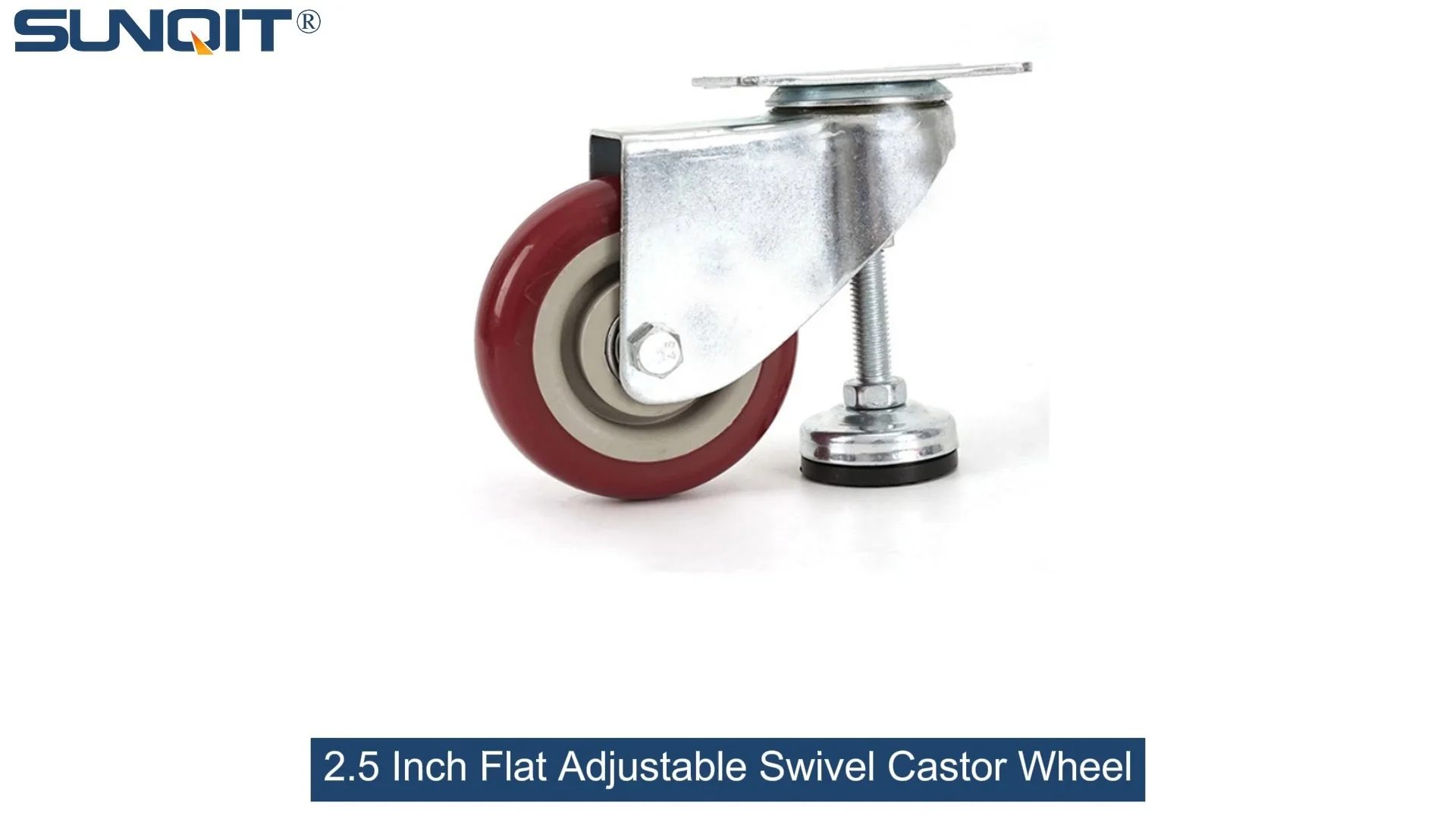
Flat Adjustable Swivel Castor Wheel
Swivel Chair Casters Ball Bearing Wheels Rubber Base with adjustable height function. Resistant to abrasion, impact and corrosion. Heavy payload can hold 80Kgs per pcs,which can make it works at a stable and smooth status.
In the high-stakes world of pharmaceutical manufacturing, where precision, compliance, and efficiency are non-negotiable, even the smallest components can have a profound impact on overall operations. Among these unsung heroes are flat adjustable swivel castor wheels—seemingly simple devices that play a critical role in keeping production lines moving, workstations flexible, and cleanrooms compliant. Unlike ordinary casters, these specialized components are engineered to meet the unique demands of pharmaceutical environments, where contamination risks, strict regulatory standards, and the need for adaptability reign supreme. In this article, we'll explore why flat adjustable swivel castor wheels have become indispensable in pharmaceutical settings, diving into their key features, real-world applications, and how they integrate seamlessly with lean systems and essential equipment like workbenches and conveyors.
The Unique Demands of Pharmaceutical Manufacturing
Before delving into the specifics of flat adjustable swivel castor wheels, it's important to understand the environment they're designed to operate in. Pharmaceutical manufacturing facilities are governed by rigorous standards, such as Good Manufacturing Practices (GMP), which dictate everything from air quality and surface cleanliness to equipment design and workflow efficiency. Cleanrooms, for example, require surfaces that are easy to sanitize, materials that resist chemical corrosion, and equipment that minimizes particle generation. Additionally, the industry's focus on lean systems—aimed at reducing waste, optimizing flow, and enhancing flexibility—means that production setups must be easily reconfigurable to adapt to changing batch sizes, product types, or regulatory requirements.
Mobility is another critical factor. In a typical pharmaceutical plant, materials, tools, and even entire workstations often need to be moved to accommodate different stages of production, maintenance, or cleaning. However, this mobility cannot come at the expense of stability; equipment like workbenches used for precise tasks (e.g., weighing active pharmaceutical ingredients or assembling medical devices) must remain steady when in use. Similarly, conveyors that transport sensitive materials need to maintain consistent alignment to prevent spills or contamination. This delicate balance between mobility and stability is where flat adjustable swivel castor wheels truly shine.
What Are Flat Adjustable Swivel Castor Wheels?
At their core, flat adjustable swivel castor wheels are wheeled components mounted to the base of equipment to enable movement, rotation, and height adjustment. Unlike fixed castors, which only move forward and backward, swivel castors feature a rotating head that allows 360-degree movement, making equipment easier to maneuver in tight spaces—an essential feature in crowded cleanrooms or production lines. The "flat adjustable" aspect refers to their ability to fine-tune the height of the equipment they support, often via a threaded stem or adjustable plate, ensuring that workbenches, conveyors, or trolleys remain level even on uneven floors. This adjustability is critical in pharmaceutical settings, where uneven surfaces could compromise precision tasks or create gaps that trap contaminants.
To better appreciate their advantages, let's compare flat adjustable swivel castor wheels to other common castor types used in industrial settings:
| Feature | Fixed Castor | Standard Swivel Castor | Flat Adjustable Swivel Castor |
|---|---|---|---|
| Mobility | Limited to forward/backward movement | 360-degree rotation for easy maneuvering | 360-degree rotation + height adjustment for versatile positioning |
| Height Adjustment | None; fixed height | None; fixed height | Yes (typically 10-50mm range) for leveling on uneven surfaces |
| Load Capacity | High (but limited by mobility) | Moderate to high | High (often 200-500kg per castor) with stable weight distribution |
| Locking Mechanism | Rarely included | Basic wheel lock (prevents rolling) | Dual-locking (wheel + swivel head) for total stability when in use |
| ESD Compatibility | Not standard | Optional (specialized wheels) | Available with ESD-safe wheels and conductive materials |
| Best For | Heavy, stationary equipment (e.g., large mixers) | Light to medium equipment needing basic mobility (e.g., storage racks) | Precision equipment in regulated environments (e.g., workbenches, conveyors, ESD workstations) |
As the table illustrates, flat adjustable swivel castor wheels are uniquely positioned to address the dual needs of mobility and precision in pharmaceutical manufacturing. Now, let's explore their key features in more detail.

Key Features of Flat Adjustable Swivel Castor Wheels for Pharmaceutical Use
Not all castor wheels are created equal, and those designed for pharmaceutical manufacturing come with a suite of specialized features tailored to the industry's strict requirements. Below are the most critical attributes that set them apart:
1. Precision Height Adjustment
One of the defining features of flat adjustable swivel castor wheels is their ability to (fine-tune) height with exceptional precision. This is typically achieved via a threaded stem that screws into the equipment base, allowing operators to raise or lower individual castors by small increments (often as little as 1mm). Why does this matter in pharma? For starters, uneven floors are common in older facilities or areas where heavy equipment has caused minor (settling). A workbench that's even slightly tilted could lead to inaccurate measurements when weighing ingredients, while a misaligned conveyor might cause bottles or vials to tip over. By adjusting the height of each castor, operators can ensure that equipment remains perfectly level, maintaining the integrity of sensitive processes.
Height adjustment also plays a role in workflow optimization. For example, a conveyor line might need to align with multiple workstations of varying heights to facilitate seamless material transfer. With adjustable castors, the conveyor can be raised or lowered to match each station, eliminating the need for manual lifting (which increases the risk of human error or injury) and streamlining the production flow—an core principle of lean systems.
2. Dual-Locking Mechanisms for Stability
Mobility is useless if equipment moves unexpectedly during use. That's why flat adjustable swivel castor wheels are equipped with robust locking systems, often dual-locking mechanisms that secure both the wheel (preventing rolling) and the swivel head (preventing rotation). In pharmaceutical settings, this is non-negotiable: imagine a workbench used for filling capsules suddenly shifting, causing a batch of expensive API to spill, or an ESD workstation (used for assembling electrostatic-sensitive components like sensors) moving mid-task, leading to static discharge and product damage.
These locks are designed to be easy to engage and disengage, even when wearing gloves (common in cleanrooms), and are constructed from materials that resist corrosion from frequent cleaning with disinfectants. Some advanced models also feature "total lock" systems, where a single lever engages both the wheel and swivel lock simultaneously, saving time during equipment setup.
3. Chemical-Resistant and Easy-to-Clean Materials
Pharmaceutical facilities rely heavily on cleaning agents, sanitizers, and disinfectants to maintain GMP compliance. Flat adjustable swivel castor wheels must therefore be constructed from materials that can withstand repeated exposure to these chemicals without degrading, cracking, or leaching harmful substances. Common materials include stainless steel (for the swivel head and frame), which resists rust and corrosion, and thermoplastic elastomers (TPE) or polyurethane (PU) for the wheels, which are non-marking, chemical-resistant, and gentle on cleanroom floors (reducing the risk of scratches that could harbor bacteria).
Cleanability is another key consideration. Castors with smooth, crevice-free surfaces prevent the buildup of dirt, dust, or microbial growth. Many models feature sealed bearings to keep lubricants (which can attract particles) contained and to prevent contaminants from entering the wheel mechanism. Even the design of the swivel head is optimized for cleaning: rounded edges and minimal gaps ensure that disinfectants can reach all surfaces, reducing the risk of cross-contamination between batches.
4. ESD Compatibility for Sensitive Environments
Electrostatic discharge (ESD) is a silent threat in pharmaceutical manufacturing, particularly when handling electronic components (e.g., sensors in medical devices) or powders that can become electrostatically charged. An ESD workstation, for example, requires all equipment—including castor wheels—to dissipate static electricity safely to ground, preventing sparks that could ignite flammable substances or damage sensitive electronics. Flat adjustable swivel castor wheels designed for ESD environments feature conductive wheels (often made from carbon-filled PU or rubber) and metal components that create a continuous path to ground, ensuring that static charges are safely dissipated rather than accumulating.
These ESD-compatible castors are tested to meet industry standards like ANSI/ESD S20.20, which specifies electrostatic protection requirements. For pharmaceutical companies, this compliance is not just about product safety; it's also a regulatory requirement, as non-compliant equipment could lead to costly recalls or facility shutdowns.
5. High Load Capacity for Heavy Equipment
Pharmaceutical equipment is rarely lightweight. Workbenches may be loaded with precision scales, mixers, or analytical instruments; conveyors often carry heavy batches of materials; and mobile racks can hold hundreds of kilograms of raw ingredients or finished products. Flat adjustable swivel castor wheels are engineered to handle these loads without compromising performance. Depending on the model, they can support anywhere from 200kg to over 1000kg per castor, with reinforced frames and heavy-duty bearings that distribute weight evenly. This high load capacity ensures that even fully loaded equipment remains stable during movement and use, reducing the risk of tipping or damage to both the equipment and the facility.

Integration with Lean Systems and Pharmaceutical Workflows
Lean systems have revolutionized pharmaceutical manufacturing by focusing on eliminating waste, improving process flow, and enhancing flexibility. Flat adjustable swivel castor wheels align perfectly with these goals, serving as a "silent enabler" of lean principles in several ways:
Waste Reduction: In traditional setups, fixed equipment often leads to waste in the form of unnecessary movement (e.g., operators walking long distances to access tools) or downtime (e.g., waiting for a dedicated workstation to become available). With adjustable, mobile castors, workbenches and conveyors can be moved directly to the point of need, reducing travel time and keeping production flowing. For example, a mobile workbench equipped with flat adjustable swivel castor wheels can be wheeled to a filling line during peak hours, then repositioned to an inspection area once the batch is complete—eliminating the need for duplicate equipment.
Flexible Workflows: Pharmaceutical production runs are often small-batch, with frequent changes in product type. Lean systems require that facilities can adapt quickly to these changes, and adjustable castors make this possible. A conveyor line, for instance, can be reconfigured in minutes by adjusting the height of its castors to align with new processing equipment, or a row of ESD workstations can be rearranged to accommodate a larger team during a high-priority project. This flexibility reduces the need for costly, permanent infrastructure changes and allows facilities to respond rapidly to market demands.
Improved Ergonomics: Lean systems also prioritize the well-being of operators, as fatigued workers are more prone to errors. Flat adjustable swivel castor wheels contribute to ergonomic safety by allowing workbenches and equipment to be adjusted to the optimal height for each operator, reducing strain on backs, shoulders, and wrists. This not only improves productivity but also lowers the risk of workplace injuries—a critical factor in maintaining consistent production output.

Real-World Applications in Pharmaceutical Settings
To better illustrate the value of flat adjustable swivel castor wheels, let's look at some common applications in pharmaceutical manufacturing:
Mobile Workbenches for Batch Processing
Workbenches are the workhorses of pharmaceutical production, used for tasks ranging from weighing and mixing ingredients to assembling medical devices. Equipped with flat adjustable swivel castor wheels, these workbenches become highly versatile tools. For example, in a sterile compounding area, a mobile workbench can be moved to a laminar flow hood for aseptic processing, then locked in place with dual-locking castors to ensure stability during precise measurements. After use, the workbench can be wheeled to a cleaning station, where its height-adjustable castors allow it to be raised for thorough sanitization of the undersides—an area often neglected in fixed workbenches.
Conveyors for Material Transport
Conveyors are essential for moving materials between production stages, but fixed conveyors are rigid and difficult to modify. Conveyors mounted on flat adjustable swivel castor wheels, however, can be repositioned to connect different processing lines, adjusted in height to align with mixers or filling machines, and even temporarily removed to accommodate deep cleaning. In one case study, a pharmaceutical company reduced changeover time between batches by 40% by switching to mobile conveyors with adjustable castors, as they could quickly reconfigure the line without disassembling and reassembling fixed components.
ESD Workstations for Sensitive Electronics
Many pharmaceutical products, such as injectable pens or diagnostic devices, include electronic components that are sensitive to static electricity. ESD workstations used to assemble these components must be grounded, and their castor wheels play a key role in this. Flat adjustable swivel castor wheels with conductive materials ensure that any static charge generated during assembly is safely dissipated to ground, protecting both the product and the operator. Additionally, the height-adjustable feature allows the workstation to be leveled, ensuring that delicate components (e.g., circuit boards) lie flat during soldering or testing, reducing the risk of defects.
Mobile Racks and Trolleys for Material Storage
Raw materials, packaging supplies, and finished products often need to be stored in secure, accessible locations. Mobile racks and trolleys, equipped with flat adjustable swivel castor wheels, allow these materials to be moved to production lines as needed, reducing the need for manual (carrying) and minimizing the risk of spills. For example, a trolley loaded with empty vials can be wheeled directly to a filling line, adjusted to the exact height of the filling machine using the castors' height adjustment, and locked in place—streamlining the transfer process and reducing waste.
Choosing the Right Flat Adjustable Swivel Castor Wheels
With so many options available, selecting the right flat adjustable swivel castor wheels for a pharmaceutical facility requires careful consideration of several factors:
- Load Capacity: Calculate the total weight of the equipment plus the maximum load it will carry, then divide by the number of castors to determine the required load rating per castor. It's always wise to choose a castor with a higher load capacity than needed to account for unexpected stress.
- Environmental Conditions: Consider the type of cleaning agents used, the presence of ESD risks, and the floor surface (e.g., concrete, vinyl, or epoxy). For ESD environments, opt for conductive materials; for harsh chemicals, choose stainless steel frames and PU wheels.
- Locking Requirements: Determine whether a single wheel lock will suffice or if dual-locking (wheel + swivel) is necessary. In high-precision applications, dual-locking is strongly recommended.
- Height Adjustment Range: Measure the maximum floor unevenness in the area where the equipment will be used to ensure the castors can compensate for it. Most adjustable castors offer a range of 10-50mm, but custom options are available for extreme cases.
- Certifications: Look for castors that comply with GMP, FDA, and ESD standards (e.g., ANSI/ESD S20.20) to ensure regulatory compliance.
Working with a reputable supplier who understands the unique needs of pharmaceutical manufacturing is also critical. A knowledgeable supplier can help assess your specific requirements, recommend the right materials and features, and even provide custom solutions for specialized applications.
Conclusion: Small Components, Big Impact
Flat adjustable swivel castor wheels may not be the most glamorous components in pharmaceutical manufacturing, but their impact on compliance, efficiency, and safety cannot be overstated. By combining mobility with stability, precision height adjustment with robust locking, and chemical resistance with ESD compatibility, these castors enable pharmaceutical facilities to meet the strict demands of GMP, optimize workflows through lean systems, and adapt quickly to changing production needs. Whether supporting a mobile workbench in a cleanroom, aligning a conveyor line with processing equipment, or ensuring the stability of an ESD workstation, flat adjustable swivel castor wheels are truly the unsung heroes that keep pharmaceutical production moving forward—one precise, stable roll at a time.