- Company Articles
- Products and Technology
- Product knowledge
- Flat Adjustable Swivel Castor Wheels: Longevity & Durability in High-Cycle Environments

Flat Adjustable Swivel Castor Wheels: Longevity & Durability in High-Cycle Environments
Related Product
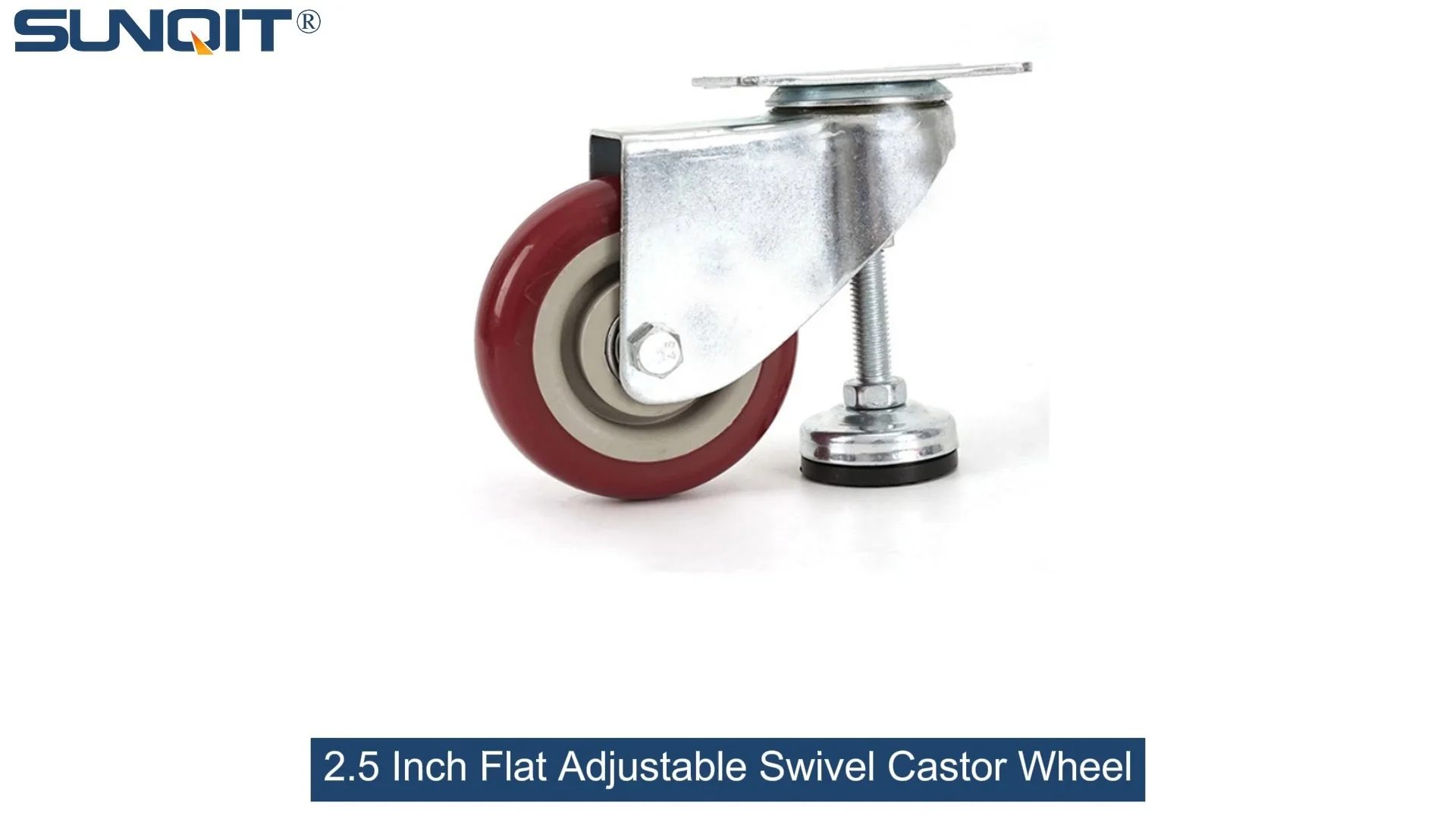
Flat Adjustable Swivel Castor Wheel
Swivel Chair Casters Ball Bearing Wheels Rubber Base with adjustable height function. Resistant to abrasion, impact and corrosion. Heavy payload can hold 80Kgs per pcs,which can make it works at a stable and smooth status.
In the bustling world of manufacturing, warehousing, and production, every second counts. From the constant hum of assembly lines to the steady flow of materials across warehouse floors, the ability to move equipment smoothly, safely, and repeatedly isn't just a convenience—it's the backbone of efficiency. Yet, for all the attention given to heavy machinery and high-tech systems, there's one unsung hero quietly bearing the load: the castor wheel. Specifically, flat adjustable swivel castor wheels. These small but mighty components are the difference between a seamless workflow and a day bogged down by stuck trolleys, wobbly workbenches, or equipment that just can't keep up with the pace. In high-cycle environments—where equipment is moved dozens of times daily, loads shift, and floors are rarely perfect—longevity and durability aren't just features; they're non-negotiable. Let's dive into why flat adjustable swivel castor wheels are the workhorses of these demanding spaces, and how they stand up to the test of time.
What Are Flat Adjustable Swivel Castor Wheels, Anyway?
Before we get into their superpowers, let's clarify what sets these castors apart. At first glance, a castor wheel might seem simple: a wheel mounted on a frame. But flat adjustable swivel castor wheels are engineered for precision and adaptability. Let's break down the name: "flat" refers to their low-profile mounting plate, which sits close to the equipment it's attached to, keeping the center of gravity low and reducing wobble. "Adjustable" means you can tweak their height—critical for leveling workbenches or trolleys on uneven floors, ensuring stability even when loads are heavy. And "swivel"? That's the 360-degree rotation that lets you maneuver tight corners, pivot in place, and navigate narrow aisles without breaking a sweat.
Unlike fixed castors (which only roll forward and backward) or non-adjustable swivel castors (which can rotate but can't be leveled), these castors combine mobility with stability. Think of them as the all-terrain vehicles of the castor world—equally at home on smooth factory floors, rough concrete warehouses, or even slightly sloped loading docks. They're the go-to choice for lean pipe workbenches, turnover trolleys, and material racks—equipment that needs to be both stationary (when in use) and mobile (when reconfiguring a workspace or transporting goods).
Key Features That Drive Longevity & Durability
High-cycle environments throw a lot at castor wheels: daily use, heavy loads, debris, and even chemical spills. To survive (and thrive), flat adjustable swivel castors need more than just a tough exterior—they need smart engineering. Here's what makes them built to last:
1. Heavy-Duty Construction Materials
The secret to durability starts with what they're made of. Most high-quality flat adjustable swivel castors feature mounting plates and housings crafted from galvanized steel or aluminum—metals that resist rust, corrosion, and bending under pressure. Galvanized steel, in particular, stands up to moisture and chemicals, making it ideal for factories where spills are common. The wheels themselves are no afterthought, either. You'll find options like polyurethane, rubber, nylon, or even steel, each tailored to specific environments:
| Wheel Material | Best For | Load Capacity (Avg) | Resistance to Wear | Noise Level |
|---|---|---|---|---|
| Polyurethane | Smooth floors, heavy loads, indoor use | 500–1,500 lbs per castor | High (resists abrasion) | Low (quiet on concrete) |
| Rubber | Uneven floors, delicate surfaces (e.g., polished concrete) | 300–800 lbs per castor | Medium (flexible, absorbs shock) | Very low (cushioned ride) |
| Nylon | Rough surfaces, chemical exposure | 800–2,000 lbs per castor | Very high (hard, non-marking) | Medium (firm roll) |
| Steel | Extreme heavy loads, outdoor use | 1,000–3,000 lbs per castor | High (but can mark floors) | High (loud on hard surfaces) |
For most high-cycle indoor environments, polyurethane is a crowd favorite. It balances load capacity, wear resistance, and noise—critical for keeping workers focused and reducing fatigue from constant clattering. Rubber is great for ESD workstations, where static control is key, and you need to protect sensitive electronics from shocks.
2. Precision Bearings for Smooth Swivel (Even Under Load)
A swivel castor is only as good as its ability to rotate—especially when it's carrying 500+ pounds. Cheap castors often have loose or poorly lubricated swivel joints that seize up over time, turning a smooth pivot into a struggle. Flat adjustable swivel castors, though, use double ball bearings or roller bearings in their swivel mechanism. These bearings distribute weight evenly, reduce friction, and keep rotation smooth even after months of daily use. Some models even add a raceway (a grooved ring) around the bearings to protect them from dust, dirt, and debris—common culprits of seized joints in warehouses. When you're moving a lean pipe workbench loaded with tools and parts, the last thing you want is a castor that "sticks" mid-turn. Precision bearings eliminate that frustration.
3. Adjustable Height: Stability When You Need It Most
Ever tried working at a wobbly workbench? It's not just annoying—it's a safety hazard. Uneven floors are a fact of life in most industrial spaces: cracks, bumps, or even slight slopes from poor installation. Flat adjustable swivel castors solve this with height-adjustable stems or threaded bolts. Turn the adjustment nut, and the castor extends or retracts, leveling the equipment in seconds. This isn't just about comfort; it's about load distribution. When a workbench is level, the weight is spread evenly across all four castors, reducing strain on individual wheels and joints. Over time, this even distribution prevents premature wear—so your castors last longer, and your equipment stays safer.
4. Reinforced Mounting Plates: No More Bending or Breaking
The connection between the castor and the equipment it's attached to is another weak point in cheap castors. Imagine moving a heavy turnover trolley: if the mounting plate bends or the bolts pull through, the castor could detach—risking damage to the load or injury to workers. Flat adjustable swivel castors use thick, reinforced mounting plates (often 3–5mm steel) with pre-drilled holes that align with standard lean pipe workbench frames or trolley bases. Some even add gussets (triangular support brackets) to the plate, strengthening the connection to the swivel housing. This reinforcement ensures the castor can handle the stress of sudden starts, stops, and turns without flexing or failing.

Why High-Cycle Environments Demand These Castors
Let's paint a picture: a busy electronics assembly plant. Workers are building circuit boards on lean pipe workbenches that need to be repositioned every hour to align with the assembly line. Each workbench holds tools, components, and a static-sensitive ESD mat—easily 300 pounds. Trolleys loaded with PCBs roll between stations, navigating around machinery and other workers. At the end of the day, everything is cleaned, reorganized, and moved again for the next shift. This is a high-cycle environment: equipment is in constant motion, loads are consistent, and downtime is catastrophic. Here's why flat adjustable swivel castors are non-negotiable here:
They Reduce Downtime (A Lot)
In high-cycle settings, even 10 minutes of downtime to fix a stuck castor can throw off production schedules. Cheap castors fail often: wheels crack, swivel joints seize, or adjustment mechanisms strip. Flat adjustable swivel castors, with their heavy-duty materials and precision parts, rarely need replacing. One manufacturer we spoke to reported replacing non-adjustable castors every 6–8 months in their assembly line; after switching to flat adjustable swivel models, they're now on year 3 with zero replacements. That's not just cost savings—it's uninterrupted workflow.
They Protect Workers (and Loads)
A stuck castor isn't just an annoyance—it's a safety risk. When a trolley jolts or a workbench wobbles, workers strain to control it, leading to back injuries or falls. Loads can shift, damaging parts or causing spills. Flat adjustable swivel castors' smooth swivel and stable base reduce these risks. The 360-degree rotation means less force is needed to maneuver, and the adjustable height keeps equipment steady, even with uneven loads. Plus, many models come with built-in brakes (a key caster accessory) that lock the wheel in place when the equipment is stationary—no more runaway trolleys during loading or assembly.
They Adapt to Changing Needs
Modern manufacturing spaces aren't static. Lean principles, agile production, and quick reconfigurations mean workbenches, racks, and trolleys are constantly being moved to optimize flow. Flat adjustable swivel castors make this flexibility possible. Need to shift a lean pipe workbench from one side of the factory to the other? No problem—their swivel action makes tight turns easy. Adding a new shelf to a material rack and need to level it? Just adjust the castor height. They grow with your workspace, so you don't have to replace equipment (or castors) every time you reorganize.

The Role of Caster Accessories in Extending Lifespan
Even the toughest castors need a little help to reach their full lifespan. That's where caster accessories come in—small add-ons that protect, reinforce, or enhance performance. Think of them as the "maintenance crew" for your castors:
Brakes: Lock It Down When You Need To
Most flat adjustable swivel castors come with optional brake systems—either side-lock (which press a pad against the wheel to stop rotation) or total-lock (which lock both the wheel and the swivel joint, preventing movement in any direction). Brakes aren't just for safety; they reduce wear. When a workbench is stationary, the brakes take the strain, so the swivel joint and wheel bearings aren't stressed by accidental shifts. Over time, this reduces friction and extends component life.
Axle Caps and Seals: Keep the Gunk Out
Dust, dirt, and metal shavings are everywhere in factories. If they get into the wheel bearings or swivel joint, they act like sandpaper, grinding down parts. Axle caps (plastic or metal covers that fit over the wheel axle) and rubber seals around the swivel housing block debris from entering. They're cheap, easy to install, and can double the lifespan of bearings.
Replacement Wheels: Swap, Don't Scrap
Even the toughest wheels wear down over time—especially if they're used on rough floors. Instead of replacing the entire castor, many flat adjustable models let you swap just the wheel. Unscrew the axle, pop off the old wheel, and install a new one. This saves money and reduces waste, and it's a quick fix that keeps your castors rolling without downtime.
Mounting Hardware: Secure and Sturdy
It might seem small, but using the right bolts and washers matters. Cheap castors often come with flimsy screws that strip or loosen over time. High-quality flat adjustable swivel castors are paired with heavy-duty bolts (often grade 8 steel) and lock washers to prevent loosening from vibration. When attaching to a lean pipe workbench or trolley, these bolts ensure the castor stays put—no wobbling, no shifting, and no stress on the mounting plate.

Real-World Performance: How These Castors Stand Up to Daily Use
Numbers and specs are great, but let's hear from the people who use these castors daily. Take Maria, a production supervisor at a automotive parts plant in Michigan. "We used to replace castors on our material racks every 4–5 months," she says. "The old ones would seize up, or the wheels would crack under the weight of engine parts. We switched to flat adjustable swivel castors with polyurethane wheels and double ball bearings, and now we're at 18 months with zero issues. The adjustability is a game-changer—our factory floor has a slight slope, and now we can level the racks so parts don't roll off. The workers love them because they're so easy to move, even when fully loaded."
Or consider Raj, who manages a warehouse for a e-commerce fulfillment center. "Our turnover trolleys move 50+ times a day, carrying boxes up to 400 pounds. We tried non-adjustable swivel castors first, but they'd get stuck on the warehouse's concrete seams. The flat adjustable ones glide over those seams, and the height adjustment means we can line the trolleys up perfectly with the conveyor belts—no more lifting boxes to load them. We've cut down on worker strain injuries, and the trolleys last twice as long now."
Maintenance Tips to Maximize Lifespan
Even the most durable castors need a little TLC to keep them rolling smoothly for years. Here's a quick maintenance checklist to follow:
- Clean them regularly: Use a brush or compressed air to remove dirt, hair, or debris from the swivel joint and wheel axles. For sticky residue (like oil or grease), wipe with a damp cloth and mild detergent.
- Lubricate moving parts: Every 3–6 months (more often in dusty environments), apply a lithium-based grease to the swivel joint and wheel bearings. This keeps rotation smooth and prevents rust.
- Check for wear: Inspect wheels for cracks, flat spots, or worn tread. If the wheel wobbles when spun, the bearing might be failing. Tighten loose bolts on the mounting plate and adjuster nut.
- Test the brakes: Ensure brake pads make full contact with the wheel, and the swivel lock (if equipped) engages securely. replace worn brake pads immediately—they're cheap, and a stuck brake can damage the wheel.
- Re-level as needed: Over time, floors can shift or castor threads can loosen. Check the equipment's level monthly and adjust the castors if it wobbles.
Choosing the Right Flat Adjustable Swivel Castor for Your Space
Not all flat adjustable swivel castors are created equal. To pick the right one for your high-cycle environment, ask yourself these questions:
What's the maximum load per castor?
Calculate the total weight of your equipment plus the heaviest load it will carry, then divide by the number of castors (usually 4). Add 30% to that number for a safety buffer—you don't want to max out the castor's capacity daily.
What type of floor will they roll on?
Smooth concrete or tile? Polyurethane or rubber wheels work best (quiet and non-marking). Rough concrete or asphalt? Nylon or steel wheels resist abrasion. For ESD workstations, look for conductive wheels that dissipate static electricity.
How much maneuverability do you need?
Tight corners or narrow aisles? Choose a smaller wheel (4–5 inches) for better swivel radius. Long, straight runs? Larger wheels (6–8 inches) roll more easily and reduce rolling resistance.
Do you need brakes or other accessories?
If the equipment stays stationary for long periods, brakes are a must. For outdoor use or wet environments, look for corrosion-resistant materials (stainless steel housing, sealed bearings).
Final Thoughts: Invest in Castors That Invest in Your Productivity
In high-cycle environments, every component matters—but few have as much impact on daily operations as castor wheels. Flat adjustable swivel castor wheels aren't just "parts"; they're an investment in efficiency, safety, and longevity. By combining heavy-duty materials, precision engineering, and smart adjustability, they turn frustrating, wobbly, short-lived equipment into reliable, smooth-moving assets that keep up with your busiest days. Whether you're outfitting a lean pipe workbench, a fleet of turnover trolleys, or a row of material racks, choosing castors built for durability means fewer replacements, less downtime, and happier workers. After all, in the world of manufacturing and warehousing, the best castors are the ones you never have to think about—because they just work, day in and day out.