- Company Articles
- Products and Technology
- Product knowledge
- Flat Adjustable Swivel Castor Wheels: Noise Reduction Benefits in Workshop Environments

Flat Adjustable Swivel Castor Wheels: Noise Reduction Benefits in Workshop Environments
Related Product
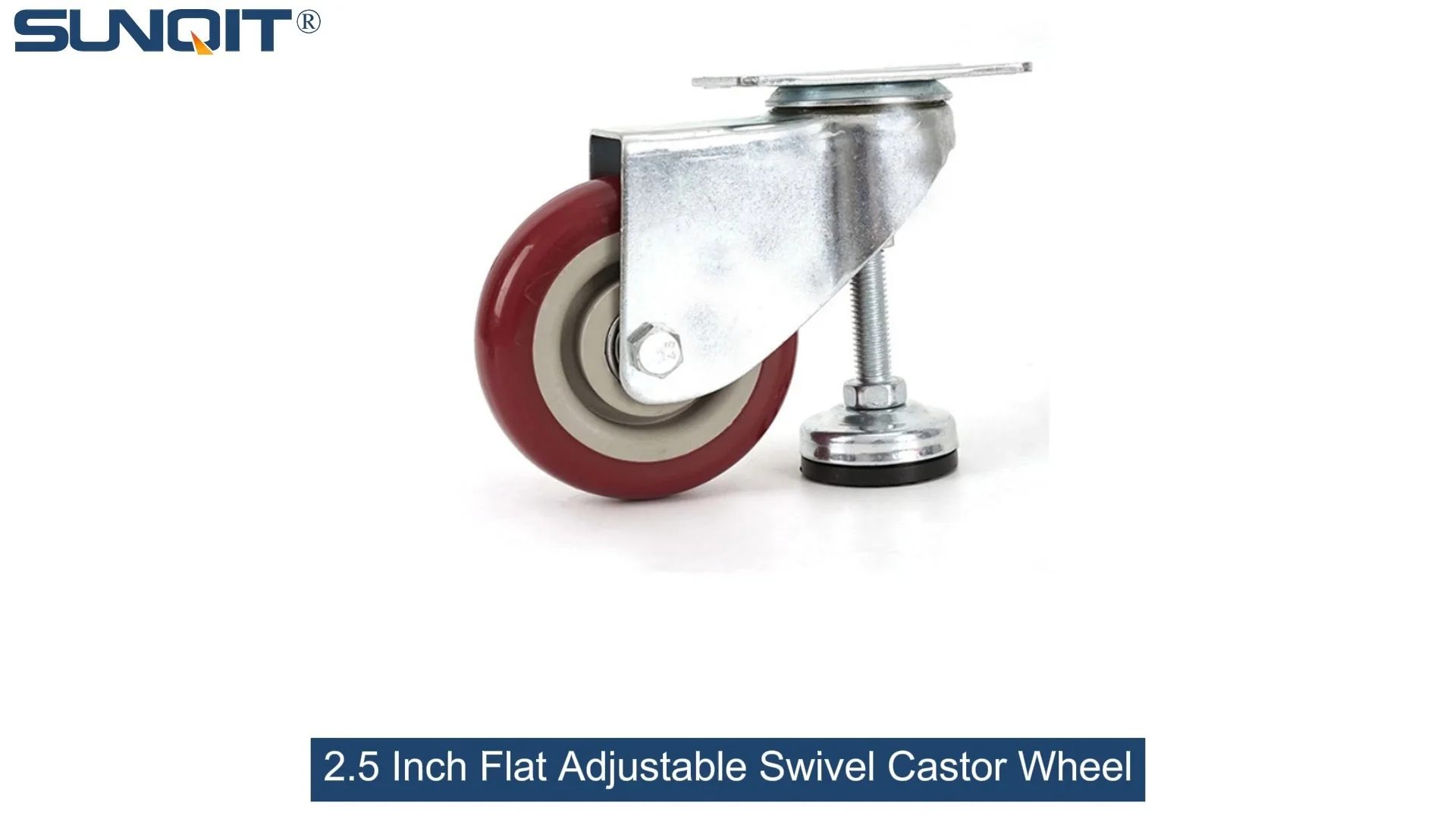
Flat Adjustable Swivel Castor Wheel
Swivel Chair Casters Ball Bearing Wheels Rubber Base with adjustable height function. Resistant to abrasion, impact and corrosion. Heavy payload can hold 80Kgs per pcs,which can make it works at a stable and smooth status.
Walk into any busy manufacturing or assembly workshop, and you'll likely be greeted by a symphony of sounds: the whir of power tools, the clank of metal parts, the buzz of conveyor belts, and—if you listen closely—the persistent, grating noise of carts, workbenches, and equipment being moved across the floor. For many workers, this background noise isn't just an annoyance; it's a daily reality that chips away at focus, increases stress, and even poses long-term health risks. While larger machinery often gets the blame for workshop noise, there's a quieter culprit that's easy to overlook: the caster wheels beneath the tools and equipment we rely on every day. Enter the flat adjustable swivel castor wheel—a small but mighty component that's changing the game for workshop acoustics. In this article, we'll explore how these specialized caster wheels reduce noise, why that matters for your team and operations, and how they stack up against traditional options.
Why Workshop Noise Matters: More Than Just a Distraction
Before diving into the specifics of flat adjustable swivel castor wheels, let's take a moment to understand why workshop noise is such a critical issue. According to the Occupational Safety and Health Administration (OSHA), prolonged exposure to noise levels above 85 decibels (dB) can lead to permanent hearing loss. To put that in perspective, a typical conversation clocks in at around 60 dB, while a busy workshop with unoptimized equipment can easily reach 90–100 dB—equivalent to standing next to a lawnmower. Over time, this exposure increases the risk of tinnitus, high blood pressure, and even cardiovascular disease.
But the impact of noise goes beyond physical health. Studies by the World Health Organization (WHO) show that chronic noise exposure in the workplace reduces productivity by up to 15%. Workers in noisy environments report higher rates of distraction, slower task completion, and more errors—all of which directly affect your bottom line. Communication also suffers: when team members have to shout to be heard over the din, instructions get misinterpreted, collaboration falters, and safety protocols become harder to enforce. In short, noise isn't just a nuisance; it's a barrier to efficiency, safety, and employee well-being.
So, where do caster wheels fit into this picture? Traditional caster wheels—especially those made of hard plastic or metal, with loose bearings or poor tread design—are major contributors to workshop noise. Every time a cart is pushed, a workbench is repositioned, or a turnover trolley is rolled down an aisle, those wheels interact with the floor, creating friction, vibrations, and squeaks. Multiply that by dozens of movements per day, across dozens of pieces of equipment, and you've got a significant source of background noise that's often overlooked in noise reduction strategies. That's where flat adjustable swivel castor wheels come in: designed to minimize these acoustic disruptions, they offer a simple, cost-effective way to quiet your workshop and unlock a host of benefits.
How Traditional Caster Wheels Create Noise: The Hidden Sources
To appreciate the noise reduction benefits of flat adjustable swivel castor wheels, it helps to first understand why traditional caster wheels are so noisy. Let's break down the key culprits:
1. Wheel Material and Tread Design
Many standard caster wheels use hard materials like nylon, polypropylene, or even metal. While these materials are durable, they lack elasticity, meaning they don't absorb impact when rolling over uneven floors or small debris. Instead, they bounce or vibrate, sending sound waves through the floor and into the air. Hard treads also create more friction with smooth surfaces like concrete or tile, leading to a high-pitched "screeching" sound as the wheel drags. In contrast, softer materials like rubber or polyurethane can dampen these vibrations, but low-quality versions often wear unevenly, creating lopsided wheels that wobble and generate noise.
2. Poor Swivel Mechanism and Bearings
The swivel joint—the part that allows the wheel to rotate 360 degrees—is another common noise source. Traditional casters often use loose or poorly lubricated bearings, which create friction when the wheel turns. This friction leads to squeaking, grinding, or "rattling" sounds, especially when the caster is under heavy load. Over time, dirt and debris can get trapped in the joint, worsening the problem and increasing wear. Even small gaps in the bearing housing can cause the wheel to wobble, amplifying noise with every movement.
3. Mismatched Load Capacity
Caster wheels are rated for specific weight limits, but in busy workshops, it's easy to overload them. When a caster is forced to carry more weight than it's designed for, the wheel deforms, the tread wears unevenly, and the swivel mechanism strains. This uneven wear leads to "thumping" or "clunking" sounds as the misshapen wheel rolls, and the strained joint adds additional squeaks. Overloading also shortens the lifespan of the caster, meaning more frequent replacements—and more noise in the long run.
4. Lack of Adjustability
Most traditional casters are fixed-height, meaning they can't be adjusted to account for uneven floors or misaligned equipment. When a workbench or trolley sits unevenly, one or more casters bear more weight than others, leading to uneven wear and noise. Even small gaps between the floor and the caster can cause the wheel to "skip" or "bounce" as it moves, creating sudden, loud noises that disrupt the workspace.
These issues might seem minor on their own, but together, they add up to a significant noise problem. The good news? Flat adjustable swivel castor wheels are engineered to address each of these pain points, creating a smoother, quieter rolling experience that transforms workshop environments.

Features of Flat Adjustable Swivel Castor Wheels That Cut Noise
Flat adjustable swivel castor wheels aren't just a "quieter version" of traditional casters—they're a thoughtfully designed solution that combines materials, mechanics, and adjustability to minimize noise at every stage of movement. Let's explore the key features that make them so effective:
1. Premium Wheel Treads: Shock Absorption Meets Durability
At the heart of these castors is the wheel itself, typically made from high-density polyurethane (PU) or synthetic rubber. Unlike hard plastics, these materials have inherent elasticity, which acts as a built-in shock absorber. When the wheel hits a small bump, crack, or piece of debris on the floor, the tread compresses slightly, absorbing the impact instead of bouncing back. This not only reduces noise but also protects delicate equipment or materials being transported. For example, a PU-treaded flat adjustable caster rolling over a concrete floor produces a soft, muffled "whoosh" instead of the sharp "clicking" of a nylon wheel. Some models even feature tread patterns designed to channel away dirt and debris, preventing buildup that can cause uneven rolling and noise.
2. Precision Sealed Bearings: Smooth Swivel, No Squeaks
The swivel mechanism of flat adjustable castors is where the "adjustable" and "quiet" features truly shine. These castors use high-quality, sealed ball bearings or roller bearings, which reduce friction in the joint. Sealed bearings also keep out dirt, dust, and moisture—common enemies of smooth movement—ensuring the swivel remains quiet and functional for longer. Many models also come pre-lubricated with high-performance grease, eliminating the need for frequent maintenance. The result? A caster that turns smoothly, without the grinding or squeaking of traditional loose-bearing designs. Even under heavy loads, the swivel joint moves with minimal resistance, keeping noise to a whisper.
3. Flat Adjustable Base: Stability and Even Weight Distribution
The "flat adjustable" design is a game-changer for noise reduction. Unlike fixed-height casters, these models feature a baseplate with adjustable screws or bolts that allow you to level the caster to the floor. This adjustability ensures that the load is distributed evenly across all four casters (or more, depending on the equipment), preventing one wheel from bearing excess weight. When weight is evenly distributed, the tread wears uniformly, the swivel joint doesn't strain, and the wheel rolls in a straight line—all of which reduce noise. For example, a mobile workbench equipped with flat adjustable casters can be leveled to sit perfectly on a slightly uneven concrete floor, eliminating the "rocking" that causes thumping and squeaking. The flat base also increases contact with the floor, reducing wobble and "skipping" during movement.
4. Reinforced Construction: Reducing Rattle and Vibration
Flat adjustable swivel castor wheels are built to last, with reinforced frames and high-quality materials that minimize vibration. The yoke (the metal frame that holds the wheel) is often made from heavy-gauge steel or aluminum, which resists bending and flexing under load. A rigid yoke ensures the wheel stays aligned, preventing the "rattling" that occurs when loose or flimsy frames vibrate against the wheel. Some models also feature rubber or plastic gaskets between the yoke and the baseplate, further dampening vibrations and reducing metal-on-metal contact noise.
5. Integrated Brake Systems: Quiet Engagement and Release
Many flat adjustable swivel castors come with built-in brake systems—an essential feature for mobile workbenches or trolleys that need to stay in place during use. Unlike traditional brakes that "clamp" down with a loud metallic snap, these brakes engage smoothly, using a soft pad or lever that presses gently against the wheel tread. This design reduces the "clunk" sound of braking and prevents the wheel from skidding or jumping when the brake is released. Some models even offer "total lock" brakes that lock both the wheel and the swivel joint, ensuring stability without added noise.

Real-World Impact: Where Flat Adjustable Swivel Castor Wheels Make the Most Difference
To truly appreciate the noise reduction benefits of these castors, let's look at two common workshop applications where they shine: mobile workbenches and turnover trolleys.
1. Mobile Workbenches: A Quieter Hub for Precision Work
Workbenches are the heart of any workshop—used for assembly, repair, and inspection. In many cases, they need to be moved to different stations or repositioned to accommodate large projects. A standard workbench with traditional casters can be a major noise source: every time you push it across the floor, the wheels squeak; every time you stop, the brakes clatter; and every time you lean on it, it rocks and thumps. For workers performing detailed tasks—like electronics assembly or quality control—this constant noise is a major distraction.
Swap those casters for flat adjustable swivel castor wheels, and the difference is immediate. A mobile workbench equipped with these casters glides across the floor with minimal effort and even less noise. The adjustable base ensures it sits level, so leaning on it doesn't cause wobbling or thumping. The smooth-rolling wheels mean you can reposition the workbench without disrupting nearby colleagues, and the quiet brakes engage softly when you're ready to work. For example, an electronics manufacturer in Ohio reported a 40% reduction in noise complaints after upgrading their mobile workbenches to flat adjustable swivel castors. Workers noted improved focus, and quality control inspectors reported fewer errors in detailed tasks—proof that quieter workspaces drive better results.
2. Turnover Trolleys and Racks: Smoother Material Transport
Turnover trolleys and racks are the workhorses of material handling, shuttling parts, tools, and finished products between stations. In a busy workshop, these trolleys can be on the move dozens of times a day, and each trip has the potential to generate noise. Traditional trolleys with hard, unadjustable casters often "rattle" as they roll, especially when loaded with metal parts, and the constant stopping and starting adds to the din. Over time, this noise can make the production line feel chaotic, increasing stress for workers along the route.
Flat adjustable swivel castor wheels transform these trolleys into quiet, efficient transporters. The shock-absorbing treads dampen the sound of metal parts shifting during transport, while the smooth swivel joints make turning corners effortless—no more "screeching" as the trolley pivots. The adjustable base ensures the trolley sits evenly, even when loaded unevenly, preventing the "tipping" that causes loud, sudden movements. A automotive parts supplier in Michigan tested this firsthand: after equipping their turnover trolleys with flat adjustable casters, they measured a 35% reduction in noise along their main transport aisle. Workers in nearby assembly stations reported feeling less stressed, and the logistics team noted that trolleys were easier to maneuver, cutting transport time by 10%.

Beyond Noise Reduction: Additional Benefits of Flat Adjustable Swivel Castor Wheels
While noise reduction is a standout feature, flat adjustable swivel castor wheels offer a host of other benefits that make them a smart investment for any workshop:
Ergonomic Advantages
Smooth-rolling casters require less force to move, reducing strain on workers' backs, shoulders, and arms. This is especially important for tasks that involve frequent repositioning of heavy equipment, like mobile workbenches or loaded trolleys. OSHA estimates that ergonomic improvements in material handling can reduce workplace injuries by up to 30%—and flat adjustable casters play a key role in that by making movement easier and more intuitive.
Durability and Longevity
High-quality materials like reinforced steel frames, sealed bearings, and wear-resistant PU treads mean these casters last longer than traditional models. While the initial cost may be higher, the reduced need for replacements and maintenance saves money over time. For example, a workshop that replaces traditional casters every 6–12 months might get 3–5 years out of flat adjustable swivel castors, even under heavy use.
Versatility
These casters are designed to work on a variety of floor surfaces, from concrete and tile to hardwood and epoxy. The adjustable base makes them suitable for uneven floors, and many models are rated for both indoor and outdoor use. Whether you're equipping a cleanroom, a warehouse, or a garage workshop, there's a flat adjustable swivel castor wheel to fit the job.
How Flat Adjustable Swivel Castor Wheels Compare to Traditional Options
To help you understand the difference, let's compare flat adjustable swivel castor wheels to two common alternatives: standard fixed casters and basic swivel casters.
| Feature | Standard Fixed Casters | Basic Swivel Casters | Flat Adjustable Swivel Castor Wheels |
|---|---|---|---|
| Noise Level (Typical) | High (80–90 dB) | Moderate-High (75–85 dB) | Low (60–70 dB) |
| Wheel Material | Hard plastic/metal | Basic rubber/nylon | High-density PU/rubber |
| Swivel Mechanism | None (fixed direction) | Loose/unsealed bearings | Sealed precision bearings |
| Adjustability | None | None | Height-adjustable base |
| Load Capacity | Low-Medium | Medium | Medium-High (up to 500 lbs per caster) |
| Ergonomics | Poor (hard to maneuver) | Fair (swivels but may stick) | Excellent (smooth rolling, easy to push) |
| Maintenance Needs | Frequent (bearing lubrication, replacement) | Moderate (bearing cleaning, lubrication) | Low (sealed bearings, minimal wear) |
Maintenance Tips to Keep Your Flat Adjustable Swivel Castor Wheels Quiet
Even the best casters need a little care to stay quiet and functional. Here are some simple maintenance tips to extend their lifespan and keep noise levels low:
- Clean the wheels regularly: Dirt, debris, and metal shavings can get trapped in the tread or swivel joint, causing noise and wear. Use a brush or compressed air to clean the wheels at least once a week, and wipe the tread with a damp cloth to remove oil or grease buildup.
- Lubricate the swivel joint annually: While sealed bearings reduce the need for frequent lubrication, a light application of lithium-based grease once a year will keep the swivel moving smoothly. Avoid over-lubricating, as excess grease can attract dirt.
- Check for wear and tear: Inspect the tread for cracks, uneven wear, or flat spots. If the tread is worn more than 20%, replace the wheel to prevent noise and instability. Also, check the adjustable base screws to ensure they're tight—loose screws can cause wobbling and noise.
- Adjust the base as needed: If you notice the equipment rocking or the casters making more noise than usual, re-level the flat adjustable base. This takes just a few minutes with a wrench and can make a big difference in noise reduction.
Conclusion: Small Change, Big Impact
In the grand scheme of workshop equipment, caster wheels might seem like an afterthought. But as we've explored, they play a critical role in shaping the acoustic environment of your workspace—and by extension, the health, productivity, and morale of your team. Flat adjustable swivel castor wheels offer a simple, effective solution to the noise problem, combining shock-absorbing materials, precision engineering, and adjustability to create a quieter, smoother rolling experience.
Whether you're equipping mobile workbenches, turnover trolleys, or any other wheeled equipment, upgrading to these castors is an investment that pays dividends: reduced noise, happier workers, fewer errors, and lower long-term maintenance costs. In a world where every decibel counts, flat adjustable swivel castor wheels prove that sometimes, the smallest changes make the biggest difference.