- Company Articles
- Products and Technology
- Product knowledge
- Flat Adjustable Swivel Castor Wheels: Reducing Downtime in Assembly Line Operations

Flat Adjustable Swivel Castor Wheels: Reducing Downtime in Assembly Line Operations
Related Product
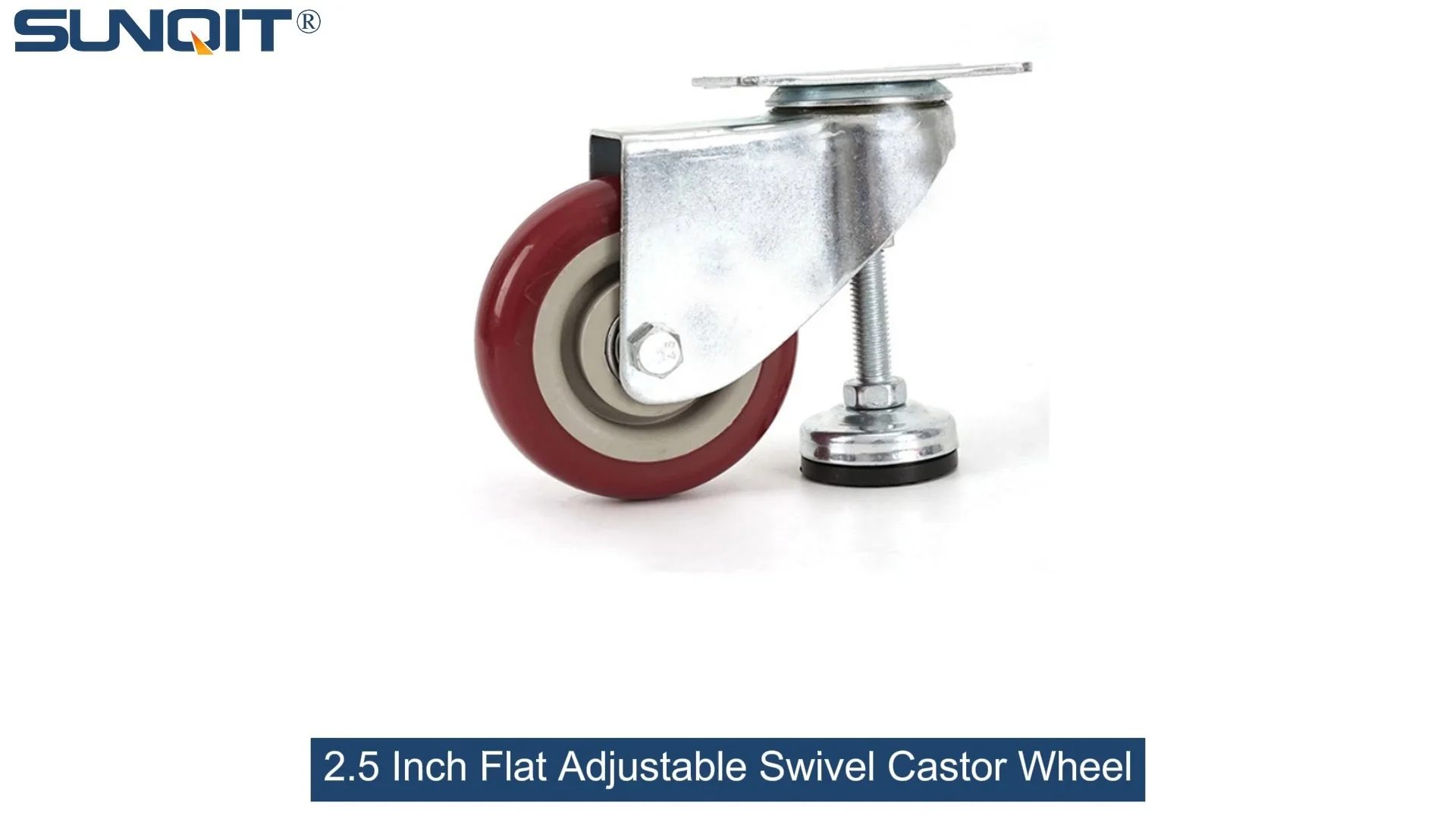
Flat Adjustable Swivel Castor Wheel
Swivel Chair Casters Ball Bearing Wheels Rubber Base with adjustable height function. Resistant to abrasion, impact and corrosion. Heavy payload can hold 80Kgs per pcs,which can make it works at a stable and smooth status.
On a Tuesday morning at a mid-sized electronics assembly plant in Ohio, the production floor suddenly falls silent. A workbench, loaded with circuit boards and precision tools, has ground to a halt. Its castor wheel—stuck, misaligned, and refusing to swivel—has jammed the material flow, bringing the entire line to a standstill. The supervisor sighs, knowing the drill: 15 minutes to troubleshoot, 20 to fix, and by then, the daily production target is already slipping. "If this keeps happening," she mutters, "we'll never hit our quarterly goals."
This scene isn't unique. For manufacturers worldwide, downtime is the silent profit killer. Studies suggest that unplanned downtime costs the average factory upwards of $22,000 per minute, with assembly lines bearing the brunt of these losses. While major equipment failures grab headlines, it's often the smallest components—the ones we overlook—that cause the most frequent disruptions. Enter the flat adjustable swivel castor wheel: a humble yet transformative tool that's quietly revolutionizing how assembly lines move, adapt, and stay operational.
The Hidden Cost of "Small" Failures: Why Downtime Haunts Assembly Lines
Before diving into the solution, let's unpack the problem. Downtime in assembly operations stems from three primary culprits: equipment breakdowns, material flow bottlenecks, and inefficient workspace design. What ties these together? Mobility—or the lack thereof. Workbenches, turnover trolleys, and material racks are the lifeblood of assembly lines, and their ability to move smoothly, adjust quickly, and stay stable directly impacts uptime.
Consider a typical scenario: A team needs to reconfigure a line to accommodate a new product model. If the workbenches are bolted to the floor (fixed castors) or equipped with clunky, non-adjustable wheels, repositioning them takes hours. If the castors seize mid-movement, that's another hour lost. Multiply this by daily adjustments, and the cumulative downtime becomes staggering. Worse, unstable workbenches—those that wobble due to uneven floors or poorly adjusted castors—lead to component damage, rework, and even safety incidents, all of which compound the problem.
The irony? Many manufacturers invest in high-tech machinery but skimp on the "small stuff" like castors. It's a classic case of missing the forest for the trees. A single stuck castor on a critical workbench can disrupt an entire shift. A castor that can't adjust to a warped floor can turn a steady workflow into a frustrating game of "balance the parts." And in lean system environments—where efficiency and waste reduction are king—these inefficiencies directly contradict the core principles of lean manufacturing.
Flat Adjustable Swivel Castor Wheels: More Than Just "Wheels on a Bench"
So, what makes a flat adjustable swivel castor wheel different from the standard castors gathering dust in your maintenance closet? Let's break it down. At its core, this isn't just a wheel—it's a precision-engineered mobility system designed to address the unique challenges of assembly lines.
First, the "flat adjustable" part. Unlike traditional castors with bulky mounting brackets, flat adjustable castors feature a low-profile, flat base that sits flush against the bottom of equipment like workbenches or turnover trolleys. This design lowers the center of gravity, reducing wobble and improving stability—critical when handling fragile components or heavy loads. The "adjustable" element allows users to tweak the height of each castor individually (usually via a threaded stem or lever), compensating for uneven floors, warped surfaces, or the need to align workbenches with conveyor belts.
Then there's the "swivel" mechanism. A high-quality swivel castor can rotate 360 degrees, allowing equipment to move in any direction without jerking or jamming. But not all swivels are created equal. The best flat adjustable swivel castors use sealed ball bearings in their swivel joints, reducing friction and preventing dust, debris, and moisture from seizing the mechanism—common causes of unexpected downtime. Add a reliable brake system (often a foot-operated lock that engages both the wheel and swivel plate), and you've got a castor that stays put when needed and moves freely when it's time to reconfigure.
Let's visualize this in action: A workbench fitted with four flat adjustable swivel castor wheels. When the line needs reconfiguring, an operator releases the brakes, glides the bench into place (no more straining or struggling with stuck wheels), adjusts each castor's height to level the surface perfectly, and locks the brakes. Total time? Two minutes, not two hours. No jams, no wobbles, no delays. That's the power of intentional design.

How These Castors Slash Downtime: The Key Benefits in Action
It's one thing to describe features; it's another to see how they translate to real-world results. Let's explore how flat adjustable swivel castor wheels directly reduce downtime across three critical areas: mobility, adaptability, and durability.
1. Seamless Mobility: Eliminating "Stuck Wheel" Delays
The most obvious benefit is smoother movement. Standard castors often struggle with debris on the factory floor—metal shavings, loose screws, or even small spills can jam the wheel or swivel joint. Flat adjustable castors mitigate this with two design choices: a larger wheel diameter (typically 4-6 inches) to roll over obstacles, and a sealed swivel housing that keeps contaminants out. In a study by the Manufacturing Mobility Institute, facilities using sealed-bearing swivel castors reported a 67% reduction in "wheel-related" downtime compared to those with open-joint castors.
Consider a turnover trolley loaded with 500 pounds of automotive parts. With standard castors, navigating a slightly uneven concrete floor might require two operators and result in a sudden stop if a wheel hits a crack. With flat adjustable swivel castors, one operator can push the trolley smoothly, thanks to the swivel's low friction and the wheel's shock-absorbing tread (often made of polyurethane, which grips floors without marking them). No stops, no strain, no downtime.
2. On-the-Fly Adjustability: Adapting to Imperfect Floors (and Imperfect Plans)
Assembly line floors are rarely perfect. Years of heavy equipment, temperature fluctuations, and general wear leave them warped, cracked, or uneven. A workbench with fixed-height castors on such a floor will wobble, leading to component damage or operator fatigue. Flat adjustable castors solve this with their height-adjustment feature—typically a range of 10-50mm—allowing users to level equipment in seconds. Need to align a workbench with a conveyor that's 20mm higher on one side? Twist the adjustment knob, lock it in, and you're done. No shims, no tools, no delay.
This adjustability also shines during line reconfigurations. In lean system environments, where "just-in-time" production demands frequent layout changes, the ability to quickly adapt equipment height and position is a game-changer. A food packaging plant in Texas, for example, reported cutting changeover time from 90 minutes to 15 minutes after upgrading to adjustable castors on their material racks. "We used to need a maintenance crew with wrenches to realign everything," said the plant manager. "Now, the operators do it themselves between shifts."
3. Durability: Built to Outlast the Hustle
Even the most mobile, adjustable castor is useless if it breaks down. Flat adjustable swivel castors are built for the rigors of assembly lines, with features like reinforced mounting plates (to handle heavy loads), corrosion-resistant materials (like zinc-plated steel or stainless steel for wet environments), and replaceable caster accessories (think brake pads, bearings, and wheel treads). This focus on durability means fewer replacements, less maintenance time, and longer intervals between unexpected failures.
Take a automotive assembly plant running two 12-hour shifts. Their workbenches, fitted with standard castors, needed wheel replacements every 3 months. After switching to heavy-duty flat adjustable swivel castors with polyurethane wheels, that interval jumped to 18 months. The maintenance team, once bogged down with wheel swaps, now focuses on preventive care—saving 120+ man-hours per year and eliminating the downtime that came with unexpected replacements.

Lean Systems and Flat Adjustable Castors: A Match Made in Efficiency Heaven
Lean manufacturing isn't just a buzzword; it's a philosophy centered on minimizing waste, maximizing value, and empowering teams to adapt. Flat adjustable swivel castor wheels embody this philosophy by addressing three key lean principles: continuous flow, respect for people, and standardized work.
Continuous flow is the backbone of lean. When workbenches, trolleys, and racks can move freely and adjust quickly, materials flow from station to station without interruption. No more bottlenecks caused by immobile equipment. No more "waiting" for a workbench to be freed up. With flat adjustable castors, each workstation becomes a flexible node in the network, able to pivot as needed to keep production moving.
Respect for people means giving operators the tools they need to work efficiently and safely. A wobbly workbench isn't just a downtime risk—it's a ergonomic nightmare. Operators hunch, strain, or slow down to avoid spills, leading to fatigue and errors. Flat adjustable castors let operators level their work surfaces to their ideal height, reducing strain and boosting morale. "It sounds small," said a line worker at a consumer goods plant, "but being able to adjust my bench so I don't have to bend over all day? I'm more focused, and I make fewer mistakes."
Standardized work thrives on consistency. With adjustable castors, every workbench in the line can be set to the exact same height, every trolley can be aligned with conveyors to the millimeter, and every material rack can be positioned for optimal access. This standardization reduces variability, cuts down on rework, and makes training new operators faster—all of which contribute to lower downtime.
| Castor Type | Mobility Range | Load Capacity (lbs) | Height Adjustment (mm) | Downtime Risk | Ideal Use Case |
|---|---|---|---|---|---|
| Fixed Castor | 0° (only forward/backward) | Up to 1,500 | None | High (no reconfiguration possible) | Static equipment (rarely moved) |
| Standard Swivel Castor | 360° (no brake) | Up to 2,000 | None | Medium (prone to swivel jams) | Light-duty trolleys (occasional movement) |
| Adjustable Swivel Castor (Non-Flat) | 360° (with brake) | Up to 2,500 | 10-30 | Medium-Low (bulky design causes alignment issues) | Warehouse racks (infrequent height changes) |
| Flat Adjustable Swivel Castor | 360° (sealed swivel + brake) | Up to 3,000 | 10-50 | Low (durable, adaptable, easy to maintain) | Assembly line workbenches, turnover trolleys, lean system stations |

Real-World Wins: How Manufacturers Are Cutting Downtime Today
Talk is cheap; results matter. Let's look at three industries where flat adjustable swivel castor wheels are making a tangible difference in reducing downtime.
Automotive Assembly: From Hours to Minutes
A leading automotive parts supplier in Michigan was struggling with line reconfigurations. Their workbenches, equipped with standard swivel castors, took 4 hours to reposition for new part models—time that ate into production targets. After upgrading to flat adjustable swivel castors with sealed bearings and foot brakes, reconfiguration time dropped to 20 minutes. "We used to schedule reconfigs during night shifts to avoid disrupting production," said the operations director. "Now we do them between shifts, and we're hitting our daily targets consistently."
Electronics Manufacturing: Precision Meets Mobility
In cleanroom environments, where dust and static are enemies, mobility is tricky. A semiconductor plant in California needed to move sensitive component racks between cleanrooms without disrupting airflow or risking contamination. Standard castors generated static and were too tall to fit under air vents. Flat adjustable castors solved both issues: their low-profile design fit under vents, and conductive polyurethane wheels eliminated static buildup. Downtime from contamination-related rework dropped by 40% in the first quarter alone.
Medical Device Production: Stability for Sterility
Medical device assembly requires sterile, stable work surfaces. A manufacturer of surgical tools was facing frequent downtime due to wobbly workbenches (caused by uneven floors in their aging facility). Flat adjustable castors let operators level each bench to within 0.5mm, ensuring precise assembly and reducing component waste by 25%. "We used to discard trays of parts because they'd slide off the bench," said a quality control manager. "Now, the benches stay rock-solid, and our reject rate is near zero."
Maximizing Uptime: Maintenance Tips for Flat Adjustable Castors
Even the best castors need care. To keep your flat adjustable swivel castor wheels performing at their best, follow these simple maintenance steps:
- Daily Checks: Have operators inspect brakes and swivel movement at the start of each shift. A quick test—swivel the wheel 360°, engage/disengage the brake—takes 10 seconds and catches issues early.
- Weekly Lubrication: Apply a silicone-based lubricant to swivel joints and brake mechanisms. Avoid oil-based lubricants, which attract dust and debris.
- Monthly Height Calibration: Check that all castors on a single piece of equipment are adjusted to the same height. Use a level to ensure the surface is flat—this prevents uneven wear on wheels.
- Quarterly Caster Accessory Inspections: Look for worn brake pads, cracked wheel treads, or loose mounting bolts. replace these parts proactively (most suppliers offer affordable replacement kits) to avoid sudden failures.
- Annual Deep Clean: Remove castors, clean the swivel housing with compressed air, and inspect for rust or corrosion. This is especially critical in humid or wet environments.
Choosing the Right Castor: A Buyer's Guide for Assembly Lines
Not all flat adjustable swivel castor wheels are created equal. To select the right model for your needs, ask these five questions:
- What's the maximum load? Don't just consider the weight of the equipment—add the weight of materials, tools, and operators. Overloading is the top cause of castor failure.
- What's the floor type? Concrete, tile, or carpet? Polyurethane wheels work best on concrete, while rubber wheels are better for sensitive floors (like tile). For cleanrooms, opt for conductive or static-dissipative wheels.
- How often will it move? If the equipment stays in one place 90% of the time, a basic model may suffice. For constant reconfiguration, invest in sealed bearings and heavy-duty swivel plates.
- What's the height adjustment range? Measure your floor's unevenness (use a laser level) and choose a castor with at least 5mm more adjustment than the maximum variance.
- Does it fit your lean system goals? Look for features that support flexibility (quick-adjust levers), durability (replaceable parts), and operator autonomy (easy-to-use brakes).
Conclusion: Small Wheels, Big Impact
Downtime in assembly lines is a complex problem, but the solution doesn't always require a million-dollar investment. Sometimes, it's the smallest components—the ones that keep your workbenches moving, your trolleys rolling, and your team adapting—that deliver the biggest returns. Flat adjustable swivel castor wheels are more than just "wheels on a bench"; they're a statement that every minute of uptime matters, every operator deserves reliable tools, and every part of your process—no matter how small—should contribute to efficiency.
So, the next time your assembly line grinds to a halt, take a look at the wheels beneath your equipment. Are they holding you back, or propelling you forward? For manufacturers ready to embrace lean systems, reduce waste, and outpace the competition, the answer is clear: it's time to upgrade to flat adjustable swivel castor wheels. Your bottom line, your team, and your peace of mind will thank you.