- Company Articles
- Products and Technology
- Product knowledge
- Flat Adjustable Swivel Castor Wheels: UV Resistance for Outdoor Industrial Use

Flat Adjustable Swivel Castor Wheels: UV Resistance for Outdoor Industrial Use
Related Product
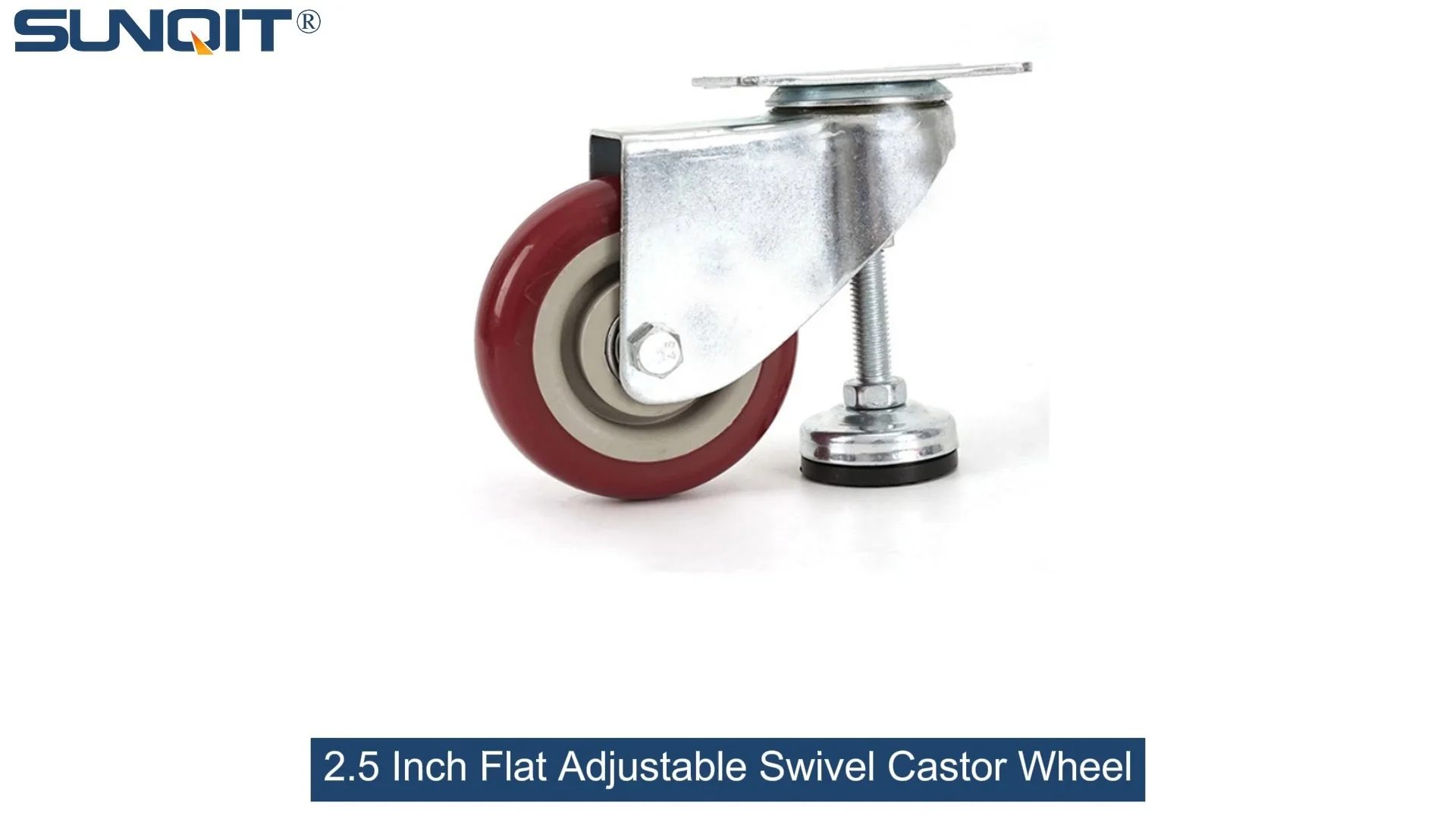
Flat Adjustable Swivel Castor Wheel
Swivel Chair Casters Ball Bearing Wheels Rubber Base with adjustable height function. Resistant to abrasion, impact and corrosion. Heavy payload can hold 80Kgs per pcs,which can make it works at a stable and smooth status.
Introduction: The Unsung Heroes of Industrial Mobility
In the bustling world of industrial operations—whether it's a manufacturing plant, a logistics warehouse, or a construction site—mobility is the backbone of efficiency. Every day, teams rely on the ability to move materials, equipment, and even entire workbenches with ease. Yet, while large machinery and high-tech systems often steal the spotlight, it's the smaller, often overlooked components that keep the wheels of productivity turning. One such component? The humble castor wheel. But not just any castor wheel—flat adjustable swivel castor wheels, specifically designed to withstand the harsh realities of outdoor industrial environments, where UV radiation, extreme temperatures, and rough terrain test even the toughest equipment.
Outdoor industrial spaces present unique challenges. Sunlight beats down relentlessly, exposing equipment to harmful UV rays that degrade materials over time. Rain, dust, and temperature fluctuations add another layer of stress. For castor wheels, which bear the weight of heavy loads while ensuring smooth movement, these conditions can be a death sentence—unless they're built with resilience in mind. That's where UV-resistant flat adjustable swivel castor wheels come into play. More than just a mobility solution, they're a strategic investment in reducing downtime, enhancing safety, and maintaining the integrity of your lean system.
The Role of Castor Wheels in Modern Industrial Mobility
Before diving into the specifics of flat adjustable swivel castor wheels, let's take a step back to understand why castors matter in industrial settings. At their core, castors are the bridge between static equipment and dynamic operations. They transform immovable workbenches into mobile workstations, material (material rack) into agile transport tools, and rigid assembly lines into flexible, adaptable spaces. In lean manufacturing, where minimizing waste and maximizing flow are priorities, the right castors can turn a bottleneck into a streamlined process.
Consider a typical day in a manufacturing facility: A team needs to reconfigure a production line to accommodate a new product. Without mobile workbenches and turnover trolleys equipped with reliable castors, this reconfiguration could take hours—if not days. With the right castors, however, the same task might be completed in minutes, allowing the team to focus on value-adding work instead of manual labor. Similarly, in outdoor settings like construction yards or agricultural facilities, moving heavy tools, supplies, or even temporary workbenches (like the "workbench e (single deck-without caster)" model, often paired with castors for mobility) requires castors that can handle uneven ground and constant sun exposure.
But not all castors are created equal. Fixed castors limit movement to straight lines, while swivel castors offer 360-degree rotation for maneuverability. Rigid castors prioritize stability but sacrifice flexibility. Flat adjustable swivel castors, however, strike a balance: they combine the stability of a low-profile design with the adjustability to level uneven surfaces and the swivel functionality to navigate tight spaces. When paired with UV resistance, they become indispensable for outdoor use.

What Makes Flat Adjustable Swivel Castor Wheels Unique?
To appreciate the value of flat adjustable swivel castor wheels, let's break down their key features—each designed to solve a specific problem in industrial mobility:
The "Flat" Design: Stability Without Compromise
Unlike traditional castors with bulky housings, flat adjustable castors feature a low-profile design that sits close to the ground. This reduces the center of gravity of the equipment they're attached to, whether it's a workbench or a material rack. Why does this matter? A lower center of gravity minimizes the risk of tipping, even when moving heavy loads or navigating uneven outdoor terrain. For example, a material rack loaded with metal components is far less likely to topple over when equipped with flat castors, compared to taller, bulkier alternatives. This stability is critical for both worker safety and protecting valuable inventory.
Adjustability: Adapting to Imperfect Surfaces
Outdoor industrial spaces are rarely perfectly smooth. Cracks in concrete, gravel, or uneven pavement can make moving equipment a frustrating, bumpy experience. Flat adjustable castors address this with built-in height adjustment mechanisms, similar to adjustable leveling feet. By turning a screw or lever, operators can raise or lower individual castors to compensate for uneven surfaces, ensuring the equipment remains level and stable. This not only improves mobility but also protects sensitive materials—like electronics on an ESD workstation—from damage caused by tilting.
Swivel Functionality: Maneuverability in Tight Spaces
Swivel castors are designed to rotate 360 degrees, allowing equipment to move in any direction with minimal effort. This is especially valuable in outdoor settings where space might be limited—think loading docks, construction zones, or crowded storage yards. A swivel castor with a smooth rotation mechanism can turn a cumbersome turnover trolley into a nimble tool, making it easy to navigate around obstacles like pallets, machinery, or other workers. Many models also come with locking mechanisms (a key caster accessory) that allow operators to lock the swivel in place for straight-line movement or to secure the equipment when stationary—adding an extra layer of safety.

The Critical Need for UV Resistance in Outdoor Industrial Environments
Now, let's turn to the elephant in the room for outdoor equipment: UV radiation. The sun emits ultraviolet (UV) rays that, while invisible to the naked eye, are powerful enough to break down the molecular structure of materials over time. For castor wheels, which often rely on rubber or plastic components for grip and shock absorption, UV exposure can be catastrophic.
Consider a standard castor wheel made with untreated rubber. After months of outdoor exposure, the rubber begins to dry out, crack, and lose elasticity. What was once a smooth-rolling wheel becomes stiff and brittle, making movement difficult and noisy. In severe cases, the wheel might even split under load, causing the equipment to tip or become stuck. Plastic components, like wheel hubs or caster accessories, fare no better—UV rays can cause them to fade, warp, or shatter, compromising the castor's structural integrity.
The consequences of UV degradation go beyond inconvenience. A failed castor wheel can lead to:
- Safety risks: Unstable equipment increases the likelihood of accidents, from trips and falls to dropped loads.
- Downtime: Replacing damaged castors means halting operations, costing time and money.
- Increased costs: Frequent replacements add up, especially for large fleets of trolleys or workbenches.
- Reduced efficiency: Stiff, unevenly rolling castors require more effort to move, slowing down workflows and fatiguing workers.
For businesses operating outdoors, these risks are unavoidable—unless they choose castors engineered to resist UV damage. UV-resistant flat adjustable swivel castor wheels are built with materials and designs that stand up to the sun's harmful rays, ensuring long-term performance even in the brightest, hottest environments.

How Flat Adjustable Swivel Castor Wheels Achieve UV Resistance
UV resistance isn't a feature you can simply add with a coat of paint. It requires intentional engineering from the ground up—starting with the materials used in every component of the castor wheel. Let's take a closer look at the technologies and materials that make these castors UV-ready:
UV-Stabilized Polymers and Rubber Compounds
The wheel itself is the first line of defense against UV radiation. Many flat adjustable swivel castors use rubber or polyurethane wheels infused with UV stabilizers—chemical additives that absorb or reflect UV rays, preventing them from breaking down the material's molecular bonds. These stabilizers are tested rigorously to ensure they don't leach out over time or degrade under prolonged sun exposure. For example, a UV-stabilized polyurethane wheel will retain its elasticity and grip for years, whereas a standard polyurethane wheel might become hard and slippery after just a few months outdoors.
Some manufacturers take it a step further by using EPDM rubber, a synthetic material known for its exceptional resistance to UV radiation, ozone, and temperature extremes. EPDM rubber wheels are a popular choice for outdoor applications because they maintain their flexibility even in hot, sunny conditions, reducing the risk of cracking or splitting.
Reinforced Metal Components
While the wheel gets most of the attention, the castor's metal components—like the swivel head, axle, and mounting plate—are also vulnerable to outdoor corrosion. UV radiation alone won't damage metal, but when combined with rain or humidity, it can accelerate rust and degradation. To combat this, reputable suppliers use stainless steel or galvanized steel for critical metal parts. Stainless steel, in particular, contains chromium, which forms a protective oxide layer that resists rust and corrosion, even when exposed to the elements. This ensures the swivel mechanism remains smooth and the castor retains its structural integrity over time.
Testing: Putting UV Resistance to the Test
Claiming UV resistance is one thing; proving it is another. The best castor suppliers subject their products to rigorous testing to validate their performance. This often includes accelerated UV testing in laboratories, where castors are exposed to intense UV light for hundreds of hours to simulate years of outdoor exposure. After testing, engineers check for signs of degradation—like cracking, discoloration, or loss of elasticity—to ensure the castors meet strict performance standards.
Some suppliers also conduct real-world outdoor trials, placing castors on equipment in sunny, high-UV locations for 12–24 months and monitoring their performance. These trials provide invaluable data on how the castors hold up in real conditions, from summer heatwaves to winter cold snaps.
Key Features of High-Quality Flat Adjustable Swivel Castor Wheels
UV resistance is a critical feature, but it's just one piece of the puzzle. The best flat adjustable swivel castor wheels combine UV protection with a host of other features designed to meet the demands of outdoor industrial use. Here are some key attributes to look for when evaluating options:
Heavy Load Capacity
Outdoor industrial equipment often carries substantial weight—think of a workbench loaded with tools, a material rack stacked with metal parts, or a turnover trolley full of construction supplies. A quality flat adjustable swivel castor should have a load capacity that exceeds your typical needs, with ratings ranging from 200 kg to over 1000 kg per castor. This ensures the castors can handle unexpected overloads without bending or breaking.
Dual-Lock Brakes
Mobility is important, but so is stability when stationary. Many flat adjustable swivel castors come with dual-lock brakes—a caster accessory that locks both the wheel and the swivel head. This prevents the equipment from rolling or swiveling accidentally, even on slopes or uneven ground. For outdoor settings where wind or vibrations might cause movement, dual-lock brakes are a must-have for safety.
Sealed Bearings and Swivel Joints
Dust, dirt, and moisture are constant threats in outdoor environments. To keep the swivel mechanism smooth and the wheel rolling freely, look for castors with sealed bearings and swivel joints. These seals prevent debris from entering and causing friction or corrosion, reducing the need for frequent maintenance. A sealed swivel joint will continue to rotate effortlessly, even after months of exposure to rain and dust.
Easy Installation and Compatibility
Time is money in industrial settings, so castors should be easy to install on existing equipment. Look for models with standardized mounting plates that fit common workbenches, material racks, and trolleys. Some suppliers also offer custom mounting options for unique equipment, ensuring a seamless fit without the need for modifications.
Applications Across Industries: Where UV-Resistant Castors Shine
Flat adjustable swivel castor wheels with UV resistance aren't limited to one type of industry—their versatility makes them indispensable in any outdoor industrial setting. Let's explore a few key applications where these castors make a tangible difference:
Manufacturing and Assembly: Outdoor Workstations
Many manufacturing facilities have outdoor assembly or storage areas, where workbenches and material racks are exposed to the elements. For example, an automotive plant might use outdoor workstations to prep parts before bringing them inside for assembly. UV-resistant castors ensure these workstations remain mobile and stable, even after years of sun exposure. Operators can move heavy tool chests or component bins with ease, keeping the production line flowing smoothly.
Logistics and Warehousing: Loading Docks and Yard Operations
Loading docks and outdoor storage yards are hubs of activity, with turnover trolleys and pallet jacks moving constantly. UV-resistant castors on these trolleys ensure they can handle the rough terrain of gravel or cracked asphalt while withstanding the sun's rays. For example, a material rack loaded with packages can be wheeled from the warehouse to a delivery truck without getting stuck or tipping, even on a hot summer day.
Construction: Mobile Job Site Equipment
Construction sites are among the harshest environments for equipment, with constant sun, dust, and heavy loads. Flat adjustable swivel castors are used on mobile tool carts, scaffolding platforms, and even temporary offices. Their UV resistance ensures they don't fail mid-project, reducing the risk of delays or accidents. Imagine a tool cart with standard castors: after a few weeks in the sun, the wheels might crack, making it impossible to move tools to different areas of the site. With UV-resistant castors, the cart remains operational from groundbreaking to project completion.
Agriculture: Moving Supplies and Equipment
Farms and agricultural facilities often have large outdoor areas where feed, equipment, and harvested crops need to be moved. UV-resistant castors on feed carts, seed storage racks, and maintenance trolleys ensure these tools can handle long hours in the sun without degradation. This is especially important in regions with intense sunlight, where standard castors would quickly wear out.
UV-Resistant Castors vs. Standard Castors: A Cost-Benefit Comparison
It's natural to wonder: Are UV-resistant flat adjustable swivel castors worth the investment? After all, standard castors are often cheaper upfront. To answer this, let's compare the two options across key factors like lifespan, maintenance costs, and downtime—using a hypothetical scenario of a manufacturing facility with 10 outdoor workbenches, each equipped with 4 castors.
| Factor | Standard Castors | UV-Resistant Flat Adjustable Swivel Castors |
|---|---|---|
| Initial Cost per Castor | $20 | $35 |
| Total Initial Cost (40 castors) | $800 | $1,400 |
| Expected Lifespan Outdoors | 6–12 months | 3–5 years |
| Replacement Frequency (5-year period) | 5–10 times | 1 time |
| Total Replacement Cost (5 years) | $4,000–$8,000 | $1,400 |
| Downtime per Replacement | 2 hours per workbench | 2 hours per workbench (once every 3–5 years) |
| Total Downtime (5 years) | 100–200 hours | 20 hours |
| Maintenance Requirements | Frequent lubrication, cleaning, and part replacements | Minimal—occasional cleaning and lubrication |
| Safety Risk | High—cracking wheels increase tipping/accident risk | Low—stable, durable wheels reduce accidents |
As the table shows, while UV-resistant castors have a higher initial cost, they pay for themselves within the first year by reducing replacement frequency and downtime. Over five years, the total cost of ownership for standard castors could be 3–5 times higher than UV-resistant models. Add in the safety benefits and reduced maintenance headaches, and the choice becomes clear: UV-resistant flat adjustable swivel castors are a smart, long-term investment.
Maintenance Tips: Extending the Life of Your UV-Resistant Castors
Even the most durable castors need a little care to maximize their lifespan. While UV-resistant flat adjustable swivel castors require less maintenance than standard models, following these simple tips will ensure they continue to perform at their best for years:
Regular Cleaning
Dirt, debris, and grime can build up in the swivel joint or around the wheel, causing friction and wear. Use a brush or compressed air to remove debris from the castor's components, then wipe with a damp cloth. For stubborn dirt, mild soap and water can be used—avoid harsh chemicals that might damage the UV stabilizers in the wheel material.
Lubrication of Moving Parts
The swivel joint and axle benefit from occasional lubrication to keep movement smooth. Use a silicone-based lubricant (avoid petroleum-based products, which can degrade rubber wheels) and apply a small amount to the swivel head and axle bearings every 3–6 months, depending on usage. This prevents rust and ensures the castor continues to swivel effortlessly.
Inspect for Wear and Tear
Make it a habit to inspect castors monthly for signs of damage—like cracks in the wheel, loose bolts, or sticking brakes. Catching issues early can prevent costly breakdowns. For example, a small crack in a wheel might be repairable, but if left unchecked, it could lead to a catastrophic failure under load.
Adjust as Needed
Flat adjustable castors are designed to be adjusted for uneven surfaces, but over time, the adjustment mechanism might loosen. Check the height adjustment periodically and tighten any screws or levers to ensure the equipment remains level. This not only improves mobility but also reduces unnecessary stress on the castors.
Choosing the Right Supplier: Beyond the Product
Investing in UV-resistant flat adjustable swivel castors is about more than just buying a product—it's about partnering with a supplier who understands your unique needs and can support you long after the sale. Here are key qualities to look for in a castor supplier:
Proven Expertise in Outdoor Industrial Solutions
Not all suppliers specialize in outdoor or UV-resistant products. Look for a supplier with a track record of serving industries like construction, agriculture, or outdoor manufacturing. They should be able to provide case studies or testimonials from clients with similar needs, demonstrating their understanding of the challenges you face.
Customization Options
Every industrial setting is different. A good supplier will offer customization options—like custom load capacities, wheel materials, or mounting plates—to ensure the castors fit your specific equipment and environment. For example, if you need castors for a corrosive outdoor environment (like a coastal facility), they should be able to recommend stainless steel components or specialized coatings.
Transparent Testing and Quality Assurance
Don't hesitate to ask for proof of UV resistance. Reputable suppliers will share test reports, certifications, or warranty information that validate their claims. For example, a supplier might provide results from ASTM G154 UV exposure testing, which is an industry standard for evaluating material resistance to UV radiation.
Responsive Customer Support
From installation questions to replacement parts, you need a supplier who is easy to reach and quick to respond. Look for suppliers with dedicated customer support teams and a network of distributors for fast delivery of caster accessories or replacement wheels.
Conclusion: Investing in Mobility That Lasts
In the fast-paced world of outdoor industrial operations, every component counts. Flat adjustable swivel castor wheels with UV resistance are more than just a mobility solution—they're a testament to the power of intentional engineering. By combining stability, adjustability, and UV resilience, these castors ensure that your workbenches, material racks, and trolleys remain mobile, safe, and efficient, even in the harshest outdoor conditions.
The data speaks for itself: While UV-resistant castors may cost more upfront, their long lifespan, reduced maintenance, and minimal downtime make them a far more cost-effective choice than standard castors. They're an investment in your team's productivity, your equipment's longevity, and your bottom line.
So, the next time you're evaluating equipment for your outdoor industrial space, don't overlook the castors. Choose flat adjustable swivel castors built to stand up to the sun—and watch as they keep your operations moving forward, year after year.