- Company Articles
- Products and Technology
- Product knowledge
- Flat Adjustable Swivel Castor Wheels vs. Regular Swivel Castors: A Comparative Analysis

Flat Adjustable Swivel Castor Wheels vs. Regular Swivel Castors: A Comparative Analysis
Related Product
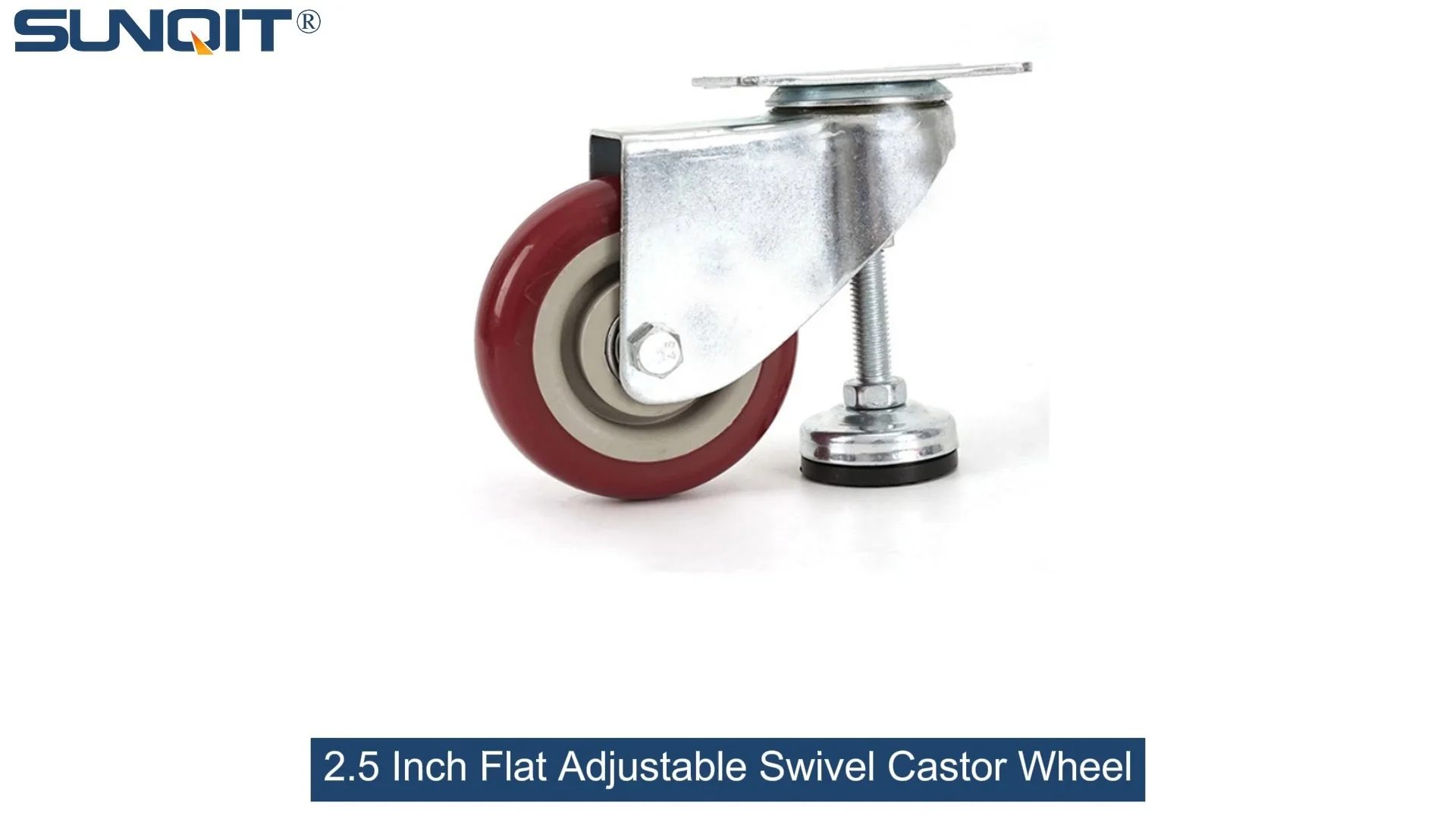
Flat Adjustable Swivel Castor Wheel
Swivel Chair Casters Ball Bearing Wheels Rubber Base with adjustable height function. Resistant to abrasion, impact and corrosion. Heavy payload can hold 80Kgs per pcs,which can make it works at a stable and smooth status.
In the bustling world of manufacturing, warehousing, and even everyday workplaces, there's a silent workhorse that keeps operations moving—literally. Castors, those small but mighty components attached to the bottom of carts, workbenches, and machinery, play a critical role in mobility, efficiency, and safety. Yet, not all castors are created equal. Walk through any factory or workshop, and you'll likely encounter two common types: flat adjustable swivel castor wheels and regular swivel castors. While they might look similar at first glance, their differences can mean the gap between smooth, productive workflows and frustrating, error-prone operations. Let's dive into what sets these two apart, and how to choose the right one for your needs.
Understanding the Basics: What Are We Comparing?
Before we jump into the nitty-gritty, let's clarify what each term means. At their core, both are swivel castors—meaning they can rotate 360 degrees, allowing the equipment they're attached to move in any direction. But that's where the similarities start to fade.
Flat Adjustable Swivel Castor Wheels: The Adaptable Performer
A flat adjustable swivel castor wheel is designed with one key priority: adaptability. Picture a castor that doesn't just roll but also lets you tweak its height to fit the environment. These castors typically feature a flat, sturdy mounting plate (hence "flat") and a built-in adjustment mechanism—often a threaded stem or a lever—that lets you raise or lower the wheel by a few centimeters. This might sound small, but on uneven floors or in setups where precision matters (like a lean pipe workbench ), that adjustability can be a game-changer. They're built to handle not just movement, but also the need to stabilize equipment on imperfect surfaces.
Regular Swivel Castors: The Reliable Workhorse
Regular swivel castors, on the other hand, are the "standard issue" of the castor world. They're all about straightforward mobility. With a fixed height and a simple swivel mechanism, their job is to make pushing or pulling equipment as easy as possible. You'll find them on everything from office chairs to warehouse trolleys. They come in various sizes and materials, but their design focuses on smooth rotation and basic durability—no frills, just reliable movement for everyday tasks.
Design & Structural Differences: It's All in the Details
To really understand why these castors behave differently, let's break down their designs. Think of it like comparing a Swiss Army knife (flat adjustable) to a basic pocket knife (regular)—both cut, but one does so much more.
Mounting Plates: Stability First
The mounting plate is where the castor attaches to your equipment, and here's where flat adjustable castors start to stand out. Their plates are often larger and flatter, with extra reinforcement. Why? Because when you adjust the height of the wheel, the mounting plate needs to distribute weight evenly to prevent wobbling. Regular castors, by contrast, have smaller, simpler plates—they don't need to handle the stress of height changes, so they prioritize lightness over bulk.
Swivel Mechanisms: Smooth Rotation, but for Different Jobs
Both castors swivel, but their internal mechanisms tell different stories. Regular swivel castors use a basic ball bearing or raceway system to let the wheel rotate freely—great for quick, easy turns on smooth floors. Flat adjustable castors, though, need a beefier swivel mechanism. Imagine adjusting the height of a castor while it's under load; that extra movement could strain a regular mechanism. So, these castors often have reinforced bearings or sealed swivel joints to ensure the rotation stays smooth even after repeated adjustments.
The Adjustment Mechanism: The "Flat Adjustable" Secret Sauce
This is where flat adjustable castors truly shine. Most use a threaded stem: twist a nut at the top of the stem, and the wheel either rises or lowers. Some fancier models have a quick-release lever for tool-free adjustments—handy for busy workplaces where time is tight. Regular castors? No adjustment here. Once you bolt them on, their height is fixed. It's a trade-off: simplicity for adaptability.
A Quick Comparison: Key Features at a Glance
| Feature | Flat Adjustable Swivel Castor Wheel | Regular Swivel Castors |
|---|---|---|
| Height Adjustment | Yes (typically 10-50mm range) | No (fixed height) |
| Mounting Plate | Larger, reinforced flat plate | Smaller, standard plate |
| Swivel Mechanism | Reinforced bearings for adjustment stress | Basic bearings for smooth rotation |
| Typical Load Capacity | Higher (often 200-500kg per castor) | Moderate (50-300kg per castor) |
| Best For | Uneven floors, precision setups (e.g., lean pipe workbench ) | Smooth floors, basic mobility |

Performance in Real-World Scenarios: How They Stack Up
Design differences are one thing, but how do these castors actually perform when the pressure is on? Let's put them to the test in common workplace scenarios.
On Uneven Floors: The Great Divide
Walk into any older factory, and you'll notice the floors tell a story—cracks, dips, and uneven patches from years of heavy machinery. This is where flat adjustable castors earn their keep. Suppose you're using a lean pipe workbench to assemble delicate electronics. With regular castors, even a small dip in the floor could make the bench rock, causing parts to roll off or tools to slip. Flat adjustable castors? Twist the adjustment nut on the low side, raise the wheel, and suddenly the bench is level. No more wobbling, no more lost parts—just a stable workspace.
Regular castors, though, struggle here. Without height adjustment, they'll follow the floor's contours, turning a simple workbench into a teeter-totter. It's not just annoying; it's a safety risk. A worker leaning on an unsteady bench could lose balance, or a heavy load could tip. In smooth environments like a modern warehouse with polished concrete, this isn't an issue—but in the real world, floors are rarely perfect.
Maneuverability: Small Turns, Big Differences
You might assume regular castors are more agile—after all, they're simpler. And you'd be right… sometimes. On smooth, open floors, regular castors zip around tight corners with ease, thanks to their smaller swivel radius. But flat adjustable castors are no slouches. Many manufacturers design them with compact swivel heads, so they can still navigate narrow aisles. The difference? When the floor gets rough, regular castors can get "stuck" in dips, making turns feel clunky. Flat adjustable castors, leveled to the floor, glide more consistently—no more fighting to keep the equipment on track.
Noise & Vibration: Keeping the Peace
Ever pushed a cart that sounds like a squeaky door? Chances are, it had cheap regular castors. Wheel material plays a role here (rubber is quieter than plastic), but the design matters too. Flat adjustable castors, with their reinforced swivel joints and sealed bearings, tend to be quieter—fewer moving parts rattling around. Regular castors, if not maintained, can develop loose bearings or worn raceways, turning every push into a symphony of squeaks. In a busy workshop, that noise adds up—distracting workers and raising stress levels.

Applications: Where Each Castor Thrives
Now that we've covered performance, let's talk about where each castor belongs. It's not about "better" or "worse"—it's about matching the tool to the job.
Flat Adjustable Swivel Castor Wheels: When Precision & Adaptability Matter
These castors are stars in settings where stability and customization are non-negotiable. Here are a few examples:
- Lean Pipe Workbenches: As mentioned earlier, lean pipe workbenches are the backbone of many assembly lines. They hold tools, parts, and sometimes even small machinery. With flat adjustable castors, workers can level the bench to their height, reduce strain, and keep parts from sliding off—critical for precision work like electronics or medical device assembly.
- Mobile Medical Carts: In hospitals, surgical carts need to be perfectly level during procedures. A slight tilt could send instruments sliding. Flat adjustable castors let nurses or doctors tweak the height in seconds, ensuring stability even on uneven hospital floors.
- Industrial Machinery: Heavy equipment like 3D printers or testing rigs often needs precise positioning. Flat adjustable castors make it easy to align the machine with power sources or conveyor belts, even if the factory floor isn't perfectly flat.
Regular Swivel Castors: When Simple Mobility is Key
Regular castors are the go-to for everyday tasks where adjustability isn't needed. Think:
- Shopping Carts & Trolleys: Supermarkets and warehouses use these for a reason—they're cheap, lightweight, and work great on smooth, level floors. No need for adjustment when you're just moving boxes from A to B.
- Office Furniture: Office chairs, file cabinets, and mobile desks rarely need height adjustment (the chair's seat does that job). Regular castors keep them light and easy to move around cubicles.
- Turnover Racks: In retail or logistics, racks that hold clothes or packages need to roll smoothly but don't require leveling. Regular castors keep costs low and functionality high.

Maintenance & Durability: Longevity in the Details
No one wants to replace castors every few months. Let's look at how these two types hold up over time, and what it takes to keep them rolling.
Flat Adjustable Castors: A Little Care Goes a Long Way
With more moving parts (the adjustment mechanism, reinforced swivel joints), flat adjustable castors need a bit more TLC. Here's what to watch for:
- Lubrication: The swivel joint and adjustment threads can dry out, leading to squeaks or stuck adjustments. A few drops of lubricating oil every 3-6 months (more often in dusty environments) keeps things moving smoothly.
- Thread Check: If you use the adjustment often, the threads on the stem can wear down. Inspect them for damage—stripped threads mean you won't be able to adjust the height anymore.
- Mounting Plate Tightness: The larger mounting plate can loosen over time, especially if the castor takes a lot of bumps. Tighten the bolts periodically to prevent wobbling.
But here's the upside: when maintained, these castors often outlast regular ones. Their reinforced design and durable materials (like steel or heavy-duty plastic) stand up to heavy loads and rough use.
Regular Swivel Castors: Simple, but Still Needs Love
Regular castors have fewer parts, so maintenance is simpler—but don't skip it:
- Swivel Joint Lubrication: Even basic swivel joints need oil to prevent rust and keep rotation smooth. A quick spray every few months works.
- Wheel Wear: The wheels take the brunt of the abuse. Check for cracks, flat spots, or worn tread—especially if you're using them on rough floors. Worn wheels make the castor harder to push and can damage floors.
- Bearing Checks: If the swivel starts to feel stiff or "gritty," the bearings might be failing. Replacing them is cheaper than buying new castors, but it's a sign the castor is reaching the end of its lifespan.
Cost: Short-Term Savings vs. Long-Term Value
Let's talk money. Regular swivel castors are almost always cheaper upfront—sometimes by 30-50%. If you're on a tight budget and only need basic mobility, they make sense. But flat adjustable castors? They're an investment. Their extra features (adjustment mechanisms, reinforced parts) drive up the initial cost. But here's the catch: they can save you money in the long run.
Think about a lean pipe workbench with regular castors on an uneven floor. Workers might waste time chasing rolling parts, or worse, make mistakes due to an unsteady workspace. Over time, those inefficiencies add up. Flat adjustable castors, by keeping the bench level, reduce errors and downtime—paying for themselves in productivity gains. Plus, their durability means you'll replace them less often than cheaper regular castors.
Choosing the Right Castor: A Quick Checklist
Still unsure which to pick? Ask yourself these questions:
- What's the floor like? Uneven, cracked, or rough? Go flat adjustable. Smooth and level? Regular castors might suffice.
- Do I need to adjust height or level equipment? If yes, flat adjustable is a must. If no, regular works.
- How heavy is the load? Heavier loads (over 300kg) often benefit from flat adjustable castors' reinforced design.
- What's the environment? Hospitals, labs, or precision workshops need stability—flat adjustable. Warehouses with smooth floors or office settings? Regular castors are fine.
Final Thoughts: It's All About the Workflow
At the end of the day, flat adjustable swivel castor wheels and regular swivel castors are both essential tools in the workplace toolkit. The flat adjustable variety brings adaptability and stability to precision-driven environments, while regular castors excel at simple, cost-effective mobility. The key is to look beyond the price tag and think about your daily workflow: Will uneven floors slow you down? Do you need to level equipment for safety or precision? If the answer is yes, flat adjustable castors are worth the investment. If not, regular castors will keep things moving without the extra frills.
So, next time you're shopping for castors, remember: it's not just about rolling—it's about rolling smarter. Whether you're outfitting a lean pipe workbench or a simple trolley, the right castor can turn a frustrating chore into a seamless part of your day.