- Company Articles
- Products and Technology
- Product knowledge
- Flat Rigid Castor Wheel Bearings: Ball vs Roller Bearings for Heavy Loads

Flat Rigid Castor Wheel Bearings: Ball vs Roller Bearings for Heavy Loads
Related Product
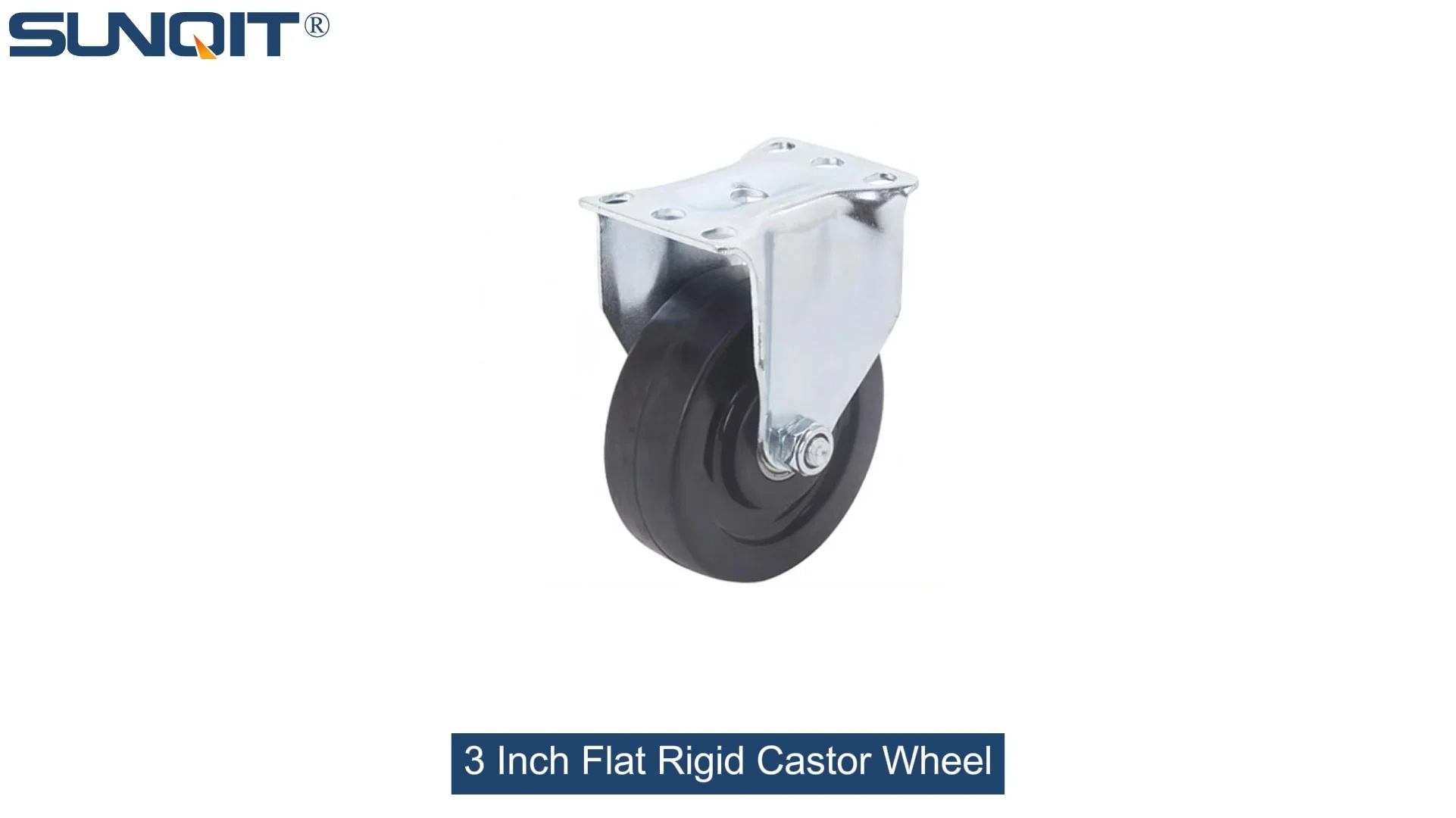
Flat Rigid Castor Wheel
Chair Casters Ball Bearing Wheels Rubber Base. Resistant to abrasion, impact and corrosion. Heavy payload can hold 70Kgs per pcs,which can make it works at a stable and smooth status.
If you've ever walked through a warehouse, stood in a factory, or even pushed a heavy cart in a hospital, you've probably taken castor wheels for granted. Those small, unassuming components are the unsung heroes of efficiency, quietly keeping operations moving—literally. But not all castor wheels are created equal, and when it comes to heavy loads, the type of bearing inside can make or break your workflow. Today, we're diving deep into flat rigid castor wheels, focusing on the age-old debate: ball bearings vs. roller bearings. Which one should you choose for heavy-duty applications? Let's roll up our sleeves and find out.
First Things First: What Are Flat Rigid Castor Wheels?
Before we jump into bearings, let's make sure we're on the same page about the star of the show: flat rigid castor wheels. Unlike swivel castors, which rotate 360 degrees to allow easy direction changes, rigid castors are fixed in place—they only move forward or backward. The "flat" here refers to the mounting plate, which sits flush against the equipment or cart it's attached to, providing stability. These castors are the workhorses of environments where straight-line movement is key: think conveyor systems, heavy machinery bases, or material racks that rarely need to pivot.
Now, the bearing is the heart of any castor wheel. It's the component that reduces friction between the wheel and the axle, allowing the wheel to spin smoothly even under load. Without a good bearing, you're looking at stuck wheels, increased wear and tear, and a whole lot of unnecessary effort to move things around. For heavy loads—we're talking 500kg and up—choosing between ball and roller bearings isn't just a technicality; it's a decision that impacts safety, productivity, and long-term costs.
Ball Bearings: The Speedy Lightweights
How Do Ball Bearings Work?
Picture a set of small, smooth metal balls (usually steel or ceramic) housed in a circular raceway—a grooved track that keeps the balls aligned. When the wheel spins, the balls roll between the inner and outer raceways, creating point contact with the tracks. This minimal contact area is why ball bearings are known for low friction. It's like rolling a marble across a table versus dragging a brick—less surface area means less resistance.
The Pros of Ball Bearings in Flat Rigid Castor Wheels
1. Low Starting Friction: Ever tried pushing a heavy cart that "sticks" at first? Ball bearings solve that. Their point contact means they require less force to get moving, making them ideal for applications where frequent starts and stops are common. If your workflow involves loading and unloading material racks multiple times a day, this can save your team a lot of muscle strain.
2. Smooth Operation at Moderate Speeds: Thanks to their low friction, ball bearings excel at moderate speeds. Think of a lean system where parts move along a conveyor at a steady, medium pace—ball bearings keep the motion consistent without overheating or vibrating.
3. Cost-Effective: Ball bearings are simpler to manufacture than roller bearings, which translates to lower upfront costs. If your loads are on the lighter side (under 500kg) and your environment is clean and dry, ball bearings offer great value for money.
4. Versatile Sizing: Ball bearings come in tiny diameters, making them a good fit for smaller castor wheels. If you need a compact flat rigid castor—say, for a medical cart that needs to fit through narrow doorways—ball bearings are often the only practical option.
The Cons: When Ball Bearings Fall Short
1. Limited Load Capacity: Here's the catch: point contact is great for friction, but terrible for heavy loads. Imagine standing on a single nail versus a bed of nails—the single nail (point contact) will sink into the wood, while the bed (multiple points) distributes weight. Ball bearings work the same way: under heavy loads, the small contact area can cause the balls or raceways to deform, leading to premature failure.
2. Vulnerable to Shock and Impact: If your castor wheels regularly hit bumps, cracks, or uneven floors (common in warehouses with concrete that's seen better days), ball bearings can struggle. The sudden force of impact can chip the balls or dent the raceways, turning a smooth roll into a wobbly, noisy mess.
3. Less Durable in Contaminated Environments: Dust, dirt, and moisture are ball bearings' worst enemies. Even with seals (rubber or metal shields that keep debris out), fine particles can sneak in and act like sandpaper, wearing down the balls and raceways over time. In factories with sawdust, metal shavings, or liquid spills, you'll find yourself replacing ball bearings far more often.

Roller Bearings: The Heavy-Duty Workhorses
How Do Roller Bearings Work?
Instead of balls, roller bearings use cylindrical, tapered, or spherical rollers—think tiny metal cylinders or cones—that roll along the raceways. This design creates line contact with the tracks, meaning the load is distributed over a longer surface area. It's like using a rolling pin to flatten dough versus a single marble—more contact means more stability under weight.
The Pros of Roller Bearings in Flat Rigid Castor Wheels
1. Superior Load Capacity: This is where roller bearings shine. Their line contact can handle significantly more weight than ball bearings. A standard roller bearing in a flat rigid castor wheel can easily support 1000kg or more, depending on size. If you're moving engine blocks, steel sheets, or full pallets of inventory, roller bearings are the safe bet.
2. Shock and Impact Resistance: Warehouses and factories aren't always smooth sailing. Roller bearings' line contact absorbs sudden shocks better than ball bearings. drop a heavy crate onto a cart with roller bearings, and the rollers will distribute the force across the raceway instead of chipping or denting. This makes them ideal for rough floors or outdoor use (think loading docks exposed to rain and gravel).
3. Longer Lifespan in Harsh Conditions: Roller bearings are built tough. Many come with reinforced raceways and sealed designs that keep out contaminants better than ball bearings. In environments with high humidity, chemicals, or debris—like automotive shops with oil spills or food processing plants with water splashes—roller bearings last longer, reducing replacement costs over time.
4. Better Alignment Tolerance: No castor wheel is perfectly aligned 100% of the time. Over time, axles can bend slightly, or mounting plates can loosen. Roller bearings, especially spherical or tapered types, can handle small misalignments without sacrificing performance. Ball bearings, on the other hand, are less forgiving—even a tiny misalignment can cause uneven wear.
The Cons: When Roller Bearings Might Not Be Right
1. Higher Starting Friction: Remember that "sticky" cart we talked about earlier? Roller bearings can feel like that at first. Their line contact means more surface area to overcome, so they need more force to start moving. If your team is pushing carts manually (no motorized help), this can lead to fatigue over long shifts.
2. Noisier at High Speeds: While roller bearings handle heavy loads well, they're not the quietest at high speeds. The line contact creates more vibration, which can get loud if the wheel is spinning fast (think a conveyor moving at 100+ feet per minute). If noise is a concern—say, in a hospital or office setting—this might be a dealbreaker.
3. Higher Upfront Costs: Roller bearings are more complex to make, so they cost more than ball bearings. If your budget is tight and your loads are light, this extra expense might not be worth it. But remember: cheaper upfront doesn't always mean cheaper in the long run. A roller bearing that lasts 5 years versus a ball bearing that needs replacement every 2 years could save you money over time.

Ball vs. Roller Bearings: A Head-to-Head Comparison
Still on the fence? Let's break down the key differences with a side-by-side comparison. This table will help you see how they stack up in real-world scenarios:
| Feature | Ball Bearings | Roller Bearings |
|---|---|---|
| Contact Type | Point contact (small surface area) | Line contact (larger surface area) |
| Load Capacity | Lower (best for ≤500kg per wheel) | Higher (ideal for ≥500kg per wheel) |
| Starting Friction | Low (easy to push from a stop) | Higher (needs more force to start moving) |
| Speed Performance | Excellent at moderate speeds (≤3km/h) | Good at low-to-moderate speeds; noisy at high speeds |
| Shock Resistance | Poor (prone to chipping/denting under impact) | Excellent (absorbs sudden loads well) |
| Durability in Contaminants | Fair (seals help, but debris still causes wear) | Better (reinforced seals and sturdier design) |
| Maintenance Needs | Moderate (lubricate every 3-6 months) | Moderate to high (heavier loads require more frequent lubrication) |
| Upfront Cost | Lower (budget-friendly for light loads) | Higher (but better long-term value for heavy loads) |
| Ideal Applications | Medical carts, office furniture, small material racks, lean systems with light parts | Industrial conveyors, heavy machinery bases, warehouse racks, loading dock equipment |

Real-World Scenarios: When to Pick Which Bearing
Let's put this into context with a few examples. These scenarios will help you see how the choice plays out in day-to-day operations:
Scenario 1: A Small Electronics Assembly Line (Lean System)
Imagine you run a lean system where small circuit boards (each weighing 1-2kg) move along a conveyor to different workstations. The conveyor runs at a steady 2km/h, and the line stops and starts frequently as workers load/unload parts. For this, ball bearings in flat rigid castor wheels make sense. They're cheap, start easily, and keep the lightweight parts moving smoothly without adding unnecessary cost.
Scenario 2: A Warehouse Moving Steel Beams (Heavy Loads)
Now, picture a warehouse storing steel beams that weigh 800kg each. You need a cart with flat rigid castors to move these beams from the storage area to the cutting station. The floor is concrete with a few cracks, and the cart is pushed manually by two workers. Here, roller bearings are non-negotiable. Their high load capacity and shock resistance will handle the weight and rough floor, while their durability means you won't be replacing bearings every few months.
Scenario 3: A Hospital Supply Cart (Light Loads, Frequent Stops)
Hospitals use carts to transport linens, medications, and equipment—loads that rarely exceed 300kg. These carts need to start and stop smoothly (no jostling meds!) and move quietly. Ball bearings are perfect here. They're quiet, low-friction, and cost-effective, making them the go-to choice for healthcare settings.
Maintenance Matters: Keeping Your Bearings Rolling
No matter which bearing you choose, maintenance is key to extending their lifespan. Here's how to keep both types in top shape:
For Ball Bearings:
- Lubricate Regularly: Use a light machine oil or grease every 3-6 months, depending on usage. This prevents metal-on-metal contact and washes out small debris.
- Check Seals: If your ball bearings have rubber seals, inspect them for cracks or tears. Damaged seals let in dirt, which is the #1 cause of premature failure.
- Clean Wheels: Wipe down the wheels weekly to remove dust and grime. A quick once-over with a damp cloth can prevent buildup that traps debris near the bearing.
For Roller Bearings:
- Use Heavy-Duty Grease: Roller bearings under heavy loads need thicker grease (look for NLGI Grade 2) to stay in place. Lubricate every 2-4 months if used daily.
- Inspect for Misalignment: If the wheel wobbles or makes a grinding noise, check the axle alignment. Roller bearings can handle small misalignments, but major shifts cause uneven wear.
- replace Worn Rollers: Over time, rollers can flatten or chip. If you notice the wheel isn't spinning as smoothly, replace the bearing ASAP—waiting will damage the axle and raceway.
Choosing a Caster Supplier: What to Look For
Even the best bearing design won't perform if the castor wheel itself is poorly made. When shopping for flat rigid castor wheels, choose a reputable caster supplier who understands your needs. Here's what to ask:
1. Do they offer custom load ratings? A good supplier will help you calculate the exact load per wheel (total load ÷ number of wheels) and recommend bearings accordingly.
2. What materials do they use? For industrial settings, look for wheels made of polyurethane (good for floor protection) or cast iron (high durability). Avoid plastic wheels for heavy loads—they crack under pressure.
3. Can they provide caster accessories? Things like brake kits, axle locks, or replacement seals are essential for maintenance. A supplier who stocks these will save you time when you need repairs.
Final Thoughts: It's All About Your Needs
At the end of the day, the choice between ball and roller bearings in flat rigid castor wheels comes down to your specific application. If you're moving light to moderate loads (under 500kg) with frequent starts and stops, ball bearings are the affordable, efficient choice. If you're dealing with heavy loads (500kg+), rough floors, or shock-prone environments, roller bearings are worth the extra investment for their durability and safety.
Remember: your castor wheels are the foundation of your workflow. A failed bearing can bring operations to a halt, costing you time and money. By understanding the differences between ball and roller bearings, and choosing the right one for your needs, you'll keep things rolling smoothly—literally and figuratively—for years to come.
So, what's your scenario? Light loads or heavy? Smooth floors or rough? Let us know, and we'll help you find the perfect bearing match!