- Company Articles
- Products and Technology
- Product knowledge
- Flat Rigid Castor Wheel Design: Structure and Bearing Types Explained

Flat Rigid Castor Wheel Design: Structure and Bearing Types Explained
Related Product
Flat Rigid Castor Wheel
Chair Casters Ball Bearing Wheels Rubber Base. Resistant to abrasion, impact and corrosion. Heavy payload can hold 70Kgs per pcs,which can make it works at a stable and smooth status.
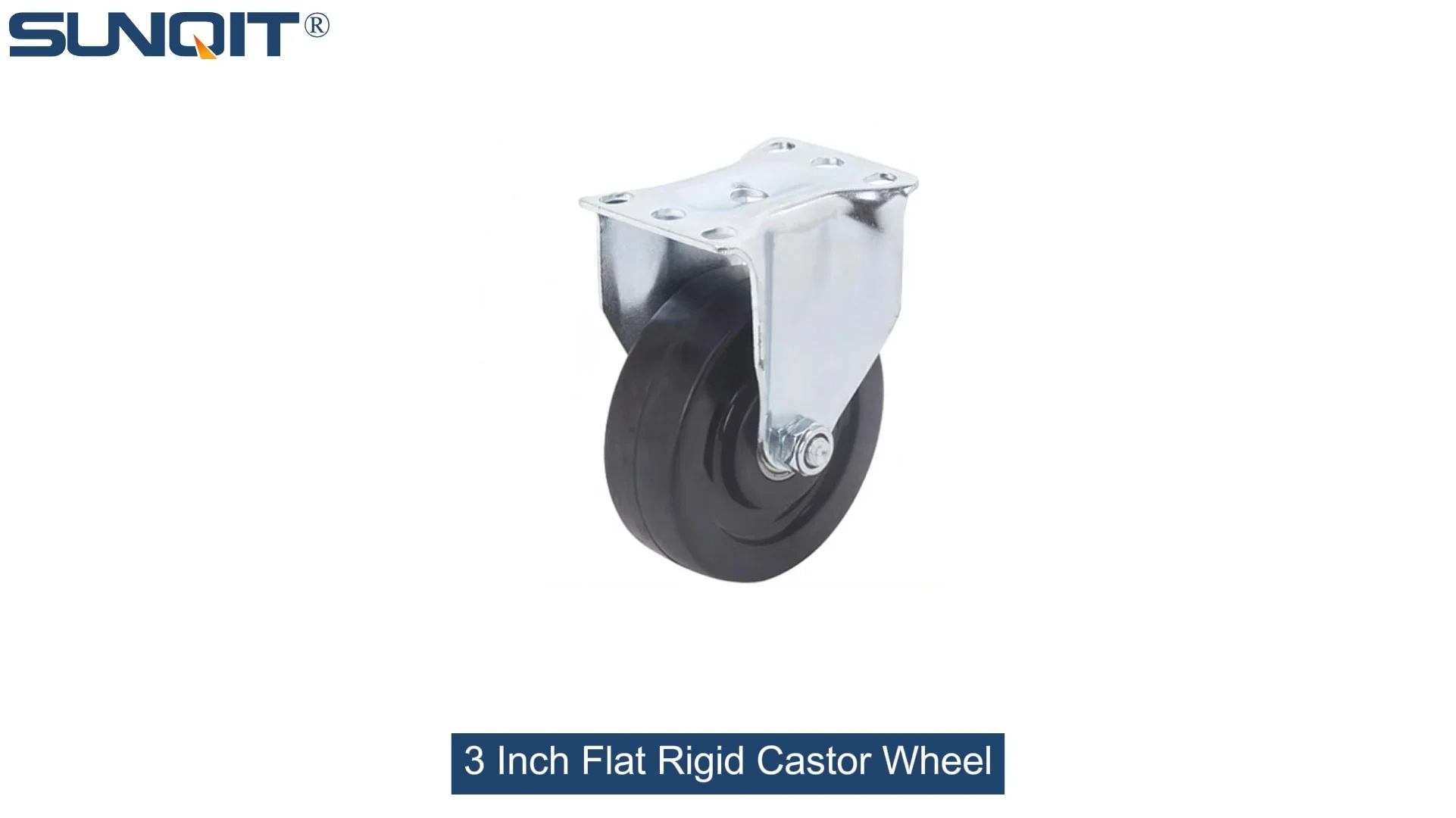
In the world of material handling and industrial mobility, few components work as quietly yet critically as castor wheels. From the warehouse floors where heavy pallets glide to the factory lines where assembly parts are transported, castor wheels are the unsung heroes that keep operations moving. Among the many types of castors available, flat rigid castor wheels stand out for their simplicity, stability, and reliability. Unlike swivel castors that pivot 360 degrees, flat rigid castors are fixed in direction, making them ideal for applications where straight-line movement and maximum stability are non-negotiable. Whether you're managing a busy warehouse with turnover trolley and rack systems or designing heavy-duty industrial equipment, understanding the design, structure, and bearing types of flat rigid castor wheels is key to optimizing efficiency, safety, and longevity. In this article, we'll dive deep into what makes these castors tick, exploring their components, bearing options, applications, and how to choose the right one for your needs.
What Are Flat Rigid Castor Wheels?
Before we unpack their design, let's clarify what sets flat rigid castor wheels apart. A "flat rigid" castor is defined by two key features: its mounting style and its movement capability. The term "flat" refers to the mounting plate—a flat, rectangular or square metal plate that attaches the castor to the equipment (such as a trolley, rack, or machine). This plate typically has pre-drilled holes for bolts or screws, ensuring a secure connection to the equipment's frame. The "rigid" aspect means the castor does not swivel; its wheel axis is fixed in a straight line relative to the mounting plate. This fixed orientation means the equipment moves only in the direction the castor is pointing, eliminating side-to-side sway and providing superior stability, especially when carrying heavy loads.
Unlike swivel castors, which require a swivel head (a complex mechanism with bearings that allows 360-degree rotation), flat rigid castors have a simpler design with fewer moving parts. This simplicity translates to lower maintenance needs, higher load capacities, and greater durability—qualities that make them a staple in industrial, commercial, and even some residential settings. Common examples include the castors on heavy-duty storage racks, the wheels under large industrial ovens, and the base of material transport carts used in manufacturing plants.
The Anatomy of Flat Rigid Castor Wheel Design
To truly understand how flat rigid castor wheels function, let's break down their structure into core components. Each part plays a critical role in determining the castor's load capacity, durability, and performance.
1. The Wheel: The Point of Contact with the Floor
The wheel is arguably the most visible and critical component of any castor. Its design—including material, tread pattern, diameter, and width—directly impacts how the castor interacts with the floor, handles loads, and resists wear. Let's explore the key considerations:
Materials: Flat rigid castor wheels are made from a variety of materials, each suited to specific environments and load requirements:
- Polyurethane (PU): A popular choice for general-purpose use, polyurethane wheels offer a balance of durability, floor protection, and quiet operation. They're resistant to oils, chemicals, and abrasion, making them ideal for indoor use on smooth floors like concrete or tile. PU wheels also provide good traction, reducing slippage when starting or stopping.
- Nylon: Known for its high load capacity and chemical resistance, nylon wheels are rigid and durable, suitable for heavy loads and harsh environments (e.g., warehouses with oil spills or exposure to solvents). However, they can be noisy on hard floors and may mark delicate surfaces like hardwood.
- Rubber: Rubber wheels excel at shock absorption and quiet movement, making them perfect for environments where noise reduction is key (e.g., hospitals, offices). They also grip well on wet or uneven floors but have lower load capacities than nylon or steel.
- Steel: For extreme heavy loads (often exceeding 1,000 kg per castor), steel wheels are unmatched. They're highly durable and heat-resistant, making them suitable for outdoor use or high-temperature environments like foundries. However, they're noisy, can damage soft floors, and require smooth surfaces to avoid vibration.
Diameter and Width: The wheel's diameter affects how easily the castor rolls: larger diameters (e.g., 100mm or more) roll over obstacles like cracks or debris more smoothly and require less force to move. Width, on the other hand, distributes the load over a larger area, reducing floor pressure. For soft floors (e.g., asphalt, carpet), wider wheels prevent sinking, while narrow wheels are better for tight spaces.
Tread Design: While flat rigid castors often have a smooth tread for consistent rolling, some designs include grooves or patterns to improve traction on slippery surfaces. For example, wheels used in outdoor or wet environments may have a knobby tread to prevent skidding.
2. The Mounting Plate: The Connection Point
The mounting plate is the bridge between the wheel assembly and the equipment. As the "flat" part of the castor, it's typically a flat sheet of metal (steel or aluminum) cut to a specific size (e.g., 100x80mm, 125x100mm) with pre-drilled holes for bolts or screws. The plate's thickness and material determine its strength—heavier loads require thicker, high-grade steel plates to avoid bending or warping.
A critical accessory here is the caster installation base , which sometimes refers to the mounting plate itself or additional hardware that reinforces the connection between the plate and the equipment. For example, in heavy-duty applications, a caster installation base might include gussets (triangular metal brackets) to strengthen the plate against twisting forces, ensuring the castor remains securely attached even under stress.
Hole patterns on the mounting plate vary by manufacturer but often follow industry standards to ensure compatibility with common equipment frames. For instance, a 4-bolt pattern (two holes on each side) is typical for medium to heavy loads, while smaller castors may use a 2-bolt pattern for lighter applications.
3. The Axle: The Wheel's Rotational Axis
The axle is a metal rod that runs through the wheel's center, allowing it to rotate freely. Axles are typically made from hardened steel for strength and may be fixed to the mounting plate via brackets or welded directly. The axle's diameter must match the wheel's bore (the central hole) and the load requirements—a thicker axle reduces bending under heavy loads. Some axles are threaded at the ends, with nuts securing the wheel in place, while others use cotter pins or snap rings to prevent the wheel from sliding off.
4. Bearings: Reducing Friction for Smooth Movement
While the wheel, mounting plate, and axle provide structure, it's the bearings that enable smooth, efficient rotation. Bearings sit between the wheel's bore and the axle, reducing friction as the wheel turns. Without bearings, the wheel would rub directly against the axle, causing excessive wear, heat, and resistance—making the castor difficult to move, even under light loads. Let's explore the most common bearing types used in flat rigid castor wheels.

Bearing Types in Flat Rigid Castor Wheels
Bearings are the unsung heroes within the wheel, dictating how easily the castor rolls, how much load it can handle, and how long it will last. The right bearing type depends on factors like load capacity, speed, and operating environment. Below are the most common bearing types found in flat rigid castor wheels, along with their pros, cons, and ideal applications.
| Bearing Type | How It Works | Load Capacity | Friction Level | Best For | Maintenance Needs |
|---|---|---|---|---|---|
| Ball Bearings | Small metal balls (steel or ceramic) between inner and outer races, rolling to reduce friction. | Light to medium (up to ~500 kg per castor) | Low | General-purpose, medium speeds, smooth floors (e.g., office equipment, light trolleys) | Regular lubrication with oil or grease; susceptible to debris |
| Roller Bearings | Cylindrical or tapered rollers between races, providing more contact area than balls. | Medium to heavy (500–2,000+ kg per castor) | Low to medium | Heavy loads, radial force (e.g., industrial trolleys, warehouse racks) | Grease lubrication; more tolerant of debris than ball bearings |
| Plain Bearings (Bushings) | Solid sleeve (often brass, bronze, or plastic) with no moving parts; relies on low-friction materials. | Light to medium (up to ~300 kg per castor) | Medium to high | Slow speeds, low-cost applications (e.g., light-duty carts, residential use) | Minimal; occasional lubrication for plastic bushings |
| Tapered Roller Bearings | Conical rollers designed to handle both radial and axial (thrust) loads. | Heavy to extreme (1,000–5,000+ kg per castor) | Low | Extreme loads, combined radial/axial forces (e.g., heavy machinery, construction equipment) | Regular grease lubrication; precise installation required |
1. Ball Bearings: The Go-To for Smooth, Light-to-Medium Loads
Ball bearings are the most common bearing type in castor wheels, thanks to their low friction and versatility. They consist of a set of small, spherical balls held in place by a cage (or retainer) between an inner race (fitted around the axle) and an outer race (fitted inside the wheel's bore). As the wheel turns, the balls roll between the races, reducing friction far more effectively than sliding contact.
Ball bearings are ideal for light to medium loads (typically up to 500 kg per castor) and medium speeds. They're widely used in general-purpose applications like office furniture, light material handling trolleys, and medical equipment. However, their small contact area makes them less suitable for heavy loads or environments with excessive debris, which can get trapped between the balls and races, causing premature wear. Regular lubrication with oil or grease is essential to keep them rolling smoothly.
2. Roller Bearings: Heavy-Duty Performance
For applications requiring higher load capacities, roller bearings are the better choice. Instead of balls, they use cylindrical, tapered, or spherical rollers, which have a larger contact area with the races. This increased contact distributes the load more evenly, allowing roller bearings to handle heavier radial loads (forces perpendicular to the axle) than ball bearings. Cylindrical roller bearings are common in flat rigid castors, offering excellent durability for medium to heavy loads (500–2,000 kg per castor).
Roller bearings are often found in industrial settings, such as on turnover trolley and rack systems in warehouses, where carts carry heavy pallets or bulk materials. They're more tolerant of debris than ball bearings, as the rollers can push small particles aside, and they require less frequent lubrication (though grease is still recommended for optimal performance). Tapered roller bearings, a subtype, are designed to handle both radial and axial loads (e.g., when equipment is tilted or cornered sharply), making them suitable for extreme heavy-duty applications like construction machinery.
3. Plain Bearings (Bushings): Simplicity and Cost-Effectiveness
Plain bearings, also known as bushings, are the simplest bearing type—no rolling elements, just a solid sleeve made of low-friction material (e.g., brass, bronze, nylon, or self-lubricating plastic like PTFE). They work by creating a sliding interface between the axle and wheel, relying on the bushing material to reduce friction.
Plain bearings are inexpensive, easy to install, and require minimal maintenance (some self-lubricating plastics need no lubrication at all). However, their sliding friction results in higher resistance than rolling bearings, making them best suited for slow speeds and light loads (up to ~300 kg per castor). Common uses include low-cost, low-duty applications like residential carts, small toolboxes, or lightweight warehouse trolleys that aren't moved frequently.
4. Tapered Roller Bearings: Handling Combined Loads
Tapered roller bearings are a specialized type designed to handle both radial and axial (thrust) loads. Their conical rollers and races allow them to distribute forces in multiple directions, making them ideal for equipment that may experience tilting or uneven loading, such as heavy machinery or large industrial racks. While less common in standard flat rigid castors, they're critical for extreme heavy-duty applications where reliability under stress is non-negotiable. Tapered roller bearings require precise installation and regular grease lubrication to maintain their performance.

Applications of Flat Rigid Castor Wheels
Flat rigid castor wheels thrive in environments where straight-line movement, stability, and load capacity are priorities. Let's explore some of their most common applications:
1. Turnover Trolley and Rack Systems
Turnover trolleys and racks are workhorses in warehouses, manufacturing plants, and distribution centers, used to transport materials, components, or finished goods between workstations. These trolleys often carry heavy loads (e.g., stacks of boxes, pallets of parts), and flat rigid castors ensure they move in straight, predictable paths, reducing the risk of tipping or collision. For example, a three-tier turnover rack loaded with 500 kg of automotive parts relies on flat rigid castors to glide smoothly along warehouse aisles, maintaining stability even when stopping or starting suddenly.
2. Industrial Machinery and Equipment
Large industrial machines, such as printing presses, injection molding equipment, or metalworking tools, often rest on flat rigid castors to facilitate repositioning (when needed) while maintaining stability during operation. The fixed direction prevents the machine from shifting during use, which is critical for precision tasks. Steel or polyurethane wheels with roller bearings are common here, offering the load capacity to support the machine's weight (often several tons) and the durability to withstand industrial environments.
3. Heavy-Duty Storage Racks
Mobile storage racks in warehouses or retail backrooms use flat rigid castors to move along fixed tracks, allowing easy access to stored goods. These racks can hold thousands of kilograms of inventory, so castors with high load capacities (often using roller or tapered roller bearings) are essential. The rigid design ensures the rack stays aligned with the track, preventing jamming or derailment.
4. Medical and Laboratory Equipment
In healthcare settings, equipment like mobile patient lifts, medication carts, or laboratory workstations often use flat rigid castors for stability and quiet operation. Rubber or polyurethane wheels with ball bearings reduce noise (critical in hospitals) and prevent marking on floors, while the fixed direction ensures precise movement in tight spaces.

Benefits of Choosing Flat Rigid Castor Wheels
Why opt for flat rigid castors over swivel or other types? Their unique design offers several key advantages:
- Superior Stability: Fixed direction eliminates swiveling, so equipment moves in a straight line, reducing the risk of tipping or swaying—especially important for tall or top-heavy loads.
- Higher Load Capacity: Without the complex swivel mechanism (which adds weight and reduces structural integrity), flat rigid castors can handle heavier loads than comparably sized swivel castors.
- Lower Maintenance: Fewer moving parts mean less to break or wear out. No swivel bearings or raceways to lubricate or replace, reducing long-term upkeep costs.
- Cost-Effectiveness: Simpler design translates to lower manufacturing costs, making flat rigid castors an economical choice for budget-conscious operations.
- Durability: Robust construction (thick mounting plates, heavy-duty axles) makes them resistant to impact and wear, even in harsh industrial environments.
How to Choose the Right Flat Rigid Castor Wheel
Selecting the perfect flat rigid castor wheel requires careful consideration of your specific needs. Here's a step-by-step guide to help you decide:
1. Calculate the Load Capacity
Start by determining the total weight of the equipment plus the maximum load it will carry. Divide this total by the number of castors (most equipment uses 4–6 castors) to get the load per castor, then add a 20–30% safety factor to account for uneven loading or impact. For example, a trolley weighing 200 kg with a 500 kg load (total 700 kg) on 4 castors would require each castor to handle at least 700 kg / 4 = 175 kg, plus 30% safety factor = 227.5 kg. Choose a castor with a load rating exceeding this number.
2. Consider the Floor Surface
The floor type dictates wheel material and tread:
- Smooth, hard floors (concrete, tile): Polyurethane or nylon wheels work well; avoid steel if noise is a concern.
- Soft floors (carpet, asphalt): Wider wheels with a larger diameter to prevent sinking (e.g., 100mm+ diameter, 50mm+ width).
- Uneven or rough floors: Larger diameter wheels (125mm+) with shock-absorbing materials like rubber to roll over obstacles.
3. Evaluate the Environment
Factors like temperature, chemicals, and moisture affect material choice:
- High temperatures (e.g., foundries): Steel wheels and heat-resistant bearings.
- Chemicals or oils (e.g., factories): Nylon or polyurethane wheels (resistant to most chemicals).
- Wet environments (e.g., food processing): Stainless steel mounting plates and corrosion-resistant bearings to prevent rust.
4. Determine Speed and Frequency of Use
For equipment moved frequently at medium to high speeds (e.g., assembly line trolleys), ball or roller bearings are essential to reduce friction. For slow-moving, rarely used equipment (e.g., storage racks), plain bearings may suffice to save costs.
5. Check Mounting Requirements
Ensure the mounting plate's hole pattern matches your equipment's frame. Measure the distance between bolt holes (center-to-center) and the plate size to ensure a secure fit. If needed, use a caster installation base or adapter plate to bridge any gaps.
Maintenance Tips for Longevity
With proper care, flat rigid castor wheels can last for years, even in demanding environments. Here's how to maintain them:
- Clean Regularly: Remove dirt, debris, and oil from wheels and bearings using a brush or cloth. Built-up debris can wear down treads and jam bearings.
- Lubricate Bearings: Follow the manufacturer's recommendations for lubrication frequency and type. Ball bearings typically need oil or light grease; roller bearings need heavier grease. Avoid over-lubricating, as excess can attract dirt.
- Inspect Wheels and Axles: Check for cracks, flat spots, or worn treads on wheels—replace immediately if damaged. Tighten loose axles or mounting bolts to prevent wobbling.
- replace Worn Parts: Keep caster accessories like replacement wheels, axles, and bearings on hand. Swapping out a worn wheel is often cheaper than replacing the entire castor.
Conclusion
Flat rigid castor wheels may not have the flashy maneuverability of swivel castors, but their stability, durability, and simplicity make them indispensable in countless industrial, commercial, and even residential applications. From the wheel material and mounting plate to the critical role of bearings, every component is designed to work together to ensure smooth, reliable movement of heavy loads in straight paths. Whether you're equipping a turnover trolley and rack in a warehouse or designing a heavy-duty industrial machine, understanding the structure and bearing types of flat rigid castors is key to optimizing performance and safety. By carefully considering load capacity, floor conditions, environment, and maintenance needs, you can select the perfect castor to keep your operations moving forward—quietly, efficiently, and reliably.