- Company Articles
- Products and Technology
- Solution
- Flat Rigid Castor Wheel for Custom Solutions: Tailored to Your Industry's Needs

Flat Rigid Castor Wheel for Custom Solutions: Tailored to Your Industry's Needs
Related Product
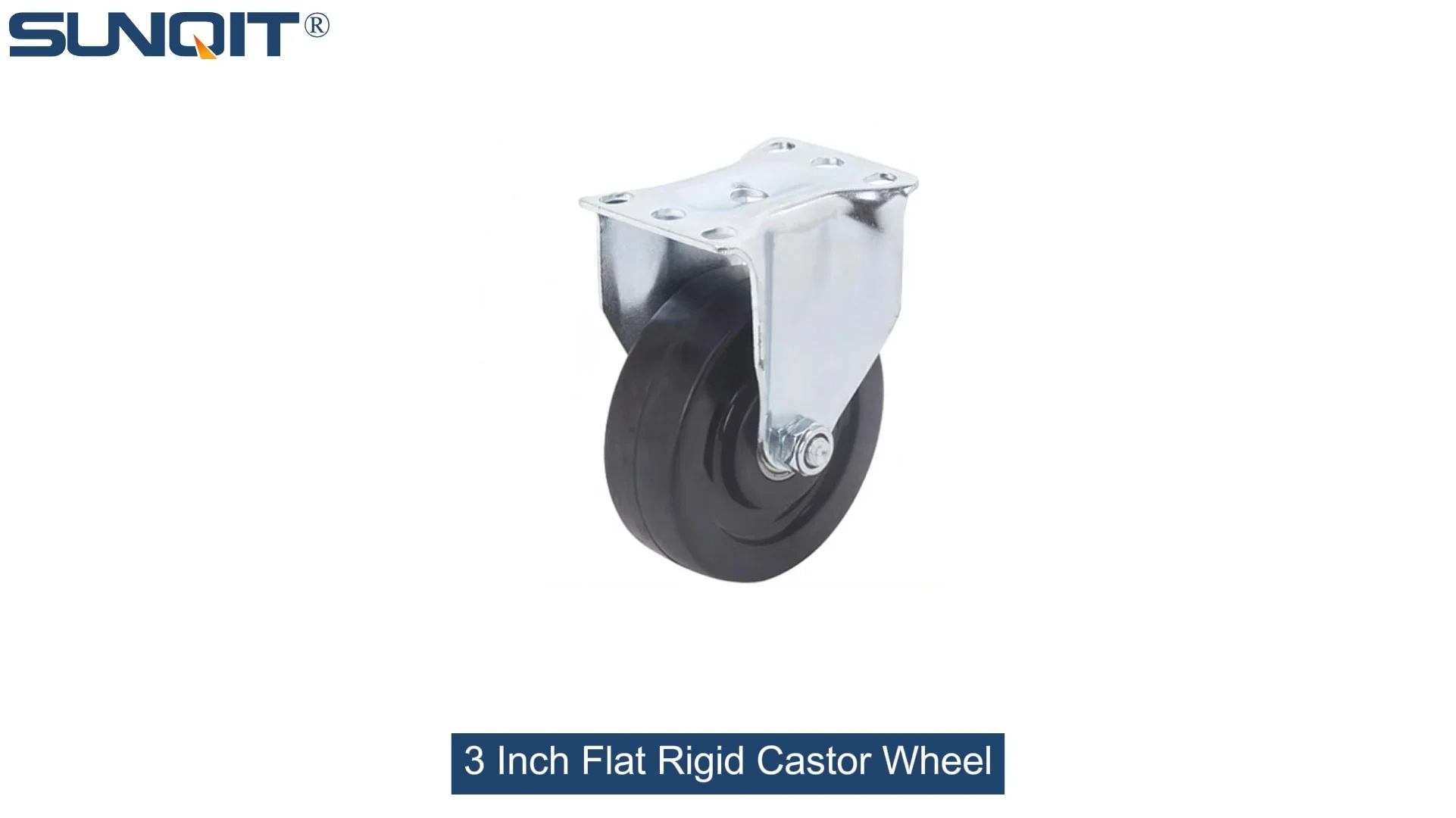
Flat Rigid Castor Wheel
Chair Casters Ball Bearing Wheels Rubber Base. Resistant to abrasion, impact and corrosion. Heavy payload can hold 70Kgs per pcs,which can make it works at a stable and smooth status.
Walk into any busy warehouse, manufacturing floor, or retail stockroom, and you'll notice a common thread: movement. Carts glide past, workbenches shift to new stations, and trolleys carry goods from point A to B. But here's the thing—too often, the casters making that movement possible are an afterthought. They're generic, one-size-fits-all solutions that wobble under heavy loads, get stuck on uneven floors, or fail to align with the unique rhythms of the work happening around them. For operations manager Maria at a mid-sized electronics plant, this was a daily headache. "Our assembly line workbenches kept drifting when we didn't want them to," she recalls. "We needed stability for precision work, but also smooth movement when reconfiguring the floor. The swivel casters we had were overkill—we just needed something that went straight, reliably." That's where flat rigid castor wheels stepped in. Unlike their swivel counterparts, these fixed-direction wheels prioritize stability and control, making them a secret weapon for industries that need predictable movement without the fuss of unnecessary rotation. But what makes them truly powerful isn't just their design—it's how they can be tailored to fit your industry's specific needs. Let's dive into why flat rigid castor wheels are more than just a "part"—they're a custom solution in motion.
What Are Flat Rigid Castor Wheels, Anyway?
At their core, flat rigid castor wheels are exactly what the name suggests: wheels mounted on a fixed, non-swiveling frame. Unlike swivel casters, which can rotate 360 degrees, these wheels lock into a straight path, moving only forward or backward. This simplicity is their superpower. Think of them as the "steady hands" of the caster world—no unexpected turns, no wobbly shifts, just consistent, linear movement. But don't mistake "simple" for "basic." Modern flat rigid castors are engineered with precision, often paired with durable materials like high-grade steel frames or shock-absorbing rubber tires. They attach to equipment via sturdy mounting plates or stems, and when combined with the right caster accessories—like brake locks, anti-slip pads, or corrosion-resistant coatings—they become adaptable tools for almost any environment.
Take the aluminum profile frames common in today's modular workbenches and turnover trolleys. These lightweight, durable structures need casters that complement their strength without adding unnecessary bulk. Flat rigid castors, with their low-profile design and secure mounting, integrate seamlessly with aluminum profiles, creating a system where the wheel and the frame work in harmony. "We switched our material racks to aluminum profiles and paired them with flat rigid casters," says Raj, a logistics coordinator at a food distribution center. "The combination is game-changing—light enough for our team to move by hand, but stable enough that pallets don't shift during transport. It's like the casters were made for the racks, not just bolted on."
Real-World Example:
A automotive parts manufacturer recently upgraded their turnover trolley and rack system with flat rigid castor wheels. Previously, their trolleys used swivel casters that often got stuck in the grooves of the factory's concrete floor, causing delays. By switching to flat rigid wheels with polyurethane tires (chosen for their grip on rough surfaces), they reduced trolley jams by 40% and cut down on worker fatigue—all because the casters were tailored to their specific floor type.
Why "One-Size-Fits-All" Casters Fall Short
Industries aren't cookie-cutter, so why should their casters be? A bakery that moves delicate pastries on a cart has different needs than a steel mill transporting 500kg slabs of metal. A hospital requiring sterile, non-marking wheels can't use the same casters as a construction site with gravel and debris. Flat rigid castor wheels shine here because they're a blank canvas for customization. Let's break down the key reasons industries need tailored solutions:
- Load Capacity: A retail stock cart might carry 50kg of clothing, while a manufacturing workbench could hold 300kg of tools and materials. Flat rigid casters come in load ratings from 100kg to over 2000kg, ensuring they don't buckle under pressure.
- Environment: Wet floors (like in commercial kitchens) demand water-resistant wheels; chemical plants need casters that stand up to corrosive spills; cleanrooms require non-shedding, easy-to-sterilize materials. Custom options let you pick wheels made from polyurethane, rubber, or even stainless steel to match the environment.
- Terrain: Smooth warehouse floors? Hard rubber tires work best. Uneven concrete? Pneumatic (air-filled) tires absorb shocks. Gravel or outdoor paths? Larger, treaded wheels prevent sinking. Flat rigid casters can be outfitted with any of these, depending on where they'll roll.
- Workflow: Some operations need casters that lock in place during use (like a workbench during assembly) but roll freely when repositioning. Others need wheels that glide silently to avoid disrupting patient care in hospitals. Custom features like foot brakes or noise-dampening tires make all the difference.

Industry-Specific Solutions: How Flat Rigid Casters Deliver
Let's zoom in on how flat rigid castor wheels solve unique problems across four key industries. Spoiler: It's not just about "moving stuff"—it's about making work safer, faster, and more efficient.
1. Manufacturing: Stability for Precision Work
On a manufacturing floor, precision is everything. A workbench holding sensitive electronics or delicate machinery can't shift mid-assembly, but it does need to move when the production line reconfigures. Flat rigid casters strike this balance perfectly. Paired with sturdy aluminum profile workbenches, they stay locked in place during use (thanks to optional brake caster accessories) and roll smoothly when it's time to rearrange. "Our circuit board assembly workbenches used to drift even with swivel casters locked," says Mike, a plant supervisor at a tech firm. "We switched to flat rigid casters with rubber tires, and now the benches stay put while our technicians work. When we need to move them? Two people can push a fully loaded bench across the floor without breaking a sweat."
2. Logistics & Warehousing: Turnover Trolleys That Keep Up
Warehouses run on turnover trolley and rack systems—carts and shelves that ferry goods from receiving to shipping, or from storage to picking stations. These trolleys often follow fixed routes: down aisles, around corners, and onto loading docks. Swivel casters here can be a liability, veering off course and causing collisions. Flat rigid casters, with their straight-line focus, turn these trolleys into efficient, predictable tools. Add in features like heavy-duty steel frames and high-capacity wheels, and you've got a system that handles pallet loads, bulk packages, and even fragile goods without a hitch. "We use flat rigid casters on all our bulk turnover trolleys," says Lisa, a warehouse manager at a national retailer. "They follow the same path every time, so our team knows exactly where to stand, how fast to walk, and how much weight to load. It's cut down on accidents and made our workflows 20% more consistent."
3. Healthcare: Clean, Quiet, and Controlled
Hospitals and clinics have zero tolerance for casters that squeak, shed debris, or fail under the weight of medical equipment. Flat rigid casters here are often made with non-marking, latex-free rubber tires to protect floors and prevent cross-contamination. They're also designed to move quietly—critical for patient recovery areas—and lock securely to keep carts stationary during procedures. "Our medication carts used to have swivel casters that would roll if someone bumped them," notes Dr. Patel, a clinic administrator. "With flat rigid casters and foot brakes, the carts stay exactly where we park them. No more near-misses with IV stands or spilled supplies. It's the little things that make a big difference in patient safety."
4. Retail: Stockroom Efficiency, No Fuss
Retail stockrooms are tight spaces with constant foot traffic. Stock carts need to move quickly but carefully, navigating around staff and stacked boxes. Flat rigid casters, with their predictable movement, reduce the risk of collisions. They're also easy to maneuver in straight lines, making restocking shelves faster. "Our team used to waste time wrestling with swivel carts that got stuck between racks," says Jamie, a store manager at a clothing chain. "Flat rigid casters? They glide right down the aisles. We can restock twice as many shelves in an hour now—plus, the carts don't mark up our newly polished floors. Win-win."

Key Features to Look for in Custom Flat Rigid Casters
So, you're sold on the benefits—now how do you choose the right flat rigid castor wheel for your needs? Here are the must-ask questions to ensure your solution is tailored to perfection:
- What's your maximum load? Don't just guess—calculate the heaviest item your equipment will carry, then add 20% for safety. A 500kg load needs casters rated for at least 600kg to avoid premature wear.
- What's the floor like? Smooth concrete? Go for hard rubber or polyurethane. Uneven or outdoor surfaces? Pneumatic or large-diameter wheels with treads. Wet or chemical-exposed areas? Stainless steel frames and non-porous tires.
- Do you need brakes? For stationary work (like workbenches), foot brakes or side locks are essential. Look for caster accessories that integrate seamlessly with the wheel design—no clunky add-ons that get in the way.
- How often will it move? If your equipment stays in one place 90% of the time, a basic flat rigid caster works. If it's rolling 10+ times a day, invest in high-quality bearings and durable wheel materials to reduce maintenance.
- What's your budget? Custom doesn't have to mean expensive. Work with a supplier who can prioritize features—like a higher load rating over fancy finishes—so you get what you need without overpaying.

Flat Rigid vs. Swivel vs. Heavy-Duty: Which Caster Is Right for You?
Still unsure if flat rigid casters are the way to go? Let's compare them to two other common types to see where they fit best:
| Caster Type | Key Features | Ideal Applications | Max Load Capacity | Best For… |
|---|---|---|---|---|
| Flat Rigid | Fixed direction (no swivel), stable, low maintenance | Workbenches, straight-path trolleys, assembly lines | 100kg – 2000kg+ | Precision work, predictable routes, stability-first needs |
| Swivel | 360° rotation, maneuverable in tight spaces | Retail carts, medical stretchers, small toolboxes | 50kg – 1000kg | Constant direction changes, tight corners, light to medium loads |
| Heavy-Duty | Reinforced frames, large wheels, shock absorption | Construction equipment, industrial machinery, cargo containers | 2000kg – 10,000kg+ | Extreme loads, rough terrain, outdoor use |
As the table shows, flat rigid casters occupy a sweet spot: they're more stable than swivel casters and more versatile than heavy-duty ones for indoor, medium-load applications. They're not meant to replace other types—they're meant to complement them, stepping in where precision and predictability matter most.
Choosing a Supplier: More Than Just Casters—It's About Partnership
You've narrowed down your needs, compared caster types, and decided flat rigid is the way to go. Now, the final piece: finding a supplier who doesn't just sell you casters, but partners with you to create a custom solution. Here's what to look for:
- Access to Caster Accessories: The best solutions aren't just the wheels—they're the brakes, mounting plates, and replacement parts that keep your equipment running. A good supplier stocks a range of caster accessories, so you're not scrambling if a tire wears out or a brake needs replacing.
- Industry Expertise: A supplier who specializes in your field (manufacturing, healthcare, etc.) will ask the right questions: "What's your floor made of?" "How often do you move the equipment?" "Any regulatory standards to meet?" Their insights can turn a good solution into a great one.
- Customization Flexibility: Can they adjust wheel size, tire material, or mounting style to fit your equipment? Avoid suppliers who push pre-packaged "kits"—your operation is unique, and your casters should be too.
- Reliability: Late deliveries or faulty parts can grind your operation to a halt. Look for suppliers with a track record of on-time shipping and quality guarantees. Read reviews, ask for references, and test a small order before committing.
Final Thoughts: Your Operation Deserves a Caster That Fits
At the end of the day, flat rigid castor wheels are more than just hardware. They're a reflection of how well you understand your operation's needs—how you prioritize stability, efficiency, and safety. For Maria's electronics plant, they turned frustrating workbench drifts into smooth, precise assembly. For Raj's distribution center, they turned clunky trolleys into streamlined transport tools. And for countless others, they're the unsung heroes keeping workflows moving forward, without the drama of unexpected swivels or stuck wheels.
So, the next time you're shopping for casters, don't settle for "good enough." Ask: Does this fit my floor? My load? My team's daily rhythm? With flat rigid castor wheels and a supplier who prioritizes customization, the answer can be a resounding "yes." After all, your industry doesn't run on generic solutions—and neither should your casters.