- Company Articles
- Products and Technology
- Product knowledge
- Flat Rigid Castor Wheel for Workbench E: Enhancing 3C Assembly Efficiency

Flat Rigid Castor Wheel for Workbench E: Enhancing 3C Assembly Efficiency
Related Product
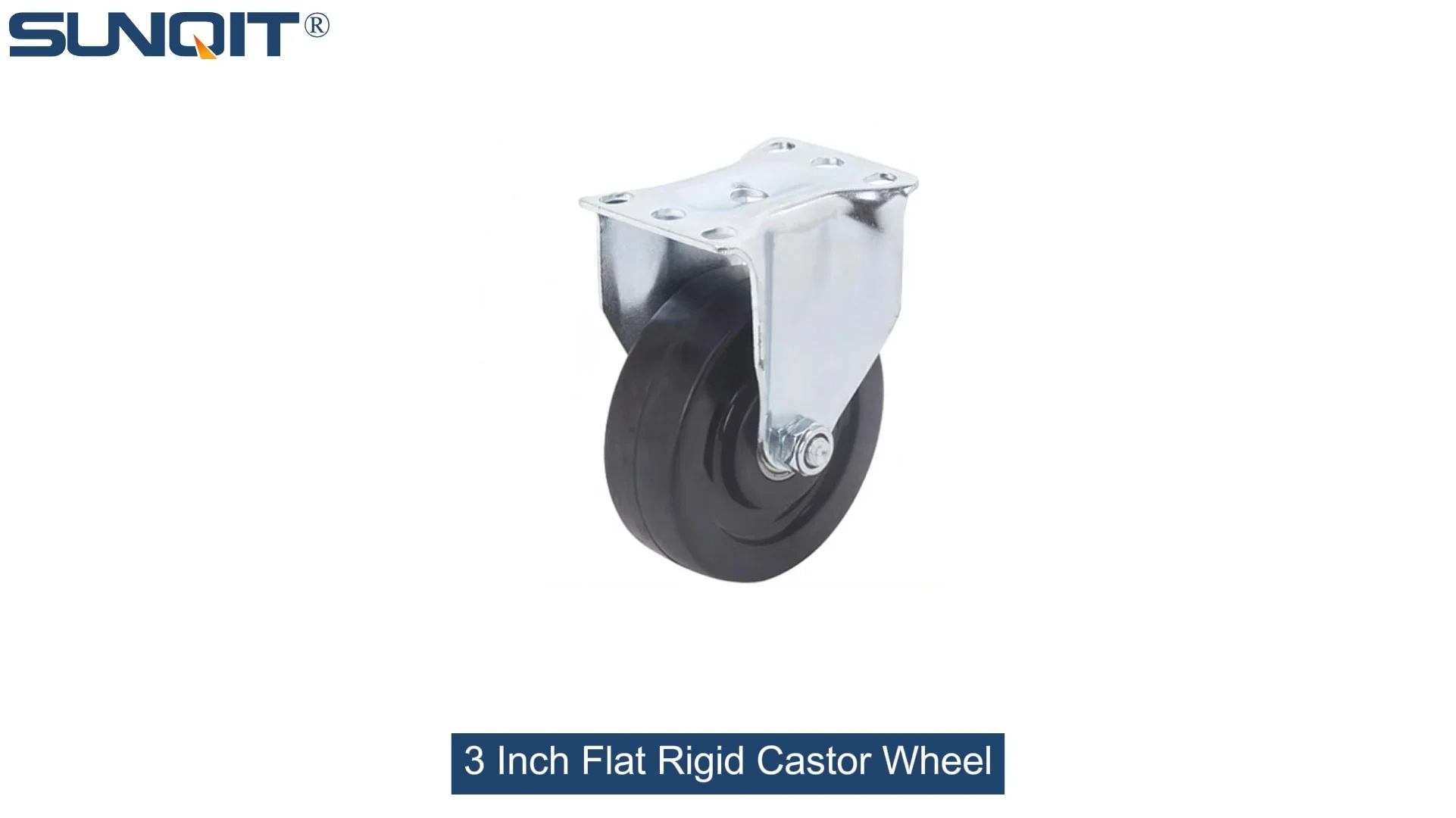
Flat Rigid Castor Wheel
Chair Casters Ball Bearing Wheels Rubber Base. Resistant to abrasion, impact and corrosion. Heavy payload can hold 70Kgs per pcs,which can make it works at a stable and smooth status.
Let's start with a typical day on a 3C assembly line. Picture workers hunched over workbenches, piecing together tiny smartphone components—tasks that demand precision, focus, and above all, efficiency. Now, imagine that workbench is bolted to the floor. Every time a new batch of PCBs arrives, someone lugs them 20 feet from the storage rack to the bench. When a quality check is needed, the entire setup can't shift closer to the inspection station. Sound familiar? This is the reality for many 3C manufacturers still relying on fixed workbenches like Workbench E (single deck-without caster)—a sturdy, reliable workhorse, but one that's stuck in place. Today, we're diving into how one simple upgrade—the Flat Rigid Castor Wheel—transforms this workbench from a static fixture into a dynamic tool that supercharges efficiency, all while aligning with the principles of a Lean System.
The Backbone of 3C Assembly: Workbench E (Single Deck-Without Caster)
First, let's get to know Workbench E. In the world of 3C manufacturing—where "3C" stands for computers, communications, and consumer electronics—this workbench is everywhere. It's the unsung hero of assembly lines, used for everything from soldering microchips onto PCBs to sorting tiny screws and connectors. Designed as a single-deck unit without built-in casters, it's built for stability: a flat, sturdy surface (often made from aluminum profile for lightweight durability) supported by fixed legs, ensuring it stays rock-solid during precision tasks. No wobbling, no movement—ideal for when you need a steady platform.
But here's the catch: in 3C assembly, change is constant. Production runs shift from smartwatches to tablets overnight. Material storage areas get rearranged to optimize flow. Workers rotate between stations, and inspectors need quick access to every corner of the line. A fixed Workbench E, for all its reliability, can't keep up. It's like having a great car with no wheels—functional, but limited in how far it can take you.
The Hidden Cost of Immobility: Why Fixed Workbenches Slow You Down
Let's break down the inefficiencies of a caster-less Workbench E. For starters, there's the time wasted on material handling. In a typical 3C plant, an operator might spend 15–20 minutes per hour fetching components—walking back and forth between the workbench and storage racks. Multiply that by 50 workers over a shift, and you're losing hours of productive time daily. Then there's ergonomics: bending to reach tools on the floor or stretching to grab parts from a distant bin leads to fatigue, which doesn't just slow down work—it increases the risk of errors and injuries.
Worst of all, fixed workbenches disrupt the flow of work. In Lean System terms, this is "motion waste"—one of the seven deadly wastes that eat into profitability. A Lean System thrives on continuous flow, where materials and tasks move seamlessly from one step to the next. When a workbench can't move, the flow breaks. Inspectors can't bring their tools to the work; the work has to come to them. Maintenance teams waste time maneuvering around immovable fixtures. And when production needs to reconfigure for a new product? You're looking at hours of disassembly and reassembly just to shift the bench a few feet.
I once visited a 3C factory where workers had taken to propping up Workbench E on makeshift wooden blocks just to roll it with a forklift—risking damage to the bench, the floor, and even the products on it. That's when it hit me: the problem isn't the workbench itself. It's the lack of mobility. And that's where the Flat Rigid Castor Wheel comes in.

Enter the Flat Rigid Castor Wheel: A Simple Solution with Big Impact
At first glance, a castor wheel might seem like a small upgrade. But in the context of 3C assembly, it's a game-changer. The Flat Rigid Castor Wheel, specifically, is designed to address the unique needs of Workbench E. Unlike swivel casters that spin in all directions (great for maneuverability but prone to wandering), rigid casters lock into straight-line movement. They're built to keep the workbench stable when in use but allow easy relocation when needed—no forklift required.
Let's talk about what makes these wheels special. They're "flat" in design, meaning the contact surface with the floor is wider than standard casters. This distributes the weight of the Workbench E (and all its tools, components, and products) evenly, reducing stress on the floor and ensuring the bench stays steady even when loaded with heavy PCBs or test equipment. The "rigid" part? That's key for precision work. Unlike swivel casters that might shift mid-task, rigid wheels keep the bench moving in a straight line—perfect for aligning with conveyor belts or docking with material racks.
But don't just take my word for it. Let's look at the numbers. A mid-sized 3C manufacturer in Shenzhen retrofitted 100 Workbench E units with Flat Rigid Castor Wheels last year. Within three months, they reported a 12% reduction in material handling time and a 15% drop in worker fatigue complaints. The plant manager summed it up: "We used to think of the workbench as a fixed part of the line. Now, it's a tool we can move to where the work is. It sounds simple, but it's transformed how we operate."

What Makes Flat Rigid Castor Wheels Stand Out? Key Features
Not all casters are created equal, especially in a 3C environment where precision and durability matter. Let's dive into the features that make Flat Rigid Castor Wheels the right fit for Workbench E:
1. Heavy-Duty Construction for 3C Loads
3C assembly isn't light work. A fully loaded Workbench E might hold 50kg of tools, 30kg of components, and a 20kg PCB testing rig—easily 100kg or more. Flat Rigid Castor Wheels are built to handle this, with load capacities ranging from 150kg to 200kg per wheel. That means four wheels can support over 600kg, well beyond the typical needs of a 3C workbench. They're often made with reinforced steel brackets and high-impact nylon or polyurethane wheels, resistant to the oil, coolants, and chemicals common in factories.
2. Smooth Movement, Minimal Effort
Ever tried pushing a heavy cart with clunky wheels? It's a workout. Flat Rigid Castor Wheels solve this with precision ball bearings that reduce friction, so even a fully loaded Workbench E can be moved by one person. This is critical in 3C plants, where workers don't have time to wrestle with equipment—they need to focus on assembling tiny components, not pushing furniture.
3. Floor-Friendly Design
Factory floors take a beating. Concrete, epoxy, or vinyl surfaces can scratch or crack under heavy, hard wheels. Flat Rigid Castor Wheels use soft, non-marking treads (often polyurethane) that grip without damaging floors. This is a big win for maintenance teams, who no longer have to patch up scratches or replace damaged flooring around workbenches.
4. Easy Installation (No Expertise Required)
The best upgrades are the ones you can install yourself. Most Flat Rigid Castor Wheels are designed to bolt directly onto the base of Workbench E, using existing holes in the aluminum profile legs. No drilling, no welding—just a wrench and 10 minutes per wheel. This means factories can retrofit an entire line of workbenches over a weekend, with minimal downtime.

From Static to Dynamic: How These Wheels Boost 3C Assembly Efficiency
Now, let's get practical. How exactly do Flat Rigid Castor Wheels transform Workbench E into a productivity powerhouse? Let's walk through a typical 3C assembly scenario before and after the upgrade.
Before: The Fixed Workbench Routine
Imagine Anna, an operator assembling smartphone cameras. Her Workbench E is fixed 15 feet from the component storage rack. Each hour, she spends 10 minutes walking to fetch lens modules, sensors, and adhesive strips. When a batch is ready for inspection, she carries the tray 20 feet to the quality control station. By mid-shift, she's tired from the extra steps, and her throughput drops by 8%. The line manager notices the delay but can't move the workbench—relocating it would require unbolting, shifting, and re-leveling, which takes two hours of downtime.
After: The Mobile Workbench Revolution
Three months later, Anna's Workbench E has Flat Rigid Castor Wheels. Now, when a new batch of components arrives, she rolls the bench directly to the storage rack—30 seconds, not 10 minutes. When inspection is needed, she wheels the entire setup to the QC station, where the inspector can work right alongside her. No more carrying heavy trays, no more wasted steps. Her fatigue levels drop, and her throughput increases by 12%. The line manager? He's reconfigured the entire assembly line twice in a month to test new product layouts—each time taking less than 30 minutes, with zero downtime.
This isn't just anecdotal. Studies in Lean manufacturing show that reducing motion waste by just 10% can boost overall productivity by 5–7%. For a 3C plant producing 10,000 units per day, that's 500–700 extra units—profit straight to the bottom line.
Aligning with Lean System Principles: More Than Just Wheels
A Lean System is about more than efficiency—it's about creating value for customers while eliminating waste. Flat Rigid Castor Wheels fit perfectly into this philosophy in three key ways:
1. Eliminating Motion Waste (Muda)
As we mentioned earlier, motion waste is one of the seven wastes in Lean. Every step an operator takes to fetch materials or adjust their position is waste if it doesn't add value to the product. By making Workbench E mobile, we cut out those unnecessary steps. Workers stay focused on assembly, not fetching, and the line flows smoother.
2. Enabling 5S Workplace Organization
5S—Sort, Set in Order, Shine, Standardize, Sustain—is the foundation of a Lean workplace. A fixed Workbench E makes "Shine" (cleaning) and "Set in Order" (organizing) harder. Dust accumulates under the bench; tools get scattered because there's no room to rearrange. With casters, the bench rolls out of the way for deep cleaning, and tools can be organized exactly where operators need them. It's easier to maintain a clutter-free, efficient workspace.
3. Supporting Continuous Improvement (Kaizen)
Kaizen, or continuous improvement, thrives on experimentation. Can we rearrange the line to reduce bottlenecks? What if we group similar tasks together? With fixed workbenches, testing these ideas takes time and resources. With mobile Workbench E units, teams can experiment daily—shifting, testing, and refining layouts in minutes. This culture of experimentation leads to constant small improvements that add up to big gains over time.
Flat Rigid vs. Swivel vs. Fixed: Which Caster is Right for You?
You might be wondering: why not just use swivel casters for maximum mobility? Or stick with fixed legs for stability? The answer depends on your workflow. Let's compare the options:
| Feature | Flat Rigid Castor Wheel | Swivel Casters | Fixed Legs (Original Workbench E) |
|---|---|---|---|
| Mobility | Straight-line movement; easy to roll short/medium distances | 360° rotation; highly maneuverable but harder to control in straight lines | No mobility; fixed in place |
| Stability | High—rigid design prevents unintended movement during tasks | Lower—can swivel or drift if not locked, risking precision errors | Very high—bolted to floor, no movement |
| Best For | 3C assembly lines with frequent layout changes; aligning with conveyors/racks | Material carts or workbenches needing tight turns (e.g., warehouse use) | Static workstations with zero layout changes (rare in modern 3C) |
| Installation/Retrofit | Easy—bolt-on design fits most Workbench E models | Easy, but may require additional locking mechanisms | Permanent—requires unbolting for relocation |
For 3C assembly, Flat Rigid Castor Wheels strike the perfect balance. They offer enough mobility to eliminate motion waste but enough stability to keep precision tasks on track. Swivel casters, while more maneuverable, can be overkill—most assembly lines need straight-line movement, not 360° rotation. Fixed legs? They're a relic of a less dynamic manufacturing era.
Choosing the Right Supplier: Why Quality Matters
Not all Flat Rigid Castor Wheels are created equal. In the rush to cut costs, some suppliers skimp on materials—using thin steel brackets or low-quality plastic treads that wear out in months. For 3C manufacturers, this is a false economy. A failed caster can derail an entire assembly line, leading to hours of downtime and lost production.
Look for suppliers who specialize in lean manufacturing accessories—companies that understand the unique demands of 3C assembly. Ask about load ratings, tread material (polyurethane is best for factory floors), and warranty periods. A reliable supplier will also offer samples, so you can test the casters with your Workbench E before committing to a full order. Remember: the goal is to enhance efficiency, not create new headaches with shoddy parts.
Final Thoughts: Small Upgrade, Big Results
In the fast-paced world of 3C manufacturing, every second counts. A Workbench E (single deck-without caster) is a great tool—but without mobility, it's holding you back. Flat Rigid Castor Wheels turn that static bench into a dynamic asset, reducing waste, boosting productivity, and aligning perfectly with Lean System principles. They're not just wheels—they're a shortcut to a more efficient, flexible, and profitable assembly line.
So, the next time you walk through your factory, take a look at those fixed workbenches. Imagine the time saved, the fatigue reduced, and the value added if they could move. Then ask yourself: isn't it time to give your Workbench E the wheels it deserves?