- Company Articles
- Products and Technology
- Product knowledge
- Flat Rigid Castor Wheel for Workbench E: Supporting 3C Assembly Precision

Flat Rigid Castor Wheel for Workbench E: Supporting 3C Assembly Precision
Related Product
Flat Rigid Castor Wheel
Chair Casters Ball Bearing Wheels Rubber Base. Resistant to abrasion, impact and corrosion. Heavy payload can hold 70Kgs per pcs,which can make it works at a stable and smooth status.
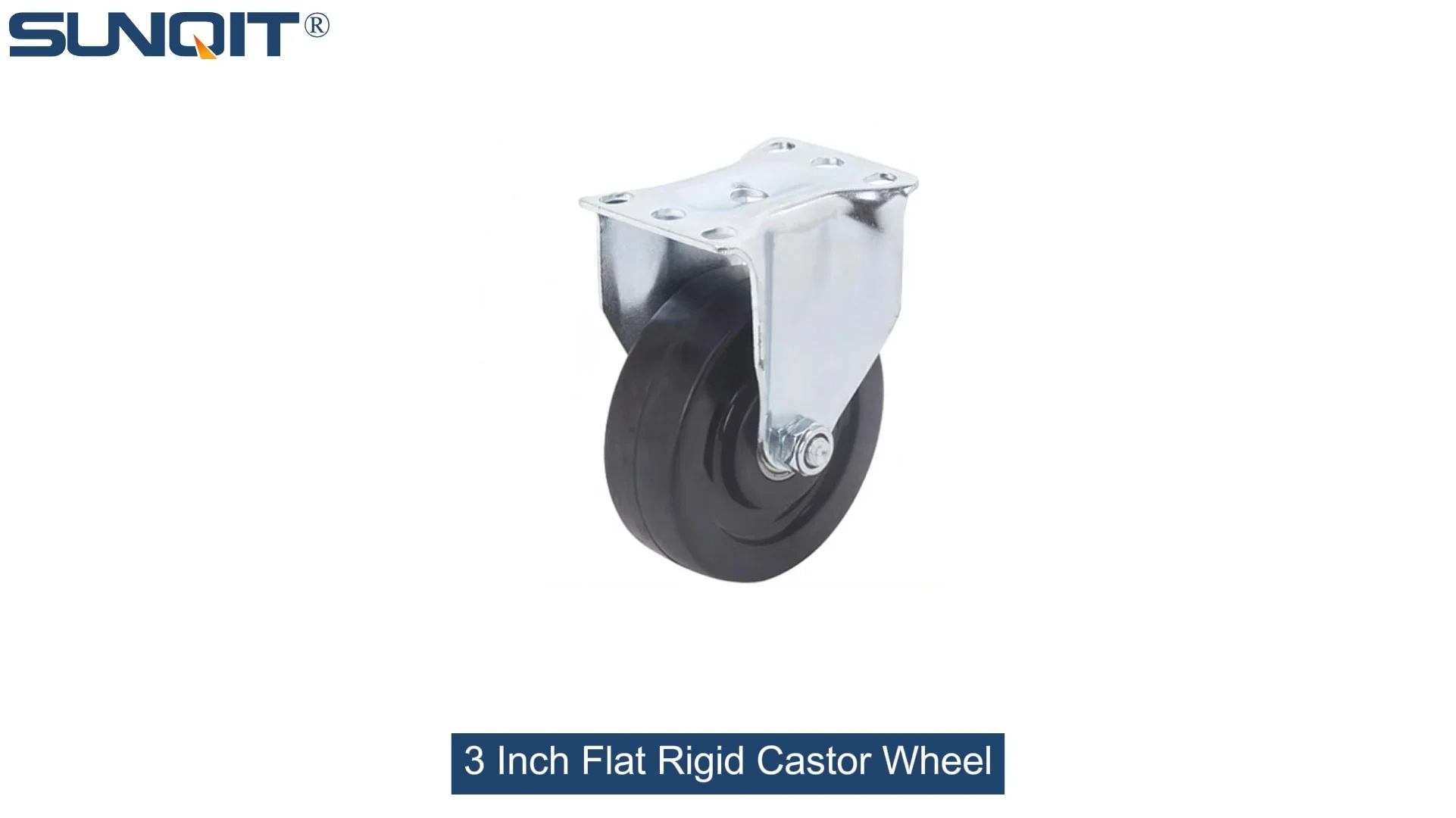
In the fast-paced world of 3C manufacturing—where smartphones, laptops, and wearables are built with components smaller than a grain of rice—precision isn't just a goal; it's the difference between a flawless product and a costly defect. Every element of the production line, from the microscopic chips to the workstations themselves, plays a role in upholding that precision. Today, we're shining a light on an unsung hero of the assembly floor: the flat rigid castor wheel , and how it transforms Workbench E (single deck-without caster) into a cornerstone of 3C assembly accuracy.
The Stakes of 3C Assembly: Why Precision Can't Be Compromised
Imagine assembling a smartphone motherboard. The distance between two solder points might be less than 0.1mm—about the width of a human hair. A single misalignment could short-circuit the device, rendering hours of work useless. Now, multiply that by thousands of units per day, and you begin to grasp the pressure on assembly line technicians. Their workbenches aren't just tables; they're command centers where stability, consistency, and reliability are non-negotiable.
3C components are delicate, lightweight, and often electrostatically sensitive (ESD). This means workstations must minimize vibration, stay perfectly level, and avoid sudden movements. Traditional workbenches, while sturdy, often fall short when mobility is added to the mix. Casters that swivel or wobble can introduce micro-movements that, over time, throw off alignment. Enter Workbench E and its secret weapon: the flat rigid castor wheel.
Workbench E: Designed for the Demands of Modern Assembly
Workbench E (single deck-without caster) is a staple in lean manufacturing environments, prized for its simplicity, durability, and adaptability. As the name suggests, it comes standard without casters—a deliberate choice to prioritize a solid, fixed base. But in dynamic production lines, mobility matters too. Technicians need to reconfigure workstations quickly, move materials to where they're needed, or shift the bench for cleaning and maintenance. This is where adding the right casters becomes critical.
Most workbenches opt for swivel casters for maneuverability, but swivel designs have a trade-off: they can rotate unexpectedly under load, creating instability. For 3C assembly, where a technician might be using a precision screwdriver or a microscope, even a 1mm shift in the workbench's position can disrupt their focus and accuracy. This is why the flat rigid castor wheel has emerged as the preferred upgrade for Workbench E in high-precision settings.

Flat Rigid Castor Wheels: Stability Meets Mobility
What makes the flat rigid castor wheel different? Unlike swivel casters, which rotate 360 degrees, rigid casters lock into a fixed direction—usually forward and backward. They don't pivot, they don't sway, and they certainly don't shift unexpectedly. This rigidity is exactly what 3C assembly needs.
Let's break down the design: The "flat" in the name refers to the wheel's contact surface, which is wider and flatter than standard rounded casters. This distributes the workbench's weight evenly across the floor, reducing pressure points and minimizing floor indentation (a common issue with heavy equipment). The "rigid" axle ensures the wheel only moves along a straight path, so when the bench is in use, it stays put. Even when locked, swivel casters can have slight play in their joints; flat rigid casters eliminate that entirely.
For Workbench E, which typically supports tools, ESD mats, and component trays (often weighing 100-200kg), the flat rigid castor wheel's load capacity is another key advantage. Most models can handle 150-300kg per wheel, ensuring the bench remains stable even when fully loaded with equipment. This is crucial for maintaining levelness—if a caster bends or compresses under weight, the workbench tilts, and precision goes out the window.

How Flat Rigid Casters Enhance 3C Assembly Precision
It's easy to overlook casters when talking about precision, but their impact is tangible. Here's how flat rigid castor wheels make a difference on the assembly line:
1. Zero Micro-Movements, Maximum Focus
When a technician is soldering a tiny component under a microscope, their hands are steady, but their workstation must be steadier. Swivel casters, even when locked, can vibrate slightly from nearby machinery or foot traffic. Flat rigid casters, with their fixed axles and wide contact points, act like anchors. They absorb minimal vibration and prevent the bench from "creeping" across the floor, letting technicians focus on their work without second-guessing the stability of their setup.
2. Consistent Height and Leveling
3C assembly often involves aligning components across multiple workstations. For example, a circuit board might move from a soldering bench to an inspection bench to a testing station. If each bench sits at a slightly different height, technicians waste time adjusting their posture or repositioning tools. Flat rigid casters, with their uniform wheel diameter and rigid construction, ensure Workbench E stays level—even after repeated moves. This consistency reduces fatigue and errors, keeping the assembly process flowing smoothly.
3. ESD Compatibility for Sensitive Components
Many 3C components are ESD-sensitive, meaning static electricity can damage them. While Workbench E often includes ESD mats and grounding features, casters can introduce static if not properly designed. Flat rigid castor wheels for ESD environments are typically made with conductive materials (like rubber or polyurethane infused with carbon) that dissipate static charges safely to the floor. This adds an extra layer of protection, ensuring components stay intact from assembly to packaging.

Flat Rigid vs. Swivel Casters: A Comparison for 3C Assembly
Still not convinced that flat rigid casters are the right fit? Let's compare them head-to-head with swivel casters, the most common alternative, in the context of 3C assembly:
| Feature | Flat Rigid Castor Wheel | Swivel Caster Wheel | Best For 3C Assembly? |
|---|---|---|---|
| Movement Type | Fixed direction (straight line only) | 360° swivel + rotation | Flat rigid (minimizes unexpected movement) |
| Stability Under Load | High (no joint play; even weight distribution) | Medium (swivel joints can wobble when locked) | Flat rigid (critical for precision tasks) |
| ESD Compatibility | Available in conductive materials | Available, but swivel joints may create static | Flat rigid (fewer moving parts = less static risk) |
| Maneuverability | Low (only moves forward/backward) | High (easy to pivot and reposition) | Swivel (but with trade-offs in stability) |
| Long-Term Durability | High (fewer moving parts = less wear) | Medium (swivel bearings require more maintenance) | Flat rigid (reduces downtime from caster repairs) |
Real-World Impact: A Case Study in 3C Manufacturing
A leading 3C manufacturer in Shenzhen recently upgraded 50 of their Workbench E stations with flat rigid castor wheels. Before the switch, they were seeing a 2.3% defect rate in their smartphone camera module assembly—most traced to minor workstation movements during soldering. Within three months of installing the new casters, the defect rate dropped to 0.8%. Technicians reported feeling more confident in their work, and supervisors noted fewer "rework" sessions due to misaligned components.
The plant manager summed it up: "We used to think casters were just about moving benches around. Now we realize they're part of our quality control system. The flat rigid wheels turned our Workbench E stations into precision tools, not just tables."
Choosing the Right Flat Rigid Castor Wheel for Workbench E
Not all flat rigid casters are created equal. When selecting wheels for Workbench E, consider these factors:
Load Capacity
Calculate the total weight of your Workbench E (typically 50-80kg) plus tools, materials, and equipment. Aim for casters with a load capacity of at least 1.5x the expected weight to account for dynamic loads (e.g., when moving the bench).
Wheel Material
For ESD-sensitive environments, choose conductive rubber or polyurethane. For rough factory floors, opt for polyurethane or nylon wheels, which resist wear and roll smoothly. Avoid hard plastic wheels on concrete, as they can create noise and vibration.
Locking Mechanism
Even flat rigid casters need locks to keep the bench stationary during use. Look for heavy-duty brake locks that engage both the wheel and the swivel (if applicable) to prevent any movement.
Conclusion: Small Wheels, Big Impact on Precision
In the world of 3C assembly, where the margin for error is microscopic, every detail counts. Workbench E (single deck-without caster) is already a reliable foundation, but pairing it with flat rigid castor wheels elevates it to a tool that actively supports precision. These wheels don't just move benches—they stabilize workflows, reduce defects, and give technicians the confidence to focus on what matters: building perfect products.
So the next time you pick up your smartphone, take a moment to appreciate the unseen heroes of its creation. From the engineers who design the chips to the flat rigid casters that kept the assembly bench steady, precision truly is a team effort.