- Company Articles
- Products and Technology
- Product knowledge
- Flat Rigid Castor Wheel Load Distribution: Ensuring Stability for Material Rack B

Flat Rigid Castor Wheel Load Distribution: Ensuring Stability for Material Rack B
Related Product
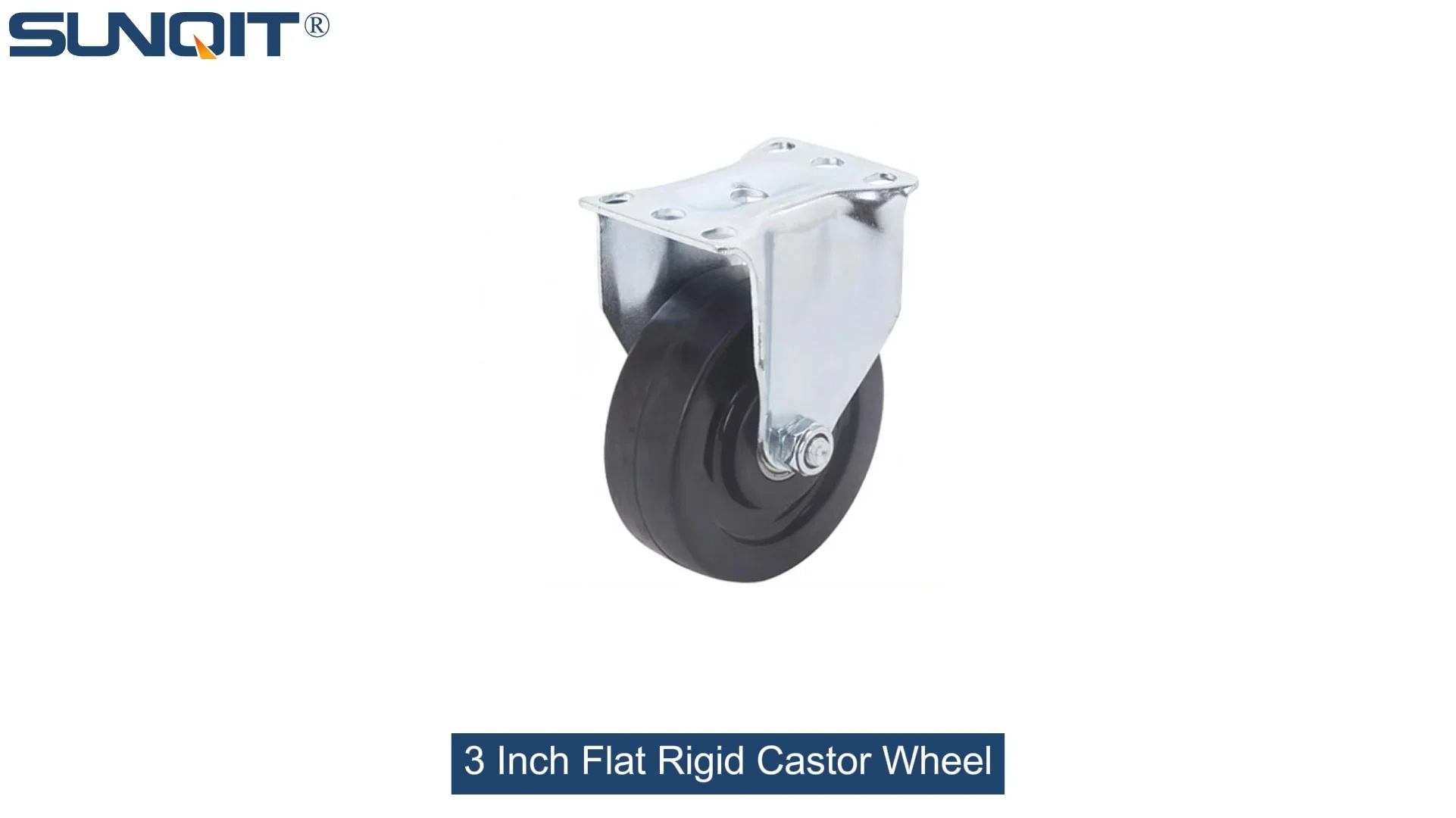
Flat Rigid Castor Wheel
Chair Casters Ball Bearing Wheels Rubber Base. Resistant to abrasion, impact and corrosion. Heavy payload can hold 70Kgs per pcs,which can make it works at a stable and smooth status.
The Backbone of Efficient Warehousing – Why Stability Matters
In the bustling world of manufacturing and warehousing, where every second counts and every inch of space matters, stability isn't just a buzzword—it's the foundation of safe, efficient operations. Imagine a warehouse floor where racks teeter under heavy loads, where a single misstep in load distribution could lead to damaged inventory, delayed shipments, or worse, workplace injuries. This isn't a hypothetical scenario; it's a daily reality for facilities that overlook the critical role of the components keeping their storage systems grounded. Among these components, castor wheels might seem, but they're the unsung heroes ensuring that racks, trolleys, and workbenches stay steady even when loaded to their limits. Today, we're zeroing in on one specific player in this stability game: the flat rigid castor wheel. And we're putting it under the microscope in the context of a workhorse of modern storage: Material Rack B (3 row and 3 floor). By the end, you'll understand why load distribution isn't just engineering jargon—it's the key to unlocking smoother workflows, longer equipment lifespans, and a leaner, more productive operation.
Understanding Material Rack B: A Workhorse in 3x3 Storage
Before we dive into the nuts and bolts of castor wheels, let's get to know the star of the show: Material Rack B (3 row and 3 floor). If you've ever walked through a well-organized warehouse or production facility, chances are you've seen its cousins—metal racks with multiple shelves, designed to maximize vertical space while keeping items accessible. But Material Rack B isn't just any rack. With its 3-row, 3-floor configuration, it's built to handle the demands of high-density storage. Picture this: three vertical columns of shelves, each with three levels, creating a grid of storage spaces that can hold everything from small components to bulkier materials. Whether it's electronic parts in an assembly plant or raw materials in a distribution center, this rack is engineered to keep items sorted, visible, and within arm's reach.
But here's the catch: all that storage capacity means weight. Even with lightweight materials, three rows and three floors add up. A fully loaded Material Rack B can easily bear hundreds, if not thousands, of pounds. And while the rack itself is built with sturdy materials—often aluminum or steel profiles, reinforced with cross-braces—none of that matters if the wheels holding it don't distribute that weight evenly. That's where flat rigid castor wheels come into play. Unlike swivel casters that prioritize maneuverability, or locking casters that focus on immobility, flat rigid castors are all about stability. They're fixed in place, meaning they don't swivel, and their flat base ensures maximum contact with the floor. For a rack that's meant to stay put (or move only occasionally, with precision), this is non-negotiable.

Castors 101: The Unsung Heroes Under Every Rack
What Are Flat Rigid Castor Wheels?
Let's start with the basics. A castor wheel is essentially a wheel mounted on a frame, designed to be attached to the bottom of equipment to make it mobile. But not all castors are created equal. Swivel castors, for example, have a rotating joint that allows the wheel to turn 360 degrees, making them ideal for equipment that needs to maneuver tight spaces—think hospital carts or office chairs. Locking castors add a brake mechanism, letting you switch between mobile and stationary modes. Then there are flat rigid castor wheels. As the name suggests, "rigid" means the wheel doesn't swivel; it's fixed in a straight line. "Flat" refers to the base plate, which is typically a flat metal plate that attaches to the bottom of the rack or trolley. This design prioritizes stability over maneuverability, making it perfect for heavy, stationary (or occasionally moved) equipment like Material Rack B.
But why does this matter for load distribution? Let's break it down. When a rack is loaded, its total weight is distributed across all its castors. If the castors are swivel, their rotating joints can create uneven weight distribution as the wheels shift direction, leading to "hot spots" where one castor bears more weight than others. Over time, this can warp the rack frame, damage the floor, or even cause the rack to tip. Flat rigid castors, by contrast, keep the wheels fixed in position, ensuring that the weight is spread evenly across all contact points. Their flat base plate also increases the surface area in contact with the rack, reducing stress on the attachment points. It's like the difference between standing on tiptoes (unstable, uneven weight) and standing flat-footed (stable, even distribution)—and for a rack holding thousands of pounds, that stability is everything.
How They Differ from Swivel or Locking Casters
To really appreciate flat rigid castors, let's compare them to their more popular counterparts. Swivel casters are the chameleons of the castor world—versatile and agile. They're great for equipment that needs to move in all directions, like a turnover trolley that weaves between workbenches. But agility comes at a cost: their rotating joints add complexity and reduce load capacity. A heavy rack on swivel casters might wobble when loaded, or the swivel mechanism could seize under stress. Locking casters solve part of that problem by letting you lock the wheel in place, but they still have the same swivel joint, which can loosen over time. Flat rigid castors, on the other hand, have no moving parts beyond the wheel itself. No swivel joint, no brake mechanism—just a fixed wheel attached to a sturdy plate. This simplicity makes them more durable, easier to maintain, and better at handling heavy, static loads. For Material Rack B, which spends most of its life in one spot (with occasional moves for reorganization), this is a game-changer.

Load Distribution 101: The Science Behind Stable Racking
Weight Distribution Principles
Load distribution is all about balance. Imagine stacking books on a shelf: if you pile all the heavy books on one side, the shelf will sag or tip. The same principle applies to Material Rack B, but on a larger scale. When the rack is loaded, its total weight (let's call it W) is divided among its castors. If there are four castors (a common configuration), each ideally bears W/4. But in reality, this only happens if the weight is evenly distributed across the rack, and the castors are perfectly aligned and in contact with the floor. Any imbalance—whether from unevenly placed items, a warped rack frame, or misaligned castors—can cause some castors to bear more weight than others. This is where flat rigid castors shine: their fixed orientation ensures that each wheel stays in its designated position, reducing the risk of shifting weight.
Another key factor is the "footprint" of the rack. Material Rack B, with its 3x3 design, has a relatively wide base compared to taller, narrower racks. This wider footprint lowers the center of gravity, making it less prone to tipping. But even with a low center of gravity, the castors must provide a stable foundation. Flat rigid castors, with their flat base plates and large wheel diameters, increase the contact area with the floor. This not only distributes weight over a larger surface (reducing floor stress) but also minimizes the risk of the wheel sinking into soft floors or catching on uneven surfaces. For warehouses with concrete floors that might have minor cracks or unevenness, this is crucial—no one wants a rack that rocks every time someone walks by.
How Flat Rigid Castors Optimize Load Bearing
Let's get technical for a moment. The load capacity of a castor isn't just about the wheel material—it's about how the weight is transferred from the rack to the floor. Flat rigid castors typically have a rigid mounting plate that attaches directly to the rack's frame. This direct connection ensures that there's no "play" or movement between the castor and the rack, which is critical for load distribution. When weight is applied, the force travels straight down through the mounting plate, into the wheel, and onto the floor. There's no swivel joint to absorb or redirect the force, which means more of the weight is evenly distributed across the wheel's surface.
Wheel material also plays a role. Flat rigid castors for heavy-duty racks like Material Rack B are often made with polyurethane or rubber tires, which compress slightly under load. This compression helps distribute weight more evenly by conforming to minor floor irregularities. Steel wheels, while durable, are harder and less forgiving—they might concentrate weight on small contact points if the floor isn't perfectly smooth. For most warehouses, polyurethane wheels strike the right balance between durability and load distribution. They're resistant to wear, can handle heavy weights, and their slight flexibility acts as a buffer against uneven floors.

Material Rack B and Flat Rigid Castor Wheels: A Perfect Pair
Design Specifications of Material Rack B
To understand why flat rigid castors are the ideal match for Material Rack B, let's look at the rack's design specs. According to standard manufacturer guidelines, Material Rack B (3 row and 3 floor) typically measures around 1500mm in height, 1200mm in width, and 600mm in depth. It's constructed using aluminum profiles or steel tubes, with shelves made of metal mesh or solid panels to support various load types. The frame is reinforced with cross-braces and corner brackets to prevent twisting under load. Most importantly, the base of the rack is designed with mounting points specifically for castors—four evenly spaced holes or plates, positioned at the corners to maximize stability. This intentional design ensures that when flat rigid castors are attached, they're placed at the rack's "corners of balance," minimizing the risk of tipping even when the top shelves are loaded.
Another key spec is the rack's maximum load capacity. Depending on the materials used, Material Rack B can typically hold between 500kg to 1000kg in total. Divided across four castors, that's 125kg to 250kg per castor. Flat rigid castors designed for this application are rated to handle at least this amount, with a safety margin (often 20-30%) to account for dynamic loads (like when the rack is moved) or uneven loading. This ensures that even in less-than-ideal conditions, the castors won't fail.
Why Flat Rigid Casters Are the Ideal Choice Here
Let's recap: Material Rack B is wide, heavy when loaded, and mostly stationary. It needs castors that can handle heavy static loads, distribute weight evenly, and keep the rack stable on potentially uneven floors. Swivel casters would introduce unnecessary complexity and instability; locking casters, while useful, still have swivel joints that can wear over time. Flat rigid casters, with their fixed orientation, rigid mounting, and load-optimized wheels, check all these boxes. They're simple, durable, and designed for exactly this kind of application. It's like choosing hiking boots over flip-flops for a mountain climb—you want gear that's built for the job.
Caster Accessories: Enhancing Performance and Longevity
While flat rigid castor wheels are stars in their own right, they don't work alone. Caster accessories play a supporting role, enhancing performance, protecting the rack and floor, and extending the life of the castors. Let's take a look at a few key accessories that pair well with flat rigid castors on Material Rack B.
Common Accessories for Flat Rigid Castors
First up: castor mounting plates. These are metal plates that attach to the bottom of the rack, providing a secure surface for the castor to bolt onto. While some racks come with built-in mounting points, mounting plates add an extra layer of strength, especially for heavier loads. They also help align the castors correctly, ensuring that each wheel is positioned at the same height and angle. Next, floor protectors. These are often rubber or plastic pads that fit over the castor wheels, reducing noise and preventing scratches on concrete or tile floors. In warehouses where floor maintenance is a priority, these are a must. Then there are brake kits—though flat rigid castors don't swivel, some models come with brake accessories that lock the wheel in place, preventing accidental movement when the rack is being loaded or unloaded. Finally, replacement wheels and axles. Over time, wheels can wear down, especially if the rack is moved frequently. Having spare wheels and axles on hand ensures that you can replace worn parts quickly, minimizing downtime.
These accessories might seem small, but they make a big difference in the overall performance of the castor system. For example, a well-aligned mounting plate ensures even weight distribution, while a floor protector prevents the wheel from sinking into a soft spot on the floor. Together, they turn a good castor setup into a great one—one that keeps Material Rack B stable, safe, and operational for years.
Real-World Applications: Case Studies in Stability
Warehouse A: Reducing Accidents with Upgraded Castors
Let's take a trip to Warehouse A, a mid-sized electronics distribution center that was struggling with unstable storage racks. Their old racks used swivel casters, which, while easy to move, often wobbled when fully loaded. This led to two issues: first, items on the top shelves would occasionally fall off, causing damage; second, workers were hesitant to load the racks to their full capacity, wasting valuable storage space. After consulting with a lean system expert, they switched to Material Rack B with flat rigid castors and caster accessories like mounting plates and floor protectors. The results were immediate: the racks stood steady, even when loaded to maximum capacity, and workers reported feeling more confident when stocking items. Over six months, accident rates dropped by 40%, and storage efficiency increased by 25% as they could now fully utilize each shelf. It wasn't just about the castors—it was about how they integrated into the warehouse's overall lean system, reducing waste (in this case, wasted space and damaged inventory) and improving safety.
Factory Floor B: Streamlining Workflow with Material Rack B
Factory Floor B, a manufacturer of automotive parts, was dealing with a different problem: workflow bottlenecks. Their assembly line relied on workbenches positioned next to storage racks, but the racks were heavy and hard to move, making it difficult to reorganize the line for new product runs. They needed racks that were stable enough to hold heavy tooling but mobile enough to reposition occasionally. The solution? Material Rack B with flat rigid castors. While the castors are fixed, they're smooth-rolling enough to be moved by two workers when needed. The key was pairing the castors with high-quality caster accessories, like precision ball bearings in the wheels, which reduced rolling resistance. Now, when the production team needs to rearrange the line, they can move the racks quickly and safely, minimizing downtime. Plus, the stability of the flat rigid castors ensures that the tooling stays in place during assembly, reducing errors and improving product quality. It's a classic example of how the right castor choice can support a lean system, making operations more flexible and efficient.
Maintenance Tips: Keeping Your Castors (and Rack) in Top Shape
Regular Inspection Routines
Like any equipment, flat rigid castors and Material Rack B need regular maintenance to perform at their best. Here's a simple inspection routine to follow:
- Weekly Checks: Visually inspect the castors for signs of wear, like cracks in the wheel or bent axles. Check that the mounting bolts are tight—loose bolts can cause the castor to shift, leading to uneven load distribution. Also, check the shelves of Material Rack B for signs of sagging, which could indicate overloading or a frame issue.
- Monthly Checks: Test the wheels by gently pushing the rack (if it's designed to move). They should roll smoothly without sticking or wobbling. Clean the wheels to remove dirt or debris that might cause uneven rolling. For caster accessories like floor protectors, check for tears or excessive wear and replace if needed.
- Quarterly Checks: Measure the height of each castor to ensure they're all at the same level—even a small difference (1-2mm) can cause uneven weight distribution. If one castor is lower, check for a bent mounting plate or a worn wheel and replace as needed. Also, inspect the rack's frame for rust or corrosion, especially if the warehouse is humid.
Troubleshooting Common Issues
Even with regular maintenance, issues can arise. Here's how to troubleshoot common problems with flat rigid castors on Material Rack B:
- Rack Rocks or Wobbles: This is often due to uneven castor height or loose mounting bolts. Tighten the bolts first; if the problem persists, check the wheel height and replace any worn wheels.
- Wheel Doesn't Roll Smoothly: Dirt or debris in the axle is usually the culprit. Clean the axle with a brush and apply a small amount of lubricant (avoid oil, which can attract more dirt—use a dry lubricant instead).
- Mounting Plate Bends: This can happen if the rack is overloaded or if the castor hits a sharp obstacle. replace the mounting plate immediately, as a bent plate will cause uneven load distribution.
- Floor Scratches: If floor protectors are in place, this might mean they're worn out. replace them with new protectors, and consider upgrading to a thicker, more durable material if scratches are frequent.
Comparing Castor Types: Why Flat Rigid Wins for Material Rack B
| Castor Type | Load Capacity (per castor) | Stability | Maneuverability | Best For |
|---|---|---|---|---|
| Flat Rigid | 125-250kg (or higher) | High (fixed orientation, wide base) | Low (only moves forward/backward) | Heavy, stationary racks (Material Rack B) |
| Swivel | 50-150kg | Medium (swivel joint can shift under load) | High (360° rotation) | Lightweight trolleys, mobile workbenches |
| Locking Swivel | 75-200kg | Medium-High (lock prevents movement, but swivel joint remains) | Medium-High (locks for stability, swivels for movement) | Equipment that moves frequently but needs to stay put during use |
As the table shows, flat rigid castors outperform swivel and locking swivel castors when it comes to stability and load capacity—two critical factors for Material Rack B. While they sacrifice some maneuverability, this is a small price to pay for the safety and efficiency gains they provide in a mostly stationary storage setup.
Conclusion: Investing in Stability for Long-Term Efficiency
At the end of the day, flat rigid castor wheel load distribution isn't just about engineering—it's about investing in the long-term efficiency and safety of your operation. Material Rack B, with its 3x3 storage capacity, is a powerful tool for maximizing space, but it's only as good as the foundation it stands on. Flat rigid castors, paired with the right caster accessories, provide that foundation, ensuring even weight distribution, reducing the risk of accidents, and supporting a lean system that minimizes waste and maximizes productivity.
Whether you're running a warehouse, a factory, or a distribution center, the message is clear: don't overlook the small components that keep your operation moving. A well-chosen castor wheel might not grab headlines, but it can make a world of difference in how smoothly, safely, and efficiently your facility runs. So the next time you're evaluating storage solutions, remember: stability starts from the ground up—and flat rigid castor wheels are the ground beneath your success.