- Company Articles
- Products and Technology
- Product knowledge
- Flat Rigid Castor Wheel Material Analysis: Aluminum Benefits for Lightweight Racks

Flat Rigid Castor Wheel Material Analysis: Aluminum Benefits for Lightweight Racks
Related Product
Flat Rigid Castor Wheel
Chair Casters Ball Bearing Wheels Rubber Base. Resistant to abrasion, impact and corrosion. Heavy payload can hold 70Kgs per pcs,which can make it works at a stable and smooth status.
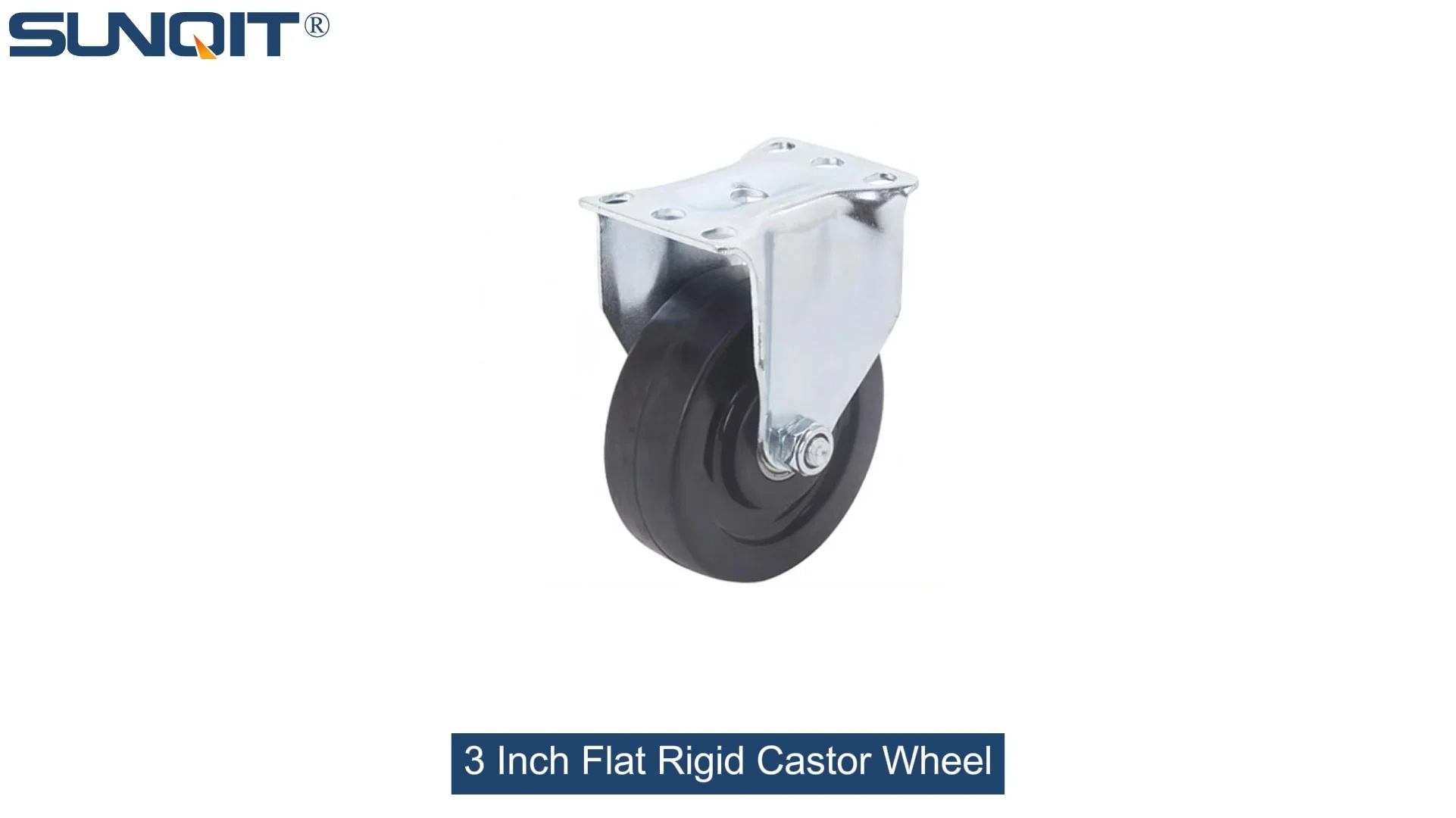
In the bustling world of warehouses, factories, and workshops, where every second counts and efficiency reigns supreme, the smallest components often hold the biggest power. Take castor wheels, for example—those unassuming, wheeled devices attached to the bottom of racks, trolleys, and workbenches. They're the silent workhorses that keep operations moving, quite literally. But not all castor wheels are created equal. When it comes to lightweight racks—those essential structures that organize materials, tools, and products—one type stands out for its stability and reliability: the flat rigid castor wheel . And today, the material making waves in this space isn't steel or plastic. It's aluminum.
If you've ever pushed a heavy rack across a concrete floor, you know the struggle: strained muscles, slow progress, and the constant worry of damaging the floor or the rack itself. But what if there was a way to make that task easier, safer, and more efficient? That's where aluminum comes in. In this article, we'll dive deep into why aluminum is transforming flat rigid castor wheels for lightweight racks, comparing it to traditional materials, exploring real-world benefits, and even looking at how it pairs with essential accessories to elevate performance. Whether you're a warehouse manager, a workshop owner, or just someone curious about industrial mobility, this is the guide to understanding why aluminum is the future of flat rigid castors.
Understanding Flat Rigid Castor Wheels: The Unsung Heroes of Mobility
Before we jump into materials, let's get clear on what a flat rigid castor wheel actually is. Unlike swivel castors, which rotate 360 degrees to allow movement in any direction, flat rigid castors are fixed—they only move forward or backward. This fixed design makes them incredibly stable, which is why they're a top choice for lightweight racks, workbench setups, and turnover trolleys. Imagine a material rack in a electronics factory, loaded with small components. You don't need it to spin or turn sharply; you need it to glide smoothly from point A to point B without wobbling. That's where flat rigid castors shine.
Traditionally, these castors were made from heavy materials like steel or cheap plastics. Steel offered strength but came with a downside: weight. A single steel flat rigid castor could add several pounds to a rack, turning a "lightweight" rack into something that felt more like a boulder. Plastic, on the other hand, was lighter but often lacked the durability to handle daily wear and tear. Enter aluminum—a material that bridges the gap between strength and lightness, stability and flexibility.
Material Matters: Why the Right Choice Makes All the Difference
For decades, the debate around castor wheel materials has been dominated by two contenders: steel and plastic. Let's break down their pros and cons to see why aluminum is now stealing the spotlight.
Steel: The Old Reliable (But Heavy)
Steel has long been the go-to for industrial equipment. It's strong, durable, and can handle heavy loads—up to 500 pounds or more per castor. But here's the catch: steel is heavy. A 4-inch steel flat rigid castor wheel can weigh 3–4 pounds, and when you attach four of them to a lightweight rack, that's an extra 12–16 pounds of dead weight. For a warehouse team moving racks multiple times a day, that added weight adds up to fatigue, slower workflows, and even increased risk of injury. Plus, steel is prone to rust and corrosion, especially in humid environments like food processing plants or coastal warehouses. Over time, rusted castors become stiff, making movement even harder.
Plastic: Lightweight but Limited
Plastic castors emerged as a lighter alternative to steel, and they're certainly easy on the scales—some plastic flat rigid castors weigh as little as 1 pound each. They're also resistant to rust and cheaper upfront. But plastic has its own set of issues. It's not as strong as steel, so it can't handle heavy loads (most plastic castors top out at 200 pounds per wheel). It's also prone to cracking or warping under constant use, especially in high-temperature environments like automotive factories. And while plastic is lightweight, it's not always smooth-rolling; rough floors or small debris can cause it to jolt or stick, slowing down movement.
Aluminum: The Game-Changer
Aluminum isn't new, but recent advancements in alloy technology have made it a star in the castor wheel world. Think of it as the Goldilocks of materials: not too heavy, not too weak, but just right. Aluminum flat rigid castors weigh in at around 1.5–2 pounds per wheel—heavier than plastic but a fraction of steel's weight. This makes a noticeable difference when moving a lightweight rack : instead of two people straining to push, one person can do it with ease. But aluminum isn't just about weight. It's also naturally resistant to corrosion, so it holds up in damp, humid, or even chemical-exposed environments. And thanks to modern alloys, it's surprisingly strong—most aluminum flat rigid castors can handle 300–400 pounds per wheel, which is more than enough for typical lightweight rack loads (think tools, small parts, or boxed products).
But don't just take our word for it. Let's hear from someone who's experienced the difference firsthand. Meet Raj, a warehouse manager at a small electronics assembly plant in Ohio. A year ago, his team was using steel flat rigid castors on their material racks, which held circuit boards and small components. "We have about 15 racks, and we move them 4–5 times a day to reconfigure workstations," he says. "The steel castors were so heavy that even empty racks took two people to move. Our team was exhausted by lunch, and we were falling behind on orders." Then, Raj switched to aluminum flat rigid castors. "It was like giving everyone a superpower," he laughs. "Now, one person can move a loaded rack across the floor in 30 seconds. We've cut down on fatigue, and our daily output has gone up by 15%. Aluminum didn't just change our castors—it changed our whole workflow."

Aluminum vs. Traditional Materials: A Side-by-Side Comparison
To really understand why aluminum is winning, let's put it head-to-head with steel and plastic. The table below breaks down key factors like weight, strength, durability, and cost, so you can see the difference for yourself:
| Material | Weight (4-inch wheel, per unit) | Corrosion Resistance | Load Capacity (per wheel) | Durability (Daily Use) | Upfront Cost | Best For |
|---|---|---|---|---|---|---|
| Steel | 3–4 lbs | Low (prone to rust) | 400–500 lbs | High (but stiffens over time) | Moderate ($15–$25 per wheel) | Extremely heavy loads (rare in lightweight racks) |
| Plastic | 0.8–1.2 lbs | High (no rust) | 150–200 lbs | Low (prone to cracking/warping) | Low ($8–$12 per wheel) | Very light, occasional use (e.g., home workshops) |
| Aluminum | 1.5–2 lbs | High (naturally resistant) | 300–400 lbs | High (smooth-rolling, minimal wear) | Moderate-High ($18–$30 per wheel) | Lightweight racks, workbenches, daily industrial use |
As the table shows, aluminum strikes a perfect balance. It's light enough to make mobility easy, strong enough to handle typical lightweight rack loads, and durable enough to stand up to daily use. While its upfront cost is slightly higher than steel or plastic, the long-term savings—fewer replacements, less worker fatigue, faster operations—make it a smart investment.

Beyond the Wheel: Aluminum's Synergy with Lightweight Racks and Accessories
Aluminum flat rigid castor wheels don't work alone. They're part of a larger ecosystem that includes lightweight racks, caster accessories , and even the structures they support. Let's explore how aluminum enhances each of these elements:
1. Lightweight Racks: A Match Made in Efficiency
Lightweight racks are designed to be easy to move and reconfigure, which is why they're so popular in dynamic environments like small factories or e-commerce warehouses. But if the castors on these racks are heavy or clunky, they defeat the purpose. Aluminum castors complement lightweight racks perfectly because they add minimal weight while maximizing mobility. For example, a typical lightweight rack made with aluminum profile (hollow, lightweight aluminum beams) weighs around 40–50 pounds empty. Add four steel castors (12–16 lbs), and the total weight jumps to 52–66 lbs. With aluminum castors (6–8 lbs), the total is 46–58 lbs—a difference of 6–8 lbs. That might not sound like much, but when you're pushing it 10 times a day, it adds up to less strain and more energy for other tasks.
2. Caster Accessories: Enhancing Performance
Aluminum castors are even better when paired with the right accessories. Take brake mechanisms, for example. A caster accessory like a foot brake can lock the wheel in place, ensuring the rack stays put when loading or unloading—critical for safety. Aluminum castors often come with pre-drilled holes for easy brake installation, making upgrades simple. Another useful accessory is a wheel guard, which protects the wheel from debris (like loose screws or small tools) that could get stuck and slow movement. And because aluminum is lightweight, these accessories don't add excessive bulk, keeping the overall setup easy to handle.
3. Workbenches and Trolleys: Expanding the Use Case
While we're focusing on lightweight racks, it's worth noting that aluminum flat rigid castors excel in other applications too. Workbenches, for instance, often need to be moved to accommodate different projects. An aluminum castor-equipped workbench is easy to reposition, allowing teams to create custom workstations on the fly. Turnover trolleys—used to transport materials between departments—also benefit from aluminum castors, as they're light enough to push through narrow aisles but strong enough to carry boxes or tools.

Why Aluminum is the Smart Choice for Your Operation
At this point, you might be thinking, "Aluminum sounds great, but is it really worth the slightly higher cost?" Let's break it down in terms of return on investment (ROI). Suppose you run a small workshop with 10 lightweight racks, each using four castor wheels. Switching from steel to aluminum would cost an extra $40–$60 upfront (since aluminum castors are $3–$5 more per wheel). But consider the savings:
- Reduced labor costs: If moving a rack takes half the time (or half the number of people), you're saving hours of work per week. Over a year, that could add up to thousands of dollars in saved wages.
- Fewer injuries: Heavy lifting is a leading cause of workplace injuries. Aluminum castors reduce strain, lowering the risk of back pain or muscle injuries—and the associated medical costs or workers' compensation claims.
- Longer lifespan: Aluminum castors resist corrosion and wear, meaning you'll replace them less often than plastic ones. Over 5 years, you might replace plastic castors 2–3 times, while aluminum could last the whole time.
- Higher productivity: When racks move faster, workflows speed up. More tasks get done, deadlines are met, and customers are happier. For a small business, that can mean the difference between growing and stagnating.
Raj, the warehouse manager we mentioned earlier, puts it this way: "We spent about $200 more upfront on aluminum castors for all 15 racks. But in the first month, we saved $500 in labor costs alone because we weren't falling behind on orders. Plus, no one's called out sick with a backache since we switched. That's priceless."
Conclusion: Aluminum Flat Rigid Castors—Small Change, Big Results
In the world of industrial mobility, details matter. And when it comes to flat rigid castor wheels for lightweight racks, the detail that matters most is material. Steel is strong but heavy, plastic is light but weak, and aluminum? Aluminum is the sweet spot—lightweight, strong, corrosion-resistant, and built to last. It's not just a material upgrade; it's an efficiency upgrade, a safety upgrade, and a workflow upgrade.
Whether you're running a warehouse, a workshop, or a factory, your lightweight racks are the backbone of your operation. They keep your space organized, your materials accessible, and your team productive. Don't let heavy, outdated castors hold them back. Switching to aluminum flat rigid castors is a small change that delivers big results—less strain, more speed, and a smoother, more efficient workplace. As Raj puts it, "Aluminum didn't just make our racks lighter. It made our whole business lighter."
So, the next time you're looking to upgrade your castor wheels, remember: it's not just about the wheel. It's about the material. And when it comes to lightweight racks, aluminum is the clear choice.