- Company Articles
- Products and Technology
- Product knowledge
- Flat Rigid Castor Wheel Sizing Chart: Matching Height to Workbench E Requirements

Flat Rigid Castor Wheel Sizing Chart: Matching Height to Workbench E Requirements
Related Product
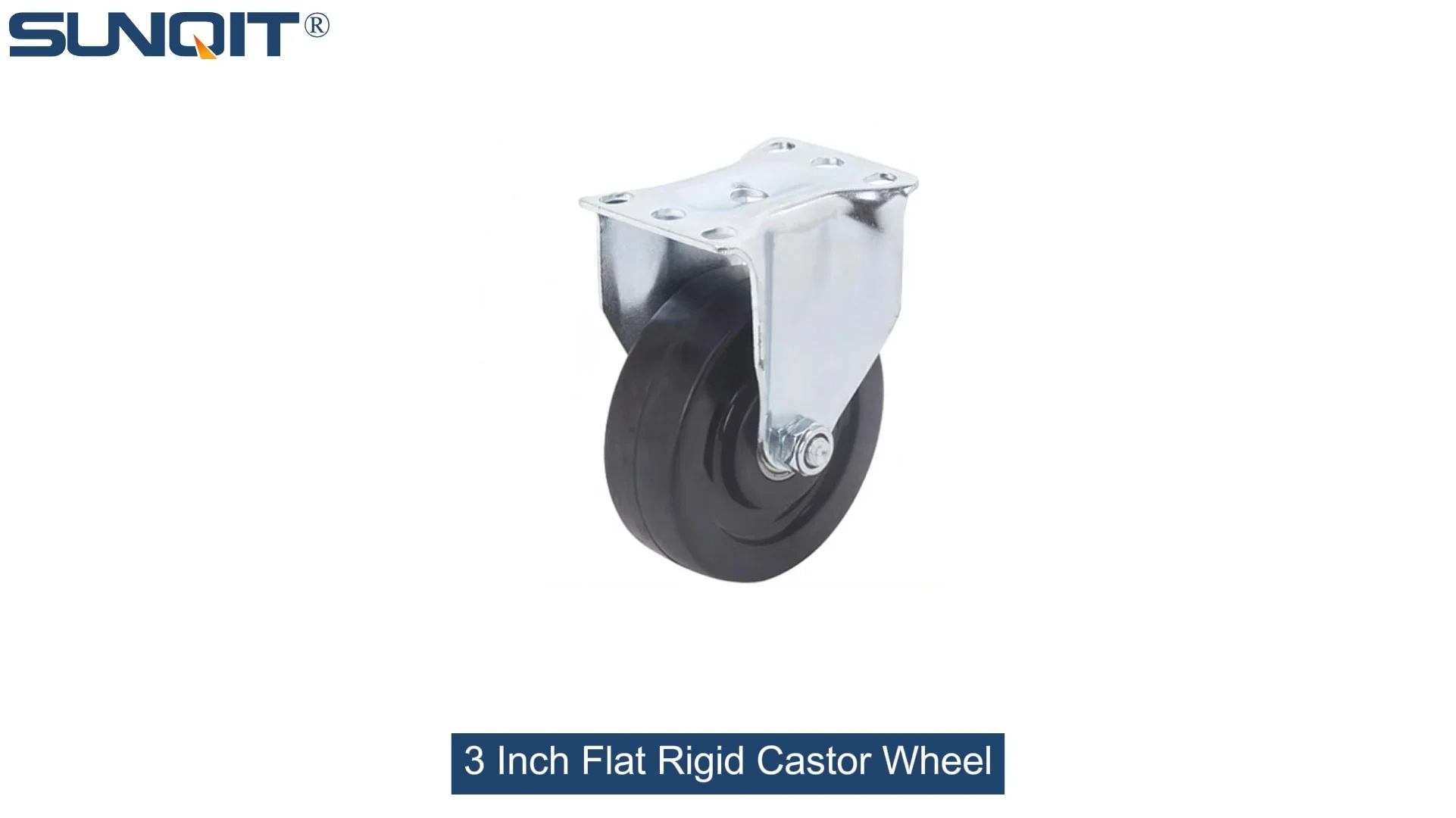
Flat Rigid Castor Wheel
Chair Casters Ball Bearing Wheels Rubber Base. Resistant to abrasion, impact and corrosion. Heavy payload can hold 70Kgs per pcs,which can make it works at a stable and smooth status.
Walk into any busy workshop, factory floor, or even a home garage, and you'll likely spot a workbench holding court at the center of the action. It's more than just a table—this is where ideas take shape, parts get assembled, and projects cross the finish line. But what if that workbench could do more? What if, instead of being stuck in one spot, it could glide smoothly to where it's needed most? That's where adding casters comes in. And if you're working with a Workbench E (single deck-without caster), choosing the right flat rigid castor wheels isn't just a detail—it's the difference between seamless productivity and a frustrating, wobbly mess.
Workbench E is a popular choice for many shops, thanks to its sturdy single-deck design and clean, no-frills structure. But here's the thing: it doesn't come with casters. That means if you want to move it—say, to reconfigure your workspace for a new project or to sweep underneath—you'll need to add them yourself. And not just any casters: flat rigid castor wheels are a top pick here. Unlike swivel casters that rotate 360 degrees, flat rigid ones lock into place, moving only forward and backward. They're simpler, more durable for heavy loads, and less likely to get stuck on uneven floors. But to get them right, you need to nail the height. Too short, and your workbench might scrape the floor or get caught on cords. Too tall, and it becomes unstable, risking spills or even injury. So let's dive into how to size these casters perfectly for your Workbench E.
Understanding Workbench E: The Foundation of Your Setup
Before we talk casters, let's get to know Workbench E (single deck-without caster) a little better. This workbench is designed with functionality in mind: a single, solid deck (usually made from materials like aluminum or steel, though aluminum profile is common here for its lightweight strength), no built-in casters, and a frame that's meant to be sturdy and reliable. Think of it as a blank canvas—ready to be customized with the tools, storage, and mobility features you need.
First, check the specs. Most Workbench E models have a weight capacity ranging from 300 to 800 pounds, depending on the materials used. The deck size typically falls between 48 inches (length) x 24 inches (width) and 72 inches x 30 inches, though exact dimensions can vary by supplier. The frame height—from the floor to the bottom of the deck—is usually around 30 to 36 inches, but again, this can differ. Why does this matter? Because the height of your flat rigid castor wheels will add to this frame height, raising the entire workbench. You need to make sure that the final height is comfortable to work at (nobody wants to hunch over or strain their back) and that the added height doesn't throw off how you use the bench.
Another key point: Workbench E's frame is often made with aluminum profile or steel tubing, which means the legs are hollow or have mounting points where casters can be attached. This is where caster accessories like mounting plates or castor installation bases come into play—they bridge the gap between the workbench legs and the casters, ensuring a secure fit. But these accessories add a little extra height too, so we can't ignore them when calculating total caster height.
The Big Question: Why Does Caster Height Matter So Much?
You might be thinking, "Can't I just pick any caster that fits and call it a day?" Unfortunately, no. The height of your flat rigid castor wheels affects three critical things: stability, mobility, and usability. Let's break them down.
Stability: Avoiding the Wobble
Imagine loading your Workbench E with heavy tools, a half-assembled machine, and a bin of parts—easily 400 pounds. If your casters are too tall, the workbench's center of gravity rises. That means even a small bump or a quick turn (though flat rigid casters don't swivel, you might still need to pivot the bench occasionally) could tip it over. On the flip side, if the casters are too short, the workbench sits lower, but the frame might scrape the floor, especially if your workshop has uneven concrete or small debris. Scrapping not only damages the floor and the bench legs but can also create friction, making the workbench hard to move even with casters.
Mobility: Gliding vs. Grinding
Flat rigid castor wheels are all about smooth movement, but that's only possible if they have enough clearance. If the caster height is too low, the bottom of the workbench deck or frame might drag on the floor, turning a simple push into a struggle. This isn't just tiring—it can also wear down the casters prematurely. On the other hand, casters that are too tall might have trouble with door thresholds or ramps, getting stuck or jolting the workbench as you move it. The sweet spot is a height that lets the wheels roll freely without any part of the bench touching the ground.
Usability: Comfort Matters
Think about how you use your workbench. If you're standing at it for hours, assembling parts or repairing equipment, the height of the deck directly impacts your posture. The standard comfortable height for a workbench is around 34 to 36 inches for most adults. If your Workbench E's frame is 30 inches tall and you add 4-inch casters, the deck height becomes 34 inches—perfect. But if you add 6-inch casters, suddenly the deck is 36 inches, which might be too high for someone shorter. Conversely, 2-inch casters would drop it to 32 inches, forcing you to hunch. Getting the height right ensures you can work comfortably, reducing fatigue and injury risk.
Pro Tip: If multiple people use the Workbench E, measure the average elbow height of the primary users. The deck should sit about 1 to 2 inches below elbow height when standing, allowing for a natural, relaxed working position. Add this to your caster height calculations!

Key Factors That Influence Caster Height for Workbench E
Now that we know why height matters, let's talk about what determines the "right" height for your flat rigid castor wheels. It's not a one-size-fits-all answer—several factors come into play, and you'll need to balance them to find your perfect match.
1. Floor Type and Condition
The surface your Workbench E sits on makes a big difference. If your workshop has smooth, polished concrete or hardwood floors, you can get away with shorter casters (2 to 3 inches) because there's less risk of tripping over cracks or debris. But if the floor is rough, has expansion joints, or is often cluttered with small parts or cords, you'll need more clearance. For example, a garage with uneven concrete might require 4 to 5-inch casters to glide over bumps without catching. Even something as simple as a door threshold between rooms—say, from the workshop to the storage area—can affect height: measure the threshold height and add a little extra (about 0.5 inches) to ensure the casters roll over it without getting stuck.
2. Load Capacity: How Much Weight Will You Be Carrying?
Workbench E has a weight limit, and so do casters. But here's the catch: heavier loads often require larger casters, not just for strength but for stability. A flat rigid castor wheel with a 2-inch diameter might handle 200 pounds, but if you're regularly loading the workbench with 500 pounds of tools and materials, you'll need a larger wheel (4 inches or more) to distribute that weight over a bigger surface area. This reduces stress on the wheel bearings and the floor, preventing damage. Always check the caster's load rating—remember, that's per wheel, so for a four-caster setup, multiply the per-wheel rating by four to get the total capacity. And err on the side of caution: if your typical load is 400 pounds, go for casters that can handle 500+ to account for unexpected heavy items.
3. Clearance Needs: What's Under the Workbench?
Do you store bins, tools, or equipment under your Workbench E? If so, you'll need enough clearance between the bottom of the deck and the floor to slide those items in and out. Measure the height of the tallest item you plan to store there (say, a plastic bin that's 12 inches tall) and add 1 to 2 inches for easy access. If your Workbench E's frame is 30 inches tall and you need 14 inches of clearance, you'll need casters that add 14 inches to the height—but wait, that might be too tall! In this case, you might need to prioritize: either choose shorter casters and store smaller items, or opt for a higher caster and accept a taller workbench. It's all about balance.
4. Frequency of Movement
How often do you need to move the Workbench E? If it stays in one spot 90% of the time and only gets moved monthly for cleaning, you might prioritize stability over mobility and go with shorter casters (2 to 3 inches). But if you're repositioning it daily—say, rolling it to a assembly line in the morning and back to the storage area in the afternoon—you'll want smoother-rolling, slightly taller casters (3 to 4 inches) that can handle frequent use without wearing down. Flat rigid casters with larger wheels also roll more easily over longer distances, reducing the effort needed to move the bench.

Step-by-Step: How to Measure for Flat Rigid Castor Wheels on Workbench E
Okay, let's get practical. Here's how to measure your Workbench E and calculate the ideal caster height. Grab a tape measure, a piece of paper, and maybe a helper—this will take 10 minutes, tops, and save you from buying the wrong casters.
Step 1: Measure the Workbench's Frame Height
First, find the current height of your Workbench E from the floor to the bottom of the deck. This is the "base height." Place one end of the tape measure on the floor next to one of the legs, and extend it up to the bottom of the deck. Write this number down (let's call it H1). For example, if it's 30 inches, H1 = 30".
Step 2: Determine Desired Deck Height
Next, figure out how high you want the deck to be after adding casters (H2). As a rule of thumb, 34 to 36 inches is comfortable for most standing work. Let's say you settle on 34 inches, so H2 = 34".
Step 3: Account for Caster Accessories
Remember those caster accessories we mentioned earlier? Things like castor installation bases or mounting plates add a small amount of height. If you're using a standard mounting plate, it might add 0.5 to 1 inch. Check the product specs of the accessories you plan to use and note this height (H3). For example, a castor installation base might add 0.75 inches, so H3 = 0.75".
Step 4: Calculate Required Caster Height
Now, do the math: Caster Height = H2 - H1 - H3. Using our example: 34" (desired deck height) - 30" (base height) - 0.75" (accessory height) = 3.25". So you'd need casters around 3.25 inches tall. Since casters are sold in standard sizes (2", 3", 4", etc.), you'd round up to 3.5 inches or down to 3 inches, depending on which fits better with your other needs (like floor condition or load capacity).
Step 5: Check Clearance for Storage/Obstacles
Finally, measure the tallest item you'll store under the workbench (H4) and add 1 inch for clearance. The total clearance after adding casters should be: Clearance = (Caster Height + H3) - (H1 + Caster Height - H2)? Wait, no—simpler: Clearance = (H2 - H1) - (H3 + Caster Height)? No, let's clarify. The clearance is the space between the floor and the bottom of the workbench frame after adding casters. Since the frame's base height was H1, and we're adding casters of height Caster Height plus H3 (accessories), the new frame height from the floor is H3 + Caster Height. So the clearance is (H3 + Caster Height). For example, with 3.25" casters and 0.75" accessories, clearance is 4 inches. If you need to store a 12-inch bin, 4 inches isn't enough—so you'd need to increase the caster height until clearance ≥ H4 + 1".
See? It's a bit of a puzzle, but taking the time to measure ensures you don't end up with casters that are either uselessly short or dangerously tall.

Flat Rigid Castor Wheel Sizing Chart for Workbench E
To make this easier, we've put together a sizing chart based on common Workbench E scenarios. Use it as a starting point, then adjust based on your specific measurements and needs.
| Caster Height (Inches) | Load Capacity (Per Wheel, lbs) | Suitable Floor Type | Best For Workbench E Scenarios | Clearance (Inches)* |
|---|---|---|---|---|
| 2" | 200-300 | Smooth concrete, hardwood, tile (no debris) | Light loads (tools, small parts), rarely moved, low-profile storage | 2.5-3" (with 0.5-1" accessories) |
| 3" | 300-500 | Smooth to slightly uneven floors, minimal debris | Medium loads (assembled parts, power tools), occasional movement | 3.5-4" |
| 4" | 500-800 | Uneven concrete, garage floors, workshops with thresholds | Heavy loads (machinery parts, large tools), frequent movement | 4.5-5" |
| 5" | 800-1200 | Rough floors, outdoor use, or storage of tall items underneath | Extra-heavy loads (industrial equipment), daily movement, tall under-bench storage | 5.5-6" |
*Clearance is approximate, assuming 0.5-1" added from caster accessories like mounting plates.
Common Mistakes to Avoid When Sizing Casters for Workbench E
Even with the best intentions, it's easy to slip up when choosing caster height. Here are a few pitfalls to watch out for:
Mistake #1: Ignoring Load Capacity for Height
It's tempting to pick the height you need and then grab the cheapest casters in that size, but load capacity matters more than you think. A 4-inch caster rated for 300 pounds might fit your height needs, but if your Workbench E regularly holds 600 pounds, those casters will wear out fast, wobble, or even break. Always prioritize load capacity first—then adjust height if needed.
Mistake #2: Forgetting About Adjustable Leveling Feet
Some Workbench E setups use adjustable leveling feet to stabilize the bench on uneven floors. If you're adding casters, you might need to remove these feet or replace them with shorter ones. If you leave them on, they'll add extra height, throwing off your calculations. Check if your workbench has leveling feet, and measure their height before sizing casters.
Mistake #3: Overlooking Wheel Material
Wheel material (rubber, plastic, steel) affects how the caster performs, but it can also impact effective height. For example, a rubber wheel might compress slightly under heavy loads, reducing clearance by 0.25 to 0.5 inches. If you're using rubber wheels for floor protection, factor in this compression when calculating height.
Mistake #4: Choosing the Same Height for All Wheels
This might sound silly, but it happens: mixing caster heights. If one wheel is 3 inches and another is 4 inches, the workbench will wobble, putting stress on the frame and making it hard to move. Always buy a set of four identical casters to ensure stability.
Final Thoughts: Your Workbench E Deserves the Right Casters
At the end of the day, your Workbench E is more than just a piece of equipment—it's a partner in your work. Adding flat rigid castor wheels can transform it from a static fixture into a dynamic tool that adapts to your needs. But to get the most out of it, you need to size those casters correctly. By considering your workbench's specs, floor condition, load capacity, and personal comfort, you'll find a height that makes moving, working, and storing items a breeze.
Remember, this isn't about perfection—it's about balance. Use our sizing chart as a guide, measure twice, and don't hesitate to adjust based on your unique workshop setup. With the right flat rigid castor wheels, your Workbench E will glide smoothly, stay stable, and support you through every project. Now go out there and make that workbench work for you.