- Company Articles
- Products and Technology
- Product knowledge
- Flat Rigid Castor Wheel Surface Hardness: Ensuring Durability on Rough Factory Floors

Flat Rigid Castor Wheel Surface Hardness: Ensuring Durability on Rough Factory Floors
Related Product
Flat Rigid Castor Wheel
Chair Casters Ball Bearing Wheels Rubber Base. Resistant to abrasion, impact and corrosion. Heavy payload can hold 70Kgs per pcs,which can make it works at a stable and smooth status.
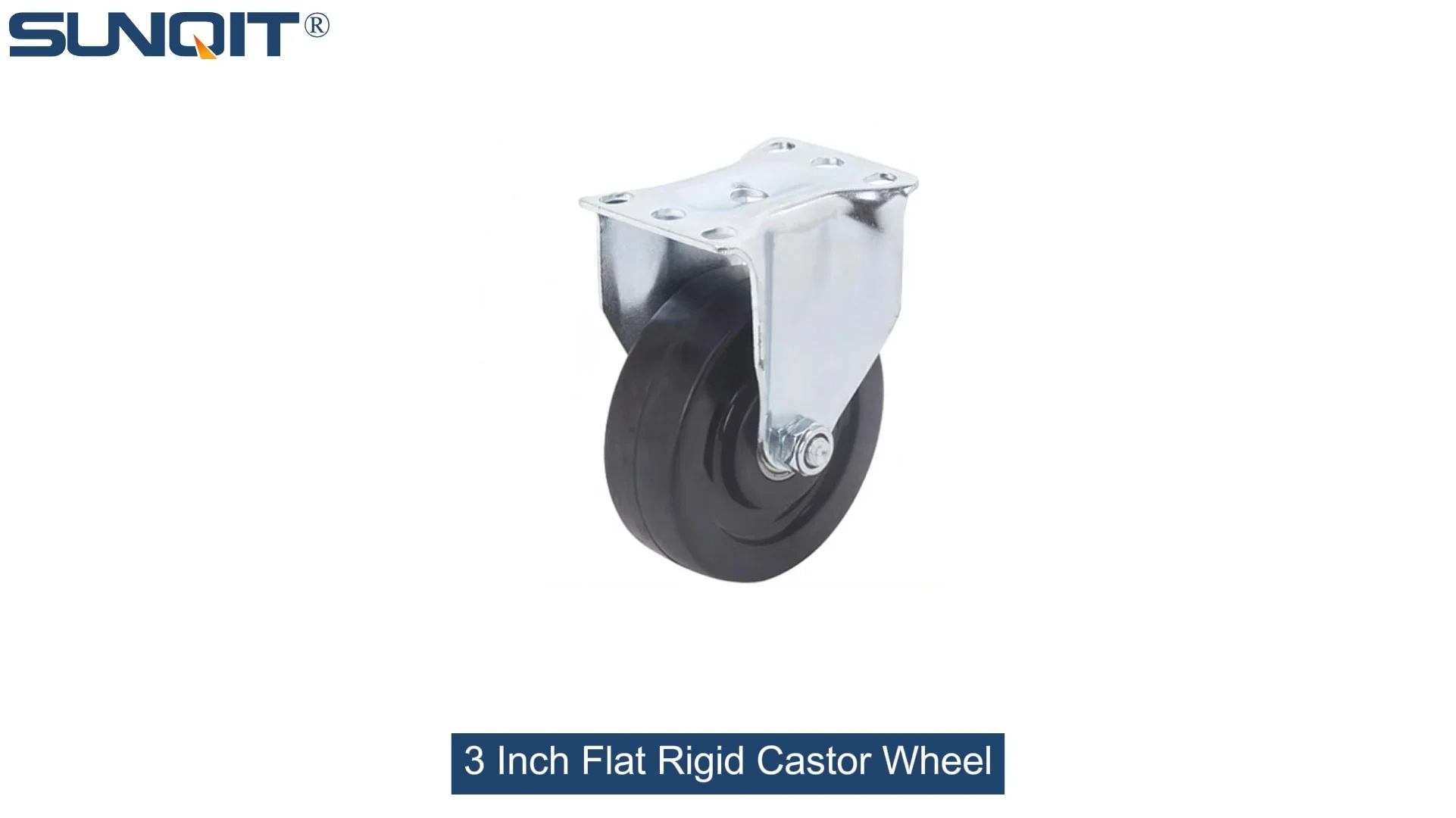
On any given day in a bustling factory, you'll find hundreds of moving parts—literally. From assembly line workbenches shuttling components to heavy-duty material carts transporting raw materials, the unsung heroes keeping everything rolling smoothly are caster wheels. But not all caster wheels are created equal, especially when it comes to surviving the tough conditions of rough factory floors. Among the various types, flat rigid castor wheels stand out for their stability and load-bearing capacity, but their true resilience hinges on one critical factor: surface hardness. In this article, we'll dive into why surface hardness matters, how it impacts durability, and what you need to know to choose the right caster wheel for your factory's unique challenges.
What Are Flat Rigid Castor Wheels, Anyway?
Before we get into hardness, let's clarify what makes a flat rigid castor wheel different. Unlike swivel casters that rotate 360 degrees, rigid casters are fixed in direction—they only move forward or backward. The "flat" refers to their tread design, which typically has a wide, flat contact surface with the floor, as opposed to rounded or grooved designs. This combination makes them ideal for applications where stability is key, like heavy-duty turnover trolley and rack systems, large material storage racks, or stationary workbenches that need occasional repositioning. They're the workhorses of the factory, often carrying loads from 500 to 2,000 pounds or more, so their durability isn't just a nice-to-have—it's a necessity.
The Science of Surface Hardness: Why It's Not Just About Being "Tough"
Surface hardness might sound like a technical term, but it's essentially a measure of how well a material resists being dented, scratched, or deformed when pressure is applied. For caster wheels, this is measured using scales like Shore Hardness (for elastomers like rubber or polyurethane) or Rockwell Hardness (for metals and hard plastics). Most commonly, you'll see Shore D hardness used for the rigid, non-elastic materials in flat castor wheels—think nylon, polypropylene, or reinforced plastics. The scale ranges from 0 (very soft) to 100 (extremely hard, like diamond), so a higher number means the wheel's surface is more resistant to indentation.
Why does this matter? A caster wheel with low surface hardness—say, Shore D 60—rolling over a factory floor scattered with metal shavings and small cracks will quickly show signs of wear. Every sharp edge or rough patch can scratch, chip, or even create flat spots on the wheel. Over time, those flat spots make the wheel wobble, slow down movement, and eventually fail. On the flip side, a wheel with high surface hardness—Shore D 85 or higher—glides over those same obstacles with minimal damage, maintaining its shape and performance for much longer.

Why Rough Factory Floors Demand Harder Surfaces
Factory floors are rarely pristine. Even in well-maintained facilities, daily operations leave their mark: concrete cracks from heavy machinery, oil and grease spills that degrade materials, metal chips from machining processes, and uneven wear from years of foot and equipment traffic. For flat rigid castor wheels, which can't swivel to avoid these hazards, every inch of movement is a direct interaction with the floor's imperfections. Let's break down the specific challenges rough floors pose and how hardness helps:
- Abrasion Resistance: Rough concrete or asphalt floors act like sandpaper. A hard wheel surface resists being worn down, whereas a soft wheel would gradually thin, reducing load capacity and stability.
- Impact Resistance: Cracks and potholes mean sudden jolts. Harder materials absorb these impacts without deforming, preventing "flat spots" that make wheels bounce or vibrate.
- Chemical and Oil Resistance: Factory floors often have oil, coolant, or cleaning solvents. Many hard materials (like nylon) are more resistant to chemical breakdown than softer rubbers, which can swell or crack when exposed.

Real-World Impact: How Hardness Saves Time and Money
To put this in perspective, consider a mid-sized automotive parts manufacturer we worked with last year. Their assembly line used turnover trolleys equipped with standard rubber caster wheels (Shore A 65, a soft material). Within weeks, the wheels showed wear—scratches, small tears, and flat spots from rolling over metal shavings and uneven concrete. Trolleys became harder to push, slowing workflows, and wheels needed replacement every 4-6 weeks. Maintenance teams spent hours swapping out wheels, and production delays cost the company an estimated $2,000 per month.
After assessing their floor conditions (rough concrete with frequent oil spills), we recommended switching to flat rigid caster wheels made of glass-reinforced nylon with a surface hardness of Shore D 85. Six months later, wheel replacements dropped to once every 6-8 months, trolley movement was smoother, and maintenance time was cut by 75%. The initial investment in harder wheels paid for itself within three months.

Choosing the Right Hardness: A Quick Guide
Not every factory needs the hardest caster wheel. The "right" hardness depends on your floor conditions, load requirements, and operations. Here's a framework to help you decide:
| Floor Condition | Typical Hardness Range (Shore D) | Recommended Material | Best For |
|---|---|---|---|
| Smooth, clean concrete (minimal debris) | 60-75 | Polyurethane | Light to medium loads (e.g., tool carts, small workbenches) |
| Rough concrete with minor cracks/debris | 75-85 | Nylon (unreinforced) | Medium loads (e.g., parts bins, light turnover trolleys) |
| Very rough, debris-heavy, or oily floors | 85-95 | Glass-reinforced nylon or steel | Heavy loads (e.g., material rack b (3 row and 3 floor), engine transport carts) |
Load weight matters too. A higher load means more pressure on the wheel, so even on a smooth floor, a heavy load may require a harder wheel. Always calculate the maximum load per caster (total trolley weight divided by number of wheels) and add a 20% buffer.
Caster Accessories: The Unsung Partners in Durability
While surface hardness is critical, caster accessories play a supporting role in maximizing durability. Even the hardest wheel fails prematurely if not properly mounted or maintained. Key accessories to consider:
- Castor Fixed Plates: These metal plates attach the wheel to trolleys/racks. Sturdy, well-fitted plates distribute weight evenly, preventing stress fractures. Look for thick steel with reinforced welding for heavy loads.
- Sealed Bearings: Open bearings trap dirt, causing friction and wear. Sealed bearings keep contaminants out, extending wheel life—vital in dusty factories.
- Brake Mechanisms: Keep trolleys stationary when not in use, reducing unnecessary wheel movement and wear from accidental rolling.
Maintenance Tips to Keep Hard Wheels Rolling
Even tough caster wheels need care. Follow this checklist:
- Clean Weekly: Use a stiff brush or compressed air to remove debris from wheel treads and bearings. Built-up debris accelerates wear.
- Inspect Monthly: Check for cracks, uneven wear, or flat spots. replace wheels immediately if damaged—waiting causes instability.
- Lubricate Quarterly: Use lithium-based grease on sealed bearings (per manufacturer guidelines) to keep rotation smooth and reduce friction heat.
- Tighten Hardware: Loose bolts on fixed plates cause wobbling, stressing wheels. Tighten regularly.
Conclusion: Hardness Drives Productivity
Flat rigid caster wheel surface hardness isn't just a spec—it's a productivity driver. It impacts how smoothly turnover trolleys roll, how often maintenance teams intervene, and how much your factory spends on replacements. By understanding hardness, assessing floor conditions, and pairing wheels with quality caster accessories, you reduce downtime, cut costs, and keep operations moving.
Next time you evaluate caster wheels, ask about surface hardness. Test materials. And remember: a harder wheel today means fewer headaches tomorrow. In a factory where every second counts, the right caster wheel keeps you rolling forward.