- Company Articles
- Products and Technology
- Product knowledge
- Flat Rigid Castor Wheel Surface Treatments: Enhancing Durability in Industrial Settings

Flat Rigid Castor Wheel Surface Treatments: Enhancing Durability in Industrial Settings
Related Product
Flat Rigid Castor Wheel
Chair Casters Ball Bearing Wheels Rubber Base. Resistant to abrasion, impact and corrosion. Heavy payload can hold 70Kgs per pcs,which can make it works at a stable and smooth status.
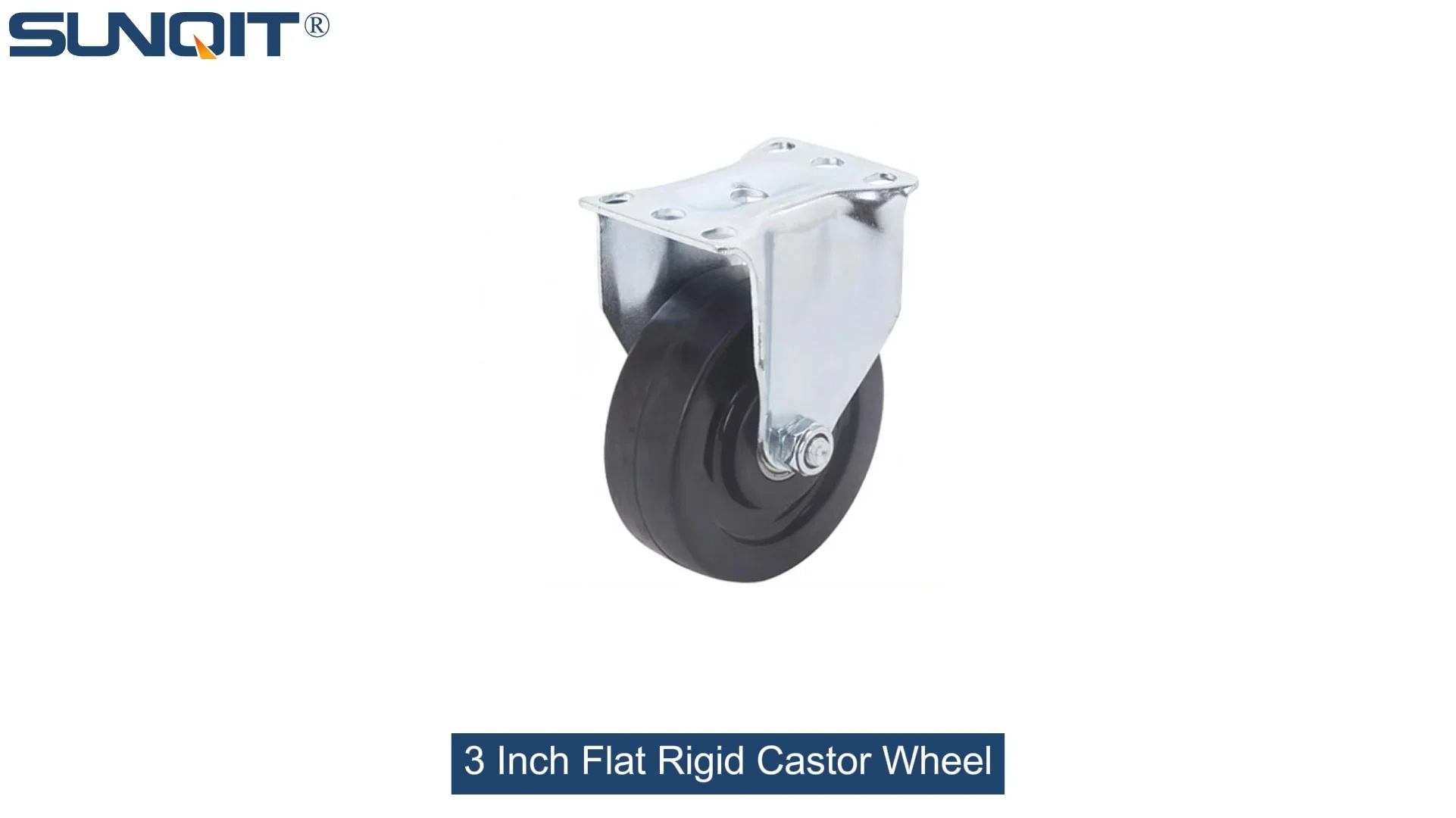
Walk through any manufacturing plant, warehouse, or distribution center, and you'll likely encounter a silent workhorse that keeps operations moving: the castor wheel. Among the various types of castors, flat rigid castor wheels stand out for their stability, strength, and reliability in heavy-duty applications. Unlike their swivel counterparts, which offer maneuverability, flat rigid castor wheels are designed for fixed-direction movement, making them ideal for transporting heavy loads along straight paths—think assembly line carts, material racks, or large storage units. But in the harsh realities of industrial environments—where dust, moisture, chemicals, and constant friction are daily challenges—even the sturdiest castor wheels can wear down quickly without proper protection. That's where surface treatments come in. These specialized processes not only extend the lifespan of flat rigid castor wheels but also ensure they maintain peak performance, safety, and efficiency. In this article, we'll explore why surface treatments matter, the most common types available, and how to choose the right one for your industrial needs—with a focus on durability, cost-effectiveness, and real-world application.
Why Surface Treatments Are Critical for Flat Rigid Castor Wheels
Industrial settings are unforgiving environments. A typical factory floor might expose castor wheels to metal shavings, oil spills, and fluctuating temperatures, while a warehouse near the coast could subject them to salt-laden air that accelerates corrosion. Even a "clean" facility like a food processing plant may use harsh sanitizers that eat away at untreated metal. For flat rigid castor wheels, which often bear loads of 500 pounds or more, the stakes are high: a corroded or worn wheel can seize up, causing carts to jam, slowing down production, or even leading to accidents. The cost of ignoring surface treatments isn't just about replacing wheels more frequently—it's about downtime, worker injuries, and the ripple effects of disrupted workflows.
Consider this: A mid-sized automotive parts manufacturer was using untreated steel flat rigid castor wheels on its material transport carts. Within six months, the wheels began to rust, their surfaces pitting and becoming uneven. The rough wheels not only made the carts harder to push but also scratched the factory's epoxy floors, requiring expensive repairs. Worse, a seized wheel once caused a cart to tip, spilling $10,000 worth of components. After switching to galvanized flat rigid castor wheels, the company saw a 70% reduction in wheel replacements and eliminated floor damage—proving that surface treatments aren't an extra expense, but a smart investment in long-term efficiency.
Beyond durability, surface treatments also enhance functionality. For example, a smooth, coated surface reduces friction, making carts easier to move with less manual effort. Chemical-resistant treatments protect wheels in environments with oils or solvents, while anti-slip coatings can improve safety on wet floors. In short, the right surface treatment transforms a basic castor wheel into a tailored solution that meets the unique demands of your workspace.
Common Surface Treatments for Flat Rigid Castor Wheels
Not all surface treatments are created equal. Each process offers distinct benefits, depending on the wheel's base material (steel, aluminum, or even plastic), the environment it will operate in, and the load it needs to bear. Below, we break down the most widely used treatments, their applications, and how they stack up in terms of performance.
1. Galvanization: The Workhorse of Corrosion Resistance
Galvanization is one of the oldest and most trusted surface treatments for metal components, and for good reason. The process involves dipping the castor wheel in a bath of molten zinc, which bonds to the steel surface, forming a protective layer. This layer acts as a barrier, preventing moisture and oxygen from reaching the underlying metal. Even if the zinc coating is scratched, it continues to protect the steel through a process called "cathodic protection," where the zinc corrodes first, sacrificing itself to preserve the base material.
Galvanized flat rigid castor wheels excel in outdoor or high-moisture environments, such as construction sites, docks, or cold storage facilities. They're also cost-effective, offering a balance of durability and affordability. A standard galvanized wheel can last 3–5 years in moderate industrial use, compared to 1–2 years for untreated steel. However, galvanization does add thickness to the wheel, which may be a consideration in tight spaces, and the zinc layer can chip if subjected to extreme impacts.
2. Powder Coating: Versatility and Aesthetic Appeal
Powder coating is a popular choice for industrial castor wheels that need both protection and a clean, uniform look. The process involves electrostatically applying a dry powder (typically polyester or epoxy) to the wheel's surface, then curing it in an oven. The result is a hard, durable finish that resists chipping, scratching, and fading. Unlike liquid paints, powder coating contains no solvents, making it more environmentally friendly and reducing volatile organic compound (VOC) emissions.
One of the biggest advantages of powder coating is its versatility. It comes in a wide range of colors, allowing facilities to color-code carts by department or function (e.g., red for hazardous materials, blue for cleanroom use). It also offers excellent resistance to chemicals, oils, and UV radiation, making it suitable for indoor and outdoor use. However, powder coating is less effective than galvanization in highly corrosive environments like saltwater or acid exposure, and it may crack under extreme pressure or temperature fluctuations.
3. Chrome Plating: Hardness and Shine for High-Wear Applications
For applications where friction is a primary concern—such as castor wheels on assembly line carts that move continuously—chrome plating is a top choice. The process involves electroplating a thin layer of chromium onto the wheel's surface, creating a hard, smooth finish that resists wear and reduces friction. Chrome-plated wheels are also highly resistant to scratches and stains, making them easy to clean—an important feature in industries like food processing or pharmaceuticals, where hygiene is critical.
Chrome plating does have limitations, though. It offers minimal corrosion resistance on its own, so it's often applied over a nickel undercoat to enhance protection. It's also more expensive than galvanization or powder coating, and the plating can peel if the wheel is bent or dented. For these reasons, chrome plating is best suited for low-moisture environments with high wear, such as automotive manufacturing or electronics assembly, where the wheel's smooth surface and longevity justify the cost.
4. Anodization: Lightweight Protection for Aluminum Wheels
While many industrial castor wheels are made of steel, aluminum is gaining popularity for its lightweight properties—especially in applications where manual handling is required. However, untreated aluminum is prone to oxidation, which forms a dull, powdery layer that weakens the metal over time. Anodization solves this problem by creating a protective oxide layer on the aluminum's surface through an electrolytic process. The result is a hard, corrosion-resistant finish that's also porous, allowing for dyeing in a range of colors (though clear anodization is most common for industrial use).
Anodized aluminum flat rigid castor wheels are ideal for environments where weight is a priority, such as aerospace manufacturing or medical device facilities. They're also resistant to saltwater, making them a good choice for coastal warehouses. However, anodization adds minimal thickness to the wheel, so it's not recommended for heavy loads exceeding 300 pounds—steel wheels with other treatments are better suited for such tasks.
5. PTFE Coating: Specialized Protection for Chemical Environments
In settings where wheels are exposed to harsh chemicals—think laboratories, chemical plants, or battery manufacturing—PTFE (polytetrafluoroethylene) coating is a game-changer. Also known by the brand name Teflon, PTFE is a synthetic fluoropolymer that repels oils, acids, and solvents, ensuring the wheel's surface remains intact even after repeated exposure. The coating also has a low friction coefficient, making carts easier to move, and it's heat-resistant up to 500°F (260°C), making it suitable for high-temperature environments like foundries.
PTFE coating is not without drawbacks, though. It's one of the most expensive surface treatments, and it's relatively soft compared to galvanization or chrome plating, so it may scratch under heavy loads or sharp impacts. For this reason, it's typically used only when chemical resistance is non-negotiable.

Comparing Surface Treatments: A Practical Guide
With so many options, choosing the right surface treatment can feel overwhelming. To simplify the decision, we've compared the most common treatments based on key factors like durability, corrosion resistance, and cost. Use this table as a starting point to match your needs with the best solution:
| Treatment Type | Process | Durability (in Industrial Use) | Corrosion Resistance | Max Load Capacity (per wheel) | Cost (Relative) | Ideal Environment |
|---|---|---|---|---|---|---|
| Galvanization | Dipping in molten zinc | 3–5 years | High (resists moisture, salt) | Up to 1,500 lbs | Moderate | Outdoor/coastal warehouses, construction sites |
| Powder Coating | Electrostatic powder application + oven curing | 2–4 years | Moderate (resists oils, UV rays) | Up to 1,200 lbs | Low to Moderate | Indoor factories, retail distribution centers |
| Chrome Plating | Electroplating chromium over nickel undercoat | 4–6 years | Low to Moderate (needs nickel undercoat for corrosion protection) | Up to 2,000 lbs | High | High-wear assembly lines, cleanrooms |
| Anodization (Aluminum) | Electrolytic oxide layer formation | 2–3 years | High (resists oxidation, saltwater) | Up to 300 lbs | Moderate | Lightweight applications, aerospace, medical facilities |
| PTFE Coating | Spray or dip coating with Teflon | 1–3 years | Very High (resists chemicals, solvents) | Up to 800 lbs | Very High | Chemical plants, laboratories, high-temperature settings |

Choosing the Right Treatment: Key Factors to Consider
While the table above provides a general guide, the best surface treatment for your flat rigid castor wheels depends on your specific situation. Here are the critical factors to evaluate:
Load Capacity
Start by calculating the maximum load each wheel will bear. For example, if a cart carries 2,000 pounds and uses four wheels, each wheel must support at least 500 pounds. Chrome-plated or galvanized steel wheels are better for heavy loads, while anodized aluminum is suitable for lighter applications. Remember: surface treatments add minimal weight, but the base material (steel vs. aluminum) plays a bigger role in load capacity.
Environmental Conditions
Ask: Is the environment wet (e.g., a car wash facility) or dry (e.g., a electronics assembly line)? Are there chemicals present (oils, acids, sanitizers)? For wet or coastal areas, prioritize galvanization or a powder coating with a corrosion-resistant additive. For chemical exposure, PTFE coating is the safest bet. In dry, low-friction environments, chrome plating reduces wear and makes movement smoother.
Frequency of Use
Wheels that move 10+ times a day will wear faster than those used occasionally. For high-frequency use—like on a 24/7 production line—invest in a hard-wearing treatment like chrome plating or galvanization. For carts used once a week, powder coating may be sufficient and more cost-effective.
Maintenance and Caster Accessories
Even the best surface treatments need care. Galvanized wheels may require occasional cleaning to remove dirt buildup, while chrome-plated wheels benefit from lubrication to maintain smooth rotation. Don't overlook caster accessories like wheel brushes (to remove debris) or specialized lubricants (to prevent rust). A little maintenance goes a long way in extending the life of your treated wheels.

Real-World Success Stories: How Surface Treatments Improve Operations
To illustrate the impact of surface treatments, let's look at two case studies from different industries:
Case Study 1: Food Processing Plant Reduces Downtime with Stainless Steel and Galvanization
A large food processing plant in the Midwest was struggling with rusted castor wheels on its ingredient transport carts. The plant uses high-pressure steam cleaning daily, which left untreated steel wheels corroded and pitted within three months. The solution? Switching to stainless steel flat rigid castor wheels (from the stainless steel pipe series) with a galvanized coating. Stainless steel provides a non-porous surface that resists bacterial growth, while galvanization adds an extra layer of corrosion protection. After the switch, the plant reduced wheel replacements from every 3 months to every 2 years, saving $15,000 annually in parts and labor. Workers also reported that the smoother wheels made carts easier to push, cutting transport time by 10%.
Case Study 2: Lean System Efficiency with Powder-Coated Wheels
A furniture manufacturer implementing lean system principles wanted to eliminate waste, including time spent replacing damaged equipment. The company's old carts used untreated wheels that frequently got stuck, causing delays in material delivery to the assembly line. By switching to powder-coated flat rigid castor wheels in a bright orange color (to match their 5S organizational system), they achieved two goals: the durable coating reduced wheel failures by 80%, and the color-coding made it easier to identify carts by department, streamlining workflow. The result? A 15% increase in production efficiency and a 25% reduction in cart-related downtime—proving that surface treatments can support broader operational goals like lean manufacturing.
Conclusion: Investing in Durability for Long-Term Success
Flat rigid castor wheels may seem like a small component in the grand scheme of industrial operations, but their performance has a ripple effect on efficiency, safety, and profitability. Surface treatments are the unsung heroes that protect these wheels from the harsh realities of factory floors, warehouses, and distribution centers—turning a basic part into a reliable asset. Whether you choose galvanization for corrosion resistance, powder coating for versatility, or chrome plating for high wear, the key is to match the treatment to your environment, load, and usage patterns. And don't forget: even the best treatment needs maintenance, so pair your wheels with the right caster accessories and a regular care routine.
In the end, the cost of a surface treatment is far less than the cost of downtime, accidents, or frequent replacements. By investing in durability today, you're ensuring that your operations keep moving tomorrow—and for years to come. After all, in industrial settings, the wheels that keep turning are the ones that drive success.