- Company Articles
- Products and Technology
- Product knowledge
- Flat Rigid Castor Wheel vs Pneumatic Castor: Which Suits Smooth Factory Floors?

Flat Rigid Castor Wheel vs Pneumatic Castor: Which Suits Smooth Factory Floors?
Related Product
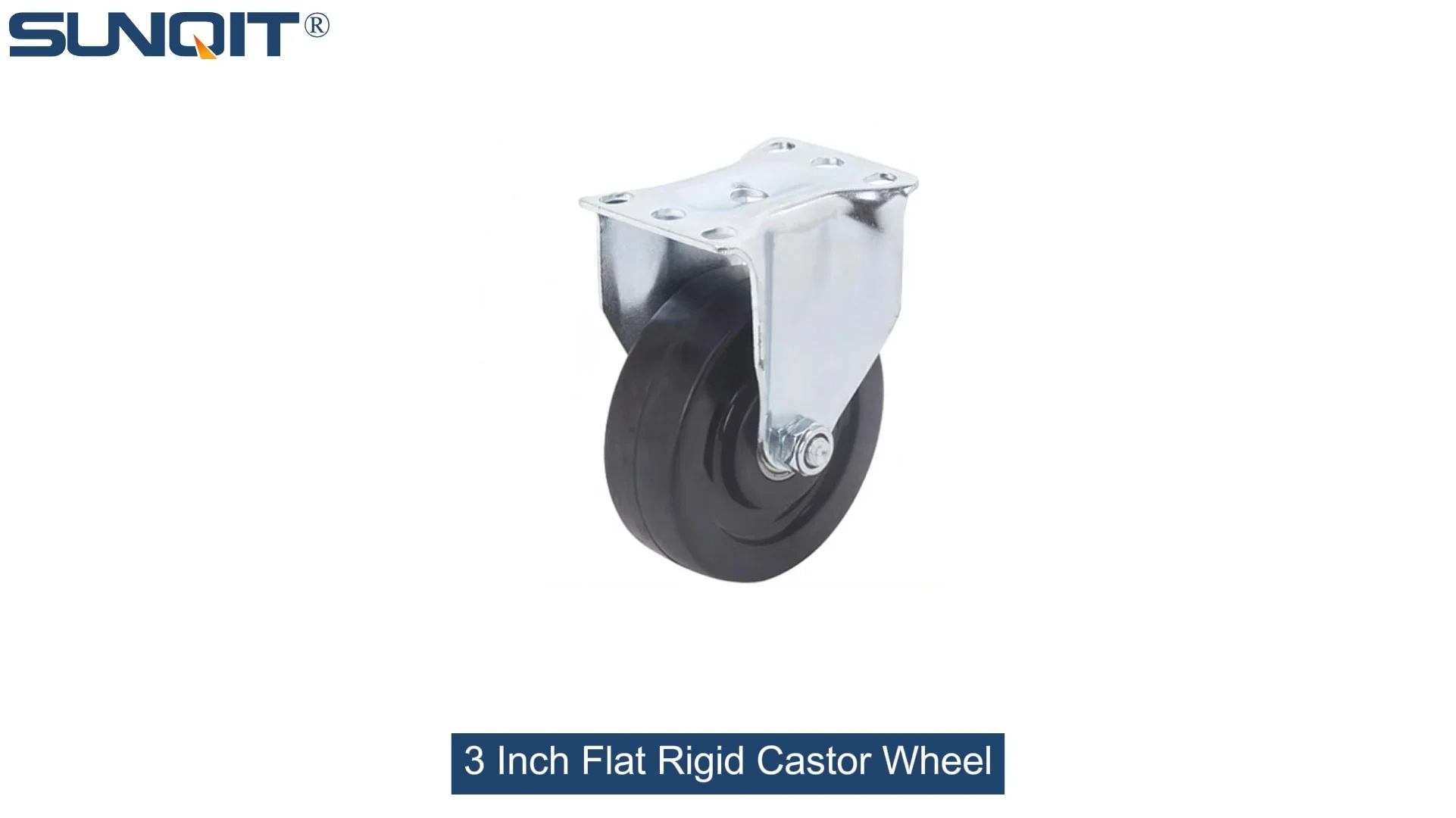
Flat Rigid Castor Wheel
Chair Casters Ball Bearing Wheels Rubber Base. Resistant to abrasion, impact and corrosion. Heavy payload can hold 70Kgs per pcs,which can make it works at a stable and smooth status.
Walk into any well-run factory, and you'll notice something subtle but critical: the way equipment moves. A workbench gliding into place, a trolley ferrying parts across the floor, a flow rack shifting to align with the assembly line—these movements are the unsung heroes of daily operations. And beneath nearly every one of these mobile tools lies a small but mighty component: the caster wheel. But not all caster wheels are created equal. When it comes to smooth factory floors, two options often rise to the top: the flat rigid castor wheel and the pneumatic castor. Choosing between them isn't just about picking a wheel; it's about optimizing workflow, protecting your floors, and ensuring your team can work efficiently without unnecessary hassle.
In this article, we'll dive deep into the world of caster wheels, breaking down the strengths, weaknesses, and real-world applications of flat rigid and pneumatic options. Whether you're setting up a new lean system, upgrading your workbenches, or simply trying to reduce the daily strain on your team, this guide will help you make a decision that aligns with your factory's unique needs. Let's start by getting to know each contender.
Meet the Contenders: What Are Flat Rigid Castor Wheels?
Imagine a workbench loaded with tools, components, and maybe even a heavy machine—something that needs to stay steady during use but still be movable when your layout changes. That's where flat rigid castor wheels shine. These are the workhorses of the caster world: solid, unyielding, and built for stability. Unlike their pneumatic cousins, rigid castors have no air or cushioning; their wheels are typically made from dense materials like polyurethane, rubber, or hard plastic, mounted on a fixed or swivel frame.
What makes them "rigid" is their lack of suspension. The wheel itself is solid, so there's no give or bounce when rolling. This design has a clear purpose: to handle heavy loads with minimal flex. If you've ever pushed a fully loaded workbench across a smooth concrete floor and felt how effortlessly it glides (once you get it moving), chances are it was on flat rigid castors. Their flat, wide treads distribute weight evenly, reducing pressure on the floor and preventing indentations—critical for maintaining those smooth surfaces factories rely on.
How Do They Work?
Flat rigid castor wheels are all about simplicity. The wheel is attached to a bracket (either fixed, meaning it only rolls forward/backward, or swivel, allowing 360° movement) and locked in place with a brake when needed. The key to their performance on smooth floors is their contact with the surface. Since there's no air pressure to adjust or soft rubber to wear down unevenly, they maintain consistent traction. Materials like polyurethane are popular here because they offer a balance of grip (to prevent slipping) and hardness (to resist wear), making them ideal for repetitive movement on smooth, clean floors.
Take, for example, a workbench in an electronics assembly line. It might hold sensitive equipment, bins of small parts, and a static-dissipative mat (common in ESD workstations). The last thing you want is for that workbench to wobble or drift during use. Flat rigid castors with locking brakes keep it anchored, while their smooth-rolling design means when you need to reposition the bench for a new project, two people can move it without straining. No bouncing, no sudden stops—just steady, predictable motion.
Pros of Flat Rigid Castor Wheels for Smooth Floors
- Heavy-Duty Load Capacity: Their solid construction handles more weight than most pneumatic castors. A typical rigid castor can support 500-2,000 lbs per wheel, depending on size and material—perfect for workbenches or trolleys carrying heavy machinery.
- Low Maintenance: No air to refill, no inner tubes to puncture, no valves to clog. A quick wipe down to remove dust or debris is usually all they need. This is a huge plus in busy factories where downtime for maintenance is costly.
- Consistent Performance: On smooth floors, they roll with minimal resistance. Since there's no air pressure to lose, their rolling ease doesn't degrade over time (unlike pneumatic castors, which can go flat if punctured).
- Floor Protection: When made with non-marking materials like polyurethane, rigid castors won't leave scuffs or black marks on polished concrete or epoxy floors. This is a big deal for factories that prioritize a clean, professional appearance (and avoid the headache of floor repairs).
Cons to Consider
Of course, no caster is perfect. Flat rigid castors have limitations, especially in environments where flexibility or shock absorption matters. For one, their lack of suspension means they transmit vibrations. If you're moving delicate parts—think circuit boards or glass components—even small bumps (and yes, even "smooth" floors can have tiny cracks or uneven joints) can jostle items. This makes them less ideal for trolleys carrying fragile goods.
They're also noisier than pneumatic castors. The solid wheel hitting the floor creates a higher-pitched "rumble" compared to the muffled roll of an air-filled tire. In a factory with many moving parts, this noise can add up, contributing to worker fatigue over time. Finally, while they glide on smooth floors, they struggle on uneven surfaces. If your factory has transitions between floor types (e.g., concrete to tile) or occasional debris, rigid castors can get stuck or become hard to push.
The Challenger: What Are Pneumatic Castors?
Now, let's shift to the other side of the ring: pneumatic castors. If flat rigid castors are the steady workhorses, pneumatic castors are the shock-absorbing comfort experts. These castors have wheels that look like tiny tires—because that's essentially what they are. Instead of a solid core, they're filled with air, just like a bicycle or car tire. This design gives them a unique set of abilities that make them popular in settings where smooth movement and vibration reduction are priorities.
Picture this: a trolley carrying a rack of finished products from the assembly line to the shipping area. The floor is smooth, but there's a slight dip near the loading dock. With pneumatic castors, that dip is barely noticeable—the air in the wheels compresses, absorbing the impact. The products stay stable, and the person pushing the trolley doesn't feel a jolt. That's the magic of pneumatic castors: they turn a potentially jarring ride into a smooth one.
How Do They Work?
Pneumatic castors rely on air pressure to cushion movement. The wheel's outer layer is rubber (or a rubber-like compound), and the inner cavity is filled with air, creating a spring-like effect. When the wheel hits a bump, the air compresses, absorbing the shock before it reaches the equipment or load. Most pneumatic castors also have a swivel design, making them highly maneuverable—great for tight spaces where you need to navigate around machinery or workers.
Their construction makes them a favorite for applications where noise and vibration matter. For example, in a food processing plant, where cleanliness and quiet operation are key, pneumatic castors on ingredient trolleys reduce clanging and prevent spills. In a lab setting, where sensitive instruments might be moved occasionally, they minimize disruption to experiments. And yes, even in factories with smooth floors, they add a layer of comfort that can make a big difference in daily work.
Pros of Pneumatic Castors for Smooth Floors
- Shock Absorption: This is their biggest selling point. The air-filled wheels act as a buffer, protecting fragile loads from jostling. If your factory handles delicate parts—think semiconductors or medical devices—pneumatic castors can reduce product damage and waste.
- Quiet Operation: The rubber tire and air cushion muffle rolling noise. Compared to the sharp "click-clack" of rigid castors, pneumatic wheels produce a soft, low rumble. This is a small change that can have a big impact on worker satisfaction; quieter environments are less stressful and reduce fatigue.
- Better Traction on Less-Than-Perfect Floors: Even smooth floors aren't always flawless. A spilled drop of oil, a tiny gravel chip, or a hairline crack can cause rigid castors to slip or get stuck. Pneumatic wheels, with their rubber tread, grip better on these minor imperfections, reducing the risk of accidents.
- Comfort for Operators: Pushing a heavy trolley all day is hard on the body. The shock absorption of pneumatic castors reduces the force needed to get the trolley moving and the strain on wrists, arms, and backs. Over time, this can lower injury rates and boost productivity.
Cons to Keep in Mind
Pneumatic castors aren't without drawbacks, especially in high-demand factory settings. The biggest issue? Maintenance. Air-filled tires can puncture—whether from a stray nail on the floor, a sharp edge on a pallet, or even repeated contact with rough surfaces. A flat pneumatic castor is useless until refilled or replaced, which means downtime for your equipment. They also require regular pressure checks, just like car tires; under-inflated wheels lose their shock-absorbing ability and become harder to roll.
They also have lower load capacities than rigid castors. Most pneumatic castors max out around 300-800 lbs per wheel, which might not be enough for heavy workbenches or machinery. And while their rubber treads are great for traction, they wear down faster than polyurethane or steel. In a factory with constant movement, you might find yourself replacing pneumatic wheels more often than rigid ones—adding to long-term costs.

Head-to-Head: The Comparison Table
To make it easier to see how these two options stack up, let's put them side by side. The table below compares key factors like load capacity, maintenance, noise, and performance on smooth floors—all things that matter when choosing caster wheels for your factory.
| Factor | Flat Rigid Castor Wheels | Pneumatic Castors |
|---|---|---|
| Load Capacity | High (500-2,000 lbs per wheel) | Medium (300-800 lbs per wheel) |
| Maintenance Needs | Low (no air pressure checks; occasional cleaning) | High (regular pressure checks, risk of punctures, tire replacement) |
| Noise Level | Higher (solid wheel on hard floor = more vibration/noise) | Lower (air cushion and rubber tread muffle sound) |
| Shock Absorption | Low (no suspension; vibrations transfer to load) | High (air-filled tires cushion impacts) |
| Floor Protection | Excellent (polyurethane/non-marking options prevent scuffs) | Good (rubber tread is gentle, but may leave marks if over-inflated) |
| Best For Smooth Floors When... | You need heavy load support, minimal maintenance, and consistent rolling | You're moving fragile loads, prioritizing operator comfort, or need better traction on minor imperfections |
| Long-Term Cost | Lower (fewer replacements, no repair kits needed) | Higher (more frequent tire replacement, potential downtime from punctures) |

Real-World Scenarios: When to Choose Which?
Tables and specs are helpful, but nothing beats real-world examples. Let's walk through a few common factory scenarios to see how flat rigid and pneumatic castors perform in action. These stories might feel familiar—they're based on the challenges many factory managers face daily.
Scenario 1: The Heavy-Duty Workbench in a Lean System
A manufacturing plant specializing in automotive parts has just adopted a lean system to streamline production. Part of this system involves modular workbenches that can be reconfigured as assembly tasks change. Each workbench holds a torque wrench, a parts bin, and a small testing machine—all adding up to around 800 lbs. The floor is smooth, polished concrete, and the workbenches are moved once a week (during layout adjustments) but stay fixed during daily use.
In this case, flat rigid castor wheels are the clear choice. Why? The workbench's weight exceeds the typical pneumatic castor's capacity, and since it's only moved occasionally, the noise and vibration of rigid castors aren't a daily annoyance. The lean system prioritizes efficiency and minimal waste, so the low maintenance of rigid castors (no downtime for air checks or punctures) aligns perfectly with those goals. Plus, the non-marking polyurethane wheels keep the floor looking clean, which matters for audits and safety inspections.
Scenario 2: Transporting Delicate Electronics on a Flow Rack
An electronics factory assembles circuit boards for smartphones. Once a board is soldered, it's placed on a flow rack —a wheeled cart with sloped shelves that let boards glide gently to the next station. The flow rack is moved 10-15 times a day, carrying 10-15 boards at a time (each worth hundreds of dollars). The floor is smooth epoxy, but there's a small lip where the assembly line meets the testing area.
Here, pneumatic castors make sense. The circuit boards are fragile; even a small jolt could damage a solder joint. The pneumatic wheels' shock absorption ensures the boards stay stable during transport. The lip between floor sections? Pneumatic castors roll over it without a bump, whereas rigid castors might jostle the load. And since the flow rack is moved frequently, the quieter operation and reduced operator strain are worth the extra maintenance. The factory keeps a small air pump and spare inner tubes on hand to handle punctures quickly, minimizing downtime.
Scenario 3: The Multi-Use Trolley
A packaging facility uses a single trolley for two tasks: moving heavy rolls of plastic film (600 lbs each) in the morning and transporting boxes of finished products (300 lbs total) in the afternoon. The floor is smooth but has a few hairline cracks from years of use.
This is trickier. For the morning task (heavy rolls), flat rigid castors would handle the weight better. But in the afternoon, the boxes are lighter but more prone to crushing if jostled, and the cracks could cause rigid castors to vibrate. What's the solution? Some factories opt for a hybrid approach: two rigid castors on one end (for heavy load support) and two pneumatic castors on the other (for shock absorption). Alternatively, they might invest in "semi-pneumatic" castors—solid rubber wheels with a hollow core that mimic pneumatic cushioning without the risk of punctures. It's a reminder that sometimes, the best choice isn't black and white.

Expert Tips for Choosing the Right Caster Wheel
Still on the fence? Here are some pro tips to help you narrow down your choice. These come from factory managers, maintenance supervisors, and caster suppliers who've seen it all—and learned what works (and what doesn't) on smooth factory floors.
1. Start with the Load (and Then Double It)
Never guess your load capacity. Weigh your equipment (including any tools, materials, or products it will carry) and choose castors rated for at least 125% of that weight. Why? Because loads shift during movement—what's balanced at rest might become uneven when rolling. A 500-lb workbench might feel like 600 lbs when someone pushes it quickly around a corner. Overloading castors leads to premature wear, floor damage, and even accidents.
2. Think About How Often It Moves
A workbench moved once a month has different needs than a trolley moved hourly. For infrequent movement, rigid castors are fine—their noise and vibration are a small price to pay for low maintenance. For daily use, especially by the same team members, pneumatic castors' comfort and quietness can boost morale and reduce fatigue.
3. Inspect Your Floor (Really Inspect It)
"Smooth" is subjective. Get down on the floor and look for cracks, oil stains, or uneven seams. Run your hand over the surface—even a slight texture can affect how castors perform. If your floor is near-perfect, rigid castors will glide. If there are minor flaws, pneumatic or semi-pneumatic castors will handle them better.
4. Don't Overlook Brakes
Both rigid and pneumatic castors come with brake options, but not all brakes are created equal. For workbenches that need to stay put during use, choose "total lock" brakes that lock both the wheel and the swivel, preventing movement in any direction. For trolleys that are parked temporarily, a simple wheel lock might suffice. Brakes add cost, but they're non-negotiable for safety—especially on smooth floors where even a slight incline can cause equipment to roll away.
5. Consider the Total Cost of Ownership
Pneumatic castors might be cheaper upfront, but their long-term costs (replacement tires, downtime, maintenance kits) can add up. Rigid castors cost more initially but save money over time. Do the math: if a pneumatic castor needs replacement every 6 months and a rigid one lasts 3 years, which is the better deal? Factor in labor costs for repairs and downtime, too—those can dwarf the price of the castor itself.
Conclusion: Finding Your Perfect Fit
At the end of the day, there's no "best" caster wheel—only the best one for your factory. Flat rigid castor wheels excel in heavy-load, low-maintenance scenarios, making them ideal for workbenches and equipment that stays put but needs occasional movement. Pneumatic castors shine when shock absorption, noise reduction, and operator comfort are priorities—think delicate loads or frequent trolley use.
The key is to align your choice with your factory's unique goals. If you're focused on a lean system , rigid castors' reliability and low waste might be the way to go. If you're invested in worker well-being and product quality, pneumatic castors could be worth the extra upkeep. And if you're somewhere in between? Don't be afraid to mix and match—hybrid setups or semi-pneumatic options can offer the best of both worlds.
Remember, the caster wheel might be small, but its impact is huge. It's the difference between a team dreading the daily task of moving equipment and one barely noticing the effort. It's the difference between a floor covered in scuffs and one that looks professional for years. So take the time to evaluate your needs, test a few options if you can, and choose the wheel that will keep your factory moving—smoothly, safely, and efficiently—for years to come.