- Company Articles
- Products and Technology
- Product knowledge
- Flat Rigid Castor Wheel vs Swivel Castor: Cost-Effectiveness in Long-Term Use

Flat Rigid Castor Wheel vs Swivel Castor: Cost-Effectiveness in Long-Term Use
Related Product
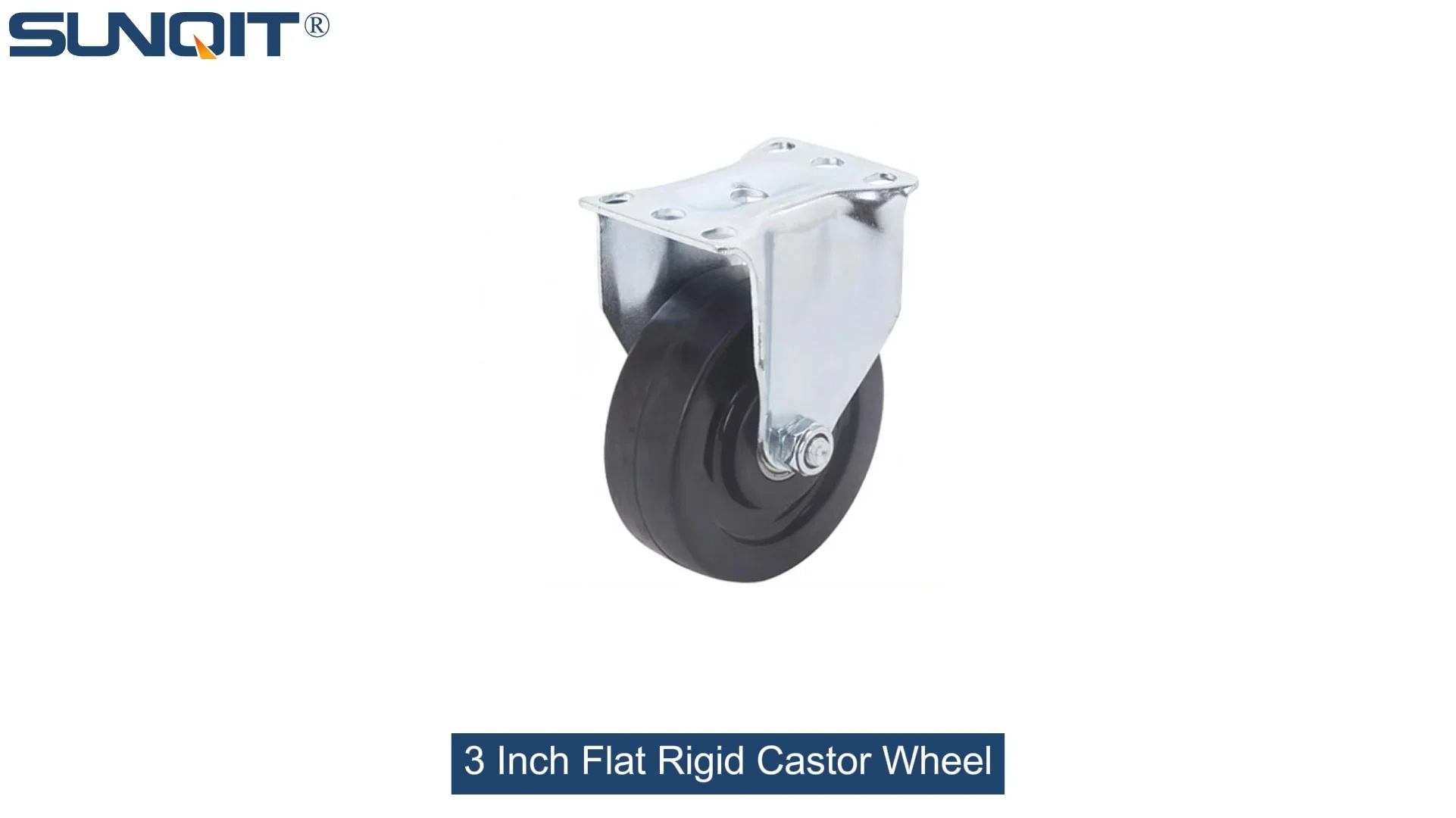
Flat Rigid Castor Wheel
Chair Casters Ball Bearing Wheels Rubber Base. Resistant to abrasion, impact and corrosion. Heavy payload can hold 70Kgs per pcs,which can make it works at a stable and smooth status.
In the world of material handling, manufacturing, and daily operations, there's a silent workhorse that often goes unnoticed: the caster wheel . These small, unassuming components carry the weight of our workflows—literally. From the heavy-duty trolleys shuttling parts across factory floors to the medical carts gliding through hospital corridors, the right caster can mean the difference between smooth, efficient operations and frustrating, costly delays. But when it comes to choosing between flat rigid castor wheel and swivel castors, the decision isn't just about "which rolls better." It's about long-term cost-effectiveness: balancing initial expenses, maintenance needs, durability, and the hidden costs of downtime or inefficiency.
Let's face it: no one wants to replace castors every few months, or deal with constant repairs that eat into your team's time and budget. Whether you're outfitting a warehouse, a workshop, or a retail stockroom, the choice between rigid and swivel castors will ripple through your operations for years. In this article, we'll break down the differences, weigh their pros and cons, and help you decide which option makes the most sense for your unique needs—because when it comes to castors, the "cheaper" upfront choice might end up costing you far more in the long run.
First Things First: What Are We Actually Comparing?
Before diving into cost-effectiveness, let's make sure we're on the same page about what these two types of castors are . At their core, both are designed to make moving heavy objects easier, but their mechanics and intended uses couldn't be more different.
Flat Rigid Castor Wheels: The "Straight and Steady" Workhorses
A flat rigid castor wheel is exactly what it sounds like: a wheel mounted on a fixed, non-rotating fork. Unlike swivel castors, which can spin 360 degrees, rigid castors lock the wheel in a single direction. Think of them as the "train tracks" of the caster world—they excel at moving in straight lines, but struggle with tight turns or sudden direction changes.
These castors are built for stability and simplicity. Their design is straightforward: a wheel (often made of rubber, polyurethane, or steel) attached to a rigid metal frame, which bolts or welds directly to the bottom of a cart, trolley, or rack. Because there are no moving parts beyond the wheel itself, they're inherently durable and low-maintenance. You'll find them on everything from heavy-duty material racks to simple hand trucks that only need to go back and forth along a predictable path.
Swivel Castors: The "Maneuverability Masters"
Swivel castors, on the other hand, are all about flexibility. Their defining feature is a rotating swivel head, which allows the wheel to turn 360 degrees independently of the cart or trolley. This makes them ideal for tight spaces, frequent direction changes, or environments where you need to navigate around obstacles—think hospital carts that need to weave between beds, or warehouse trolleys that have to pivot to load/unload in cramped aisles.
A common type of swivel castor is the swivel stem caster wheel , which uses a stem (instead of a plate) to attach to the equipment. The swivel head contains bearings (usually ball or roller bearings) that let the wheel rotate smoothly, even under heavy loads. But with this added maneuverability comes complexity: more moving parts mean more potential points of wear and tear, from the bearings to the swivel raceway (the track that the swivel head rotates on).
Design Differences: Why They Matter for Long-Term Use
At first glance, rigid and swivel castors might seem similar—after all, they both have wheels! But their design differences are critical when it comes to long-term cost-effectiveness. Let's break down the key components and how they impact durability, maintenance, and overall value.
| Feature | Flat Rigid Castor Wheel | Swivel Castor (e.g., Swivel Stem Caster Wheel) |
|---|---|---|
| Moving Parts | Minimal: Only the wheel axle and wheel itself. | Multiple: Wheel axle, swivel head, bearings, raceway, and sometimes a brake mechanism. |
| Stress Points | .(),. | :, raceway ,. |
| Attachment Style | (plate-mounted),,. | (stem-mounted);,. |
| Maintenance Accessibility | :,. | :,,. |
For example, consider a warehouse trolley used to move pallets back and forth along a 100-foot straight aisle, 50 times a day. A rigid castor here would thrive: its fixed direction means the wheels only wear in one spot, the axle stays aligned, and there's no risk of the swivel head jamming from debris. Now, imagine that same trolley needing to navigate around a maze of workstations and storage racks—suddenly, the rigid castor becomes a liability. You'd need to push harder to change direction, putting extra strain on the wheels and the trolley frame, leading to faster wear.
On the flip side, a swivel castor in a straight-line-only environment would be overkill. The swivel head would rarely rotate, but its bearings might still collect dust or debris, leading to "seizing" (when the swivel head gets stuck). Without regular lubrication, that fancy 360-degree rotation becomes a costly problem, not a benefit.

Performance in Real-World Environments: Where Each Shines (and Struggles)
Cost-effectiveness isn't just about how much a caster costs to buy or repair—it's about how well it performs in your specific environment. A castor that lasts 10 years in a clean, climate-controlled lab might fail in 6 months in a dusty factory with uneven concrete floors. Let's explore how rigid and swivel castors hold up in common work settings.
1. Heavy-Duty Industrial Settings (Factories, Warehouses)
In factories and warehouses, castors face brutal conditions: heavy loads (often 500+ lbs), rough concrete floors, exposure to oil, grease, and debris, and constant use (sometimes 24/7 in shift-based operations). Here's how the two types compare:
Flat Rigid Castor Wheel: Thrives in environments with predictable, straight-line paths. For example, if you have a production line where trolleys move back and forth between two stations along a fixed route, rigid castors are ideal. Their simple design resists damage from debris (no swivel head to get clogged with dirt or metal shavings), and their fixed direction reduces the risk of the trolley veering off course and damaging products or equipment.
One warehouse manager we spoke to (let's call him Mark) shared his experience: "We used to put swivel castors on all our material trolleys, thinking maneuverability was key. But in our main assembly line, the trolleys only move 50 feet back and forth. The swivel castors kept seizing up because of the metal dust—we were replacing bearings every 3 months. We switched to rigid castors, and they've been going strong for 2 years with zero issues. The initial cost was 20% lower, and we haven't spent a dime on repairs."
Swivel Castors: Better for areas with frequent direction changes, like loading docks or order-picking zones where trolleys need to weave between racks. But they require consistent maintenance in dirty environments. Without regular cleaning and lubrication, debris can get trapped in the swivel head, causing the caster to "bind" (drag instead of rotating smoothly). This not only makes the trolley harder to push (wasting labor time) but also puts extra stress on the wheels and frame, leading to premature failure.
For example, in a busy warehouse with narrow aisles, a swivel castor that seizes up could force workers to exert extra effort, increasing the risk of back injuries or slowed productivity. Over time, those "small" delays add up: if a worker spends just 5 extra minutes per hour struggling with a stuck caster, that's 40+ hours of lost productivity per year per worker.
2. Light-to-Medium Use (Retail, Offices, Hospitals)
In settings with lighter loads (under 300 lbs), smoother floors, and less debris—like retail stockrooms, office mail carts, or hospital supply trolleys—the dynamics shift. Here, maneuverability often takes priority, but maintenance still matters.
Flat Rigid Castor Wheel: Still useful for straight paths, like moving boxes from a stockroom to the sales floor along a fixed corridor. But in tight spaces (e.g., a small retail backroom with shelves on both sides), rigid castors can be frustrating. Imagine trying to push a cart loaded with clothing racks into a corner—with rigid castors, you'd have to "shuffle" the cart back and forth, wasting time and risking damage to walls or merchandise.
Swivel Castors: The clear winner here. In hospitals, for example, nurses need to maneuver medication carts around beds, chairs, and patients—swivel castors (often with brakes) make this possible. But even in these cleaner environments, maintenance isn't optional. Hospital carts, for instance, are frequently wiped down with disinfectants, which can strip lubrication from swivel bearings. Without re-lubrication, the castors will start to squeak and drag, making them harder to push. Over time, this can lead to nurse fatigue—a hidden cost that impacts both productivity and staff well-being.
A hospital facilities manager (Sarah) told us: "We use swivel stem caster wheel on our medication carts because maneuverability is life-saving in emergencies. But we learned the hard way: we used to skip lubrication to save time, and within 6 months, the castors were so stiff that nurses were complaining about wrist pain. Now we schedule monthly lubrication checks—it takes 10 minutes per cart, but it's prevented injuries and kept the castors going for 3+ years instead of 6 months."
2. Uneven or Outdoor Surfaces (Construction Sites, Loading Yards)
On gravel, dirt, or cracked asphalt, both castor types face challenges, but rigid castors often come out ahead. Their fixed direction helps them "plow through" small obstacles (like rocks or potholes) without getting stuck, while swivel castors can easily veer off course or have their swivel heads damaged by uneven terrain. For example, a construction site trolley used to haul tools back and forth from a truck to a worksite would likely benefit from rigid castors—swivel castors would struggle with the rough ground and constant exposure to mud and debris.

Maintenance: The Hidden Cost Driver
When calculating long-term cost-effectiveness, maintenance is often the biggest wildcard. A castor with a low upfront price might end up costing far more if it requires frequent repairs or replacement parts. Let's break down the maintenance needs of each type, including caster accessories that can extend their lifespan.
Flat Rigid Castor Wheel Maintenance
Rigid castors are the "set it and forget it" option—most of the time. Their simple design means maintenance is minimal, but not zero. Key tasks include:
- Wheel Inspection: Check for cracks, flat spots, or excessive wear (e.g., rubber wheels getting "chunked" from rough floors). replace wheels when tread depth is below 1/8 inch.
- Axle Tightening: Over time, bolts holding the axle can loosen (especially under heavy loads). A quick tighten with a wrench every 3–6 months prevents the wheel from wobbling, which causes uneven wear.
- Cleaning: In dirty environments, wipe debris from the wheel and axle to prevent grinding (e.g., metal shavings wearing down the axle).
The good news? Replacement parts are cheap and easy to find. A basic rigid castor wheel (polyurethane, 5-inch diameter) costs $15–$30, and you can replace just the wheel without buying a whole new caster. No special tools needed—most people can do it with a wrench and 10 minutes of time.
Swivel Castor Maintenance
Swivel castors require more TLC, thanks to their moving parts. Key tasks include:
- Bearing Lubrication: The swivel head's bearings need regular lubrication (every 1–3 months, depending on use) to prevent seizing. Use a high-quality bearing grease (avoid WD-40, which is a cleaner, not a lubricant).
- Swivel Head Inspection: Check for "play" (excessive wobble) in the swivel head, which indicates worn bearings or a damaged raceway. If the wheel doesn't rotate smoothly, it's time to replace the bearings or the entire swivel head.
- Debris Removal: Clean the swivel raceway (the track the swivel head sits in) to remove dirt, hair, or debris that can cause binding. A small brush or compressed air works well.
- Brake Checks (if applicable): If your swivel castors have brakes, ensure they engage/disengage smoothly. replace brake pads when they're worn to prevent the cart from rolling unexpectedly.
Here's where caster accessories come into play. For swivel castors, accessories like bearing protectors (to keep debris out) or lubrication nipples (to make greasing easier) can extend maintenance intervals. For example, a $5 bearing protector might add 6 months to the life of a swivel caster's bearings, saving you $20–$50 on replacement bearings. But these accessories add upfront cost—so you need to weigh their value against your maintenance budget.
The biggest hidden cost with swivel castors? Labor. If you have 50 swivel caster-equipped carts, and each takes 15 minutes to lubricate and inspect every month, that's 12.5 hours of labor per month—time your team could spend on more productive tasks. At $25/hour, that's $312.50/month, or $3,750/year—money that could be saved with rigid castors in low-maneuverability environments.

Long-Term Cost Breakdown: Initial Price vs. Total Cost of Ownership (TCO)
Let's get concrete with numbers. To calculate cost-effectiveness, we need to look beyond the initial purchase price and consider Total Cost of Ownership (TCO)—which includes purchase, maintenance, replacement parts, labor, and downtime. Let's compare two scenarios: a warehouse using 10 trolleys (each with 4 castors) over 5 years.
| Cost Factor | 10 Trolleys with Flat Rigid Castor Wheels | 10 Trolleys with Swivel Castors (Swivel Stem Caster Wheel) |
|---|---|---|
| Initial Caster Cost | 40 castors × $20 = $800 (rigid castors are ~20% cheaper than swivel) | 40 castors × $25 = $1,000 (swivel castors have more parts, higher cost) |
| Replacement Wheels (5-year lifespan) | 1 set per trolley (4 wheels) × $15/wheel × 10 trolleys = $600 (replaced once at year 3) | 2 sets per trolley × $15/wheel × 10 trolleys = $1,200 (wheels wear faster due to swiveling) |
| Swivel Parts (Bearings, Raceways) | $0 (no swivel parts) | 2 bearings per caster × $8/bearing × 40 castors × 2 replacements (years 2 and 4) = $1,280 |
| Maintenance Labor | 1 hour/quarter × $25/hour × 20 quarters = $500 (simple inspections, axle tightening) | 4 hours/quarter × $25/hour × 20 quarters = $2,000 (lubrication, swivel head cleaning, brake checks) |
| Downtime (Repairs/Replacement) | 5 hours total ($125) – minimal downtime, easy wheel swaps | 20 hours total ($500) – longer repairs (swivel head replacement, bearing swaps) |
| Total TCO Over 5 Years | $800 + $600 + $0 + $500 + $125 = $2,025 | $1,000 + $1,200 + $1,280 + $2,000 + $500 = $5,980 |
In this scenario, rigid castors save over $3,900 over 5 years—even though the initial cost was only $200 less. That's a 196% higher TCO for swivel castors in a straight-line, heavy-use environment. Of course, this changes if maneuverability is critical. For example, in a hospital where nurses need to navigate tight spaces, the "cost" of inefficient movement (e.g., delayed patient care) might justify the higher TCO of swivel castors. But in most industrial settings with fixed paths, rigid castors are the clear budget winner.
When to Choose Which: A Decision Guide
So, how do you decide? Here's a quick checklist to help:
Choose Flat Rigid Castor Wheels if:
- Your equipment moves primarily in straight lines (e.g., production lines, fixed-route trolleys).
- You're in a dirty, debris-heavy environment (factories, construction sites).
- Loads are heavy (500+ lbs) and consistent.
- Maintenance budget or labor is limited.
- You prioritize durability and minimal downtime over maneuverability.
Choose Swivel Castors (e.g., Swivel Stem Caster Wheel) if:
- Your equipment needs to navigate tight spaces, corners, or frequent direction changes (hospitals, retail stockrooms, workshops with multiple workstations).
- Loads are light-to-medium (under 500 lbs) and vary in size/shape.
- You have the budget for regular maintenance (lubrication, bearing checks).
- Maneuverability directly impacts productivity (e.g., order-picking trolleys that need to reach multiple shelves quickly).
The Role of Quality: Why "Cheap" Castors Cost More in the Long Run
Before we wrap up, a critical note: quality matters . A poorly made rigid castor (e.g., thin metal fork, low-grade rubber wheel) will fail faster than a high-quality swivel castor. When shopping, look for reputable suppliers that use durable materials (e.g., reinforced steel forks, polyurethane wheels with steel cores for heavy loads) and offer warranties. A $10 "bargain" rigid castor might last 6 months, while a $20 high-quality one lasts 5 years—so don't skimp on upfront quality to save a few dollars.
The same goes for caster and accessories : investing in quality bearings (e.g., sealed ball bearings instead of loose needle bearings) for swivel castors reduces maintenance needs, and choosing the right wheel material (polyurethane for floor protection, steel for extreme loads) prevents premature wear. As Mark (the warehouse manager) put it: "We tried cheap rigid castors once—wheels cracked after 3 months. Now we buy mid-range, and they last 3x longer. Quality pays for itself."
Final Verdict: It's About Balance
So, which is more cost-effective in the long run: flat rigid castor wheels or swivel castors? The answer is: it depends on your operations . Rigid castors are the workhorses of straight-line, heavy-load, low-maintenance environments—they offer simplicity, durability, and lower TCO for predictable workflows. Swivel castors are the agile problem-solvers for tight spaces and frequent direction changes, but they demand more maintenance and higher upfront investment.
The key is to avoid the "one size fits all" mindset. Many facilities use a mix: rigid castors on trolleys with fixed routes, swivel castors on equipment that needs to maneuver, and swivel-with-brake castors for safety in high-traffic areas. By analyzing your specific needs—load size, floor type, path complexity, and maintenance budget—you can choose the castor that delivers the best value over time.
At the end of the day, castors might seem like small components, but they're the foundation of smooth operations. Choose wisely, maintain regularly, and you'll keep your workflows rolling—and your budget intact—for years to come.