- Company Articles
- Products and Technology
- Product knowledge
- Flat Rigid Castor Wheel vs Swivel Castor: Key Differences in Workplace Stability

Flat Rigid Castor Wheel vs Swivel Castor: Key Differences in Workplace Stability
Related Product
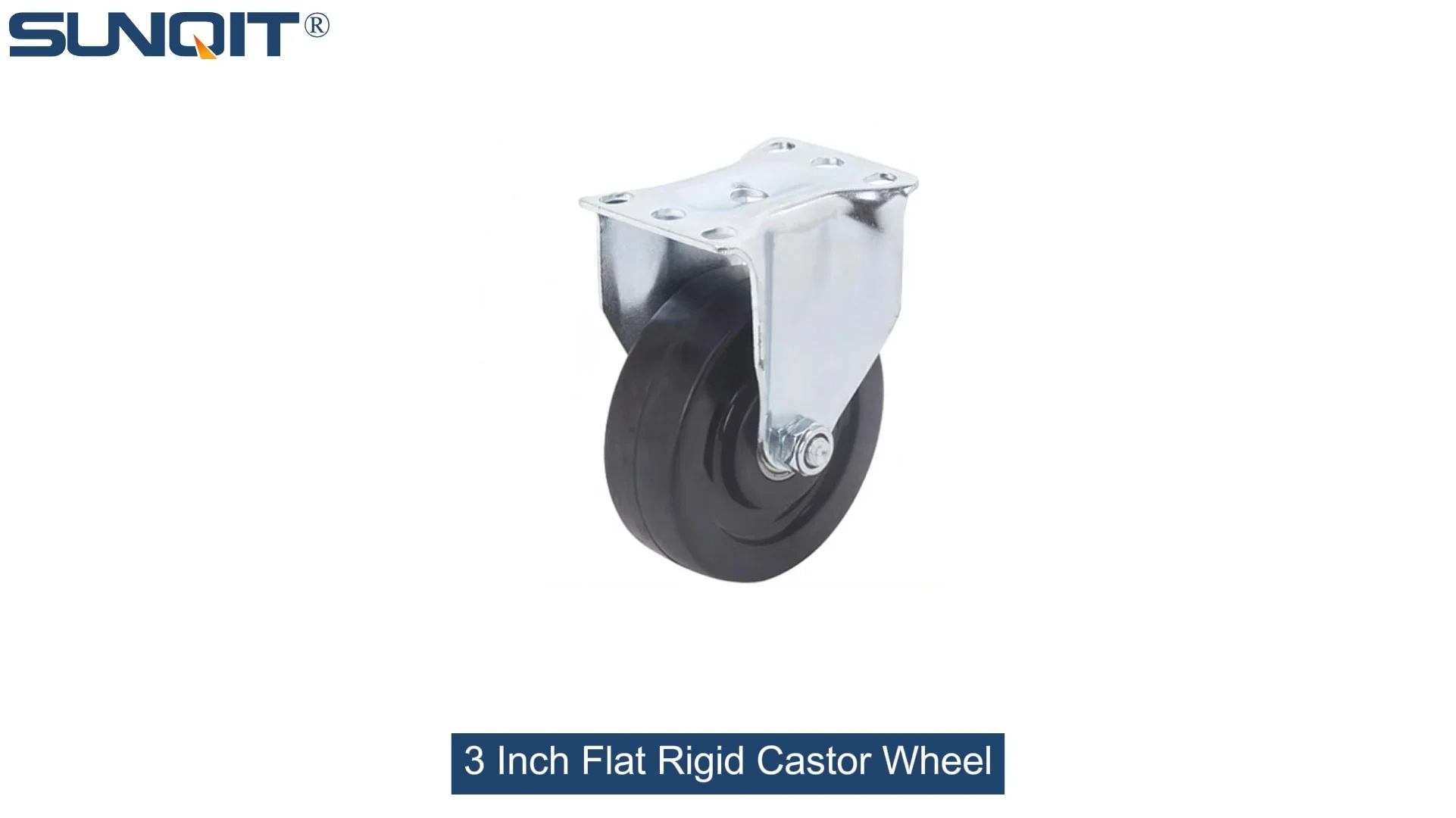
Flat Rigid Castor Wheel
Chair Casters Ball Bearing Wheels Rubber Base. Resistant to abrasion, impact and corrosion. Heavy payload can hold 70Kgs per pcs,which can make it works at a stable and smooth status.
Introduction: The Unsung Heroes of Workplace Mobility
Walk through any factory, warehouse, or workshop, and you'll notice something that rarely gets the attention it deserves: the small wheels attached to almost everything. From the tool cart that glides past your workstation to the heavy-duty storage rack holding raw materials, these wheels—castors—are the silent workhorses keeping operations moving. But not all castors are created equal. In fact, choosing between a flat rigid castor wheel and a swivel castor can mean the difference between a smooth, efficient workflow and a frustrating, accident-prone day.
Think about the last time you struggled to push a loaded trolley around a tight corner, or watched a workbench wobble dangerously as someone tried to reposition it. Chances are, the type of castor underneath was the culprit. Stability, maneuverability, and durability—these are the factors that make or break a castor's performance in the workplace. And when every minute counts, and safety is non-negotiable, getting this choice right isn't just about convenience; it's about keeping your team productive, your equipment intact, and your operations running like clockwork.
In this article, we'll dive deep into the world of flat rigid castor wheels and swivel castors, breaking down their design, functionality, and ideal use cases. We'll compare their strengths and weaknesses, explore how they impact workplace stability, and share tips to help you decide which one belongs under your workbench, trolley, or material rack. By the end, you'll no longer see castors as an afterthought—you'll see them as critical tools that shape the way your workplace functions.
What Are Flat Rigid Castor Wheels? The Reliable Straight Shooters
Let's start with the basics: flat rigid castor wheels. As the name suggests, these castors are "rigid," meaning their wheels are fixed in a straight line—they don't swivel or turn. The "flat" part refers to their mounting plate, which sits flush against the bottom of the equipment, providing a stable base. Picture a shopping cart from the 1950s: the front wheels might swivel, but the back ones? Fixed. That's a rigid castor in action.
At their core, flat rigid castors are all about stability and strength. Because their wheels don't move independently, they excel at carrying heavy loads in straight lines. The fixed orientation minimizes wobble, even when transporting bulky items like stacks of metal sheets or fully loaded turnover trolleys. This makes them a favorite in environments where movement is predictable—think assembly lines where materials flow in one direction, or warehouses with long, straight aisles.
But how do they work, exactly? A flat rigid castor typically consists of a metal mounting plate (the "flat" part), a axle, and a wheel. The wheel itself can be made of rubber, plastic, or metal, depending on the load capacity and floor type. The key here is that the entire assembly is fixed: when you push the equipment, the wheels roll forward or backward, but they won't pivot to the left or right. To change direction, you have to physically lift or tilt the equipment—a limitation that becomes obvious in tight spaces but a strength in scenarios where stability is paramount.
One of the biggest advantages of flat rigid castor wheels is their simplicity. With fewer moving parts than swivel castors, they're less likely to break down. There's no swivel joint to jam, no ball bearings to wear out, and no caster accessories to maintain. This makes them ideal for high-traffic areas where reliability is key. Imagine a busy factory floor where a castor failure could halt production—rigid castors reduce that risk significantly.

What Are Swivel Castors? The Maneuverability Masters
Now, let's turn to their more flexible counterparts: swivel castors. These are the castors that make your office chair spin, your tool cart glide around corners, and your mobile workbench dance through narrow doorways. Unlike rigid castors, swivel castors have a rotating top plate that allows the wheel to turn 360 degrees. This rotation is usually enabled by a set of ball bearings or a raceway, which lets the wheel pivot smoothly with minimal effort.
The magic of swivel castors lies in their ability to adapt to direction changes on the fly. Push a trolley with swivel castors, and the wheels automatically align with the direction of force, whether you're moving forward, backward, or sideways. This makes them indispensable in environments where flexibility is more important than straight-line stability. Think about a warehouse where pickers need to navigate between tightly packed shelves, or a workshop where a single workbench might be used for multiple tasks in different locations throughout the day.
But with great maneuverability comes some trade-offs. The swivel joint that allows for 360-degree movement is also a potential weak point. Inside that joint are ball bearings or a thrust bearing that enable smooth rotation, and over time, these can wear down, especially under heavy loads. Dirt, debris, and even moisture can get trapped in the joint, causing it to jam or become stiff. That's where caster accessories like bearing covers or lubricants come into play—regular maintenance is key to keeping swivel castors performing at their best.
Swivel castors also come with a range of features to enhance their functionality. Many have brakes that lock the wheel in place, preventing unwanted movement when the equipment is stationary. Others have "total lock" brakes that lock both the wheel and the swivel joint, adding an extra layer of stability. Some even have offset wheels, which help distribute weight more evenly and reduce the effort needed to turn. These variations make swivel castors incredibly versatile, but they also mean you need to choose carefully based on your specific needs.

Key Differences: Stability, Maneuverability, and More
To truly understand how flat rigid castor wheels and swivel castors stack up, let's break down their differences across critical categories. The table below compares the two side by side, highlighting where each excels and where they fall short.
| Feature | Flat Rigid Castor Wheel | Swivel Castor |
|---|---|---|
| Movement | Fixed direction (forward/backward only); cannot swivel. | 360-degree rotation; can turn in any direction. |
| Stability | High stability due to fixed orientation; minimal wobble under heavy loads. | Lower stability at high speeds or with uneven loads; may sway when moving. |
| Maneuverability | Poor in tight spaces; requires lifting/tilting to change direction. | Excellent in tight spaces; easy to navigate around obstacles. |
| Load Capacity | Generally higher; fixed design distributes weight evenly. | Lower to moderate; swivel joint limits maximum load. |
| Maintenance Needs | Low; few moving parts; no swivel joint to maintain. | Moderate to high; swivel joint, bearings, and caster accessories require regular upkeep. |
| Ideal Use Cases | Straight-line movement (assembly lines, long aisles), heavy loads, high-stability workbenches. | Tight spaces (warehouses, workshops), frequent direction changes, mobile equipment (tool carts, office chairs). |
Let's unpack these differences further. Starting with stability: flat rigid castor wheels are like the foundation of a house—they don't move, so they provide a solid base. This is why you'll often find them on equipment that needs to stay put once positioned, like a heavy workbench in a manufacturing plant. When a workbench is bolted down or uses rigid castors, it won't shift during precision tasks, reducing the risk of errors or accidents.
Swivel castors, on the other hand, are more like a sports car—agile but less stable at high speeds. Their ability to swivel makes them great for navigating crowded spaces, but that same flexibility can cause problems. Imagine pushing a loaded trolley with four swivel castors down a sloped floor: the wheels might start to "crab walk," veering off course and increasing the risk of tipping. To mitigate this, many swivel castor setups pair two swivel castors with two rigid castors (a common configuration for trolleys), balancing maneuverability with stability.
Maneuverability is where swivel castors really shine. In a warehouse with narrow aisles or a workshop cluttered with tools, being able to turn on a dime is essential. Swivel castors make it possible to move equipment with minimal effort—no more struggling to backtrack or lift heavy loads to get around a corner. This saves time and reduces physical strain on workers, which is a big win for productivity and employee well-being.
Load capacity is another key consideration. Rigid castors, with their fixed design and sturdy construction, can handle heavier loads than most swivel castors. This is because the swivel joint in swivel castors is a potential weak point—it can bend or break under extreme weight. For example, a industrial storage rack holding tons of steel might use rigid castors to ensure it stays stable, while a lighter tool cart would use swivel castors for easy movement.

Choosing the Right Castor for Your Workplace: 5 Critical Factors
Now that you understand the basics, how do you decide whether to go with flat rigid castor wheels or swivel castors? The answer depends on your specific workplace needs. Here are five factors to consider:
1. Type of Movement Required
Ask yourself: Does the equipment need to move in straight lines only, or does it need to navigate corners and tight spaces? If you're dealing with a conveyor belt system or a material rack that stays in one aisle, rigid castors are the way to go. But if you're outfitting a mobile workbench that needs to be repositioned daily, swivel castors will save you time and frustration.
2. Load Weight
How much weight will the castors need to support? A small tool cart with a few hundred pounds might work with swivel castors, but a heavy-duty turnover trolley carrying thousands of pounds will require the stability of rigid castors. Always check the manufacturer's load rating—overloading a castor is a recipe for failure.
3. Floor Type
The surface matters too. Smooth concrete floors can handle most castor types, but rough or uneven surfaces might cause swivel castors to jam. Rubber wheels on swivel castors are better for hardwood or tiled floors (to prevent scratches), while metal wheels on rigid castors work well on industrial concrete.
4. Frequency of Movement
Is the equipment stationary most of the time, or does it get moved hourly? Rigid castors are great for equipment that stays put, as they won't drift or roll accidentally. Swivel castors, with their easy movement, are better for items that need to be repositioned frequently—just make sure to lock the brakes when they're not in use.
5. Safety Requirements
In environments where safety is critical—like hospitals or labs—stability often trumps maneuverability. A workbench holding fragile samples, for example, should use rigid castors to prevent spills. In contrast, a warehouse with frequent staff movement might prioritize swivel castors to reduce the risk of collisions (since they're easier to stop and redirect).
Real-World Applications: When to Use Which Castor
To make this more concrete, let's look at some common workplace scenarios and which castor type works best:
Scenario 1: Assembly Line Workbench
An assembly line workbench needs to stay stable while workers use power tools, assemble delicate parts, or handle heavy components. A flat rigid castor wheel ensures the workbench doesn't shift during use, reducing errors and accidents. Rigid castors also hold up well to the constant vibration from machinery, making them a durable choice for this high-stress environment.
Scenario 2: Warehouse Picking Cart
A picking cart in a warehouse needs to zip between shelves, turn sharply into narrow aisles, and stop quickly to grab items. Swivel castors here are non-negotiable—they allow workers to navigate tight spaces without wasting time. Adding caster accessories like brakes ensures the cart stays put when loading or unloading, balancing maneuverability with safety.
Scenario 3: Heavy-Duty Storage Rack
A storage rack holding pallets of raw materials might weigh several tons. Flat rigid castor wheels distribute this weight evenly and prevent the rack from tipping when loaded or unloaded. Swivel castors would struggle here, as the swivel joint could buckle under the pressure, leading to a dangerous collapse.
Scenario 4: Mobile Tool Station
A mobile tool station that moves between workstations needs to be both stable and maneuverable. The solution? A hybrid setup: two swivel castors at the front for steering and two flat rigid castor wheels at the back for stability. This "two swivel, two rigid" configuration is common in carts and trolleys, offering the best of both worlds.
Maintenance Tips: Keeping Your Castors Rolling Smoothly
No matter which castor type you choose, proper maintenance is key to extending their lifespan and ensuring workplace safety. Here are some tips to keep in mind:
For Flat Rigid Castor Wheels:
- Clean regularly: Dirt and debris can get trapped in the wheel axles, causing them to stick. Wipe down the wheels and axles with a damp cloth weekly.
- Check for wear: Inspect the wheels for cracks or flat spots, especially if they're used on rough floors. replace worn wheels immediately to avoid instability.
- Lubricate axles: Even rigid castors need lubrication. Apply a few drops of machine oil to the axle bearings every month to keep them rolling smoothly.
For Swivel Castors:
- Clean the swivel joint: The swivel joint is prone to jamming with dirt. Use a brush to remove debris, then spray with a silicone lubricant to keep it rotating freely.
- Inspect caster accessories: Brakes, locks, and bearings are critical for swivel castor performance. Test brakes regularly to ensure they engage properly, and replace worn caster accessories like brake pads or ball bearings.
- Tighten loose parts: The top plate and wheel bolts can loosen over time. Check them monthly and tighten with a wrench if needed—loose parts cause wobbling and reduce stability.
Conclusion: Stability and Maneuverability—Finding Your Balance
At the end of the day, the choice between flat rigid castor wheels and swivel castors comes down to balance. Rigid castors offer unbeatable stability and durability for straight-line, heavy-load applications, while swivel castors provide the maneuverability needed in dynamic, tight spaces. And sometimes, the best solution is a mix of both—like the hybrid cart with two swivel and two rigid castors, proving that teamwork makes the dream work even for wheels.
The next time you're outfitting a workbench, trolley, or rack, take a moment to think about the castors. They might be small, but their impact on productivity, safety, and employee satisfaction is huge. Whether you need the steady reliability of a flat rigid castor wheel or the nimble flexibility of a swivel castor, choosing wisely will ensure your workplace runs like a well-oiled machine—quietly, efficiently, and without a hitch.
So, the next time someone asks, "What's the big deal about castors?" you'll know: they're not just wheels. They're the foundation of a stable, mobile, and successful workplace.