- Company Articles
- Products and Technology
- Product knowledge
- Flat Rigid Castor Wheel vs Swivel Locking Castor: Stability vs Mobility Trade-offs

Flat Rigid Castor Wheel vs Swivel Locking Castor: Stability vs Mobility Trade-offs
Related Product
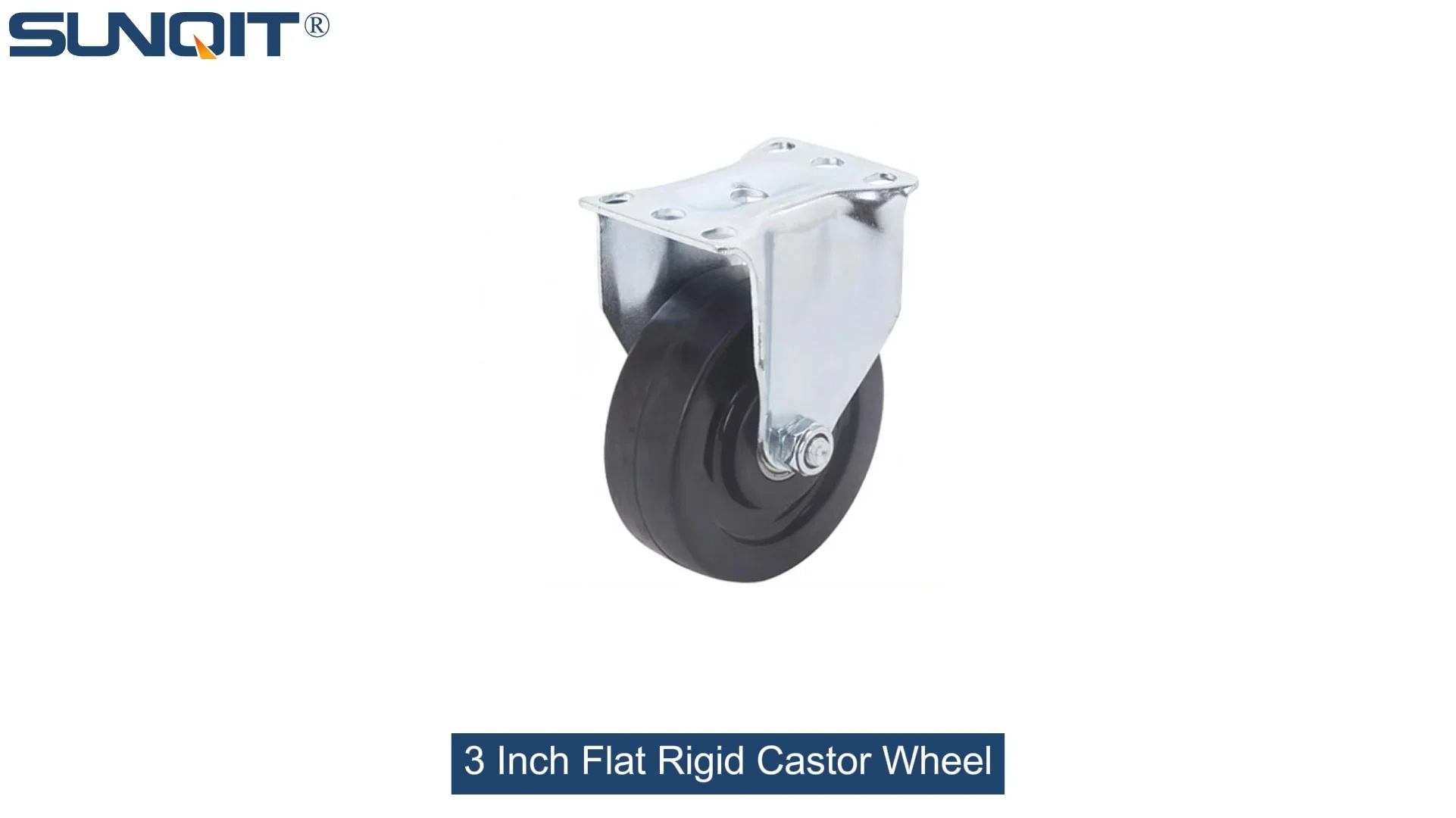
Flat Rigid Castor Wheel
Chair Casters Ball Bearing Wheels Rubber Base. Resistant to abrasion, impact and corrosion. Heavy payload can hold 70Kgs per pcs,which can make it works at a stable and smooth status.
Walk into any busy warehouse, manufacturing plant, or even a hospital lab, and you'll notice something small but mighty hard at work: castors. Those unassuming wheels attached to the bottom of carts, workbenches, and equipment are the unsung heroes of productivity. They quietly bear the weight of heavy loads, glide across floors to save time, and keep operations moving—literally. But not all castors are created equal. In fact, choosing between two common types— flat rigid castor wheels and swivel locking castors—often comes down to a classic dilemma: stability versus mobility. It's a decision that can impact everything from workplace safety to daily efficiency, and it's one that deserves a closer look.
What Are Flat Rigid Castor Wheels?
Let's start with the basics. Flat rigid castor wheels are the "no-nonsense" members of the castor family. As the name suggests, they're rigid —meaning their wheels are fixed in a straight line, unable to swivel or turn independently. Picture a shopping cart with a stuck wheel that only goes forward or backward; that's the rigid castor in action (minus the frustration of a stuck cart, of course). Their design is simple: a wheel mounted on a fixed bracket, which attaches directly to the bottom of the equipment or furniture.
What makes rigid castors stand out is their focus on stability. Because they don't swivel, they excel at keeping things moving in a straight path without wobbling. Think about a heavy-duty material rack in a warehouse that's loaded with boxes of inventory. If that rack had swiveling wheels, it might veer off course or tip if pushed unevenly. But with flat rigid castors, it glides forward smoothly, staying steady even with a full load. That fixed direction also means less stress on the wheel bearings and the equipment itself—no extra movement equals less wear and tear over time.
Another key feature? Their flat, often wide wheelbase. Many rigid castors have larger, flatter wheels that distribute weight evenly across the floor, reducing the risk of sinking into soft surfaces (like a slightly uneven concrete warehouse floor) or leaving marks. This makes them a favorite in settings where stability is non-negotiable, such as workbenches used for precision tasks or machinery that needs to stay perfectly aligned during operation.
What Are Swivel Locking Castors?
Now, let's meet their more flexible counterpart: swivel locking castors. If rigid castors are the "straight shooters," swivel locking castors are the "dancers" of the group. These castors have a unique design that allows their wheels to rotate 360 degrees on a vertical axis, thanks to a swivel joint at the top of the bracket. This means they can turn in any direction, making even heavy equipment easy to maneuver around tight corners or through narrow aisles. Imagine pushing a cart loaded with tools through a crowded workshop—with swivel castors, you can pivot, spin, and navigate obstacles with far less effort than you would with rigid wheels.
But what really sets swivel locking castors apart is their locking mechanism . Most come with a brake or lock that, when engaged, keeps the wheel (and sometimes the swivel joint itself) from moving. This is a game-changer because it gives you the best of both worlds: the mobility of swivel wheels and the stability of rigid ones, all in one. For example, a mobile lean pipe workbench in an assembly line might use swivel locking castors. During the day, workers can unlock the castors, roll the workbench to different stations as needed, then lock them in place to keep the bench steady while they assemble products. No more wrestling with a heavy bench to reposition it—just a quick unlock, a push, and a lock, and you're good to go.
Swivel locking castors also come with a variety of caster accessories to boost their performance. Some have dual locks (locking both the wheel and the swivel joint for maximum stability), while others have treaded wheels for better grip on slippery floors. There are even options with shock-absorbing features to protect fragile items during transport—handy for labs moving delicate equipment or hospitals transporting sensitive medical supplies.

Stability: The Rock-Solid Advantage of Flat Rigid Castors
Stability is the name of the game for flat rigid castor wheels, and they deliver in spades. Let's break down why. First, their fixed orientation means they resist lateral (side-to-side) movement. Think about a workbench in a woodworking shop, where a carpenter is using a heavy saw. If the workbench had swivel castors, the vibrations from the saw might cause the bench to shift slightly, ruining the cut. But with rigid castors, the bench stays planted. The wheels don't budge, even under pressure, because they can't turn—they're anchored in place, like the legs of a table.
Weight distribution is another factor. Rigid castors are often paired in sets (two on one end, two on the other), creating a stable base that evenly distributes the load. This is crucial for heavy equipment. For example, a metalworking lathe that weighs several hundred pounds needs to stay balanced to avoid tipping. Rigid castors spread that weight across four fixed points, reducing the risk of instability. In contrast, swivel castors, with their ability to turn, can sometimes create uneven weight distribution if not locked properly, especially if the load is off-center.
Then there's the matter of floor conditions. In spaces with rough or uneven floors—like a warehouse with cracks in the concrete or a garage with oil stains—rigid castors shine. Their fixed wheels are less likely to get caught or "trip" on obstacles because they only move forward or backward. Swivel castors, with their ability to pivot, might get stuck if a wheel suddenly turns into a crack, leading to jolts or even damage to the equipment.

Mobility: The Flexible Edge of Swivel Locking Castors
If stability is rigid castors' superpower, mobility is swivel locking castors' claim to fame. Their ability to swivel 360 degrees makes them incredibly maneuverable, even in tight spaces. Let's say you're working in a busy electronics assembly plant, and you need to move a cart of components from one end of the line to another—past other carts, workers, and machinery. With swivel castors, you can weave around obstacles with ease, turning on a dime to fit through narrow gaps. Rigid castors, on the other hand, would require you to backtrack, pivot the entire cart, and take a longer, more frustrating path.
The locking mechanism is what elevates swivel castors from "just mobile" to "mobile and stable." When you need to keep the equipment steady—say, while loading or unloading a cart—you simply engage the lock. The brake (usually a pedal or lever) presses against the wheel, stopping it from rolling, and some locks even freeze the swivel joint, preventing the wheel from turning. This is especially useful in dynamic workplaces where the same piece of equipment needs to be moved frequently but also stay put during use. A hospital medication cart, for example, needs to glide smoothly through corridors (mobility) but stay locked next to a patient's bed (stability) while nurses prepare doses.
Swivel castors also save time and reduce physical strain. Pushing a cart with swivel wheels requires less force than pushing one with rigid wheels, especially when changing direction. This might not seem like a big deal for a single trip, but over a full workday—for a warehouse worker making dozens of deliveries or a lab tech moving supplies between stations—it adds up. Less effort means less fatigue, which means happier, more productive employees.

Stability vs. Mobility: A Head-to-Head Comparison
To really understand the trade-offs, let's put flat rigid castor wheels and swivel locking castors side by side. The table below breaks down their key features, best uses, and limitations:
| Feature | Flat Rigid Castor Wheels | Swivel Locking Castors |
|---|---|---|
| Mobility | Low. Only moves forward/backward; no swiveling. | High. 360° swivel for easy maneuvering in tight spaces. |
| Stability | High. Fixed direction resists tipping and shifting. | Moderate to high. Stable when locked, but less so when unlocked. |
| Best For | Heavy, stationary equipment; straight-path transport; rough/uneven floors. | Frequently moved equipment; tight spaces; tasks requiring both mobility and stability. |
| Locking Mechanism | None (stability comes from fixed design). | Yes (locks wheel and/or swivel joint for stability). |
| Effort to Maneuver | Higher (hard to turn; requires more force). | Lower (swivel design reduces pushing effort). |
| Common Uses | Heavy material racks, fixed-position workbenches, industrial ovens. | Mobile workbenches, medical carts, delivery trolleys, lab equipment. |
Real-World Scenarios: When to Choose Which?
The best way to decide between flat rigid castor wheels and swivel locking castors is to think about your specific needs. Let's walk through a few common scenarios to see how the choice plays out.
Scenario 1: A Manufacturing Plant's Lean Pipe Workbench
Imagine you're managing a small electronics manufacturing plant, and you need to set up a lean pipe workbench for assembling circuit boards. The workbench will hold delicate components, soldering tools, and a small testing machine. The assembly line is in a tight space, so you might need to move the bench occasionally to make room for new equipment. But most of the time, it will stay in one spot while workers focus on precise, detail-oriented tasks.
What's the call here? Swivel locking castors make sense. They let you move the bench when needed (mobility) and lock it in place during assembly (stability). The locking feature ensures the bench doesn't shift while workers solder tiny wires or test circuits—critical for avoiding mistakes. Plus, the swivel design makes it easy to pivot the bench slightly if a worker needs to reach a tool on the other side without getting up.
Scenario 2: A Warehouse's Heavy Material Rack
Now, picture a large warehouse storing bulk pallets of goods. You have a heavy-duty material rack that holds 500+ pounds of inventory. The rack is rarely moved—maybe once a month to reorganize the storage area—and when it is moved, it's only in a straight line from one corner of the warehouse to another. The floor has a few cracks and uneven spots from years of use.
Here, flat rigid castor wheels are the better choice. The rack's weight and infrequent movement mean stability is far more important than mobility. Rigid castors will keep the rack steady, even with a full load, and their fixed direction ensures it won't veer off course or get stuck in floor cracks during the rare moves. Swivel castors, even locked, might not provide enough stability for such a heavy load, and their swivel joints could wear out faster under constant weight.
Scenario 3: A Hospital's Mobile Medication Cart
Hospitals are all about balancing mobility and stability, and nowhere is that clearer than with medication carts. These carts need to move from room to room (mobility) to reach patients, but they also need to stay perfectly still (stability) when nurses are measuring doses or updating patient records. They're often used in tight spaces like hospital corridors or small patient rooms, where turning radius matters.
Swivel locking castors are the obvious pick here. They glide smoothly through corridors, swivel to fit through doorways, and lock securely when parked. The locking mechanism is non-negotiable—imagine a cart rolling away while a nurse is distracted, spilling medications or causing a tripping hazard. Rigid castors would make navigating tight spaces frustrating and time-consuming, slowing down critical patient care.
Caster Accessories: Enhancing Performance
No discussion of castors is complete without mentioning caster accessories —small add-ons that can boost performance, whether you choose rigid or swivel castors. For rigid castors, accessories like heavy-duty wheel bearings or larger, shock-absorbing tires can improve durability and make rolling over rough floors smoother. For swivel locking castors, caster accessories like dual locks (which lock both the wheel and swivel joint) or non-marking tires (to protect hospital or office floors) are game-changers.
One accessory worth noting is the brake pedal extension, which makes it easier to engage or disengage swivel locks, especially for workers with limited mobility. Another is the floor protector, a simple rubber pad that fits over the wheel to prevent scratches on hardwood or tile floors—handy for offices or retail spaces where aesthetics matter. Even something as small as a dust cover for the swivel joint can extend the life of a castor by keeping dirt and debris out, reducing wear and tear.
Choosing the Right Castor: A Simple Framework
Still on the fence? Here's a quick framework to help you decide:
- Ask: How often will the equipment move? If it stays in one place 90% of the time, rigid castors might be enough. If it moves daily (or hourly!), swivel locking castors are worth the investment.
- Ask: What's the load capacity? Heavier loads (500+ pounds) often benefit from rigid castors' stability. Lighter to medium loads (under 500 pounds) can usually handle swivel castors.
- Ask: What's the floor like? Rough, uneven, or dirty floors? Rigid castors are more durable. Smooth, clean floors (like in offices or labs)? Swivel castors will glide easily.
- Ask: What's the workspace like? Tight corners, narrow aisles, or frequent direction changes? Swivel castors save time. Wide open spaces with straight paths? Rigid castors work fine.
Remember, there's no "one size fits all" answer. Some workplaces even mix and match: using rigid castors on one end of a cart and swivel castors on the other to balance stability and mobility. For example, a tool cart might have two rigid castors in the back (for straight-line movement) and two swivel locking castors in the front (for steering). It's all about finding what works for your unique needs.
Conclusion: The Right Castor for the Job
At the end of the day, the choice between flat rigid castor wheels and swivel locking castors boils down to balance. Rigid castors offer unbeatable stability for heavy, stationary, or straight-path equipment—they're the reliable workhorses that keep things grounded. Swivel locking castors, with their mobility and versatility, are the flexible problem-solvers that adapt to dynamic workspaces, making life easier for everyone from warehouse workers to lab technicians.
So, the next time you're shopping for castors, take a moment to think about your daily operations. What matters more: keeping things steady, or keeping things moving? Chances are, the answer will point you to the perfect castor. And if you're still unsure? Don't hesitate to test both—sometimes the best way to decide is to roll them out and see how they perform in your space. After all, the right castor isn't just a wheel; it's a tool that helps your team work smarter, safer, and more efficiently. And that's something worth investing in.