- Company Articles
- Products and Technology
- Product knowledge
- Flat Rigid Castor Wheels for Automotive Parts Storage: Heavy-Duty Load Solutions

Flat Rigid Castor Wheels for Automotive Parts Storage: Heavy-Duty Load Solutions
Related Product
Flat Rigid Castor Wheel
Chair Casters Ball Bearing Wheels Rubber Base. Resistant to abrasion, impact and corrosion. Heavy payload can hold 70Kgs per pcs,which can make it works at a stable and smooth status.
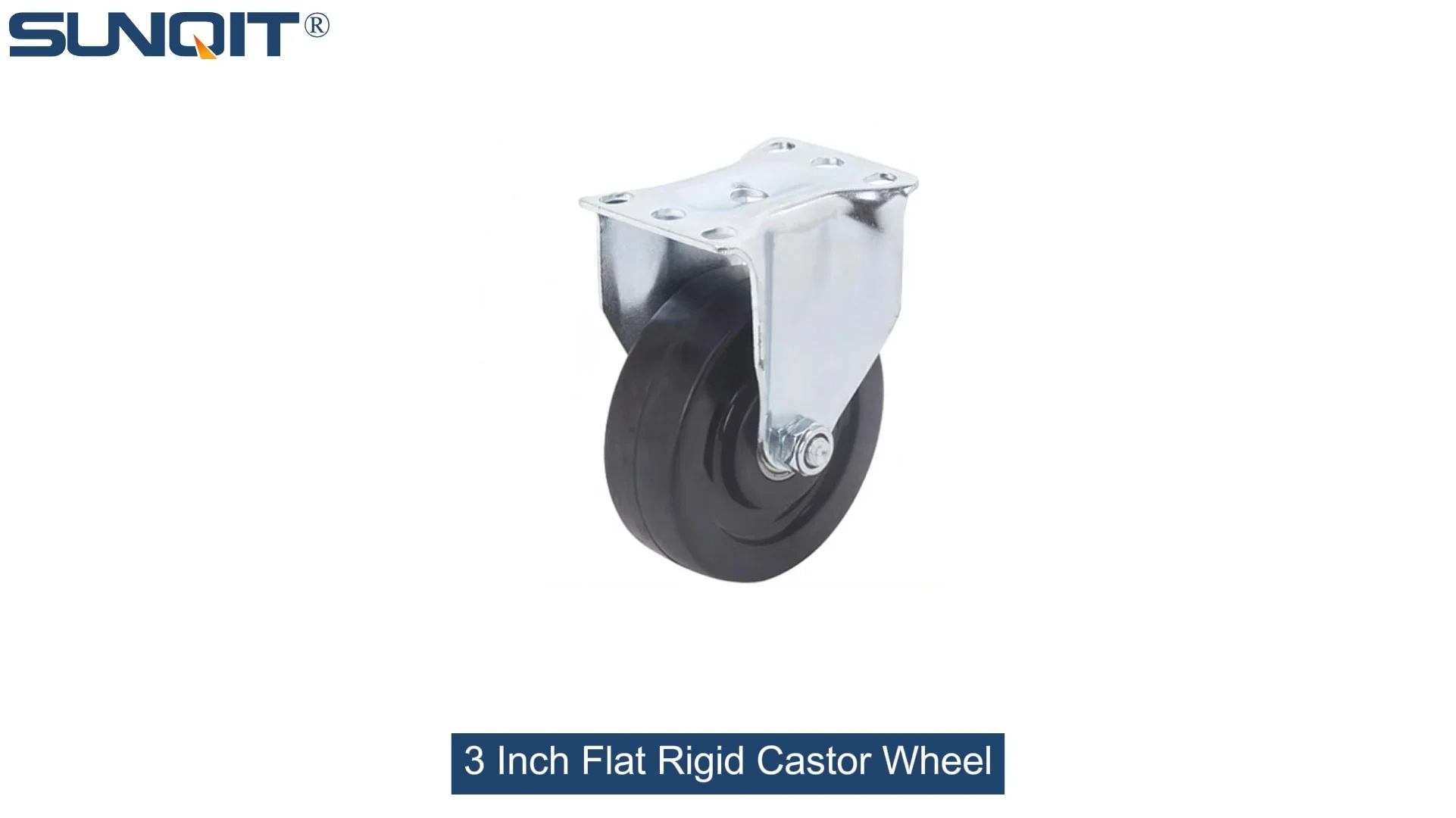
In the bustling world of automotive manufacturing and warehousing, every component has a role to play—from the largest engine block to the smallest screw. But if there's one unsung hero that keeps the wheels of productivity turning (quite literally), it's the humble caster wheel . Specifically, flat rigid castor wheels have emerged as a cornerstone of efficient automotive parts storage, offering the stability and strength needed to handle heavy loads while keeping operations running smoothly. Let's dive into how these unassuming tools tackle the unique challenges of automotive storage, and why they've become indispensable for warehouses and assembly lines worldwide.
The Hidden Challenges of Automotive Parts Storage
Automotive parts storage isn't just about stacking boxes—it's a high-stakes balancing act of weight, space, and safety. Consider the average automotive warehouse: rows of shelves groan under the weight of transmissions, axles, and brake assemblies; workers maneuver tight aisles with carts loaded with alternators or suspension parts; and every second wasted searching for a misplaced component eats into production deadlines. Here are the key hurdles that make this environment so demanding:
- Extreme Loads: Many automotive parts are deceptively heavy. A single engine block can weigh 200kg or more; a set of truck axles might tip the scales at 500kg. Standard wheels or flimsy casters simply can't handle this without buckling or damaging floors.
- Varied Part Sizes: From tiny sensors to bulky door panels, parts come in every shape and dimension. Storage solutions need to adapt—tall racks for long items, low shelves for heavy ones—without sacrificing mobility.
- Rough Environments: Warehouses are tough on equipment. Oil spills, metal shavings, and constant foot traffic mean wheels must resist corrosion, abrasion, and chemical damage.
- Safety Risks: A poorly secured load or a wobbly cart can lead to damaged parts, workplace injuries, or costly delays. Stability isn't just a convenience—it's a safety imperative.
Why Flat Rigid Castor Wheels Are the Answer
Enter flat rigid castor wheels : designed to prioritize stability and strength over maneuverability (though they still move smoothly). Unlike swivel casters, which pivot 360° for tight turns, rigid casters lock into a fixed direction—forward or backward. This rigidity makes them ideal for heavy loads, as they distribute weight evenly and reduce the risk of tipping. Let's break down why they're a game-changer for automotive storage:
Built for Heavy Lifting
Most flat rigid casters are engineered with reinforced steel frames and thick, durable wheels (often made of polyurethane or cast iron). A typical industrial-grade model can handle 500-1,500kg per wheel—meaning a four-wheeled turnover trolley and rack fitted with these casters can easily transport a 2-ton engine block without straining. This load capacity isn't just about brute strength; it's about consistency. Even under repeated use, rigid casters maintain their shape and performance, avoiding the "sag" that plagues cheaper alternatives.
Stability That Saves Lives (and Parts)
Swivel casters are great for navigating tight corners, but under heavy loads, their pivoting mechanism can cause instability. Imagine pushing a cart with a 300kg transmission: a swivel caster might suddenly shift direction, jostling the load and risking injury. Rigid casters eliminate this risk by staying fixed. When paired with a sturdy workbench or trolley, they create a stable platform that glides straight and true, even over uneven concrete floors common in warehouses.
Durability in Harsh Conditions
Automotive warehouses are messy places—oil, coolant, and cleaning chemicals are part of daily life. Flat rigid casters are built to resist these hazards. Polyurethane wheels, for example, repel oil and chemicals, while stainless steel frames prevent rust. Even the caster accessories (like mounting plates and axle bolts) are often treated with anti-corrosion coatings, ensuring the casters last for years without needing replacement.

Key Features to Look for in Flat Rigid Castor Wheels
Not all rigid casters are created equal. To maximize efficiency in automotive storage, here are the critical features to prioritize when selecting your wheels:
- Load Rating: Always check the per-wheel load capacity. Err on the side of caution—if your typical load is 800kg, choose casters rated for 1,000kg or more to account for unexpected weight spikes.
- Wheel Material: Polyurethane offers a smooth ride and floor protection (gentler on concrete than steel), while cast iron is better for extreme heat or sharp debris. For oily environments, rubber-polyurethane blends are ideal.
- Wheel Diameter: Larger wheels (6-8 inches) roll more easily over cracks and uneven floors, reducing strain on workers pushing heavy carts.
- Mounting Compatibility: Casters must fit securely to your turnover trolley and rack or workbench . Look for standard mounting plates (like 4x4-inch square plates) that align with pre-drilled holes on your equipment.
- Brake Options: While rigid casters don't swivel, many come with brake caster accessories (like foot-operated locks) to keep carts stationary during loading/unloading—critical for safety.
| Feature | Flat Rigid Castor Wheels | Swivel Casters | Best For |
|---|---|---|---|
| Load Capacity | 500-1,500kg per wheel | 100-500kg per wheel |
Rigid: Heavy engines, axles, large parts
Swivel: Light tools, small components |
| Maneuverability | Fixed direction (forward/backward) | 360° swivel for tight turns |
Rigid: Straight aisles, long-distance transport
Swivel: Assembly lines, tight warehouse corners |
| Stability | High (even weight distribution) | Moderate (risk of tipping under heavy loads) |
Rigid: Uneven floors, heavy/unbalanced loads
Swivel: Smooth surfaces, light/balanced loads |
| Durability | Reinforced steel frames, chemical-resistant wheels | Lightweight frames, softer wheel materials |
Rigid: Oily/rough warehouse environments
Swivel: Clean, controlled spaces (e.g., offices) |

Real-World Applications: From Trolleys to Workbenches
To see flat rigid casters in action, look no further than the average automotive warehouse. Here are two common setups where they shine:
1. Turnover Trolley and Rack Systems
A turnover trolley and rack is essentially a mobile shelf unit—think of it as a "floating warehouse aisle." Fitted with four flat rigid casters (two fixed, two with brakes), these trolleys can be loaded with stacked parts (like transmission cases or brake rotors) and rolled directly to the assembly line. The rigid casters ensure the trolley moves in a straight line, even when fully loaded, preventing collisions with walls or other equipment. Workers no longer need to carry heavy parts by hand; instead, they simply roll the trolley to the workstation, lock the brakes (using caster accessories ), and unload.
2. Heavy-Duty Workbenches
Many automotive assembly stations use workbench setups with integrated casters. While swivel casters might seem better for moving the bench between tasks, rigid casters are preferred for stations handling heavy parts (like engine assembly). A workbench with rigid casters stays firmly in place during use, so mechanics can torque bolts or lift components without the bench shifting. When the task is done, the bench can be rolled to a storage area—no need for disassembly.

Choosing the Right Caster: A Quick Checklist
Not sure which flat rigid caster is right for your needs? Use this checklist to narrow down your options:
- Calculate your maximum load: Multiply the weight of your heaviest part by 1.5 (to account for uneven loading) and divide by the number of wheels (e.g., 2,000kg load ÷ 4 wheels = 500kg per wheel minimum).
- Assess your floor type: Smooth concrete? Polyurethane wheels work best. Rough or debris-filled floors? Opt for cast iron wheels.
- Measure your equipment: Ensure the caster height (wheel + frame) doesn't make your trolley/bench too tall to fit under shelves.
- Check for caster accessories : Do you need brakes? Replacement wheels? Choose a supplier that offers these to avoid compatibility issues later.
Maintaining Your Flat Rigid Casters: Pro Tips
Even the toughest casters need care to last. Here's how to keep yours performing at their best:
- Inspect Weekly: Check for loose bolts, cracked wheels, or worn brake pads. Tighten mounting nuts and replace damaged caster accessories immediately.
- Lubricate Axles: Apply grease to wheel axles every month to reduce friction and prevent rust—especially important in humid or oily environments.
- Clean Wheels: Wipe off oil, dirt, or metal shavings that can get stuck in wheel bearings, which can slow movement or cause jamming.
- replace Wheels Proactively: If a wheel starts to wobble or show uneven wear, replace it before it fails. Waiting can lead to damage to your trolley, floor, or parts.
Final Thoughts: Small Wheels, Big Impact
In the grand scheme of automotive manufacturing, flat rigid castor wheels might seem (small). But anyone who's pushed a loaded trolley across a warehouse floor knows better: they're the difference between a smooth, efficient shift and a frustrating, injury-prone one. By prioritizing stability, strength, and durability, these casters turn heavy, awkward parts into manageable loads—keeping assembly lines moving, workers safe, and deadlines on track.
Whether you're outfitting a new turnover trolley and rack , upgrading an old workbench , or simply replacing worn-out wheels, investing in quality flat rigid casters (and the right caster accessories ) is an investment in your team's productivity and safety. After all, in automotive manufacturing, every detail counts—even the ones that roll under the radar.