- Company Articles
- Products and Technology
- Product knowledge
- Flat Rigid Castor Wheels for Workbench E: Compatibility with Lean Accessories

Flat Rigid Castor Wheels for Workbench E: Compatibility with Lean Accessories
Related Product
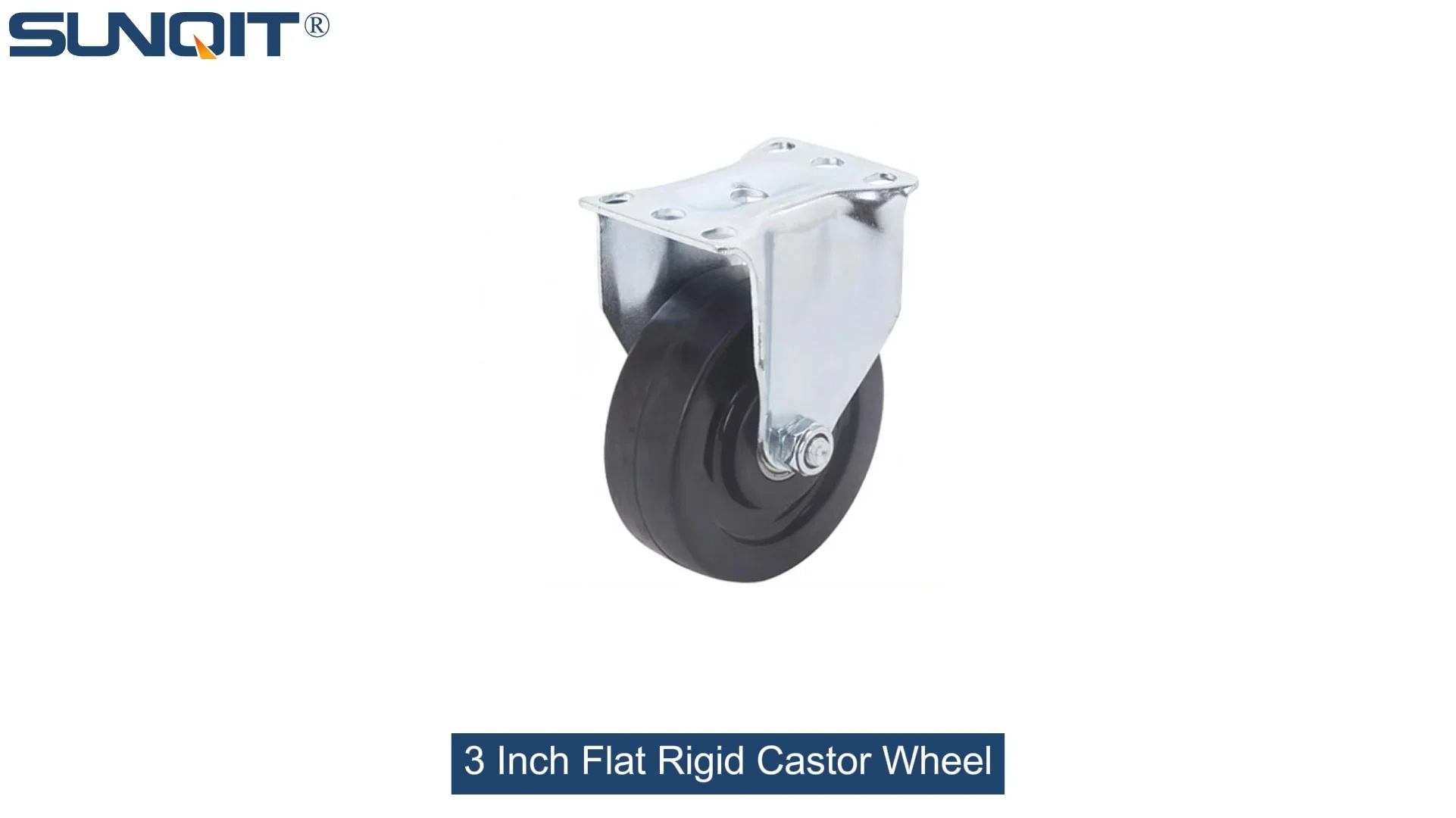
Flat Rigid Castor Wheel
Chair Casters Ball Bearing Wheels Rubber Base. Resistant to abrasion, impact and corrosion. Heavy payload can hold 70Kgs per pcs,which can make it works at a stable and smooth status.
Introduction: The Unsung Hero of Lean Workspaces – Workbench E
Walk into any modern manufacturing facility, warehouse, or assembly line, and you'll notice a common thread: workspaces that hum with efficiency. Every tool, every surface, every inch of space is intentional. At the heart of many of these setups sits a quiet workhorse: Workbench E (single deck-without caster) . Sleek, sturdy, and designed for precision, this workbench is a staple in lean environments, where minimizing waste and maximizing productivity are not just goals, but daily practices.
But here's the thing about lean systems: they're never static. A workspace that works perfectly today might need to adapt tomorrow—whether it's shifting production lines, reconfiguring assembly stations, or making room for new equipment. That's where the limitations of Workbench E (single deck-without caster) start to show. Without mobility, even the most well-designed workbench can become a bottleneck. Enter flat rigid castor wheels —small in size, but mighty in impact. These unassuming accessories transform a fixed workbench into a flexible asset, aligning seamlessly with the core principles of lean manufacturing: adaptability, efficiency, and continuous improvement.
What Are Flat Rigid Castor Wheels, and Why Do They Matter?
Before diving into compatibility, let's take a moment to appreciate what flat rigid castor wheels bring to the table. Unlike swivel casters, which rotate 360 degrees, rigid casters lock into a fixed direction—forward and backward. This design prioritizes stability over maneuverability, making them ideal for workbenches that need to stay steady during precision tasks but still require occasional repositioning.
Imagine a team assembling delicate electronics on Workbench E. They need the surface to stay rock-solid while soldering or aligning components—swivel casters might wobble, risking errors. But at the end of the shift, when the line needs to be deep-cleaned or rearranged, being able to roll the workbench out of the way without disassembly saves precious time. Flat rigid castor wheels strike that balance: they keep the workbench grounded during use and mobile when needed.
Made from durable materials like high-grade plastic or rubber (often with steel or aluminum cores for added strength), these casters are built to withstand the wear and tear of industrial environments. They're resistant to oil, chemicals, and heavy loads—critical features in settings where Workbench E might hold tools, parts, or even semi-finished products.

Compatibility 101: How Flat Rigid Castor Wheels Pair with Workbench E
The magic of lean accessories lies in their ability to work together seamlessly. Flat rigid castor wheels aren't just "added on" to Workbench E—they're designed to integrate with its structure, ensuring a secure, stable fit. Let's break down how this compatibility works, and why it matters for your workflow.
1. The Role of Caster Install Base and Castor Fixed Plate
To attach flat rigid castor wheels to Workbench E, you'll need the right mounting hardware. Enter caster install base and castor fixed plate —two unsung heroes of the accessory world. These metal plates act as intermediaries, securing the casters to the bottom of the workbench. Workbench E, with its sturdy frame (often made from aluminum or steel), is pre-drilled or designed to accept these plates, ensuring a tight, wobble-free connection.
Why does this matter? A loose caster isn't just a nuisance—it's a safety hazard. Imagine pushing a loaded Workbench E across the floor, only for a caster to detach. The result could be damaged equipment, injured staff, or disrupted production. By using compatible install bases and fixed plates, you ensure that the casters are anchored to the workbench's frame, not just its surface. This structural integrity is non-negotiable in lean systems, where reliability is key to reducing downtime.
2. Load Capacity: Matching Casters to Workbench E's Needs
Workbench E is built to handle weight—whether it's a technician's toolkit, bins of small parts, or even a laptop and testing equipment. Flat rigid castor wheels must keep up. Most models are rated for specific load capacities, ranging from 100kg to 500kg per caster (and Workbench E typically uses 4 casters, so total capacity can reach 2000kg or more). This means you can load the workbench without worrying about casters buckling or slowing down movement.
But load capacity isn't just about weight—it's about balance. Workbench E (single deck-without caster) has a uniform weight distribution, and flat rigid castor wheels, placed at the corners, ensure that weight is spread evenly. This prevents tipping, even when the workbench is fully loaded and in motion. It's a small detail, but one that keeps your team safe and your workflow uninterrupted.
3. Compatibility with Aluminum Profile Frames
Many modern Workbench E models feature frames made from aluminum profile —lightweight, durable, and infinitely customizable. Aluminum profile's modular design (think T-slots and grooves) makes it easy to attach accessories like casters, shelves, or tool hooks. Flat rigid castor wheels, with their compatible mounting plates, slide right into these T-slots, creating a secure connection without the need for welding or drilling. This modularity is a cornerstone of lean systems: if you need to swap out casters (e.g., for heavier-duty models or different wheel materials), you can do it in minutes, not hours.
Aluminum profile also resists corrosion, making it ideal for environments where Workbench E might be exposed to moisture or chemicals. When paired with flat rigid castor wheels (often with rust-resistant steel components), the result is a workbench that's built to last—even in tough conditions.

Beyond the Basics: Pairing with Other Lean Accessories
Flat rigid castor wheels don't work in isolation. To truly unlock Workbench E's potential, you'll want to pair them with other lean accessories. Here are a few key combinations that can take your workspace from "good" to "great":
1. Lean Pipe Joint for Custom Add-Ons
Once your Workbench E is mobile, you might want to add shelves, tool holders, or part bins to keep everything within arm's reach. Lean pipe joint —versatile connectors that attach to aluminum or steel pipes—let you build custom structures right on the workbench. For example, you could add a vertical pipe with hooks for hanging tools, or a horizontal shelf for bins. The best part? Since Workbench E is now mobile, these add-ons move with it, ensuring your tools and parts are always where you need them.
2. Plastic Pipe End Cap for Safety
If your Workbench E uses lean pipes (either for add-ons or as part of its frame), plastic pipe end cap is a must-have. These simple caps cover the ends of pipes, preventing scratches, cuts, or snags—especially important when the workbench is being moved. They also keep dust, debris, and moisture out of the pipes, extending their lifespan. Paired with flat rigid castor wheels, they turn Workbench E into a mobile workspace that's as safe as it is efficient.
3. Anti-Slip Adjustable Leveling Feet for Stability When Parked
Even with flat rigid castor wheels, there are times when you need Workbench E to stay completely still—e.g., during precision assembly or when using heavy machinery. That's where anti-slip adjustable leveling feet come in. Many caster models come with built-in leveling feet, or you can add them as accessories. These feet can be extended to lift the casters off the ground, locking the workbench in place. They're adjustable, too, so even if your floor is uneven, you can ensure the workbench stays level and stable. It's a small addition, but it bridges the gap between mobility and stability—two key pillars of lean design.

The Benefits in Action: A Real-World Example
Let's paint a picture of how this compatibility plays out in a real factory. Imagine a small electronics manufacturer that uses Workbench E for assembling circuit boards. Initially, the workbenches are fixed in place, and when the production line needs to be reconfigured (e.g., to accommodate a new product), the team spends hours disassembling the workbenches, moving them manually, and reassembling them. This wastes time, disrupts workflow, and increases the risk of errors.
Then, they upgrade to Workbench E with flat rigid castor wheels, paired with caster install bases and aluminum profile frames. Overnight, the game changes. Now, when reconfiguring the line, two people can roll the workbenches into place in minutes. The casters glide smoothly over the factory floor, even with tools and parts on the bench. The aluminum profile frame makes it easy to add a second shelf for extra parts storage, and the anti-slip leveling feet ensure the workbench stays steady during assembly. The result? Setup time drops by 75%, and the team can focus on what matters: building quality products.
But the benefits don't stop there. The manufacturer also starts using lean pipe joints to add custom tool holders to the workbenches, keeping frequently used tools within reach. Plastic pipe end caps prevent scratches on delicate circuit boards, and the casters' chemical resistance ensures they hold up in the factory's cleaning routine (which uses industrial solvents). Over time, they notice fewer delays, fewer accidents, and a more adaptable workspace—all thanks to the simple addition of flat rigid castor wheels and compatible accessories.
Choosing the Right Flat Rigid Castor Wheels for Your Workbench E
Not all flat rigid castor wheels are created equal. To ensure compatibility and performance, here are a few key factors to consider:
- Load Capacity: Calculate the maximum weight your Workbench E will hold (tools + parts + operators, if applicable) and choose casters rated for at least 20% more than that weight (to account for uneven loading).
- Wheel Material: Rubber wheels are ideal for smooth floors and quiet operation; polyurethane wheels offer better durability for rough surfaces; steel wheels are best for heavy loads but may be noisy.
- Mounting Hardware: Ensure the casters come with (or are compatible with) caster install base and castor fixed plate that fit Workbench E's frame (especially if it uses aluminum profile).
- Floor Conditions: If your floor has debris, cracks, or uneven surfaces, look for casters with larger wheels or shock-absorbing features to ensure smooth movement.
By taking these factors into account, you'll ensure that your flat rigid castor wheels don't just "fit" Workbench E—they enhance it, turning a static workspace into a dynamic, lean-friendly asset.
Conclusion: Small Accessories, Big Impact on Lean Systems
In the world of lean manufacturing, it's often the smallest components that make the biggest difference. Flat rigid castor wheels might not seem like a game-changer at first glance, but when paired with Workbench E (single deck-without caster) , aluminum profile frames, and other lean accessories like caster install base and plastic pipe end cap , they transform how work gets done. They turn fixed workspaces into flexible hubs, reduce setup time, enhance safety, and align perfectly with the principles of adaptability and efficiency that define lean systems.
So, if you're looking to take your lean workspace to the next level, don't overlook the power of compatibility. Choose flat rigid castor wheels that integrate seamlessly with Workbench E and its accessories, and watch as your team's productivity, creativity, and ability to adapt soar. After all, in lean manufacturing, every detail counts—and these small wheels are rolling proof of that.