- Company Articles
- Products and Technology
- Application Cases
- Flat Rigid Castor Wheels in 3C Manufacturing: Supporting Small-Part Assembly Workstations

Flat Rigid Castor Wheels in 3C Manufacturing: Supporting Small-Part Assembly Workstations
Related Product
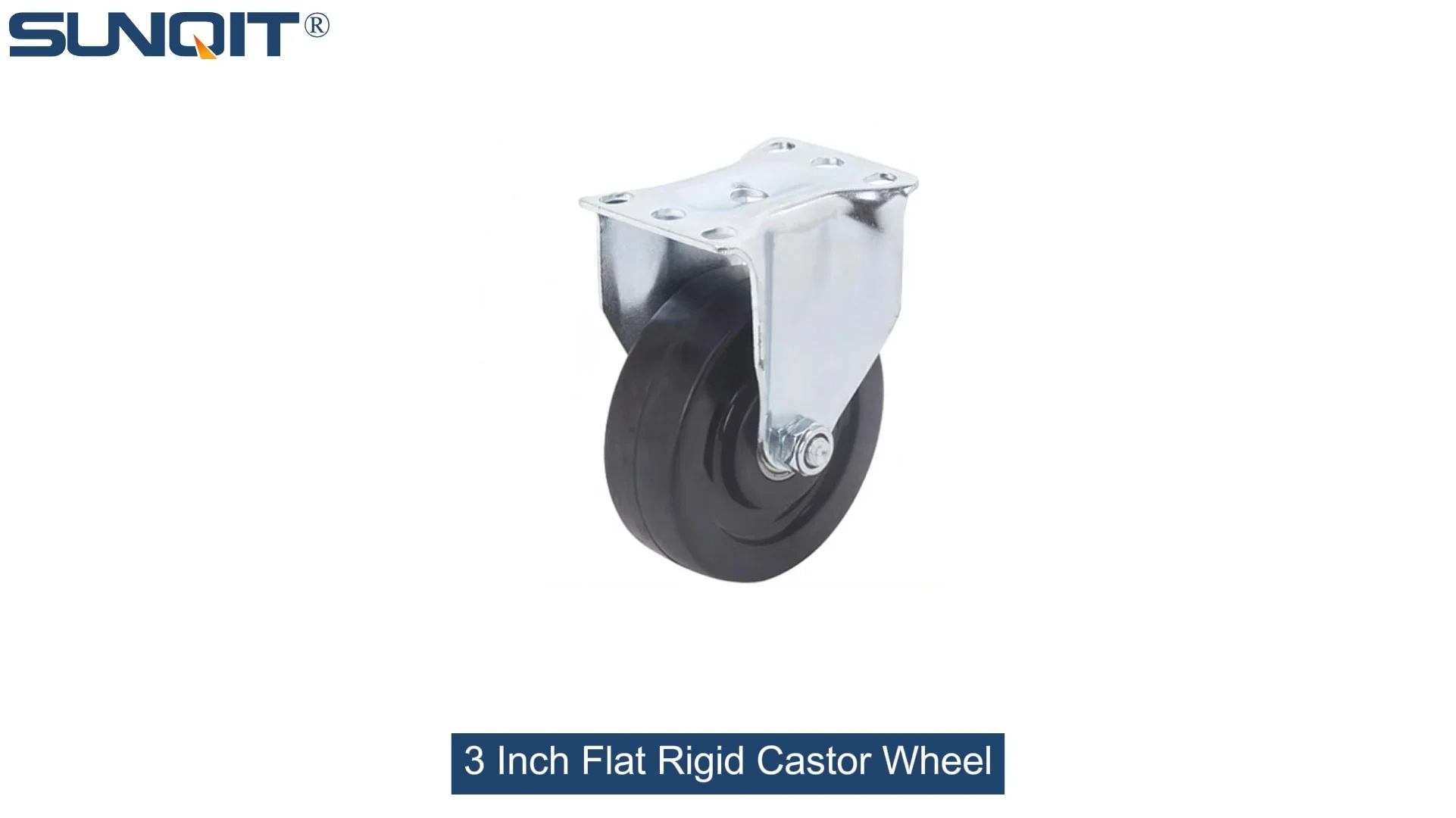
Flat Rigid Castor Wheel
Chair Casters Ball Bearing Wheels Rubber Base. Resistant to abrasion, impact and corrosion. Heavy payload can hold 70Kgs per pcs,which can make it works at a stable and smooth status.
In the fast-paced world of 3C manufacturing—where "3C" stands for computers, communications, and consumer electronics—precision isn't just a goal; it's the backbone of every operation. From the tiniest microchips in a smartphone to the delicate circuit boards of a laptop, assembling these small parts demands a workspace that's stable, flexible, and built to minimize errors. Yet, in an industry where production lines shift overnight to meet new product launches and consumer demands, flexibility can't come at the cost of stability. This is where a seemingly humble component enters the spotlight: flat rigid castor wheels. Often overlooked amid flashier tech like automated robots or AI-driven quality checks, these unassuming wheels play a critical role in keeping small-part assembly workstations running smoothly, efficiently, and safely. Let's dive into how flat rigid castor wheels are quietly revolutionizing 3C manufacturing workstations, and why they've become indispensable for teams aiming to balance precision with adaptability.
The Unique Challenges of Small-Part Assembly in 3C Manufacturing
Before we can appreciate the value of flat rigid castor wheels, it's important to understand the unique hurdles that 3C assembly teams face daily. Unlike automotive manufacturing, where parts are large and robust, 3C products thrive on miniaturization. A typical smartphone, for example, contains over 1,000 components, many no larger than a grain of rice. Assembling these requires workstations that act as steady platforms—even the slightest vibration or wobble can misalign a solder joint or damage a fragile component. At the same time, 3C production lines are anything but static. A factory might produce a high-end tablet one month and shift to a budget-friendly smartwatch the next, requiring workstations to be reconfigured, moved, or repurposed with minimal downtime.
Space is another pressing issue. 3C factories often operate in dense, high-output environments where every square foot counts. Workstations need to be compact enough to fit into tight production layouts but sturdy enough to support tools, materials, and workers throughout long shifts. Ergonomics also play a role: assembly line workers spend hours hunched over workbenches, so adjustability (in height, angle, and position) is key to reducing fatigue and preventing injuries. All these demands—stability, flexibility, space efficiency, and ergonomics—create a paradox: how do you build a workstation that stays rock-solid during assembly but can still adapt when production needs change?
Workstations: The Unsung Heroes of 3C Assembly Lines
If 3C manufacturing is a symphony, then the assembly workstation is the conductor's podium—it's where all the action comes together. A well-designed workstation isn't just a table; it's a carefully engineered system that holds tools, organizes parts, and positions workers for optimal efficiency. In small-part assembly, these workstations often feature modular components: adjustable shelves, tool hangers, anti-static mats (critical for protecting sensitive electronics from static discharge), and integrated lighting to illuminate tiny parts. But at the base of this system, supporting everything from the workbench surface to the weight of the operator and materials, are the castor wheels. They're the foundation that determines whether the workstation will be a liability or an asset.
Traditionally, workstations in 3C manufacturing leaned toward fixed, immobile designs. Bolted to the floor, they offered maximum stability but zero flexibility—reconfiguring a line meant dismantling and rebuilding from scratch, a process that could take days. As lean manufacturing principles gained traction in the industry, however, the need for "flexible stability" grew. Teams needed workstations that could be moved when production lines changed but would stay perfectly still when assembly was underway. This shift is what made castor wheels a critical consideration, and why flat rigid castor wheels emerged as a top choice for small-part assembly.

Flat Rigid Castor Wheels: What Are They, and Why Do They Matter?
Let's start with the basics: what exactly are flat rigid castor wheels? Unlike swivel castors, which can rotate 360 degrees to allow movement in any direction, rigid castors are fixed in a straight line—they only roll forward or backward. "Flat" refers to their low-profile design, which keeps the workstation close to the ground, reducing the risk of tipping and minimizing vibration. These wheels are typically made from durable materials like polyurethane (for shock absorption) or nylon (for chemical resistance), with a sturdy metal frame that attaches to the bottom of the workstation. Some models include built-in brakes, allowing workers to lock the wheels in place during assembly and unlock them when the workstation needs to be moved.
For small-part assembly, the benefits of this design are clear. First, stability: because flat rigid castors don't swivel, they eliminate the "wandering" effect that can occur with swivel castors, where a workstation might shift slightly as workers lean on it or tools are placed down. This is crucial when assembling parts that require sub-millimeter precision, like aligning a camera lens module or soldering a 0.5mm pitch connector. Second, load capacity: flat rigid castors are built to handle heavy loads—often up to 500kg per wheel—making them ideal for workstations stacked with tools, bins of parts, and even automated feeding systems. Third, durability: in the dusty, sometimes oily environment of a 3C factory, wheels take a beating. Flat rigid castors are designed with sealed bearings and rugged treads to resist wear and tear, reducing maintenance downtime.
The Difference Between "Rigid" and "Swivel" in Small-Part Workstations
You might be wondering: why not use swivel castors with brakes? After all, swivel castors offer more mobility, which sounds like a plus for flexible production lines. The issue lies in how brakes work. Even with brakes engaged, swivel castors have a small amount of "play" in their rotation—enough to cause subtle movement when a worker presses down on the workstation. For large-part assembly, this might be negligible, but for small parts, that movement can lead to misalignment, rework, or even scrap. Flat rigid castors, by contrast, don't rely on brakes for stability—their fixed direction inherently resists sideways movement. When locked (if equipped with brakes), they become virtually immobile, creating a platform that feels as stable as a fixed workstation but can still be moved when needed.
Consider this scenario: a worker is assembling a smartwatch motherboard, using a precision tweezer to place a 0402 resistor (measuring just 1mm x 0.5mm). If the workstation shifts even 0.1mm during this task, the resistor could land off-pad, requiring rework or rendering the board defective. With flat rigid castors, the workstation stays put, letting the worker focus on the task rather than compensating for movement. This isn't just about reducing errors—it's about reducing stress. When workers trust their workstation to stay stable, they can work faster and with more confidence, boosting both productivity and morale.

Integrating Flat Rigid Castor Wheels with Lean Systems
3C manufacturing thrives on lean principles: eliminating waste, optimizing flow, and empowering teams to adapt quickly. Flat rigid castor wheels align perfectly with this mindset, acting as a bridge between stability and flexibility. Let's break down how they support lean systems in practice.
First, waste reduction . In traditional fixed workstations, reconfiguring a production line meant shutting down operations, unbolting workbenches, and repositioning them—a process that wasted hours (or days) of labor. With flat rigid castor wheels, a team of two can move a workstation in minutes, allowing lines to be rebalanced or repurposed during breaks or shift changes. This reduces downtime, a key source of waste in lean manufacturing. For example, if a smartphone assembly line is underperforming in the camera module station, managers can quickly move a backup workstation into place, keeping production on track without halting the entire line.
Second, modular flexibility . 3C workstations are often built using modular components like aluminum profiles or lean pipes—systems that allow quick customization. Flat rigid castor wheels integrate seamlessly with these setups, as their flat, low-profile design doesn't interfere with the workstation's structural integrity. For instance, a workstation built with aluminum extrusion profiles can be fitted with flat rigid castors, then modified later to add shelves or tool holders without needing to replace the wheels. This modularity means workstations grow with production needs, reducing the need to purchase entirely new setups.
Third, ergonomic optimization . Lean systems prioritize worker well-being, recognizing that fatigued employees are less productive and more prone to errors. Flat rigid castor wheels make it easier to adjust workstation height or position to fit individual workers. For example, a taller operator might need the workstation raised by 5cm; with wheels, the team can unlock the brakes, adjust the height using a hydraulic lift, and relock the wheels—no heavy lifting required. This customization reduces strain on the neck, back, and shoulders, leading to fewer injuries and higher retention rates.
| Castor Type | Stability (1-10) | Mobility (1-10) | Load Capacity (Max per Wheel) | Ideal Use Case in 3C Manufacturing |
|---|---|---|---|---|
| Flat Rigid Castor Wheels | 9 | 6 | 500kg | Small-part assembly (e.g., circuit boards, microchips), where stability and low vibration are critical. |
| Swivel Castor Wheels (No Brake) | 4 | 10 | 300kg | Material transport trolleys, where omnidirectional movement is prioritized over stability. |
| Swivel Castor Wheels (With Brake) | 7 | 9 | 400kg | Medium-part assembly (e.g., phone casings), where mobility is needed but some stability is required. |
| Fixed Rigid Castor Wheels (Non-Flat) | 8 | 5 | 600kg | Heavy-duty workstations (e.g., battery assembly), where height isn't a concern and maximum load capacity is needed. |

Real-World Applications: How Flat Rigid Castors Transform Assembly Lines
To understand the impact of flat rigid castor wheels, let's look at a real-world example: a leading 3C manufacturer that produces smart home devices. Prior to adopting flat rigid castors, their small-part assembly line used fixed, bolted-down workstations. When the company launched a new smart speaker model, they needed to reconfigure 12 workstations to accommodate the smaller circuit boards. The process took three days, during which production of their existing models fell 20% below target.
After switching to workstations equipped with flat rigid castor wheels, the next line reconfiguration—for a smart thermostat—took just four hours. Workers unlocked the wheels, moved the workstations to the new layout, relocked them, and resumed production. The result? Zero downtime during the shift change, and production targets were met without disruption. What's more, the stability of the new workstations reduced resistor placement errors by 15%, cutting rework costs significantly.
Another example comes from a laptop manufacturer specializing in gaming laptops, which require larger circuit boards with densely packed components. Their assembly team was struggling with workstation vibration, which led to frequent solder joint failures. By switching to workstations with flat rigid castor wheels (paired with anti-vibration polyurethane treads), they reduced vibration by 40%, as measured by accelerometers placed on the workbench surface. This not only cut solder defects but also extended the lifespan of their precision tools, which were less prone to damage from constant shaking.
Choosing the Right Flat Rigid Castor Wheels for Your Workstation
Not all flat rigid castor wheels are created equal, and choosing the right model depends on your specific needs. Here are key factors to consider:
Load Capacity
Start by calculating the total weight your workstation will need to support: this includes the workstation itself, tools, materials, and the operator (if they lean on the station). As a rule of thumb, choose wheels with a load capacity that's 20% higher than your maximum expected weight to account for dynamic loads (e.g., when tools are placed down suddenly). For small-part assembly, most workstations require wheels rated for 300–500kg each.
Wheel Material
Polyurethane wheels are ideal for 3C environments because they absorb shock, reduce noise, and won't mark factory floors. Nylon wheels are better for oily or chemical-exposed areas, as they resist corrosion. Avoid hard rubber wheels, which can transmit more vibration and are prone to wear on concrete floors.
Brake Type
Look for castors with dual-lock brakes, which lock both the wheel and the swivel (though rigid castors don't swivel, brakes still prevent rolling). This ensures maximum stability during assembly. Some models feature foot-operated brakes, which are easier to engage than hand brakes when workers are wearing gloves.
Floor Compatibility
Consider your factory floor: smooth concrete or epoxy floors work well with most wheels, but uneven surfaces may require larger wheels (5–6 inches in diameter) to avoid getting stuck. If your floor has cables or small debris, opt for wheels with a wide tread to roll over obstacles without jamming.
Mounting Type
Flat rigid castors typically mount via a top plate (bolted to the workstation) or a stem (inserted into a socket). Top plate mounts are sturdier for heavy loads, while stem mounts are better for lightweight, modular workstations built with aluminum profiles.
The Future of Flat Rigid Castor Wheels in 3C Manufacturing
As 3C manufacturing continues to evolve—with trends like miniaturization, automation, and sustainability driving innovation—flat rigid castor wheels are evolving too. Here's what to watch for:
Smart castors : Emerging models include built-in sensors that monitor wheel wear, load, and movement. This data can be fed into factory management systems to predict maintenance needs (e.g., replacing a worn wheel before it fails) and optimize workstation placement based on usage patterns.
Eco-friendly materials : With sustainability becoming a priority, manufacturers are developing castors made from recycled polyurethane and aluminum, reducing their carbon footprint without sacrificing performance.
Integration with cobots : Collaborative robots (cobots) are increasingly working alongside humans in 3C assembly. Flat rigid castor wheels will play a role here by providing stable platforms for cobot bases, ensuring the robots stay aligned with workstations during tasks like part picking or soldering.
Conclusion: The Quiet Foundation of Precision
In the high-stakes world of 3C manufacturing, where a single misaligned part can derail an entire production run, flat rigid castor wheels are more than just "wheels"—they're the foundation of precision. By balancing stability and flexibility, they allow teams to build workstations that adapt to changing demands without compromising the accuracy small parts require. Whether it's reducing downtime through quick reconfigurations, cutting errors with vibration-free surfaces, or supporting lean principles that drive efficiency, these unassuming components prove that sometimes the most critical innovations are the ones you don't see.
So, the next time you pick up a smartphone or power on a laptop, take a moment to appreciate the unseen heroes behind its assembly: the flat rigid castor wheels keeping the workstation steady, the workers focused, and the production line moving forward. In 3C manufacturing, success lies in the details—and flat rigid castor wheels are a detail that delivers big results.