- Company Articles
- Products and Technology
- Application Cases
- Flat Rigid Castor Wheels in Computer Peripheral Production Lines: Precision Support

Flat Rigid Castor Wheels in Computer Peripheral Production Lines: Precision Support
Related Product
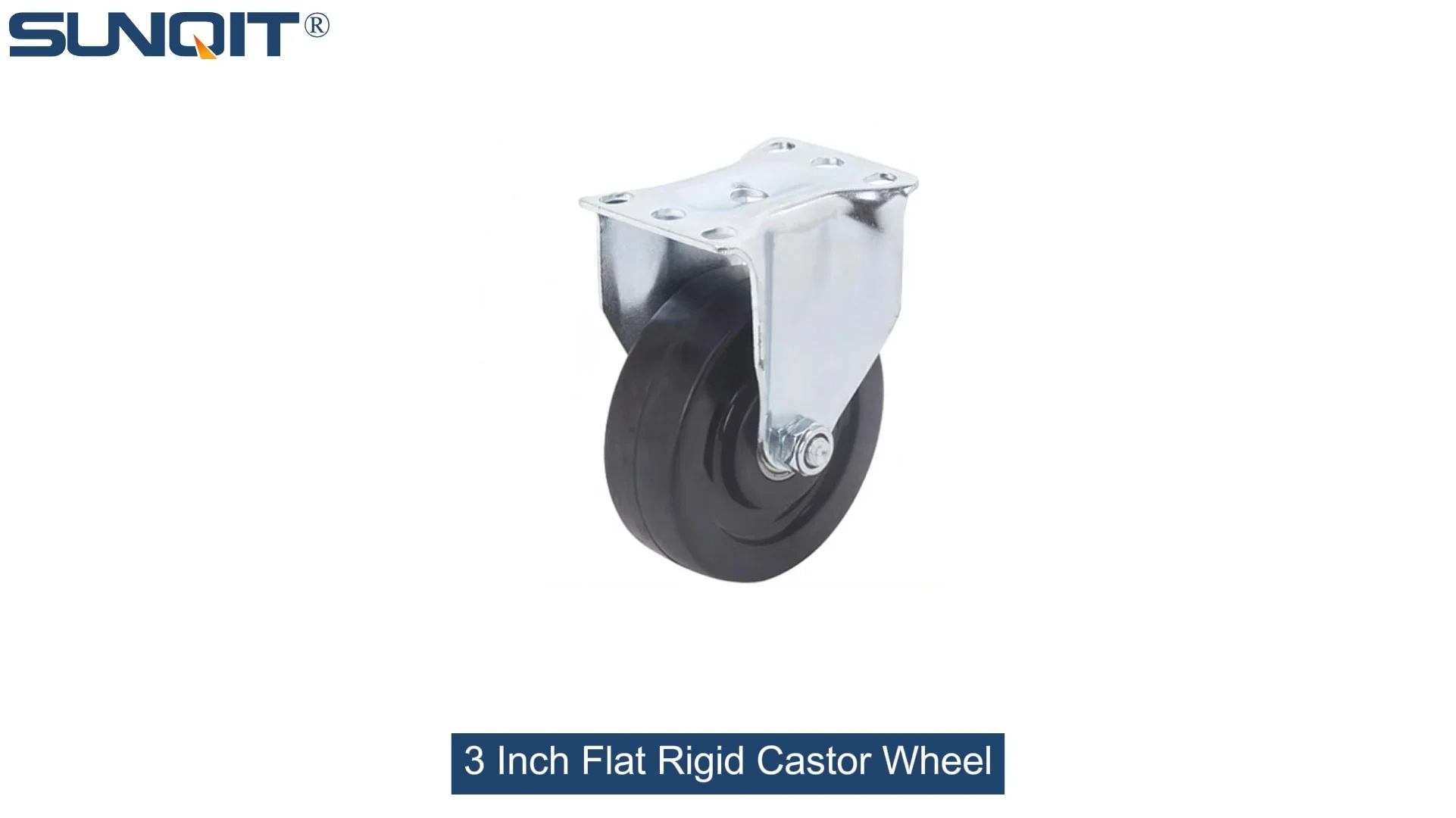
Flat Rigid Castor Wheel
Chair Casters Ball Bearing Wheels Rubber Base. Resistant to abrasion, impact and corrosion. Heavy payload can hold 70Kgs per pcs,which can make it works at a stable and smooth status.
In the fast-paced world of computer peripheral manufacturing, where every millimeter counts and assembly lines hum with the rhythm of precise movements, the difference between a flawless product and a defective one often lies in the smallest details. Think about the last time you unboxed a wireless mouse or a mechanical keyboard—its smooth buttons, perfectly aligned ports, and seamless finish are the result of countless hours of meticulous work on the production floor. But behind that polished final product is a hidden network of tools, systems, and components working in harmony. Among these unsung heroes are flat rigid castor wheels—unassuming yet critical elements that keep assembly lines stable, efficient, and primed for precision.
Computer peripherals, from slim monitors to ergonomic keyboards, demand assembly processes that leave no room for error. A misaligned sensor in a gaming mouse can render it useless; a slightly off-kilter USB port in a webcam can frustrate users for years. To meet these standards, manufacturers rely on lean systems—frameworks designed to minimize waste, optimize workflow, and enhance productivity. And at the heart of many lean-driven workstations lie flat rigid castor wheels, providing the stability needed to turn chaotic production floors into models of efficiency.
What Are Flat Rigid Castor Wheels, Anyway?
Let's start with the basics. Unlike their swiveling counterparts that rotate 360 degrees, flat rigid castor wheels are fixed in direction—they roll straight, no surprises, no sudden turns. Picture a sturdy metal bracket mounting a thick, durable wheel, bolted firmly to the base of a workbench or material cart. Their "flat" designation refers to their low-profile design, which keeps the equipment they support close to the ground, reducing wobble. "Rigid" means the wheel axle is fixed to the bracket, so the wheel only moves forward or backward, not side to side.
These castors are built for reliability. Most are constructed with heavy-duty materials: steel brackets to withstand constant weight, polyurethane or rubber wheels to absorb minor shocks, and sealed bearings to resist dust and debris—common nuisances in factory environments. They come in various sizes, but in computer peripheral production, you'll typically find 3- to 5-inch wheels, balancing load capacity (often up to 500 pounds per castor) with maneuverability.
At first glance, their simplicity might seem underwhelming. Why not use swivel castors, which offer more flexibility? The answer lies in the nature of peripheral assembly: when a worker is soldering tiny components onto a circuit board or aligning keys on a keyboard, the last thing they need is a workbench that shifts mid-task. Flat rigid castor wheels eliminate that risk, keeping workstations anchored in place while still allowing for occasional repositioning when production lines need reconfiguring.
The Backbone of Lean Systems: Stability Meets Efficiency
Lean systems are all about creating value without waste, and that starts with stable, predictable work environments. Imagine a production line where workbenches drift slightly as workers lean on them, or material carts roll unevenly, causing parts to jostle. That's a recipe for wasted time, rework, and frustration. Flat rigid castor wheels address this by turning mobile workstations into steady platforms, aligning perfectly with lean principles like 5S (Sort, Set in Order, Shine, Standardize, Sustain) and just-in-time production.
Take 5S, for example. "Set in Order"—one of the pillars of 5S—requires tools and materials to be stored in fixed, accessible locations. A workbench mounted on flat rigid castor wheels can be positioned exactly 2 feet from the conveyor belt, with tools hung at eye level and parts bins within arm's reach. Because the castors don't swivel, the workbench stays in that position shift after shift, so workers don't waste time readjusting it. This consistency reduces "motion waste"—a common lean target—and lets employees focus on what they do best: assembling high-quality peripherals.
Just-in-time (JIT) production, which minimizes inventory by delivering parts exactly when they're needed, also relies on stable workstations. When a cart loaded with keyboard PCBs (printed circuit boards) rolls down the line, flat rigid castor wheels ensure it stops precisely at the next workstation, aligning with the assembly bench so workers can slide parts onto the bench without bending or stretching. No more fumbling with misaligned carts or rushing to catch rolling components—just a smooth, steady flow that keeps production on track.

Working in Tandem: Flat Rigid Castors and Aluminum Profile Workbenches
Walk into any modern computer peripheral factory, and you'll likely notice workbenches made from aluminum profiles—lightweight, modular, and infinitely customizable. These profiles, with their T-slot designs, allow manufacturers to attach shelves, tool holders, and lighting with ease, creating workstations tailored to specific tasks. And when paired with flat rigid castor wheels, they become powerful tools for lean production.
Aluminum profiles are prized for their strength-to-weight ratio. A typical workbench frame made from 4040 aluminum profiles (a common size in manufacturing) can support hundreds of pounds of equipment—soldering irons, magnifying lamps, electrostatic discharge (ESD) mats—without flexing. But even the sturdiest frame is only as good as its base. That's where flat rigid castor wheels come in. Bolted directly to the aluminum profile legs via mounting plates, these castors distribute the workbench's weight evenly, preventing tipping and ensuring the surface remains level.
Consider a workstation dedicated to assembling laptop stands. The workbench, built from aluminum profiles, holds a drill press, a bin of screws, and a quality control station. With flat rigid castor wheels, the entire setup can be rolled to the loading dock when new raw materials arrive, then locked back into place (via floor anchors, in some cases) for assembly. During production, the wheels keep the bench steady as workers drill holes and attach hinges, ensuring each stand meets the strict tolerance requirements of laptop manufacturers.
This synergy between aluminum profiles and flat rigid castors isn't just about stability—it's about adaptability. As product lines evolve (e.g., shifting from wired to wireless keyboards), manufacturers can reconfigure their aluminum profile workbenches by adding new brackets or shelves. The castors make moving these modified workstations to new locations a breeze, without sacrificing the precision needed for assembly.

Aligning with Conveyors: Keeping the Flow Smooth
Conveyors are the arteries of production lines, carrying parts from one station to the next. In computer peripheral manufacturing, roller conveyors often transport PCBs, plastic casings, and small components between assembly steps. For workers stationed along these conveyors, aligning their workbenches with the conveyor's height and angle is critical—even a 1-inch misalignment can lead to parts getting stuck or workers straining to reach items.
Flat rigid castor wheels solve this alignment puzzle. Unlike swivel castors, which can cause workbenches to drift sideways over time, flat rigid models keep the bench locked into a straight path relative to the conveyor. This ensures that the edge of the workbench lines up perfectly with the conveyor's roller track, allowing parts to slide smoothly from the conveyor to the bench (and vice versa) without jams or spills.
Let's take a concrete example: a production line for wireless earbuds. Tiny PCBs, no larger than a postage stamp, travel down a narrow roller conveyor toward a soldering station. The workbench at this station, mounted on flat rigid castor wheels, is positioned so its surface is exactly flush with the conveyor. As the PCBs arrive, the worker uses a small tool to slide each one onto the bench, solders the battery connector, and slides it back onto the conveyor. If the workbench were on swivel castors, even a slight bump from the worker's arm could push it out of alignment, causing PCBs to get caught between the bench and conveyor—a costly delay in a line producing 500 earbuds per hour.

Why Flat Rigid Castors Outshine Other Options
To truly appreciate flat rigid castor wheels, it helps to compare them to other common castor types used in manufacturing: swivel castors and swivel castors with brakes. Each has its place, but for precision-driven tasks like computer peripheral assembly, flat rigid castors offer unique advantages.
| Feature | Flat Rigid Castor Wheels | Swivel Castor Wheels | Swivel Castors with Brakes |
|---|---|---|---|
| Stability | High (fixed direction prevents drifting) | Medium (prone to sideways movement) | Medium (brakes can slip under heavy loads) |
| Load Capacity | High (up to 500 lbs per castor) | Medium (typically 200-300 lbs per castor) | Medium (brakes add weight but limit capacity) |
| Maintenance Needs | Low (no swivel joints or brakes to wear) | Medium (swivel bearings require lubrication) | High (brakes, bearings, and joints need regular checks) |
| Best For | Fixed workstations, alignment-critical tasks | Mobile carts, frequent repositioning | Carts needing occasional stops (e.g., material transport) |
Stability First
For tasks requiring steady hands—like attaching delicate ribbon cables to a webcam's circuit board—stability is non-negotiable. Flat rigid castor wheels eliminate the "wobble factor" entirely. Workers can lean into their tasks, apply pressure with tools, and move quickly without worrying about the workbench shifting. In contrast, swivel castors, even when locked, can creep over time, especially on uneven factory floors, leading to misaligned parts and rework.
Durability That Lasts
Factory floors are tough environments: dust, oil, and constant traffic take a toll on equipment. Flat rigid castor wheels, with their simple design (no swivel plates or brake mechanisms), are built to withstand this abuse. Their sealed bearings keep contaminants out, and their solid rubber or polyurethane wheels resist cracks and abrasions. Swivel castors, with their multiple moving parts, are more prone to jamming when debris gets caught in the swivel joint—a common issue in factories where metal shavings or plastic scraps litter the floor.
Cost-Effective in the Long Run
While flat rigid castor wheels may cost slightly more upfront than basic swivel castors, their low maintenance needs and long lifespan make them more economical over time. A swivel castor with brakes might need brake pad replacements every 6 months and swivel joint lubrication monthly; a flat rigid castor, by comparison, might only require a wheel replacement after 3-5 years of heavy use. For manufacturers operating on tight margins, these savings add up quickly.
Case Study: How One Manufacturer Cut Errors by 76% with Flat Rigid Castors
The Challenge: A mid-sized manufacturer of gaming headsets was struggling with high defect rates in their microphone assembly line. Workers reported that their workbenches, mounted on swivel castors, would shift slightly when they leaned forward to solder the microphone's wiring harness. This movement caused misalignments in the harness, leading to static in the final product. Defect rates hovered around 8%, far above the industry average of 2%.
The Solution: The company replaced the swivel castors with flat rigid castor wheels on 10 assembly workbenches. The new castors were bolted to the existing aluminum profile frames, ensuring the workbenches stayed aligned with the roller conveyor feeding parts to the station.
The Results: Within two weeks, defect rates dropped to 1.9%. Workers noted that the steady work surface made soldering easier, as they no longer had to compensate for unexpected movement. Over six months, the company saved approximately $45,000 in rework costs and increased production output by 12%, as less time was spent fixing defective units. "It's amazing how much of a difference a stable bench makes," said Maria, a lead assembler with 5 years of experience. "I can focus on my work now, not on keeping the bench from moving."
Caring for Your Flat Rigid Castor Wheels: Maintenance Tips
Like any piece of equipment, flat rigid castor wheels perform best when properly maintained. Fortunately, their simple design makes upkeep a breeze. Here are a few tips to keep them rolling smoothly for years:
1. Inspect Regularly
Once a week, take a few minutes to check each castor. Look for cracks or chunks missing from the wheel tread—these can cause uneven rolling. Tighten any loose bolts connecting the castor to the workbench frame; loose bolts can lead to wobbling, even with rigid castors.
2. Keep Them Clean
Factory floors accumulate dust, oil, and metal shavings, which can get trapped in the wheel bearings. Use a brush or compressed air to clean out debris from the wheel axles and around the mounting bracket. For sticky residue, wipe the wheels with a cloth dampened in mild soap and water—avoid harsh chemicals that can degrade rubber or polyurethane.
3. Lubricate Sparingly
Most flat rigid castors come with sealed bearings, which don't require lubrication. If your castors have open bearings (uncommon in manufacturing settings), apply a small amount of lithium-based grease to the axle every 3 months to reduce friction.
4. replace When Needed
Even the sturdiest castors wear out eventually. If you notice the wheel no longer rolls smoothly, or if the mounting bracket is bent, replace the castor immediately. Delaying replacement can lead to uneven wear on other castors or damage to the workbench frame.
Conclusion: The Quiet Force Behind Precision
In the grand scheme of computer peripheral manufacturing, flat rigid castor wheels may not get the same attention as high-tech robots or advanced sensors. But their impact is undeniable. They are the steady hands that keep assembly lines stable, the silent partners in lean systems, and the unsung heroes of precision production. By providing a stable platform for workers to do their best, these humble components help turn raw materials into the peripherals we rely on every day—keyboards that type smoothly, mice that track accurately, and headsets that deliver crystal-clear sound.
As manufacturers continue to push for higher efficiency and tighter tolerances, the role of flat rigid castor wheels will only grow. They are a testament to the idea that in manufacturing, sometimes the simplest solutions are the most powerful. So the next time you use your favorite computer peripheral, take a moment to appreciate the hidden details that made it possible—including the flat rigid castor wheels that kept its assembly line rolling, steadily and surely, toward perfection.