- Company Articles
- Products and Technology
- Product knowledge
- Flat Swivel Castor Wheel Mounting Types: Top Plate vs. Stem Mount

Flat Swivel Castor Wheel Mounting Types: Top Plate vs. Stem Mount
Related Product
Flat Swivel Castor Wheel
Chair Casters Ball Bearing Wheels Rubber Base. Resistant to abrasion, impact and corrosion. Heavy payload can hold 70-90Kgs per pcs,which can make it works at a stable and smooth status.
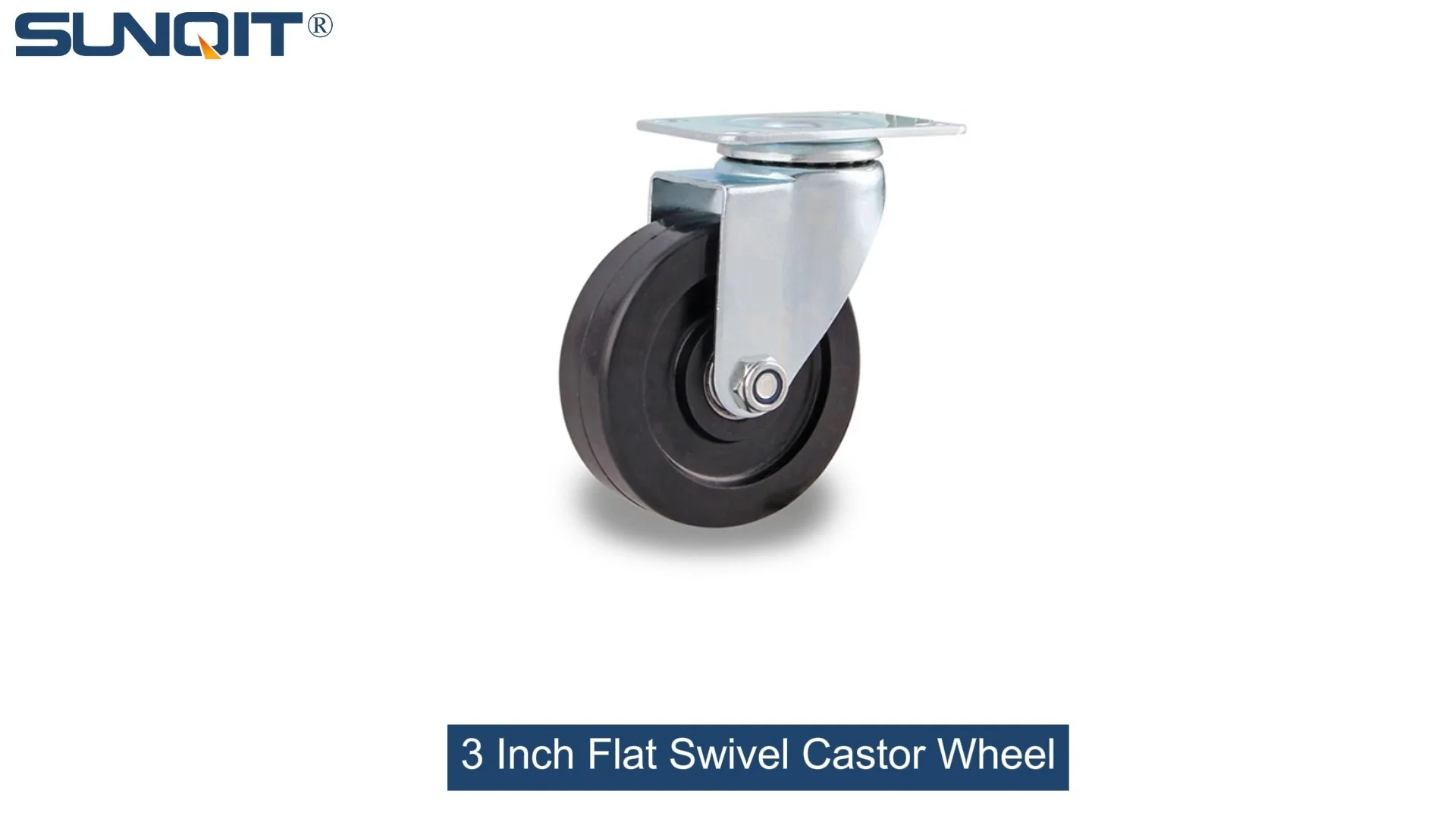
In the bustling world of manufacturing, warehousing, and logistics, there's an unsung hero working behind the scenes to keep operations moving smoothly: the caster wheel. These small but mighty components turn static workbenches into mobile stations, heavy material racks into maneuverable units, and rigid assembly lines into flexible, adaptable spaces. Among the many types of caster wheels available, flat swivel castor wheels stand out for their versatility—offering 360-degree rotation that makes navigating tight corners and crowded floors feel effortless. But here's the thing: not all flat swivel casters are created equal. The way they attach to your equipment—their mounting type—can make or break their performance, safety, and longevity. Today, we're diving deep into two of the most common mounting styles: top plate mount and stem mount. By the end, you'll know exactly which one to choose for your next project, whether you're setting up a new production line, upgrading a workshop, or simply replacing a worn-out caster on a trolley.
Understanding Flat Swivel Castor Wheels: The Basics
Before we jump into mounting types, let's make sure we're all on the same page about what flat swivel castor wheels are. At their core, these are wheels mounted on a swivel plate (or "yoke") that allows them to rotate horizontally, enabling the equipment they're attached to move in any direction. The "flat" in their name typically refers to the base or mounting surface, which is designed to sit flush against the bottom of a cart, workbench, or rack. They come in a variety of sizes, materials (think rubber, polyurethane, or steel wheels), and load capacities, but their defining feature is that swivel action—no more back-breaking pushing to change direction.
Now, why does mounting type matter? Imagine buying a high-quality caster wheel with a heavy-duty steel frame and a smooth-rolling polyurethane wheel, only to attach it with a flimsy mounting method that bends under load or loosens over time. That's like putting a race car engine in a bicycle frame—it just won't work. The mounting type determines how much weight the caster can support, how easy it is to install, how stable the equipment will be, and even how much space it takes up. So, let's start with the first contender: top plate mounting.
Top Plate Mount: The Heavyweight Champion of Stability
What Is Top Plate Mounting?
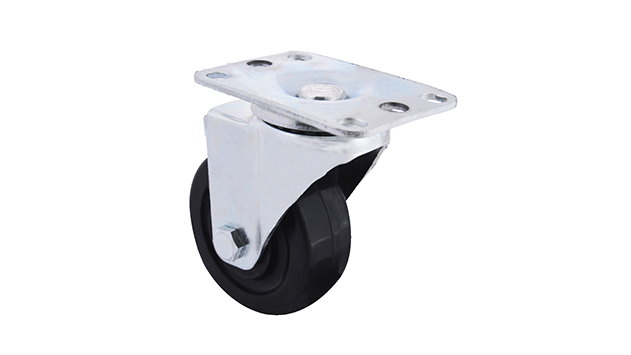
Top plate mount casters are exactly what they sound like: the caster's swivel mechanism is attached to a flat, rectangular (or sometimes square) metal plate—the "top plate"—which is then bolted or screwed directly to the bottom of the equipment. Think of it as a sturdy bridge between the caster and your workbench, trolley, or rack. The top plate itself is usually made of steel or aluminum for strength, and it features pre-drilled holes spaced to match standard bolt patterns, making installation straightforward (more on that later).
One of the key components that often accompanies top plate mount casters is the caster installation base —a flat, reinforced plate that's sometimes added between the equipment and the caster's top plate. This accessory is especially useful if the equipment's base is uneven, made of a soft material (like wood), or needs extra reinforcement to handle heavy loads. The caster installation base spreads the weight even further, reducing the risk of the equipment's base cracking or warping over time.
How to Install Top Plate Mount Casters: A Step-by-Step Guide
Installing top plate mount casters isn't rocket science, but it does require a bit of prep work to ensure a secure fit. Here's a quick walkthrough:
- Measure twice, drill once: Start by marking where the top plate will sit on the equipment's base. Most top plates have 4 holes (one in each corner), so use a pencil to mark the center of each hole. Double-check that the marks are aligned—crooked holes will make installation a headache and could weaken the connection.
- Drill the holes: Use a drill bit slightly smaller than the diameter of your bolts to create pilot holes. This prevents the equipment's base from splitting, especially if it's wood or plastic.
- Attach the top plate: Place the caster's top plate over the pilot holes, then insert bolts through the holes and tighten them with a wrench. For extra security, add washers under the bolt heads to distribute pressure and prevent the bolts from sinking into the base.
- Add a caster installation base (if needed): If your equipment's base is thin or uneven, bolt the caster installation base to the equipment first, then attach the caster's top plate to the base. This adds an extra layer of stability.
The Pros and Cons of Top Plate Mounting
Advantages:
- Superior load capacity: Top plate mounts are the workhorses of the caster world. Because the weight is distributed across the entire top plate (and often a caster installation base), they can handle much heavier loads than stem mounts. It's not uncommon to find top plate casters rated for 500 lbs or more per wheel—perfect for heavy workbenches, industrial material racks, or loaded turnover trolleys.
- Unbeatable stability: The wide footprint of the top plate means less wobble, even when moving over uneven floors. This is crucial for equipment like ESD workstations, where stability is key to preventing static discharge or damage to sensitive electronics.
- Durable and long-lasting: Bolted connections are tough to beat when it comes to longevity. Unlike stem mounts, which can loosen over time, top plate bolts stay secure even with frequent use—meaning fewer repairs and replacements down the line.
Disadvantages:
- Requires more space: The top plate adds height to the caster, which might be a problem if you're working with low-clearance equipment. It also needs enough surface area on the equipment's base to attach—so if your cart or rack has a narrow frame, a top plate might not fit.
- Installation is more involved: Drilling holes and tightening bolts takes time, especially if you're installing multiple casters. Stem mounts, by contrast, can often be popped in or screwed in without any drilling.
Best Applications for Top Plate Mount Casters
Top plate mount casters shine in scenarios where stability and load capacity are non-negotiable. Think:
- Heavy-duty workbenches: Whether it's a single-deck workbench E (without casters) that you're converting to mobile use or a custom assembly station loaded with tools, top plate casters keep it steady during use and easy to move when reconfiguring the workshop.
- Material racks and shelving: A material rack B (with 3 rows and 3 floors) loaded with inventory can weigh hundreds of pounds. Top plate casters ensure it glides smoothly without tipping.
- Industrial trolleys: Turnover trolleys used to transport raw materials or finished goods in factories need to handle heavy loads reliably. Top plate mounts prevent the trolley from swaying, even when fully loaded.
Stem Mount: The Space-Saving, Versatile Alternative
What Is Stem Mounting?
If top plate mounts are the heavyweights, stem mounts are the lightweights—compact, flexible, and designed for spaces where every inch counts. Instead of a flat plate, stem mount casters have a metal rod (the "stem") protruding from the top of the swivel head. This stem is inserted into a hole or socket on the equipment's base, securing the caster in place. Stem mounts come in several flavors, each tailored to different needs: threaded stems (which screw into a nut or threaded hole), grip ring stems (which use a spring-loaded ring to lock into a pre-drilled hole), and expanding stems (like the 360° swivel expanding stem casters wheel you might see in medical or lab settings, which expand to grip the inside of a hole for a tight fit).
How to Install Stem Mount Casters: It's All About the Stem
Installing stem mount casters is generally quicker than top plate mounts, but the process varies by stem type:
- Threaded stem: Simply screw the stem into a threaded hole on the equipment's base. It's like screwing a bolt into a nut—no drilling required if the hole is already there. Just make sure the thread size matches (common sizes include 1/2"-13 or M12).
- Grip ring stem: These have a small metal ring around the stem that compresses when inserted into a hole, then expands to lock in place. You'll need a hole with a specific diameter (usually listed in the caster's specs) to ensure a snug fit. Push the stem into the hole until you hear a "click"—that's the ring expanding.
- Expanding stem (e.g., 360° swivel expanding stem casters wheel): Turn the stem clockwise to expand a cone-shaped mechanism at the top, which presses against the inside of the hole. This creates a super-tight grip, making it ideal for equipment that needs frequent height adjustments.
The Pros and Cons of Stem Mounting
Advantages:
- Space-saving design: Stem mounts have a low profile, making them perfect for equipment with limited clearance. If you're working with a small cart or a medical device that needs to fit under tables, a stem mount caster won't add unnecessary height.
- Easy installation: No drilling (in most cases)! If your equipment already has holes for stems, you can pop them in and go. This is a huge plus for DIYers or anyone who needs to swap out casters quickly.
- Versatility: Stem mounts work with a wide range of equipment, from lightweight office chairs to specialized lab carts. They're also easier to replace than top plate mounts—just pull out the old stem and insert a new one.
Disadvantages:
- Lower load capacity: Stem mounts can't handle as much weight as top plate mounts. Most are rated for 100-300 lbs per wheel, which is fine for light to medium loads but not enough for heavy machinery.
- Less stable: The narrow stem means more wobble, especially on uneven floors. This can be a problem for equipment that holds fragile items or requires precise positioning, like a mobile workbench used for assembling small electronics.
- Prone to loosening: Over time, stems can wiggle loose, especially with frequent use. Threaded stems might need re-tightening, and grip ring stems can pop out if the hole is too large—adding maintenance headaches.
Best Applications for Stem Mount Casters
Stem mounts excel in scenarios where space and flexibility matter most:
- Lightweight equipment: Office chairs, small utility carts, and portable toolboxes all benefit from stem mounts' compact design.
- Medical and lab settings: The 360° swivel expanding stem casters wheel is a favorite here, as it allows for precise positioning of carts and equipment in tight spaces like hospital rooms or labs.
- Furniture: From rolling kitchen islands to mobile bookshelves, stem mounts add mobility without sacrificing style—their low profile keeps the focus on the furniture, not the casters.

Top Plate vs. Stem Mount: A Side-by-Side Comparison
| Feature | Top Plate Mount | Stem Mount |
|---|---|---|
| Load Capacity | High (300-1,000+ lbs per wheel) | Low to Medium (50-300 lbs per wheel) |
| Stability | Excellent (wide base reduces wobble) | Fair (narrow stem can wobble on uneven floors) |
| Installation Time | Longer (requires drilling and bolting) | Shorter (screw-in or push-in installation) |
| Space Requirement | More (needs surface area for top plate) | Less (compact stem design) |
| Best For | Heavy machinery, workbenches, material racks, ESD workstations | Lightweight carts, medical equipment, furniture, lab tools |
| Maintenance Needs | Low (bolts stay tight; minimal upkeep) | Medium (may need re-tightening or stem replacement) |

Choosing the Right Mounting Type: Key Factors to Consider
Now that you know the ins and outs of top plate and stem mounts, how do you decide which one is right for your project? Here are the critical factors to weigh:
1. Load Capacity: How Much Weight Will It Carry?
Start with the basics: how much weight will each caster need to support? If you're building a workbench for assembling car parts (which could weigh 500+ lbs), top plate is the way to go. If you're adding casters to a small cart for office supplies (20-50 lbs), stem mount will work just fine. Remember: always check the caster's load rating—don't assume a stem mount can handle more than it's rated for, even if it "feels" sturdy.
2. Space and Clearance: How Much Room Do You Have?
Measure the distance from the bottom of your equipment to the floor. If you need the equipment to fit under a table or shelf, stem mount's low profile is better. If clearance isn't an issue, top plate's stability is worth the extra height. Also, check the equipment's base: does it have enough flat surface area for a top plate, or are there only small holes for stems?
3. Environment: Where Will the Caster Be Used?
Consider the floor type, temperature, and any special conditions. In a factory with concrete floors and heavy debris, top plate casters with steel wheels and a caster installation base will hold up better. In a cleanroom or lab, where space is tight and precision is key, a 360° swivel expanding stem casters wheel might be the safer bet. For wet or corrosive environments (like food processing), look for stainless steel stems or top plates to prevent rust.
4. Mobility and Maneuverability: How Often Will It Move?
If the equipment stays in one place most of the time but needs to be moved occasionally (like a workbench that's repositioned during line reconfigurations), top plate's stability when stationary is a plus. If it's moved constantly (like a hospital cart), stem mount's swivel ease might be better—just make sure it's rated for the load to avoid wobbling.
5. Safety: Don't Overlook the Little Things
Safety should always come first. If the equipment carries heavy or fragile items, top plate's stability reduces the risk of tipping. For equipment that needs to stay put when in use (like an ESD workstation during assembly), consider adding a flat swivel castor wheel with brake —a simple accessory that locks the wheel in place to prevent accidental movement. Both top plate and stem mount casters are available with brakes, so you can add that extra layer of security regardless of mounting type.
Accessorizing Your Casters: Beyond the Mount
No matter which mounting type you choose, the right accessories can take your caster's performance to the next level. Here are a few must-haves:
- Flat swivel castor wheel with brake: As mentioned, brakes are non-negotiable for safety. They come in two main types: side-lock (which locks the wheel) and total-lock (which locks both the wheel and swivel head, preventing rotation). For workbenches and material racks, total-lock brakes are best—they keep the equipment from moving and swiveling.
- Caster installation base: Even if you're using top plate mounts, a caster installation base adds extra stability, especially on uneven or soft floors. It also protects the equipment's base from damage caused by bolt pressure.
- Caster accessories: From wheel covers that protect floors from scratches to swivel head lubricants that keep rotation smooth, caster accessories can extend your caster's lifespan and improve performance. For example, adding a rubber wheel cover to a steel caster reduces noise and prevents floor marks in office or retail settings.
Real-World Examples: Putting It All Together
Let's wrap up with a few real-world scenarios to see how these mounting types play out in practice:
Scenario 1: A manufacturing plant needs a mobile workbench for assembly line workers. The workbench will hold tools, parts, and a small ESD mat (to prevent static damage to electronics). It needs to support about 400 lbs and be moved daily when reconfiguring the line. Solution: Top plate mount casters with a flat swivel castor wheel with brake . The top plate handles the weight and keeps the workbench stable during assembly, while the brake ensures it stays put when in use. A caster installation base adds extra stability on the plant's concrete floor.
Scenario 2: A hospital needs a cart to transport medication and supplies between rooms. The cart is lightweight (about 100 lbs when loaded) but needs to fit through narrow doorways and maneuver around beds. Solution: Stem mount casters, specifically 360° swivel expanding stem casters wheel . The expanding stem allows for easy installation and precise positioning, while the compact design ensures the cart fits in tight spaces. The 360° swivel makes navigating hospital corridors a breeze.
Scenario 3: A warehouse wants to upgrade its material racks to be more mobile. The racks hold heavy boxes (up to 600 lbs per rack) and are moved weekly to reorganize inventory. Solution: Top plate mount casters with steel wheels and a caster installation base. The top plate's load capacity handles the weight, and the installation base prevents the rack's thin metal frame from bending under pressure. The steel wheels glide smoothly over the warehouse's concrete floor, even when fully loaded.
Final Thoughts: It's All About Your Needs
At the end of the day, there's no "better" mounting type—only the one that fits your specific needs. Top plate mounts are the go-to for heavy loads, stability, and durability, making them ideal for industrial and manufacturing settings. Stem mounts, on the other hand, are perfect for tight spaces, lightweight equipment, and quick installations. By considering factors like load capacity, space, environment, and safety, you'll be able to choose the right mounting type with confidence.
And remember: the best caster is one that works for you, not against you. Whether you're outfitting a workshop with top plate casters and caster accessories or upgrading a lab cart with 360° swivel expanding stem casters wheel , taking the time to understand your mounting options will pay off in smoother operations, fewer headaches, and equipment that lasts for years to come. So go ahead—start rolling, and see just how much easier your workday can be.