- Company Articles
- Products and Technology
- Solution
- Flat Swivel Castor Wheel Noise Reduction: Solutions for Assembly Lines

Flat Swivel Castor Wheel Noise Reduction: Solutions for Assembly Lines
Related Product
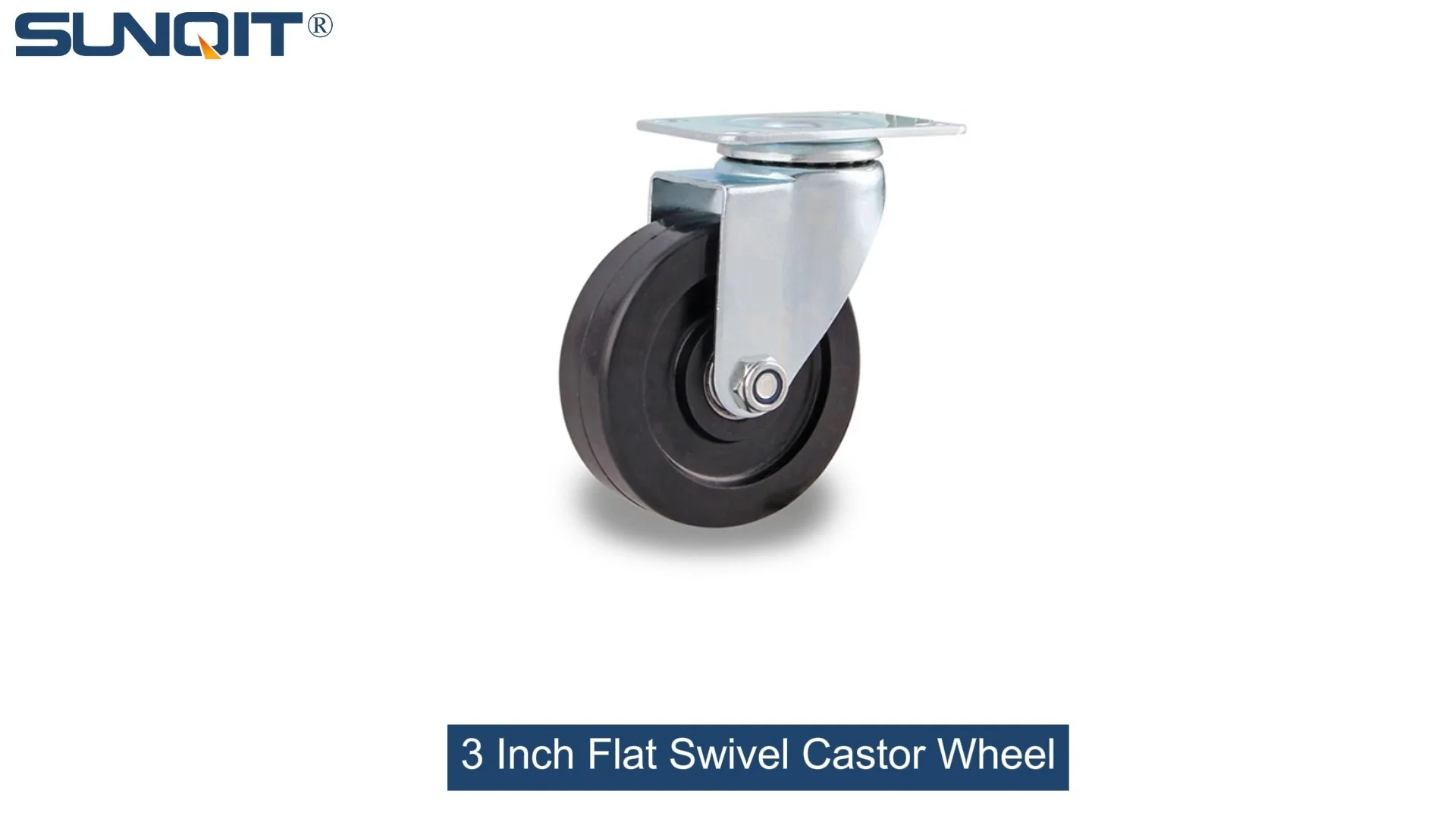
Flat Swivel Castor Wheel
Chair Casters Ball Bearing Wheels Rubber Base. Resistant to abrasion, impact and corrosion. Heavy payload can hold 70-90Kgs per pcs,which can make it works at a stable and smooth status.
Walk into any busy assembly line, and you'll be greeted by a symphony of sounds: the whir of machinery, the clink of tools, the murmur of coworkers coordinating tasks. It's a dynamic environment, alive with the energy of production—but there's one sound that often cuts through the rest like a discordant note: the high-pitched squeal or rumble of flat swivel castor wheels. Those small, unassuming components, bolted to the bottom of workbenches, trolleys, and material racks, might seem insignificant, but their noise can transform a productive space into a source of frustration, distraction, and even long-term health risks for the team on the floor.
For anyone who's spent hours on an assembly line, the impact of constant castor wheel noise is all too real. It's the kind of sound that makes you strain to hear a colleague's instruction, that leaves your head throbbing by lunchtime, and that slowly chips away at focus over a shift. Over time, studies show, persistent noise above 85 decibels can lead to hearing loss, increased stress hormones, and decreased productivity—a triple threat to both workers and the bottom line. And in today's manufacturing landscape, where lean systems prioritize efficiency and worker well-being, ignoring that squeak isn't just a quality-of-life issue; it's a missed opportunity to optimize operations.
That's why we're diving deep into flat swivel castor wheel noise reduction today. These wheels are workhorses of the assembly line, allowing teams to move heavy workbenches, transport materials, and reconfigure layouts with ease. But when they're noisy, they undermine the very flexibility and efficiency they're meant to enable. In this article, we'll explore why these wheels make so much noise, break down practical solutions to quiet them, and show how integrating these fixes can align with lean principles—creating a workspace that's not just quieter, but smarter, healthier, and more productive.
The Hidden Cost of Castor Wheel Noise: More Than Just an Annoyance
Before we tackle solutions, let's ground ourselves in why castor wheel noise matters. It's easy to dismiss a squeaky wheel as a minor irritation, but the data tells a different story. The World Health Organization (WHO) estimates that occupational noise is one of the leading causes of work-related hearing impairment, with millions of workers worldwide at risk. In manufacturing settings, where machinery already contributes to baseline noise levels, adding the erratic squeals of ill-maintained or poorly designed castor wheels can push sound levels into the danger zone.
Beyond hearing health, noise disrupts cognitive function. A 2019 study in the Journal of Occupational and Environmental Medicine found that workers in noisy environments made 30% more errors in precision tasks compared to those in quieter settings. On an assembly line, where attention to detail can mean the difference between a flawless product and a costly defect, that's a statistic that hits home. And let's not forget morale: no one wants to spend eight hours in a space that feels like a constant assault on the ears. High noise levels correlate with higher turnover rates, as workers seek environments that respect their well-being.
Then there's the regulatory side. OSHA (Occupational Safety and Health Administration) sets a permissible exposure limit (PEL) of 90 decibels over an 8-hour workday. Exceeding that can result in fines, but more importantly, it signals a failure to protect your team. For many manufacturers, flat swivel castor wheels are a silent contributor to pushing noise levels toward—or over—that threshold. A single squeaky trolley moving across the floor might not hit 90 dB alone, but when multiplied by dozens of such movements per hour, across multiple workstations, the cumulative effect adds up.
The good news? Unlike the roar of a large machine, castor wheel noise is often fixable with targeted, low-cost interventions. It starts with understanding why these wheels make noise in the first place.
Why Do Flat Swivel Castor Wheels Make Noise? The Root Causes
To quiet a flat swivel castor wheel, you need to speak its language—or rather, understand the sources of its "voice." Noise from these wheels rarely comes from a single cause; it's usually a combination of factors, each amplifying the others. Let's break them down:
1. Friction: The Main Culprit
At its core, most castor wheel noise boils down to friction—the resistance that occurs when two surfaces rub against each other. In a flat swivel castor wheel, there are two key friction points: between the wheel and the floor, and within the wheel's bearing system.
When the wheel rolls, the tread (the outer surface that touches the floor) interacts with the floor material. If the tread is hard (like nylon) and the floor is smooth concrete, the lack of give can create a loud, rumbling sound as the wheel vibrates. On the flip side, a soft rubber tread might grip too much, leading to a squeak as it sticks and releases with each rotation—a phenomenon known as "stick-slip friction."
Inside the wheel, the bearings are another friction hotspot. Bearings allow the wheel to spin freely around the axle, but if they're low-quality, dirty, or under-lubricated, they can grind or squeal. Ball bearings, which use small metal balls to reduce friction, are common in castors, but if those balls become pitted or the races (the grooves they roll in) wear down, the smooth rotation turns into a gritty, noisy mess.
2. Wheel Material: Hardness vs. Softness
The material of the castor wheel itself plays a huge role in noise production. Hard materials like nylon or phenolic resin are durable and handle heavy loads well, but they're also rigid. When they hit a small imperfection in the floor—a crack, a bolt head, or even a dust ball—they transmit that impact noise directly into the air. Soft materials like rubber or polyurethane are more shock-absorbent, but they can wear faster under heavy loads, and as they degrade, they become uneven, leading to wobbling and increased noise.
3. Loose or Misaligned Components
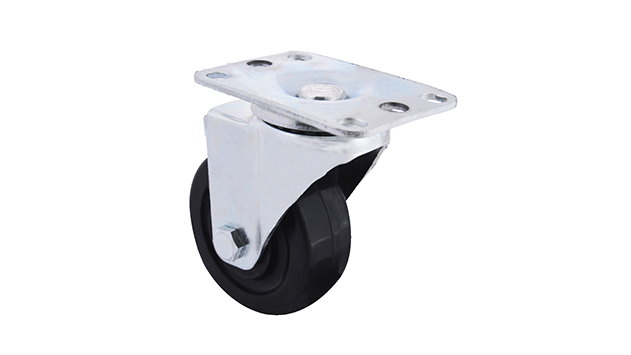
A flat swivel castor wheel is more than just a wheel and an axle; it's a system of parts: the wheel, axle, bearing, swivel plate (which allows the wheel to turn), and the mounting bracket that attaches it to the equipment. If any of these parts are loose, bent, or misaligned, noise follows. A wobbly wheel, for example, will bounce against the floor as it rolls, creating a repetitive thumping sound. A swivel plate that's seized or dirty might creak when the wheel turns, adding a (cì'ěr—shrill) metallic noise to the mix.
4. Floor Conditions: The Unsung Partner in Noise
We often blame the castor wheel for noise, but the floor it rolls on is an equal partner. Rough, uneven concrete floors with cracks or uneven seams force wheels to work harder, increasing friction and impact noise. Even smooth floors can be problematic if they're dirty—dust, debris, or small metal shavings get trapped between the wheel and floor, acting like sandpaper and amplifying sound.
Solutions That Stick: Quieting Flat Swivel Castor Wheels for Good
Now that we understand the "why," let's focus on the "how." Reducing flat swivel castor wheel noise isn't about one magic fix—it's about combining smart material choices, thoughtful design, proactive maintenance, and even small tweaks to the environment. Let's walk through the most effective strategies.
Choosing the Right Wheel Material: The Foundation of Quiet
The first step in quieting a castor wheel is selecting the right tread material for your environment. There's no one-size-fits-all here—you need to balance noise reduction with load capacity, floor type, and durability. Let's compare the most common options:
| Wheel Material | Noise Level (Typical) | Best For | Trade-offs |
|---|---|---|---|
| Polyurethane (PU) | Low (50-65 dB) | Smooth floors (vinyl, polished concrete), medium loads (up to 500 lbs per wheel) | Less durable than nylon; can mark floors if overloaded |
| Rubber (Natural or Synthetic) | Very Low (45-60 dB) | Hardwood, tile, or sensitive floors; light to medium loads | Prone to wear in high-traffic areas; can squeak on wet floors |
| Nylon | High (70-85 dB) | Heavy loads (over 1000 lbs per wheel), rough concrete | Durable but noisy; can damage soft floors |
| Urethane on Iron Core | Medium-Low (55-70 dB) | Heavy loads + noise sensitivity; industrial settings | More expensive than solid polyurethane |
For most assembly lines prioritizing noise reduction, polyurethane (PU) is a strong starting point. It's softer than nylon, so it absorbs impact and reduces friction against smooth floors. Look for "quiet" or "low-noise" PU formulations—these often have a higher density or a specialized tread pattern designed to minimize vibration. If you're working with very heavy loads (think loaded workbenches or material racks), a urethane-on-iron core wheel offers the best of both worlds: the noise-dampening of urethane with the strength of an iron core.
Rubber is another quiet option, especially for lighter loads like mobile tool carts or small workbenches. Just be mindful of floor type—some rubber compounds can leave marks on polished concrete or vinyl, so test a sample first. Avoid hard plastics or uncoated metals unless absolutely necessary; their rigidity makes them inherently noisy.
Upgrading Bearings: The Silent Workhorse
Even the best wheel material can't overcome a cheap or poorly maintained bearing. Bearings are the unsung heroes of quiet castor operation, so investing in high-quality ones pays off. Look for wheels with precision ball bearings or double-sealed roller bearings . Sealed bearings are key—they prevent dust, dirt, and moisture from getting inside, which is the leading cause of bearing noise and failure. Avoid "plain bearings" (also called sleeve bearings), which have no rolling elements and rely on friction-reducing materials like bronze; these are prone to squeaking as they wear.
When replacing bearings, don't skimp on lubrication. Use a high-quality, waterproof lubricant designed for bearings—silicone-based lubricants are great for noise reduction, as they stay in place longer and don't attract as much dust as petroleum-based options. A quick squirt of lubricant every 3-6 months (more often in dirty environments) can keep bearings spinning smoothly and quietly.
Wheel Design: Tread, Diameter, and Beyond
It's not just what the wheel is made of, but how it's shaped. A few design features can significantly reduce noise:
- Larger diameter wheels: bigger wheels roll over small floor imperfections more easily, reducing impact noise. A 5-inch wheel will be quieter than a 3-inch wheel under the same load, as it doesn't have to "climb" over obstacles as frequently.
- Wide, flat treads: a wider tread distributes weight more evenly, reducing pressure on the floor and minimizing vibration. Avoid narrow, rounded treads, which concentrate weight and are more likely to wobble.
- Non-marking treads: these often have a smoother surface finish, which reduces friction against the floor. Plus, they keep your floors looking clean—an added bonus for lean systems that prioritize visual management.
Tightening and Aligning: Fixing the "Wobble Factor"
Even the best wheels will make noise if they're loose or misaligned. Take 10 minutes at the start of each week to inspect your castor wheels: check that the axle nuts are tight, the swivel plate moves freely without binding, and the mounting bolts are secure. A loose swivel plate is a common culprit—over time, vibrations can loosen the bolts that attach it to the equipment, causing the wheel to wobble as it turns. Tightening these bolts (and using thread locker to keep them tight) can eliminate that annoying "rattle" almost instantly.
If a wheel is bent or damaged, replace it immediately. A warped wheel will never roll quietly, and it can put extra strain on the bearings and other components, leading to more noise down the line.
Floor Care: Smoothing the Path
Even the quietest castor wheel will struggle on a rough, dirty floor. Regular floor maintenance is a simple, cost-effective way to reduce noise. Sweep or vacuum daily to remove debris that can get trapped in wheel treads. For concrete floors, filling small cracks with epoxy and polishing the surface can create a smoother rolling path. In areas with heavy castor traffic, consider adding a layer of rubber or vinyl flooring—these materials absorb impact and reduce friction, acting as a "silencer" for wheels.
Another trick: use floor mats in high-traffic zones, like around workbenches or material storage areas. Not only do they protect floors, but they also add a cushion that dampens noise. Look for mats with a smooth surface (to avoid catching wheel treads) and a thickness of at least 1/4 inch for effective sound absorption.

Integrating Quiet Castors into Lean Systems: Efficiency Meets Well-being
At this point, you might be thinking, "This all sounds great, but how does it fit into our existing processes?" For manufacturers running lean systems, the answer is simple: quiet castor wheels aren't just a "nice-to-have"—they're a natural extension of lean principles. Lean manufacturing is about eliminating waste, and noise is a form of waste. It wastes time (as workers strain to communicate), wastes energy (as stress reduces focus), and wastes potential (as high turnover disrupts team cohesion).
Consider the 5S framework, a cornerstone of lean systems: Sort, Set in Order, Shine, Standardize, Sustain. "Shine" (cleanliness) and "Standardize" (creating consistent processes) directly apply to castor wheel maintenance. By standardizing a weekly castor inspection and lubrication routine, you're not just keeping wheels quiet—you're preventing breakdowns, extending equipment life, and reducing the waste of unplanned downtime. A clean, well-maintained castor wheel is a reliable castor wheel, and reliability is the backbone of lean efficiency.
Then there's the "human element" of lean. Lean isn't just about optimizing machines; it's about respecting and empowering workers. A quieter workspace shows your team that their comfort and health matter, which boosts engagement and ownership. When workers aren't distracted by noise, they're more likely to spot defects, suggest improvements, and collaborate effectively—all hallmarks of a successful lean culture.
Take, for example, a manufacturer that upgraded the flat swivel castor wheels on their aluminum profile workbenches. Previously, the workbenches—used for assembling small electronics—had hard nylon wheels that squeaked loudly when moved. Workers avoided repositioning them, even when a better layout would improve workflow, because the noise was disruptive. After switching to polyurethane wheels with sealed bearings, the noise dropped by 40%. Suddenly, teams felt free to adjust their workbenches throughout the day, rearranging layouts to match the task at hand. The result? A 15% increase in throughput, as bottlenecks were eliminated by on-the-fly reconfigurations. That's lean in action—noise reduction enabling waste elimination.

Case Study: How One Manufacturer Cut Castor Noise by 50% in 30 Days
The Challenge: A mid-sized automotive parts manufacturer was struggling with high noise levels on their assembly line, particularly from the flat swivel castor wheels on their material trolleys. Noise meters showed peaks of 92 decibels during peak production—above OSHA's PEL—and workers reported frequent headaches and difficulty communicating. Turnover in the affected department was 20% higher than the company average.
The Assessment: The team conducted a noise audit and found that the trolleys, which carried heavy metal components, were equipped with 4-inch hard nylon wheels with plain bearings. The factory floor was rough concrete with several cracks, and the wheels were rarely lubricated. Loose swivel plates on many trolleys added a metallic creak when turning.
The Solution: Over 30 days, the manufacturer implemented three changes:
- Replaced all nylon wheels with 5-inch polyurethane wheels with double-sealed ball bearings.
- Trained maintenance staff to lubricate bearings and tighten swivel plates weekly.
- Installed rubber floor mats in high-traffic areas around workstations.
The Result: Post-implementation noise levels dropped to 76 decibels—a 16-decibel reduction, well below OSHA limits. Worker feedback was immediate: "I can actually hear my coworker across the line now," one assembler noted. Within three months, turnover in the department decreased by 12%, and defect rates dropped by 8%, as focus improved. The investment in new wheels and mats paid for itself in reduced turnover and increased productivity within six months.
Conclusion: Quiet Wheels, Loud Results
Flat swivel castor wheels might be small, but their impact on the assembly line is huge. When they're noisy, they disrupt focus, harm health, and undermine efficiency. But with the right materials, design, maintenance, and a little attention to the environment, they can be transformed into quiet, reliable partners in productivity.
The solutions we've covered—choosing polyurethane or rubber wheels, upgrading to sealed bearings, regular lubrication, and smoothing floor surfaces—aren't complex or overly costly. They're common-sense steps that align with both worker well-being and lean system goals. And the payoff? A workspace where teams can communicate clearly, focus deeply, and take pride in their work. A workspace where "quiet" isn't just the absence of noise, but the presence of possibility.
So the next time you hear a squeaky castor wheel on your assembly line, don't just reach for the lubricant (though that's a good start). See it as an opportunity—to improve, to innovate, and to build a better workplace. After all, in manufacturing, the smallest components often make the biggest difference. And when those components are quiet, the results speak volumes.