- Company Articles
- Products and Technology
- Product knowledge
- Flat Swivel Castor Wheel Sizing Guide: Diameter, Width & Mounting Hole Selection

Flat Swivel Castor Wheel Sizing Guide: Diameter, Width & Mounting Hole Selection
Related Product
Flat Swivel Castor Wheel
Chair Casters Ball Bearing Wheels Rubber Base. Resistant to abrasion, impact and corrosion. Heavy payload can hold 70-90Kgs per pcs,which can make it works at a stable and smooth status.
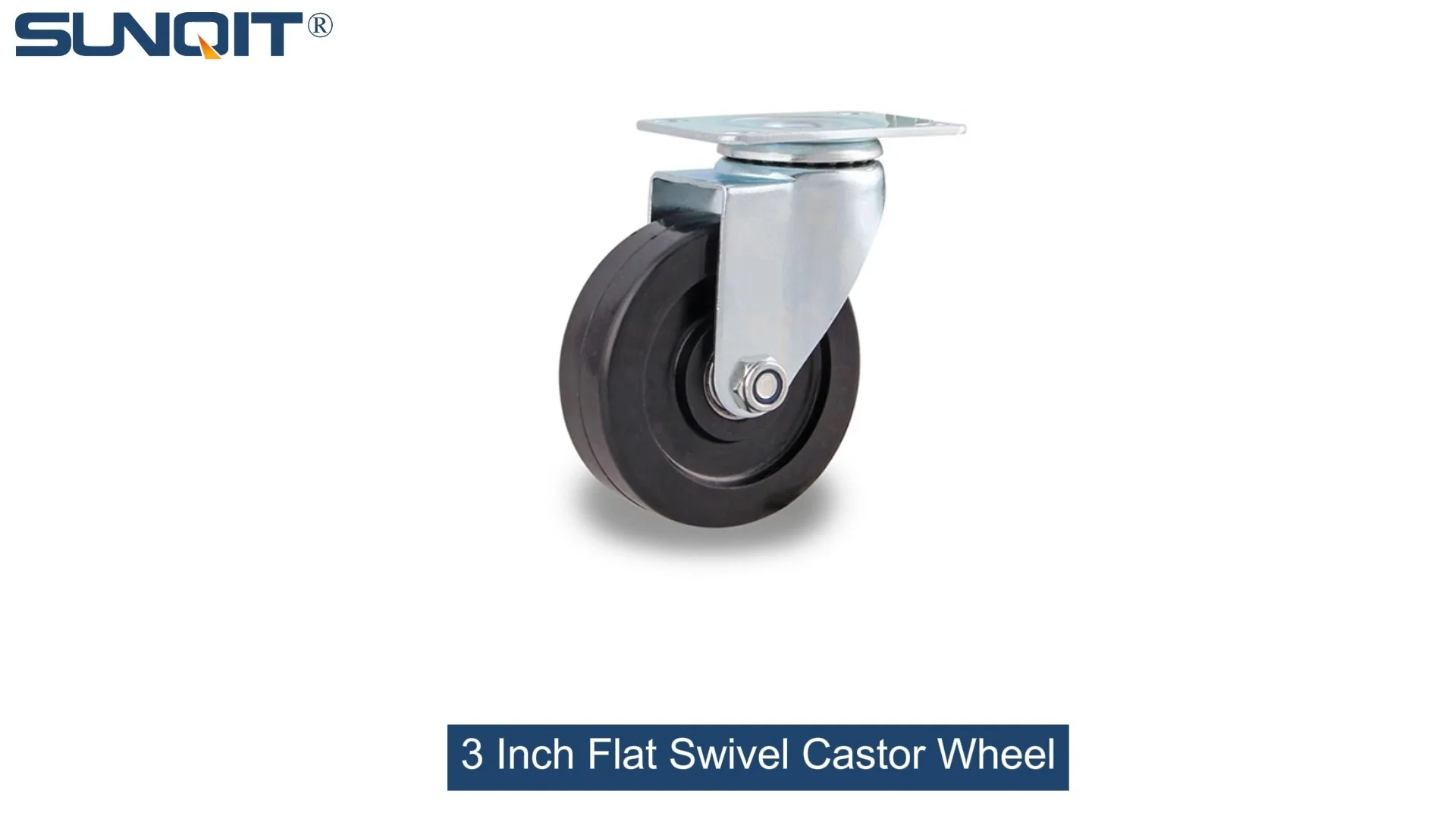
Ever had a cart that feels like it's fighting you every step of the way? Or a workbench that wobbles so much, you're scared to set your tools down? Chances are, the culprit isn't the cart or the workbench itself—it's the caster wheels. Flat swivel castor wheels might seem like small, parts, but getting their size right can make or break how smoothly your equipment moves, how safe your workspace is, and even how much time you spend fixing avoidable problems. Whether you're setting up a home workshop, kitting out a warehouse, or upgrading equipment in a factory, choosing the correct diameter, width, and mounting hole specifications isn't just a "nice-to-have"—it's essential. Let's dive into why sizing matters, how to measure like a pro, and what to watch out for so you can pick castor wheels that work with you, not against you.
Why Getting the Right Size Actually Matters (Spoiler: It's Not Just About "Fitting")
Let's start with the obvious: if a caster wheel is too big, it might not fit under your equipment. If it's too small, it might scrape the floor or get stuck on cracks. But there's more to it than just "will it fit?" The wrong size can turn a simple task—like moving a loaded shelf or repositioning a workbench—into a frustrating, time-consuming chore. Worse, it can lead to safety risks, damaged floors, and even equipment failure. Let's break down the real-world consequences of sizing mistakes:
Scenario 1: A warehouse manager orders new caster wheel s for their inventory carts, picking 2-inch diameter wheels because they "looked right." A month later, workers are complaining about sore shoulders—pushing the carts over the warehouse's slightly uneven concrete feels like dragging a boulder. The small wheels can't roll over cracks and bumps efficiently, so each push requires extra force. Productivity drops, and turnover increases as workers grow frustrated.
Scenario 2: A hobbyist builds a workbench and skimps on caster accessories , choosing generic mounting holes that don't match the workbench's frame. The casters wobble, and during a busy weekend project, the bench shifts mid-cut, ruining the material. Luckily, no one gets hurt—but the project is delayed, and the bench now needs expensive repairs.
These aren't just horror stories—they're common issues that stem from overlooking caster wheel sizing. The right size, on the other hand, makes movement effortless, reduces strain, protects floors, and keeps equipment stable. It's the difference between a workspace that flows and one that fights you every step of the way.
Key Dimensions Explained: Diameter, Width, and Mounting Holes
When it comes to flat swivel castor wheels, three dimensions reign supreme: diameter, width, and mounting hole specifications. Let's unpack each one, why it matters, and how it affects performance.
Diameter: The "Rollability" Factor
Wheel diameter is the measurement from the top of the wheel to the bottom (not including the bearing or hub). It's the single biggest factor in how easily a caster rolls. Think of it like this: a larger wheel acts like a bigger lever—it can roll over obstacles (like cracks, cords, or uneven floors) with less effort. A small wheel, by contrast, has to "climb" over every bump, which requires more force. For example, a 5-inch diameter wheel will glide over a ½-inch floor crack, while a 2-inch wheel might get stuck or jar the load.
But bigger isn't always better. If you're working in tight spaces—like a small workshop where maneuverability is key—a wheel that's too large might make the caster's swivel radius too wide, making it hard to turn. And if your equipment has limited clearance (e.g., a low-profile workbench), a large wheel might stick out too far, scraping the floor or hitting walls. The sweet spot? Match the diameter to your environment: smooth, flat floors can handle smaller wheels (3-4 inches), while rough or uneven surfaces need larger ones (5 inches or more).
Width: Weight, Traction, and Floor Love
Wheel width is the measurement from one side of the wheel to the other (excluding any flanges or edges). It might seem less critical than diameter, but it plays a huge role in how well the caster handles weight and protects your floors. A narrow wheel (say, 1 inch wide) concentrates weight on a small area of the floor. That's fine for light loads, but if you're moving something heavy—a workbench loaded with tools, for example—the narrow wheel could leave indentations in soft floors (like wood or vinyl) or get stuck in cracks. On the flip side, a wide wheel (2-3 inches) spreads the weight out, reducing floor pressure and improving traction. It's why forklifts use wide tires—they need to carry heavy loads without sinking into concrete.
But again, balance is key. Wide wheels can be harder to maneuver on smooth floors (they have more contact area, which increases friction), and they might not fit through tight gaps. If you're working with delicate floors (like polished concrete or tile), a wider, softer wheel (made of rubber or polyurethane) will protect the surface better than a narrow, hard plastic one. For rough surfaces (like gravel or unfinished concrete), a wider wheel with a treaded design will grip better and reduce bouncing.
Mounting Holes: The "Hidden" Critical Spec
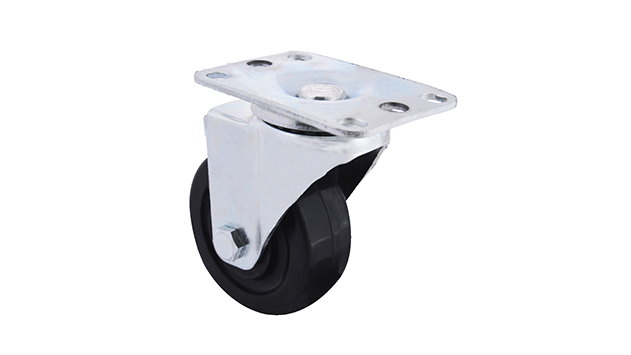
Here's where many people trip up: even if the diameter and width are perfect, if the mounting holes are wrong, the caster won't attach securely. Mounting holes are the holes in the caster's top plate (the flat metal part that bolts to your equipment), and they come in specific patterns: hole size (e.g., ¼-inch vs. ⅜-inch), number of holes (2, 4, or more), and spacing (e.g., 3 inches between holes horizontally, 2 inches vertically). If the holes don't line up with the bolts or brackets on your equipment, you'll end up with a loose caster that wobbles, rattles, or even falls off.
Imagine installing a flat swivel castor wheel with brake on a workbench, only to find the mounting holes are ½ inch too far apart. You might try to "make it work" by drilling new holes or using washers to fill the gaps—but now the caster isn't centered, and the brake doesn't engage properly. A week later, someone bumps the workbench, and the caster gives way, sending tools crashing to the floor. That's not just a hassle—that's a safety hazard.
Mounting holes are non-negotiable. They need to match your equipment's bolt pattern exactly. If you're replacing old casters, the easiest way is to measure the existing holes. If you're starting from scratch, check the equipment's manual (or the manufacturer) for the recommended bolt pattern. Don't guess—this is one spec where "close enough" can lead to disaster.
How to Measure Like a Pro: Step-by-Step Guides for Diameter, Width, and Mounting Holes
Measuring caster wheels isn't rocket science, but it does require a little precision. Grab a tape measure, a ruler, or (even better) a caliper if you have one, and let's walk through each dimension.
Measuring Diameter: From "Top to Bottom" (But Not the Way You Think)
The diameter is the distance from the top of the wheel to the bottom, but here's the catch: don't include the bearing or hub . The bearing is the metal part in the center that the wheel rotates around, and the hub is the raised area around it. If you measure from the top of the hub to the bottom of the hub, you'll get a smaller number than the actual wheel diameter. Instead, place your tape measure on the floor, set the wheel upright, and measure from the floor to the highest point of the wheel's tread (the part that touches the floor). That's the true diameter.
Example: If the wheel's tread goes from 0 inches (on the floor) to 4 inches at the top, the diameter is 4 inches. Ignore any parts of the caster that aren't part of the rolling surface.
Measuring Width: Skip the Flanges
Width is measured across the tread, not including any flanges (the raised edges on the sides of the wheel that keep it on track). Flanges are important for guiding the wheel, but they don't count toward the width. Place your ruler or caliper across the flat part of the tread, from one side to the other. If the wheel is curved (like a tire), measure the widest point of the tread. For example, a wheel with a 2-inch tread and ½-inch flanges on each side has a width of 2 inches, not 3 inches.
Pro tip: If the wheel is worn, measure the unworn part of the tread (near the center) for the most accurate width. Worn edges can make the wheel seem narrower than it actually is.
Measuring Mounting Holes: The "X-Y" Coordinate System
To measure mounting holes, you'll need to note three things: hole size, number of holes, and hole spacing. Let's start with hole size: use a caliper to measure the diameter of one of the holes (e.g., 5/16 inches). Next, count the number of holes—most casters have 4 holes (one in each corner of the top plate), but some have 2 or 6. Finally, measure the spacing: for 4-hole plates, measure the distance between the centers of two opposite holes horizontally (this is the "length" of the bolt pattern) and vertically (the "width"). For example, if the top plate is rectangular with holes 3 inches apart left-to-right and 2 inches apart top-to-bottom, the bolt pattern is "3x2 inches."
If you're replacing an old caster, the easiest way is to remove it and measure the existing top plate. If you can't remove it, use a piece of paper: place the paper over the caster's top plate, trace the holes with a pencil, then measure the traced pattern. This avoids guesswork and ensures you get the exact spacing.

Beyond the Basics: What Else to Consider When Sizing
Diameter, width, and mounting holes are the big three, but they're not the only factors. Let's talk about the "context" of your caster wheel—like how much weight it needs to carry, what kind of floor it will roll on, and whether you need it to lock in place. These factors will help you refine your size choices and pick a caster that's not just the right size, but the right fit for your needs.
Load Capacity: Don't Overestimate (or Underestimate)
Every caster wheel has a load capacity—the maximum weight it can support safely. This is usually listed in pounds per wheel, and it's critical to get right. If you have a workbench that weighs 200 pounds, and you're using 4 casters, each caster needs to support at least 50 pounds (200 ÷ 4). But here's the catch: dynamic load (when the wheel is moving) is different from static load (when it's standing still). Most manufacturers list dynamic load, which is lower than static load. To be safe, add 20-30% to your calculated weight to account for bumps, uneven loading, and wear over time. For example, if you need 50 pounds per wheel, choose a caster with a dynamic load capacity of 60-65 pounds.
Load capacity also ties into size: larger, wider wheels can handle more weight than smaller, narrower ones. A 5-inch diameter, 2-inch wide wheel might support 300 pounds, while a 3-inch diameter, 1-inch wide wheel might only support 100 pounds. If you're unsure, always size up on load capacity—it's better to have a caster that can handle more weight than you need than one that's stretched to its limit.
Floor Type: Your Wheels and Floors Should Be BFFs
The floor surface dictates what kind of wheel material and size you need. Let's break it down:
- Smooth, hard floors (concrete, tile, hardwood): Smaller diameters (3-4 inches) and narrow to medium widths work well here. Softer materials (rubber, polyurethane) protect floors from scratches. Avoid large, wide wheels—they'll create more friction and be harder to push.
- Rough or uneven floors (gravel, unfinished concrete, asphalt): Larger diameters (5+ inches) and wider widths are better. Harder materials (nylon, cast iron) resist wear and tear. Treaded wheels improve traction and reduce bouncing.
- Delicate floors (vinyl, laminate, polished concrete): Medium diameters (4-5 inches), wide widths, and soft materials (rubber, polyurethane) spread weight and avoid indentations. Swivel casters with locking brakes (like a flat swivel castor wheel with brake ) prevent unintended movement that could scratch floors.
Environment: Wet, Oily, or Corrosive? Choose Wisely
If your workspace is wet (like a kitchen or car wash), oily (like a mechanic's shop), or corrosive (like a chemical plant), you need wheels that can handle those conditions. Stainless steel or galvanized caster accessories (like bearings and top plates) resist rust. Wheels made of polyurethane or rubber stand up to oil and chemicals better than plastic or nylon. In wet environments, avoid metal wheels—they can slip on wet floors. Instead, opt for rubber wheels with a treaded design for better grip.

Quick Reference: Flat Swivel Castor Wheel Sizing Chart
Not sure where to start? Use this chart to match common applications with recommended diameter, width, and mounting hole specs. Remember, these are general guidelines—always measure your equipment and consider your specific environment!
| Application | Recommended Diameter | Recommended Width | Typical Mounting Hole Pattern | Best For |
|---|---|---|---|---|
| Home Workbench | 3-4 inches | 1-1.5 inches | 4 holes, 2x3 inches | Smooth garage floors, light to medium loads (100-300 lbs) |
| Warehouse Cart (Medium Load) | 4-5 inches | 1.5-2 inches | 4 holes, 3x4 inches | Concrete floors, loads 300-600 lbs |
| Heavy-Duty Shelving | 5-6 inches | 2-3 inches | 4-6 holes, 4x4 inches | Uneven floors, loads 600+ lbs |
| Medical Carts | 3-4 inches | 1-1.5 inches | 4 holes, 2x2 inches | Smooth hospital floors, sterile environments, light loads |
| Retail Display Racks | 4 inches | 1.5 inches | 4 holes, 2.5x3 inches | Tile or hardwood floors, frequent movement |
Common Mistakes to Avoid (Because No One Needs Extra Headaches)
Even with all this info, it's easy to slip up. Here are the most common mistakes people make when sizing flat swivel castor wheels—and how to avoid them:
- Guessing the diameter: "It looks like 4 inches" is not a measurement. Always use a tape measure or caliper. A ½-inch difference in diameter can change how the wheel rolls dramatically.
- Ignoring mounting hole spacing: "The holes are close enough" will come back to haunt you. Mismatched holes lead to loose casters and wobbling equipment.
- Underestimating load capacity: "I'll never put that much weight on it" is a risky bet. Equipment often gets loaded more than expected—play it safe and size up.
- Forgetting the environment: A rubber wheel that works great in a dry workshop will rot in a damp basement. Match the wheel material to your workspace conditions.
- Overlooking caster accessories : Brakes, bearings, and caster installation base s matter. A caster with a cheap bearing will seize up quickly, even if the size is perfect. Invest in quality accessories for longevity.
Final Thoughts: Sizing is a Process, Not a One-Time Decision
Choosing flat swivel castor wheels might feel overwhelming at first, but it's really about taking it step by step: measure diameter, width, and mounting holes; consider load, floor type, and environment; and avoid common mistakes. Remember, the goal isn't just to find a wheel that "fits"—it's to find one that makes your equipment easier to use, safer to operate, and longer-lasting. Whether you're replacing old wheels or starting from scratch, taking the time to get the size right will save you frustration, money, and headaches down the line.
And if you're ever unsure? Reach out to a supplier. A good caster wheel supplier can help you interpret measurements, recommend sizes based on your needs, and even send samples to test. After all, the best caster wheel is the one you never have to think about—because it just works.