- Company Articles
- Products and Technology
- Product knowledge
- Flat Swivel Castor Wheels for Custom Flexible Production Lines: Design Tips

Flat Swivel Castor Wheels for Custom Flexible Production Lines: Design Tips
Related Product
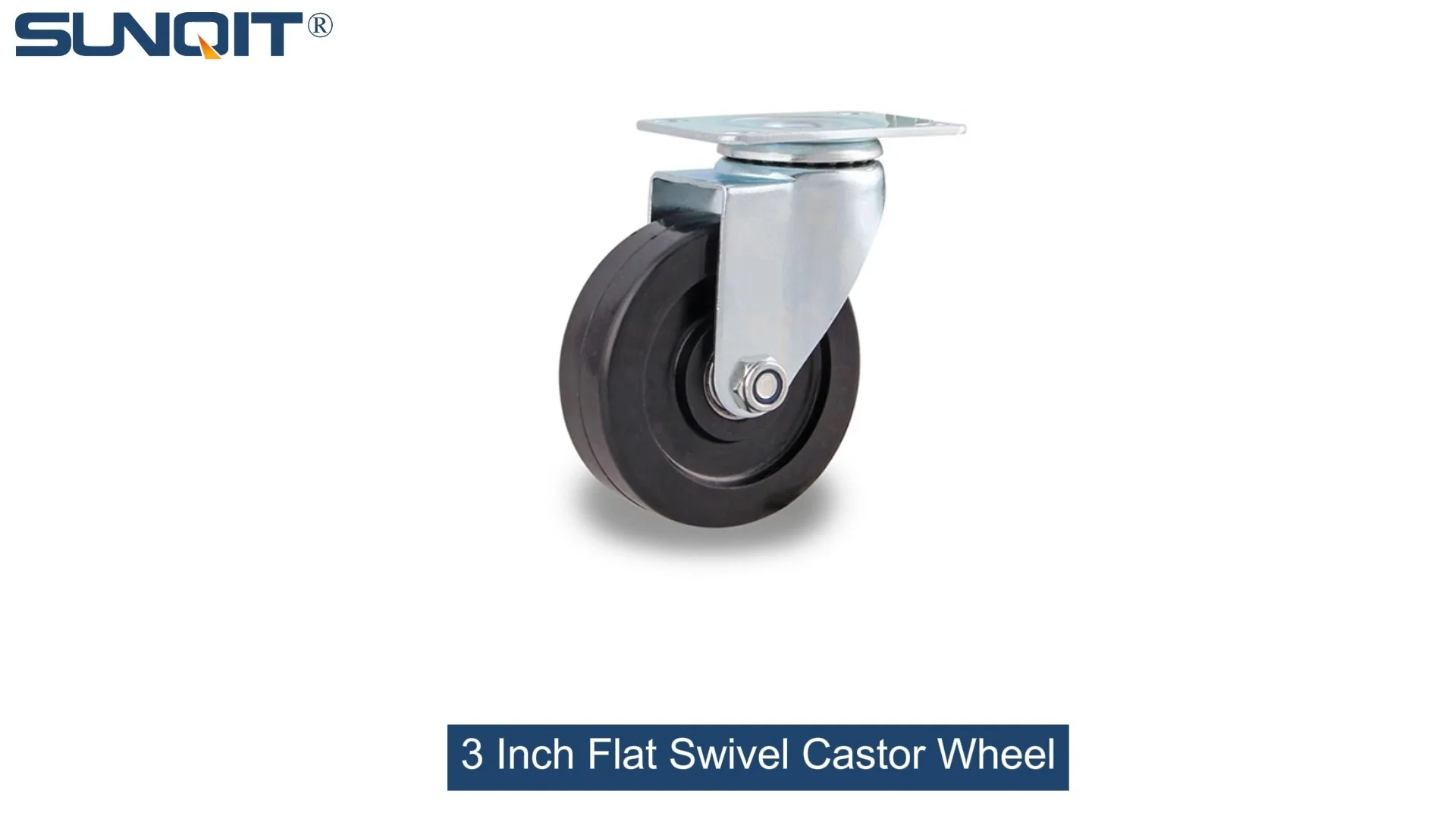
Flat Swivel Castor Wheel
Chair Casters Ball Bearing Wheels Rubber Base. Resistant to abrasion, impact and corrosion. Heavy payload can hold 70-90Kgs per pcs,which can make it works at a stable and smooth status.
The Shift to Flexible Production Lines: Why Every Component Counts
In today's manufacturing landscape, rigidity is the enemy of progress. As consumer demands shift faster than ever and product lifecycles shrink, production lines can no longer afford to be fixed, one-size-fits-all setups. Enter flexible production lines—dynamic environments where workstations, material racks, and assembly cells can be reconfigured in hours, not weeks. At the heart of this flexibility? Often, the smallest components: the wheels that let your equipment move.
Among these unsung heroes, flat swivel castor wheels stand out. Unlike rigid casters or bulky industrial wheels, these compact, 360-degree-rotating components turn static workbenches into mobile stations, transform fixed material racks into agile trolleys, and make it possible to adapt your floor layout on the fly. But choosing the right flat swivel castor wheels isn't just about picking "any wheel." It's about designing for your specific production needs—load, floor type, workflow, and long-term efficiency. In this guide, we'll walk through key design tips to ensure your flat swivel castor wheels enhance, not hinder, your custom flexible production line.
Understanding Flat Swivel Castor Wheels: Beyond the Basics
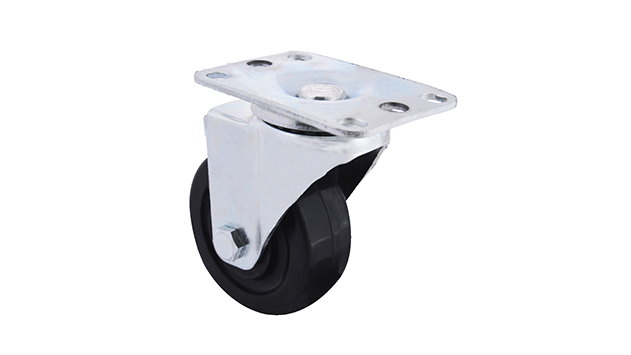
Before diving into design tips, let's clarify what makes flat swivel castor wheels unique. These wheels feature a flat mounting plate (hence "flat") that attaches directly to the bottom of equipment—think workbenches, turnover trolleys, or mobile material racks. The "swivel" aspect means the wheel assembly can rotate a full 360 degrees, allowing for smooth, multidirectional movement. Unlike fixed casters (which only roll forward/backward) or kingpinless designs (heavier-duty but less common in custom setups), flat swivel castors strike a balance between mobility, affordability, and ease of installation.
Most flat swivel castors come with options like brakes (critical for stability when in use), different wheel materials (rubber, polyurethane, nylon), and load ratings. For custom production lines, this versatility is key—you might need a lightweight castor for a small workbench and a heavy-duty version for a loaded turnover trolley. But to leverage this versatility, you need to design with intention.
Design Tip 1: Start with Load Capacity—Don't Guess, Calculate
The biggest mistake in castor selection? Underestimating load. A flat swivel castor wheel rated for 200 lbs might seem "strong enough" for a workbench, but if you regularly pile on tools, components, and a operator's weight, that 200 lbs can quickly spike to 300+ lbs. Overloading leads to premature wheel wear, swivel joint failure, or even equipment tipping—all of which disrupt production and create safety hazards.
So, how do you calculate the right load capacity? Follow these steps:
- Total Load: Add the weight of the equipment (e.g., a workbench weighs 100 lbs) + maximum materials/tools (e.g., 150 lbs) + operator weight (if they stand/sit on the equipment, e.g., 200 lbs). Total: 450 lbs.
- Number of Castors: Most equipment uses 4 castors (for stability). Divide total load by castors: 450 lbs / 4 = 112.5 lbs per castor.
- Safety Margin: Always add a 20-30% buffer. 112.5 lbs * 1.3 = 146.25 lbs. Choose a castor rated for at least 150 lbs.
For example, if you're designing a turnover trolley to carry heavy aluminum extrusion profiles, you'll need castors with higher load ratings than those for a lightweight workbench. Skimping here leads to frequent replacements and downtime—neither of which aligns with lean system principles of minimizing waste.
Wheel Material Matters Too
Load capacity isn't just about the castor frame—it's also about the wheel material. Polyurethane wheels, for instance, handle heavier loads than rubber but are gentler on concrete floors than nylon. Nylon is durable but noisy, making it better for warehouses than quiet assembly lines. Match the material to both load and environment, and you'll extend castor life significantly.

Design Tip 2: Floor Compatibility—Protect Surfaces, Ensure Smooth Movement
Your production floor is more than just a surface—it's a critical part of your workflow. Scratched epoxy floors, uneven concrete, or debris caught in wheels can slow movement, damage equipment, and even create trip hazards. Flat swivel castor wheels, when chosen correctly, can protect floors while ensuring smooth, effortless movement. Here's how:
Assess Your Floor Type
| Floor Type | Best Wheel Material | Why It Works |
|---|---|---|
| Epoxy-Coated Concrete (Common in Assembly Lines) | Polyurethane | Soft enough to avoid scratching, but durable for heavy loads. Reduces noise compared to nylon. |
| Unfinished Concrete (Warehouses, Storage Areas) | Nylon or Cast Iron | Resists abrasion from rough surfaces. Cast iron offers maximum durability for heavy loads. |
| Vinyl or Tile (Clean Rooms, Labs) | Rubber | Non-marking and gentle on soft surfaces. Provides good grip to prevent slipping. |
Account for Floor Debris and Obstacles
Even with the right material, small debris—like aluminum profile accessories or metal shavings—can jam swivel castors. Look for wheels with sealed bearings to prevent debris buildup, and consider larger wheel diameters (4-5 inches) for floors with cracks or unevenness. A larger wheel rolls over obstacles more easily than a smaller one, reducing strain on the swivel joint.

Design Tip 3: Prioritize Braking Systems—Mobility + Stability = Safety
What good is a mobile workbench if it rolls away while an operator is assembling components? That's where brakes come in. Flat swivel castor wheels with brakes—often called "flat swivel castor wheel with brake"—are non-negotiable for custom production lines. These brakes lock either the wheel (preventing rolling) or the swivel joint (preventing rotation), or both (total lock). For most applications, a total lock is ideal: it keeps the equipment stationary and aligned, even on slight inclines.
When designing, ask: When will the equipment need to be stationary? A workbench used for precision assembly needs a reliable brake to avoid movement during tasks. A turnover trolley, on the other hand, might only need brakes when loading/unloading. Overlooking brakes leads to safety risks (slips, falls) and inefficiency (operators wasting time chasing rolling equipment).
Pro tip: Test brake ergonomics. A brake that's hard to engage/disengage will get ignored by operators, defeating the purpose. Look for castors with easy-to-reach, foot-operated brakes—no bending required.
Design Tip 4: Integrate with Lean Systems—Minimize Waste, Maximize Flow
Flexible production lines and lean systems go hand in hand. Lean principles focus on eliminating waste—whether it's time, materials, or movement. Flat swivel castor wheels, when designed correctly, reduce two major wastes: motion waste (unnecessary movement of people/equipment) and waiting waste (delays from fixed setups).
For example, a mobile workbench with flat swivel castors can be wheeled directly to a material rack, eliminating the need for operators to carry components across the floor (motion waste). A turnover trolley with castors can deliver parts to the assembly line exactly when needed (just-in-time production), reducing waiting waste. Even small adjustments—like adding castors to a static aluminum profile rack—can cut down on time spent searching for tools or materials.
Caster Accessories: The Unsung Lean Tools
Don't overlook caster accessories—small add-ons that enhance lean integration. For example: caster installation bases ensure castors attach securely to equipment, preventing wobbling (which causes inefficiency). Brake extensions make brakes easier to reach, encouraging operators to use them (reducing accidents and rework). Even floor protectors (rubber pads that attach to castor bases) prevent scratches, reducing maintenance costs over time.
When designing, think: How can this castor setup reduce one more step in the workflow? The answer often lies in pairing the right castor with the right accessory.
Case Study: From Rigid to Agile—A Small Manufacturer's Success
Let's put these tips into context with a real-world example. A small electronics manufacturer specialized in assembling ESD workstations (static-safe workbenches for sensitive components). Their old setup had fixed workbenches bolted to the floor, and materials were stored on stationary racks 50 feet away. Operators spent 20% of their day walking to fetch parts—a classic case of motion waste.
They redesigned with flat swivel castor wheels: each workbench got 4 polyurethane flat swivel castors with total-lock brakes (rated for 250 lbs each, accounting for the workbench, tools, and components). They added castors to their material racks too, turning them into mobile turnover trolleys. Within a month, walk time dropped by 75%, and assembly output increased by 15%. By choosing castors that matched their epoxy floor (polyurethane) and integrating brakes for stability, they created a leaner, more adaptable line—all with a focus on the humble castor wheel.
Design Tip 5: Plan for Maintenance—Extend Lifespan, Reduce Downtime
Even the best-designed flat swivel castors need maintenance. Neglecting this leads to seized swivel joints, worn brakes, or wobbly wheels—all of which disrupt production. Lean systems prioritize preventive maintenance, and castors are no exception. Here's how to design for easy upkeep:
- Choose Castors with Grease Fittings: Swivel joints need lubrication to rotate smoothly. Look for castors with accessible grease fittings—no need for special tools.
- Opt for Replaceable Wheels: Instead of replacing the entire castor when the wheel wears out, choose designs where wheels can be swapped individually. This cuts replacement costs.
- Schedule Regular Inspections: Add castor checks to your lean maintenance checklist. Look for loose bolts, debris in wheels, or worn brake pads—catch issues early.
Remember: A castor that's easy to maintain is one that stays in service longer, supporting your goal of a continuous, waste-free production line.
Conclusion: Your Production Line is Only as Flexible as Its Components
Flat swivel castor wheels might seem like minor components, but they're the backbone of a flexible production line. By designing with load capacity, floor compatibility, braking, lean integration, and maintenance in mind, you transform static equipment into agile tools that adapt to your needs. Whether you're building custom workbenches, mobile material racks, or turnover trolleys, the right castors turn "fixed" into "fluid"—and that's where true production efficiency lies.
So, the next time you design a custom setup, don't overlook the wheels. They're not just moving your equipment—they're moving your business forward.