- Company Articles
- Products and Technology
- Product knowledge
- Flat Swivel Castor Wheels for Material Handling Equipment: Key Specs to Check

Flat Swivel Castor Wheels for Material Handling Equipment: Key Specs to Check
Related Product
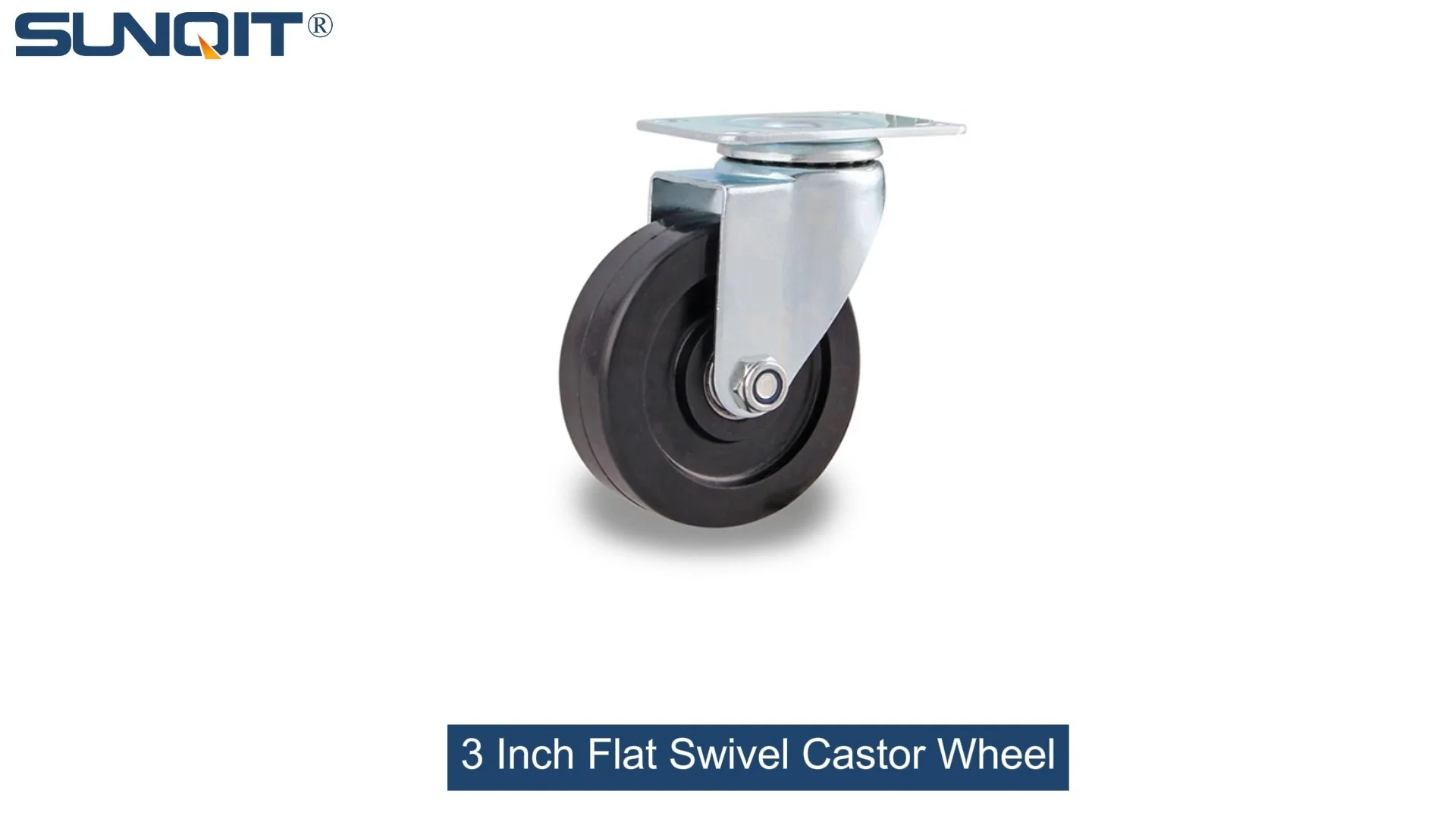
Flat Swivel Castor Wheel
Chair Casters Ball Bearing Wheels Rubber Base. Resistant to abrasion, impact and corrosion. Heavy payload can hold 70-90Kgs per pcs,which can make it works at a stable and smooth status.
Introduction: The Unsung Heroes of Material Handling
Walk into any busy warehouse, factory floor, or distribution center, and you'll quickly notice a common thread: movement. Pallets glide across the floor, bins are transported from station to station, and tools and materials follow workers as they move from task to task. Behind all this seamless motion lies a component so it's often overlooked—until it fails: the caster wheel. Specifically, flat swivel castor wheels, which are the backbone of equipment like turnover trolleys, workbenches, and material racks, play a critical role in keeping operations running smoothly.
Think about it: a poorly chosen castor wheel can turn a simple task into a frustrating ordeal. A trolley that wobbles under load, a workbench that sticks when you try to reposition it, or a rack that leaves scuff marks on the floor—these aren't just minor annoyances. They slow down workflows, increase the risk of workplace injuries, and even damage valuable equipment or products. On the flip side, the right flat swivel castor wheel can transform material handling, making it easier to maneuver heavy loads, adapt to changing workspace needs, and maintain a safe, efficient environment.
But with so many options on the market—different sizes, materials, and designs—how do you choose the right flat swivel castor wheel for your material handling equipment? It all comes down to understanding the key specifications that matter. In this article, we'll break down the critical specs to check, why they matter, and how they impact real-world performance. Whether you're outfitting a new turnover trolley and rack system or replacing worn-out castors on existing equipment, this guide will help you make an informed decision that keeps your operations moving forward.
Understanding Flat Swivel Castor Wheels: What Sets Them Apart?
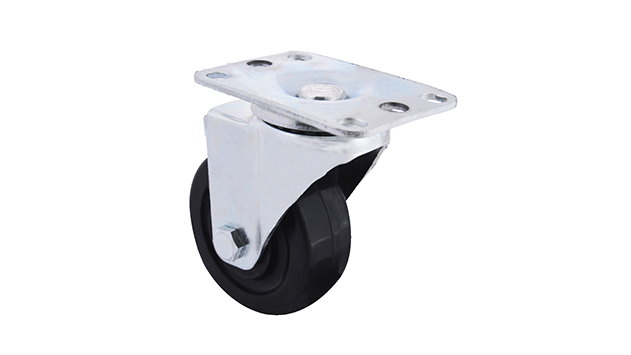
Before diving into specs, let's clarify what makes a flat swivel castor wheel unique. Unlike fixed castors, which only roll forward and backward, swivel castors can rotate 360 degrees, allowing for easy maneuverability in tight spaces. The "flat" in their name typically refers to the mounting plate—a flat, rectangular plate that attaches to the bottom of equipment like trolleys, workbenches, or racks. This design provides stability and a secure connection, making flat swivel castors ideal for equipment that needs to move in multiple directions without compromising load support.
Flat swivel castor wheels are everywhere in material handling. They're on the bottom of turnover trolleys that transport parts between assembly lines, on mobile workbenches that adjust to worker heights, and on material racks that need to shift to make space for new inventory. Their versatility and maneuverability make them a go-to choice for dynamic work environments where flexibility is key. But not all flat swivel castors are created equal. To ensure they perform as needed, you'll need to dig into the details of their specifications.
Key Spec #1: Load Capacity—Don't Underestimate the Weight
Static vs. Dynamic Load: What's the Difference?
The first spec to check—and perhaps the most critical—is load capacity. This refers to the maximum weight a castor wheel can safely support. But here's the catch: load capacity isn't a one-size-fits-all number. You'll often see two values listed: static load and dynamic load.
Static load
is the weight the castor can support when it's stationary. Think of a loaded turnover trolley parked in a corner—this is static load in action.
Dynamic load
, on the other hand, is the weight the castor can handle while in motion. This is the more important number for material handling, as most equipment is rarely stationary for long. When moving a load, forces like inertia and friction add stress to the castor, so dynamic load capacity is typically lower than static load capacity.
Real-World Example:
Suppose you're looking for castors for a turnover trolley that carries 500 lbs of parts. If a castor lists a static load of 600 lbs and a dynamic load of 400 lbs, it's not suitable—even though the static load exceeds your needs, the dynamic load falls short. Always prioritize dynamic load capacity for moving equipment.
Calculating Total Load per Castor
Another common mistake is forgetting to account for the number of castors on the equipment. Most material handling tools, like trolleys or racks, use 4 castors (one at each corner). To find the required load capacity per castor, divide the total weight of the equipment plus its maximum load by the number of castors. Then, add a safety margin—typically 20-30%—to account for uneven weight distribution or sudden impacts (like hitting a floor crack).
For example, a turnover trolley weighs 100 lbs empty and will carry up to 400 lbs of materials, totaling 500 lbs. With 4 castors, each castor needs to support at least 125 lbs (500 lbs ÷ 4). Adding a 30% safety margin brings that to 162.5 lbs per castor. Always round up to the nearest available load capacity to ensure safety.

Key Spec #2: Wheel Material—Matching the Wheel to the Environment
The material of the caster wheel has a huge impact on performance, including grip, noise level, floor protection, and durability. Choosing the right wheel material depends on your workspace conditions, the type of floor, and the materials being transported. Let's break down the most common options and their best-use scenarios:
| Wheel Material | Best For | Pros | Cons | Typical Dynamic Load Range (per castor) |
|---|---|---|---|---|
| Rubber | Smooth floors (concrete, tile), noise-sensitive areas | Excellent grip, shock absorption, quiet operation, floor-friendly | Less durable on rough surfaces, may degrade in oil or chemicals | 100–500 lbs |
| Polyurethane (PU) | Most indoor floors, heavy loads, general use | Durable, good grip, floor protection, resistant to oils and chemicals | Heavier than rubber, may leave marks on very smooth floors | 200–1,500 lbs |
| Nylon | Rough floors (asphalt, gravel), high temperatures | High load capacity, chemical-resistant, low rolling resistance | Hard, noisy, may scratch soft floors (wood, vinyl) | 500–2,500 lbs |
| Steel | Outdoor use, extremely heavy loads, industrial settings | Maximum durability, highest load capacity | Very noisy, damages floors, prone to rust without coating | 1,000–10,000+ lbs |
Special Considerations: ESD and Clean Rooms
In specialized environments like electronics manufacturing or pharmaceutical labs, you may need electrostatic discharge (ESD) safe castor wheels. These are typically made with conductive materials that dissipate static electricity, preventing damage to sensitive components. Similarly, clean rooms require non-marking, low-particulate wheels—often made of polyurethane or rubber—to maintain sterility. Always check if your workspace has unique requirements before selecting wheel material.

Key Spec #3: Swivel Mechanism—Smooth Rotation Matters
The swivel mechanism is what allows a flat swivel castor wheel to rotate 360 degrees, and its quality directly affects maneuverability. A poor swivel mechanism can make equipment hard to push, cause uneven wear on wheels, or even lock up under load. Here's what to look for:
Bearings: Ball vs. Roller
Most swivel castors use either ball bearings or roller bearings in their swivel head. Ball bearings are common in light to medium-duty applications—they're affordable and provide smooth rotation for loads up to around 500 lbs. Roller bearings, which use cylindrical rollers instead of balls, distribute weight more evenly, making them better for heavy loads (1,000 lbs and above). They also tend to be more durable and require less maintenance over time.
Swivel Radius
The swivel radius is the distance from the center of the swivel pin to the edge of the wheel. A smaller swivel radius means the castor can rotate in a tighter circle, making the equipment more maneuverable in narrow spaces—critical for warehouses with tight aisles or assembly lines with limited room. For example, a turnover trolley used in a cramped storage area would benefit from castors with a small swivel radius to navigate around obstacles.
Pro Tip:
Test the swivel action before purchasing. A good swivel mechanism should rotate smoothly with minimal effort, even when under load. If it feels stiff or jerky during a demo, it will only get worse over time as the bearings wear.
Key Spec #4: Brake Type—Stopping Power When You Need It
For many material handling applications, brakes are non-negotiable. A trolley that rolls away on a slight incline or a workbench that shifts during use can lead to accidents or damaged products. Flat swivel castor wheels often come with built-in brakes, and the type of brake you choose depends on how you'll use the equipment.
Total Lock vs. Directional Lock Brakes
Total lock brakes
(also called "dual lock" or "wheel and swivel lock") lock both the wheel and the swivel mechanism, preventing any movement. This is ideal for equipment that needs to stay completely stationary, like a workbench during assembly or a material rack loaded with fragile items.
Directional lock brakes
only lock the wheel, keeping it from rolling but allowing the swivel to rotate. This is useful for equipment that needs to stay in place but might need to pivot, like a trolley that's temporarily parked but needs to face a different direction when reloaded.
Foot-Operated vs. Hand-Operated Brakes
Most flat swivel castor brakes are foot-operated, which is convenient for workers who have their hands full with materials. Look for brakes with large, easy-to-reach pedals that can be engaged or released with minimal force—this reduces fatigue and ensures brakes are actually used. Hand-operated brakes are less common but may be necessary in applications where foot access is limited (e.g., very low-profile equipment).
Key Spec #5: Wheel Diameter and Tread Width—Balancing Speed and Stability
Wheel Diameter: The Bigger, the Easier to Roll
Wheel diameter (measured across the wheel, from one edge to the other) affects how easily the castor rolls, especially over uneven surfaces or obstacles like floor seams or small debris. Larger wheels (4–6 inches) roll more smoothly over rough floors and require less force to move, making them ideal for heavy loads or outdoor use. Smaller wheels (2–3 inches) are better for light loads and tight spaces, as they have a smaller turning radius.
For example, a turnover trolley used to transport heavy boxes across a warehouse with concrete floors would benefit from 5-inch wheels, which can glide over cracks and expansion joints. A small parts trolley used in a retail stockroom, however, might use 3-inch wheels to navigate narrow aisles.
Tread Width: Spreading the Load
Tread width is the width of the wheel's contact surface with the floor. A wider tread distributes the load over a larger area, reducing pressure on the floor and lowering the risk of indentations or damage. This is especially important for soft floors like vinyl or wood, where narrow treads can leave marks. Wider treads also provide better stability, making them a good choice for tall equipment or loads that are top-heavy.
Key Spec #6: Environmental Resistance—Protecting Against the Elements
Material handling doesn't always happen in clean, climate-controlled environments. Warehouses might be hot and humid, food processing facilities use water and chemicals for cleaning, and outdoor loading docks expose equipment to rain, snow, and UV rays. Your flat swivel castor wheels need to stand up to these conditions to avoid premature failure.
Corrosion Resistance
In damp or wet environments (like cold storage facilities or outdoor yards), look for castors with corrosion-resistant components. Stainless steel frames and zinc-plated mounting plates are good options, as they resist rust. For even harsher conditions (e.g., chemical plants), consider plastic or composite wheels that won't react with corrosive substances.
Temperature Tolerance
Extreme temperatures can cause wheel materials to harden, crack, or soften. For example, rubber wheels can become brittle in freezing temperatures, while polyurethane may melt in high-heat environments like foundries. Check the manufacturer's specs for temperature ranges—most wheels will list a minimum and maximum operating temperature. For cold storage, look for wheels rated to -40°F; for high-heat areas, aim for wheels that can handle 200°F or more.
Key Spec #7: Compatibility with Equipment—Fitting Castors to Your Tools
Even the best castor wheel won't perform well if it doesn't fit your equipment. This is where understanding mounting types and caster accessories comes into play. The most common mounting type for flat swivel castors is the
plate mount
—a flat metal plate with pre-drilled holes that bolts to the bottom of the equipment. The size of the plate (typically measured in inches, e.g., 4x4 inches) must match the mounting area on your trolley, rack, or workbench.
If your equipment has existing mounting holes, measure the distance between the holes (center-to-center) to ensure the castor's plate will align. For custom setups, you may need caster accessories like mounting adapters or extension plates to bridge the gap between the equipment and the castor. Don't overlook this step—misaligned mounting can cause the castor to wobble, reducing load capacity and lifespan.
For example, a standard turnover trolley and rack might use 4x4 inch mounting plates, while a smaller parts trolley could require a 3x3 inch plate. Always check the equipment's manual or measure the mounting surface to avoid compatibility issues.
Key Spec #8: Maintenance Requirements—Keeping Castors Rolling Smoothly
Even the highest-quality flat swivel castor wheels need regular maintenance to perform at their best. Before purchasing, consider how easy the castors are to maintain—this will save time and money in the long run. Look for features like:
- Grease fittings: Castors with grease fittings allow you to lubricate the swivel bearings and wheel axles, reducing friction and wear.
- Removable wheels: Wheels that can be easily removed (without special tools) make it simple to replace worn treads or bearings.
- Sealed bearings: For dirty or dusty environments, sealed bearings prevent debris from entering and causing jams.
Maintenance Checklist:
To extend the life of your flat swivel castors, schedule monthly inspections. Check for loose bolts, worn treads, stiff swivel mechanisms, and damaged brakes. Clean wheels regularly to remove debris that can cause uneven wear, and lubricate bearings every 3–6 months (more often in high-use or dirty environments).
Conclusion: Investing in the Right Castor for Long-Term Efficiency
Flat swivel castor wheels may seem like small components, but their impact on material handling efficiency is huge. By taking the time to check key specs—load capacity, wheel material, swivel mechanism, brake type, wheel diameter, environmental resistance, compatibility, and maintenance—you can avoid common pitfalls like equipment downtime, workplace injuries, and premature replacement costs.
Remember, the goal isn't just to buy a castor wheel—it's to invest in a solution that keeps your operations moving, your workers safe, and your bottom line healthy. Whether you're outfitting a new turnover trolley and rack system or upgrading existing equipment, prioritizing these specs will ensure you choose flat swivel castor wheels that meet your needs today and stand the test of time tomorrow. After all, in material handling, the right wheels don't just roll—they roll with purpose.