- Company Articles
- Products and Technology
- Product knowledge
- Flat Swivel Castor Wheels for Mobile Workstations in 3C Assembly

Flat Swivel Castor Wheels for Mobile Workstations in 3C Assembly
Related Product
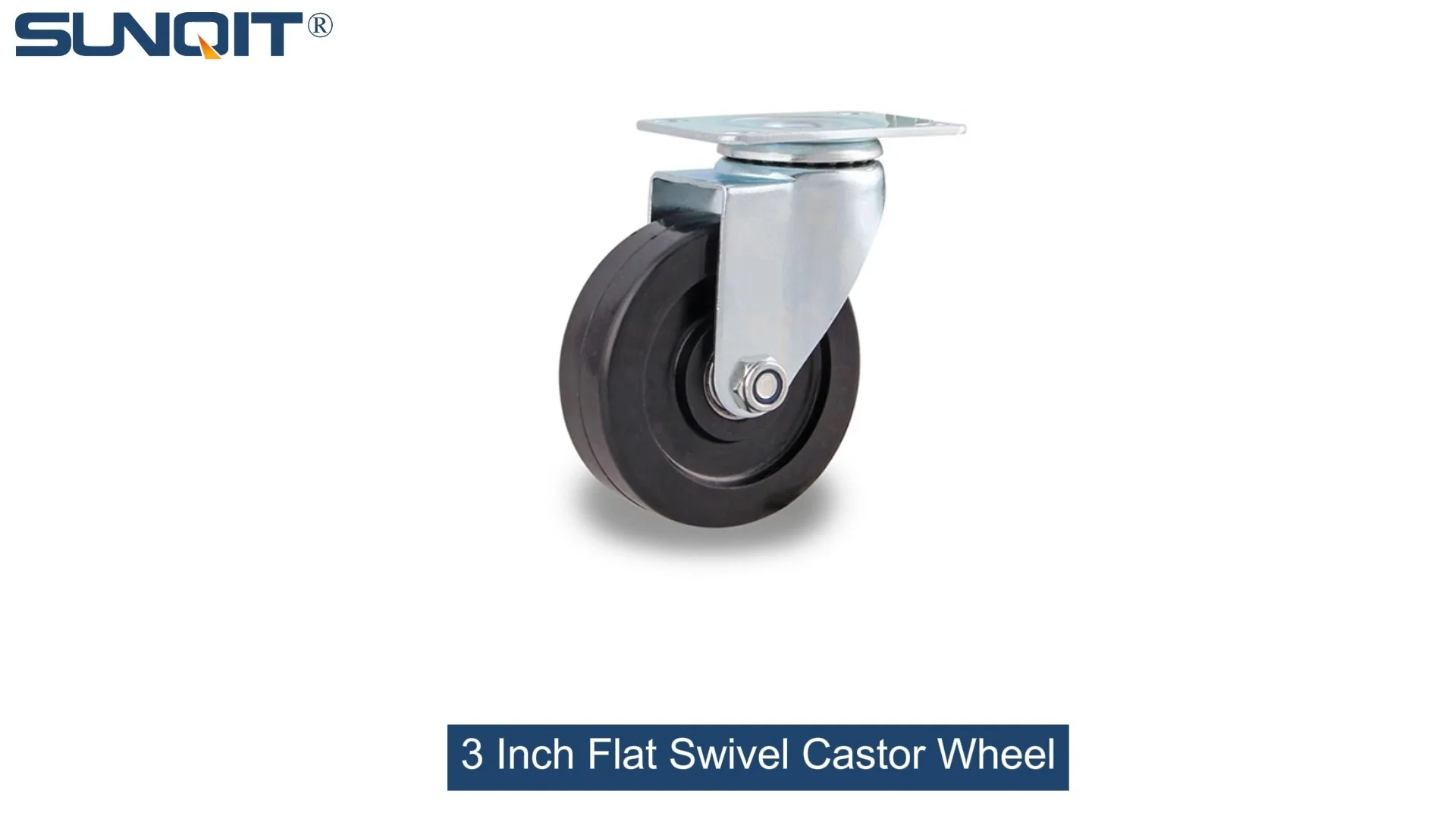
Flat Swivel Castor Wheel
Chair Casters Ball Bearing Wheels Rubber Base. Resistant to abrasion, impact and corrosion. Heavy payload can hold 70-90Kgs per pcs,which can make it works at a stable and smooth status.
In the fast-paced world of 3C (Computer, Communication, Consumer Electronics) assembly, every second counts. Factories churn out smartphones, laptops, and wearables at breakneck speeds, where production lines must adapt to new models, tighter tolerances, and ever-changing customer demands. At the heart of this adaptability lies a seemingly small but critical component: the mobile workstation. These versatile units—whether holding circuit boards, tools, or (semi-finished products)—need to move with precision, stay stable when needed, and keep up with the rhythm of assembly line workers. And what makes or breaks a mobile workstation? Its wheels. Today, we're diving into one of the most indispensable innovations in this space: flat swivel castor wheels with brake. More than just "wheels," these engineering marvels are the unsung heroes that bridge mobility, safety, and efficiency in 3C assembly floors.
The Backbone of Mobile Workstations: Why Castors Are Non-Negotiable
Walk into any modern 3C assembly plant, and you'll notice a common theme: flexibility. Unlike traditional manufacturing setups with fixed conveyor belts and rigid workbenches, today's facilities thrive on modularity. A single line might switch from assembling smartwatch screens in the morning to tablet motherboards in the afternoon. This agility demands workstations that can be repositioned, reconfigured, and redeployed in minutes—not hours. Enter mobile workstations: lightweight, customizable units built on frames of aluminum profile (a material prized for its strength-to-weight ratio and modularity) that glide across factory floors. But without the right castors, even the sturdiest aluminum profile workstation becomes a liability—clunky, unstable, or worse, a safety hazard.
Castors are the unsung connectors between the workstation and the floor, translating design intent into real-world functionality. In 3C assembly, where components are often small, delicate, or sensitive to static (think microchips or LCD panels), the margin for error is razor-thin. A workstation that drifts mid-task could ruin a batch of circuit boards; one that's hard to maneuver might slow down a worker racing to meet a production quota. This is where flat swivel castor wheels with brake step in. They're not just "wheels with a lock"—they're precision tools engineered to balance mobility and stability, two traits that often feel at odds in manufacturing environments.
Flat Swivel Castor Wheels with Brake: Engineering for Precision and Safety
Design Features That Redefine Mobility
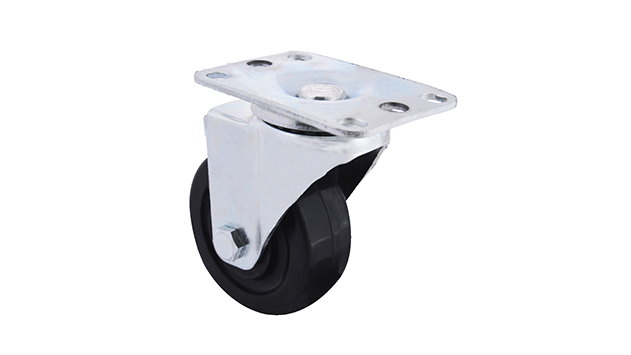
Flat swivel castor wheels with brake are designed with the unique challenges of 3C assembly in mind. Let's start with the "flat" in their name: unlike bulky industrial castors with protruding axles, these wheels have a low-profile design, keeping the workstation closer to the ground. This lowers the center of gravity, reducing the risk of tipping—critical when workstations are loaded with heavy tools or stacks of components. The "swivel" feature is equally important: a 360-degree rotating head allows the wheels to turn smoothly, even in tight spaces. In a factory where workstations might need to navigate around conveyor belts, robotic arms, or other equipment, this maneuverability is a game-changer. Imagine a technician needing to shift a workstation from a soldering station to a quality inspection area just a few feet away; with swivel castors, the turn is seamless, no backtracking required.
But what truly sets these castors apart is the integrated brake system. Unlike basic swivel wheels that rely on external chocks or flimsy locks, the brake here is built into the wheel assembly, accessible via a simple foot pedal. Press down, and the workstation locks in place—no more wobbling during precision tasks like placing surface-mount components or calibrating sensors. Release the pedal, and it glides again. This dual functionality—mobility on demand, stability when needed—is exactly what 3C assembly lines crave.
The Brake Mechanism: How It Keeps Workstations Steady
Let's take a closer look at how the brake works. Most flat swivel castor wheels with brake use a two-part locking system: one that stops the wheel from rotating and another that locks the swivel head. When the brake pedal is engaged, a metal plate presses against the wheel's tread, creating friction to halt movement. Simultaneously, a secondary lock prevents the swivel head from turning, ensuring the workstation doesn't shift sideways even if bumped. This "double lock" is crucial in high-traffic areas where carts, forklifts, or workers might accidentally brush against the workstation. In 3C assembly, where a single misalignment can lead to product defects, this level of stability isn't just convenient—it's essential.
The pedal itself is designed for ease of use. Positioned at the base of the wheel, it's large enough to engage with work boots or safety shoes, requiring minimal force. This matters during long shifts: a technician shouldn't have to bend down or struggle to lock/unlock the workstation. Over time, this small detail reduces fatigue and keeps focus where it belongs—on the assembly task.
Material Choices: Durability Meets Workspace Needs
3C assembly floors are tough environments. Spills of cleaning solvents, exposure to dust from circuit board drilling, and constant foot traffic mean castors must stand up to wear and tear. That's why manufacturers of these castors prioritize durable materials. The wheel tread, for example, is often made of polyurethane—a synthetic material that balances grip, noise reduction, and resistance to abrasion. Polyurethane wheels glide quietly (important in open-plan factories), won't mark floors (critical for maintaining cleanroom standards), and hold up well against oils and chemicals common in electronics manufacturing.
The mounting plate and swivel head, meanwhile, are typically constructed from galvanized steel or aluminum alloy. Galvanized steel offers superior strength for heavy loads (some models handle up to 300kg per wheel), while aluminum is lighter, making the overall workstation easier to push. For facilities with strict corrosion resistance requirements—such as those using water-based cleaning agents—stainless steel components are also available. These material choices ensure the castors don't just last months but years, even under daily use.
Integrating with Lean Systems: Streamlining Workflow from Station to Station
In 3C manufacturing, lean systems are more than a buzzword—they're a way of life. The goal? Eliminate waste, optimize flow, and empower workers to drive continuous improvement. Mobile workstations with flat swivel castor wheels with brake align perfectly with this philosophy, acting as a bridge between static infrastructure and dynamic workflow needs.
Consider the principle of "5S" (Sort, Set in Order, Shine, Standardize, Sustain), a cornerstone of lean systems. "Set in Order" demands that tools and materials are kept at the point of use, reducing unnecessary movement. With mobile workstations on castors, a technician can roll their entire toolkit—screwdrivers, tweezers, testing equipment—right to the assembly line, eliminating trips to a central tool crib. When the line switches to a new product, the workstation moves with the task, ensuring tools stay organized and accessible. This cuts down on "motion waste," one of the seven deadly wastes in lean, and frees up workers to focus on value-adding tasks.
Another lean principle is "heijunka" (leveling production), which aims to smooth out workflow peaks and valleys. In 3C assembly, this might mean adjusting the number of workstations at a given stage based on demand. For example, during a smartphone launch, the packaging station might need extra help. With mobile workstations on flat swivel castors, supervisors can quickly reallocate units from less busy areas, rebalancing the line in minutes. Without this mobility, rearranging workstations would require disassembly, heavy lifting, and downtime—all of which contradict lean's focus on efficiency.
The compatibility of these castors with aluminum profile workbenches further amplifies their lean credentials. Aluminum profiles are modular by design: they connect with simple brackets and T-slot accessories, allowing workstations to be customized with shelves, tool hooks, or ESD (Electrostatic Discharge) mats. When paired with flat swivel castors, this modularity becomes even more powerful. Need a taller workstation for a new assembly jig? Swap out the profile legs. Add a second shelf for extra components? Clip it on. And when the workstation is no longer needed, it can be disassembled and repurposed—no waste, no excess inventory. This circular approach to workstation design is exactly what modern lean systems strive for.

From Workbench to Flow Rack: Real-World Applications in 3C Assembly
To understand the impact of flat swivel castor wheels with brake, let's look at two common 3C assembly tools: the workbench and the flow rack. Both rely on mobility to function optimally, and both are transformed by these castors.
Workbench E: A Mobile Hub for Precision Tasks
Workbench E is a staple in 3C assembly lines—a single-deck, lightweight unit designed for tasks like circuit board testing, component sorting, or small-part assembly. Traditionally, these workbenches are fixed to the floor, limiting their utility to a single spot. But when equipped with flat swivel castors with brake, Workbench E becomes a mobile command center. Imagine a technician using Workbench E to inspect incoming LCD screens. In the morning, it's positioned near the receiving dock for quick access to new shipments. By afternoon, it's rolled to the quality control area, where screens are paired with device frames. In the evening, it's moved to a storage bay to free up floor space for night shift cleaning. All without a single tool or heavy lifting.
The ESD-safe variant of Workbench E—critical for handling sensitive electronics—benefits especially from these castors. ESD workbenches require grounding to prevent static electricity from damaging components. With fixed workbenches, grounding cables are often permanently attached, limiting movement. Mobile Workbench E with castors, however, uses retractable grounding cords that can be plugged in at any station. The brake ensures the bench stays grounded and stable during testing, while the castors let it follow the workflow. It's a small change that eliminates the need for multiple fixed ESD workbenches, reducing costs and clutter.
Flow Rack B: Keeping Materials in Motion
Flow Rack B is another 3C assembly workhorse—a three-row, three-floor rack designed to hold bins of components, from screws and connectors to batteries and cables. The goal? To keep materials flowing to the assembly line via gravity-fed roller tracks, ensuring workers never have to reach far for what they need. But even the best flow rack is useless if it's not positioned correctly relative to the line. Enter flat swivel castor wheels with brake.
Mount Flow Rack B on these castors, and suddenly it can be aligned with any section of the assembly line. Producing smartphones today? Position it next to the motherboard installation station. Switching to tablets tomorrow? Roll it over to the display mounting area. The roller tracks ensure materials still slide smoothly to the worker, but now the entire rack adapts to the line, not the other way around. The brake is essential here, too: even a slight slope in the factory floor could cause the rack to drift, misaligning the roller tracks and disrupting material flow. With the brake engaged, Flow Rack B stays put, ensuring a steady stream of components exactly where they're needed.

Comparing Castor Wheels: Which Is Right for Your Workstation?
| Castor Type | Brake Function | Load Capacity (kg) | Best For | Key Advantage |
|---|---|---|---|---|
| Fixed Castor | None | 200–500 | Straight-line movement (e.g., conveyor feeders) | Simple, low-cost, high stability in one direction |
| Swivel Castor (No Brake) | None | 150–400 | Lightweight carts, temporary storage | High maneuverability, easy to push |
| Flat Swivel Castor (With Brake) | Wheel + swivel head lock | 100–350 | Workbenches, flow racks, ESD stations | Balances mobility, stability, and safety for precision tasks |
| Heavy-Duty Swivel Castor (With Brake) | Wheel lock only | 500–1000 | Large material racks, industrial machinery | Handles heavy loads, suitable for rough floors |
Table 1: Comparing castor wheel types for 3C assembly workstations
The Ripple Effect: How Quality Castors Transform Assembly Lines
At first glance, upgrading to flat swivel castor wheels with brake might seem like a minor change. But in 3C assembly, where margins are tight and competition is fierce, small improvements add up to big results. Here's how these castors create a ripple effect across the factory:
Reduced Downtime: Every minute a workstation is stuck in the wrong place is a minute of lost productivity. With mobile workstations, changeovers between product lines take minutes, not hours. A 3C manufacturer in Shenzhen reported cutting line changeover time by 35% after equipping their workbenches with flat swivel castors—a savings of over 200 hours per year.
Lower Worker Fatigue: In traditional setups, workers often walk long distances to retrieve tools or materials. Mobile workstations bring the tools to the worker, reducing steps and strain. A study by the International Journal of Industrial Ergonomics found that workers using mobile workstations reported 28% less lower back pain and 15% higher task accuracy compared to those using fixed workstations.
Improved Safety: The brake mechanism reduces slips, trips, and falls by keeping workstations stable. It also prevents collisions: in busy factories, a runaway cart can injure workers or damage equipment. With brakes, workstations stay where they're placed, even during peak production hours.
Enhanced Adaptability: 3C product lifecycles are shorter than ever—new models launch every 6–12 months. Factories need to adapt quickly, and mobile workstations are key. A manufacturer of smartwatches, for example, used flat swivel castor-equipped workbenches to reconfigure their line for a new model in just 4 hours, compared to 2 days with fixed workstations.
Conclusion: Small Wheels, Big Impact on 3C Assembly
In the grand scheme of 3C manufacturing, flat swivel castor wheels with brake might seem. They're not as flashy as robotic arms or as high-tech as AI-powered quality checks. But they're the quiet enablers of the flexibility, efficiency, and safety that modern assembly lines demand. By bridging mobility and stability, they turn static workbenches into mobile hubs, rigid flow racks into adaptable material centers, and fixed lines into agile ecosystems ready to tackle whatever the next 3C innovation brings.
As 3C manufacturers continue to push for faster production, higher quality, and leaner operations, the importance of these castors will only grow. They're not just wheels—they're a investment in the future of manufacturing: one where workstations adapt to workers, lines evolve with products, and every component, no matter how small, contributes to operational excellence. So the next time you pick up a smartphone or tablet, take a moment to appreciate the little things that made it possible—like the flat swivel castor wheels that kept its assembly line moving, one precise step at a time.