- Company Articles
- Products and Technology
- Product knowledge
- Flat Swivel Castor Wheels for Tool Carts in Mechanical Manufacturing

Flat Swivel Castor Wheels for Tool Carts in Mechanical Manufacturing
Related Product
Flat Swivel Castor Wheel
Chair Casters Ball Bearing Wheels Rubber Base. Resistant to abrasion, impact and corrosion. Heavy payload can hold 70-90Kgs per pcs,which can make it works at a stable and smooth status.
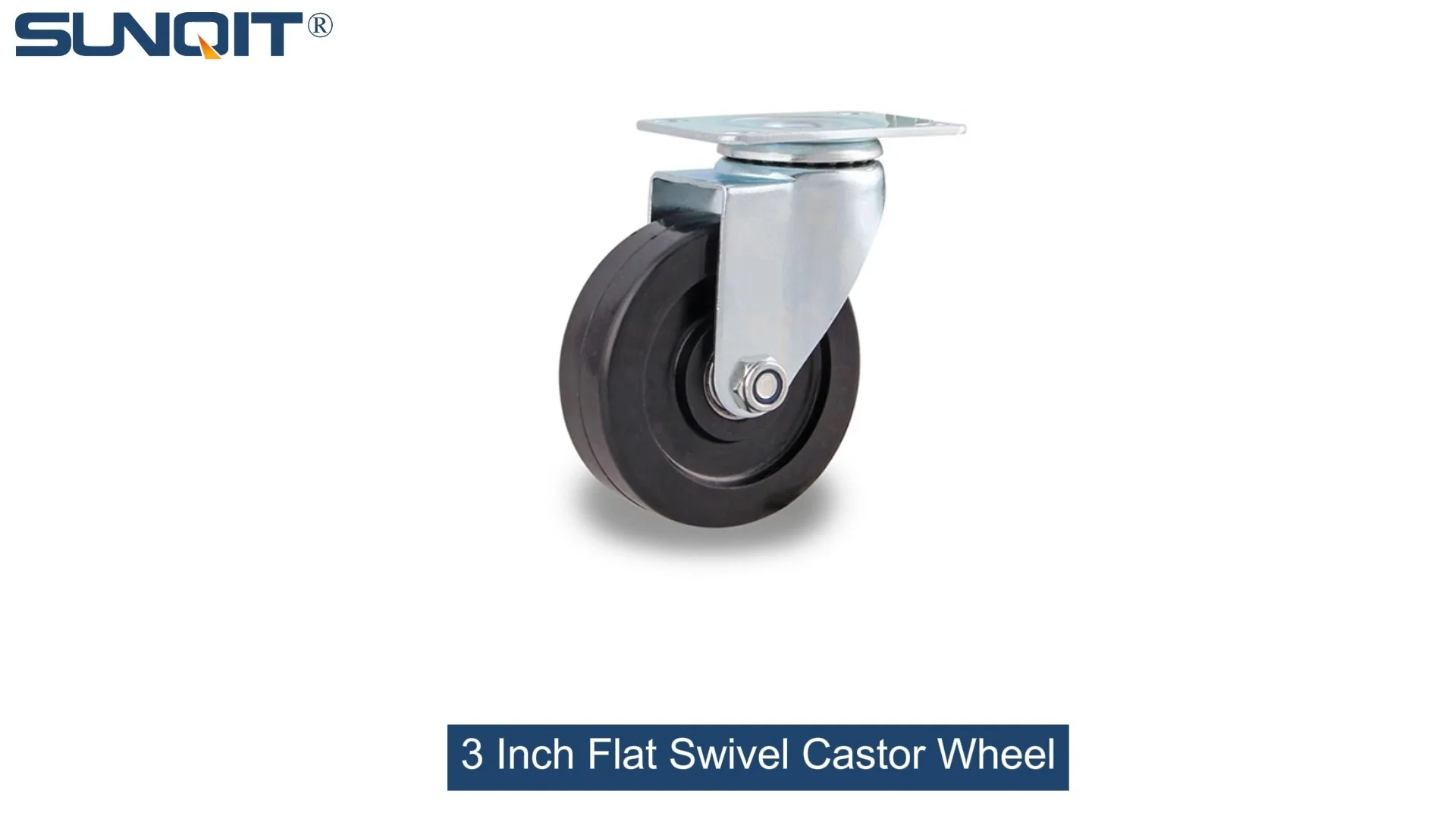
In the humming heart of a mechanical manufacturing plant, where precision meets productivity, every component—no matter how small—plays a role in the grand symphony of production. Among these, tool carts stand out as quiet workhorses, ferrying wrenches, gauges, and spare parts across factory floors, assembly lines, and maintenance bays. Yet, what truly empowers these carts to move seamlessly, adapt to tight corners, and keep pace with the relentless rhythm of manufacturing? The answer lies in their foundation: castor wheels. Specifically, flat swivel castor wheels have emerged as the unsung heroes of mobility, blending durability, flexibility, and reliability to redefine how tool carts operate in modern manufacturing settings. In this article, we'll explore why these castor wheels matter, their design nuances, and how they integrate with broader systems to drive efficiency—from supporting lean system principles to working in tandem with turnover trolley and rack setups.
The Critical Role of Tool Carts in Modern Manufacturing
Before diving into the specifics of castor wheels, it's worth understanding why tool carts themselves are indispensable. In an industry where downtime costs money and disorganization breeds errors, tool carts serve as mobile command centers. They organize tools by frequency of use, reduce the need for workers to walk back and forth to stationary toolboxes, and ensure that critical equipment is always within arm's reach during assembly or repairs. For example, in automotive manufacturing, a single tool cart might hold torque wrenches, socket sets, and diagnostic tools, following a production line as technicians move from one vehicle to the next. In aerospace facilities, specialized carts with lockable drawers protect sensitive calibration instruments from dust and damage while keeping them mobile.
This mobility isn't just about convenience—it's a cornerstone of lean system implementation. Lean manufacturing, focused on minimizing waste and maximizing value, relies heavily on optimizing workflows. A well-designed tool cart eliminates "motion waste" (unnecessary movement of workers) and "waiting waste" (delays caused by missing tools). When paired with turnover trolley and rack systems—used for storing and transporting raw materials or finished components—tool carts create a cohesive material handling ecosystem where everything from tools to parts flows smoothly through the production cycle.
But none of this is possible without reliable wheels. A tool cart loaded with 50kg of metal tools is only as good as its castors. A stuck wheel can bring a workflow to a halt; a wobbly castor can damage floors or cause tools to shift, risking damage or injury. This is where flat swivel castor wheels step in, offering a combination of stability and maneuverability that rigid or poorly designed castors simply can't match.
What Are Flat Swivel Castor Wheels, and How Do They Differ?
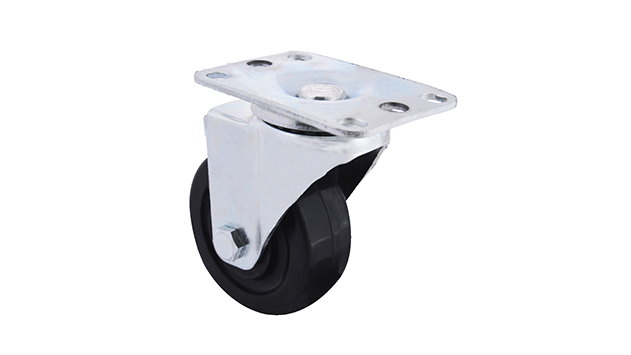
At first glance, a castor wheel might seem like a simple component: a wheel attached to a mounting bracket. But flat swivel castor wheels are engineered with precision to address the unique demands of manufacturing environments. Let's break down their key features:
- Flat Mounting Plate: Unlike "stem" castors, which attach via a rod inserted into a socket, flat swivel castors use a flat, rectangular mounting plate with pre-drilled holes. This design distributes the cart's weight evenly across the plate, reducing stress on the cart's frame and ensuring a secure connection—critical for heavy loads common in manufacturing.
- 360-Degree Swivel Mechanism: The swivel head, typically a ball bearing or raceway system, allows the wheel to rotate freely around a vertical axis. This means the cart can pivot in place, navigate narrow aisles, and make tight turns without the need for excessive force—essential in crowded factory floors where space is at a premium.
- Wheel Materials: Depending on the application, wheels may be made of rubber (for quiet operation and floor protection), polyurethane (offering a balance of grip and durability), or steel (for extreme load capacities). In mechanical manufacturing, polyurethane is a popular choice: it resists oil, chemicals, and abrasion, while its non-marking properties protect finished concrete or epoxy floors.
- Brake Options: Many flat swivel castors come with integrated brakes, either on the wheel (to stop rotation) or on the swivel head (to lock both rotation and swiveling). This is vital for safety—when a cart is stationary during use, brakes prevent accidental movement that could lead to tool spills or collisions.
Compared to rigid castors (which only move forward and backward) or swivel stem castors (which have a narrower mounting profile), flat swivel castors excel in versatility. Their flat plate design makes them easier to install on standard tool cart frames, and their robust swivel mechanism handles frequent direction changes without wearing down prematurely—an important trait in facilities where carts are moved dozens of times per shift.
Key Features to Look for in Industrial-Grade Flat Swivel Castor Wheels
Not all flat swivel castor wheels are created equal. In mechanical manufacturing, where carts may carry loads ranging from 50kg to 500kg or more, choosing the right castor can mean the difference between seamless operation and costly downtime. Here are the critical factors to consider:
Load Capacity
Load capacity is the maximum weight a castor can support without failing. It's important to calculate the total weight of the cart plus its typical load, then divide by the number of castors (usually 4) to determine the required capacity per wheel. For example, a cart weighing 30kg with a 200kg load needs castors rated for at least 57.5kg each (230kg total ÷ 4 castors). However, it's wise to choose a higher rating to account for occasional overloading or uneven weight distribution—many manufacturers recommend a 20-30% safety margin.
Swivel Radius and Maneuverability
The swivel radius is the distance from the center of the swivel axis to the edge of the wheel. A smaller radius allows for tighter turns, which is crucial in narrow spaces like between assembly workbenches or alongside production lines. High-quality castors use precision ball bearings in the swivel head to minimize friction, ensuring smooth rotation even when the cart is fully loaded. Look for castors with a "double raceway" design, where two sets of bearings distribute stress, reducing wear and extending lifespan.
Brake Reliability
In manufacturing, a castor's brake is often its most important safety feature. Two common types are:
- Wheel Brakes: These press a pad against the wheel to stop rotation. They're simple and effective for preventing the cart from rolling, but they don't lock the swivel head—meaning the cart could still pivot if pushed.
- Total Lock Brakes: These lock both the wheel and the swivel head, immobilizing the cart completely. This is ideal for situations where the cart needs to stay in one position during use, such as when a technician is leaning on it to access tools.
Durability and Resistance
Manufacturing environments are harsh. Floors may be oily, chemicals might spill, and temperatures can fluctuate. A good flat swivel castor should resist corrosion (look for zinc-plated or stainless steel brackets), stand up to chemical exposure (polyurethane or rubber wheels), and operate in temperatures from -20°C to 60°C or higher. For example, in food processing plants (a subset of manufacturing), stainless steel castors with non-marking rubber wheels are preferred for their resistance to water and cleaning agents.

The Value of Caster Accessories in Maximizing Performance
While the castor wheel itself is the star, caster accessories play a supporting role in enhancing performance and longevity. These often-overlooked components can extend the life of your castors, improve safety, and adapt them to specific tasks. Here are some essential accessories to consider:
- Mounting Hardware: High-strength bolts, washers, and locknuts ensure the castor's mounting plate stays securely attached to the cart frame. Using the wrong hardware (e.g., undersized bolts) can lead to the castor detaching under load—a serious safety hazard.
- Brake Extensions: For tall carts, brake extensions add a lever that's easier to reach, allowing workers to engage or disengage brakes without bending down. This reduces strain and encourages consistent brake use.
- Lubrication Kits: Regular lubrication of the swivel head and wheel bearings prevents rust and keeps the castor moving smoothly. Kits typically include grease, a grease gun, and application instructions tailored to the castor's design.
- Floor Protectors: While many wheels are already non-marking, adhesive floor protector pads can be added to the wheel surface for extra protection on delicate floors, such as polished concrete in office-manufacturing hybrids.
Investing in quality caster accessories is a cost-effective way to maximize your castor investment. For example, a $10 lubrication kit can double the lifespan of a $50 castor, saving money on replacements and reducing downtime for repairs.

How Flat Swivel Castor Wheels Support Lean Manufacturing Systems
Lean manufacturing is all about eliminating waste—whether it's time, materials, or motion. Flat swivel castor wheels align perfectly with this philosophy by enabling "flow," one of the core lean principles. Here's how:
Reducing Motion Waste
In traditional setups, workers might walk 10-15 meters to retrieve a tool from a stationary cabinet. With a mobile tool cart on flat swivel castors, that distance drops to zero—the cart moves with the worker. Over a shift, this can save hours of wasted motion, translating to higher productivity. For example, a study by the Lean Enterprise Institute found that implementing mobile tool carts with swivel castors reduced motion waste by 35% in a electronics assembly plant, allowing workers to complete 12% more tasks per day.
Supporting Just-In-Time (JIT) Delivery
JIT manufacturing relies on delivering materials and tools exactly when they're needed. Flat swivel castor wheels make tool carts agile enough to follow production schedules closely. For instance, in a automotive parts plant, a cart loaded with specialized fasteners can be quickly moved to the assembly line as the next batch of components arrives, ensuring workers never wait for supplies.
Flexible Workstations
Lean systems often require workstations to be reconfigured for different tasks (a concept called "heijunka," or level scheduling). Tool carts on flat swivel castors can be easily rearranged alongside turnover trolley and rack units to create temporary work cells, adapting to changing production needs without the cost of permanent fixtures. For example, a furniture manufacturer might reconfigure its assembly area from chair production to table production in under an hour by moving tool carts and turnover racks into new positions—made possible by castors that glide smoothly over the floor.
Real-World Applications: From Assembly Lines to Maintenance Bays
To truly appreciate the impact of flat swivel castor wheels, let's look at their use in specific manufacturing scenarios:
Automotive Assembly
In automotive plants, tool carts are a constant presence on the production line. A typical cart might carry torque tools, socket sets, and wiring harnesses, following the car as it moves along the conveyor. Flat swivel castors with total lock brakes are essential here: when the line stops for a worker to install a part, the cart is locked in place to prevent it from rolling into the conveyor. The swivel mechanism allows the cart to be positioned at a 45-degree angle to the car, giving the worker easy access to both sides of the vehicle without repositioning the cart.
Heavy Machinery Maintenance
Maintenance teams in factories that produce industrial equipment (e.g., bulldozers, generators) rely on heavy-duty tool carts loaded with welding gear, grinders, and replacement parts. These carts can weigh 300kg or more when fully loaded, requiring flat swivel castors with steel wheels and reinforced swivel heads. The flat mounting plate ensures the castors can handle the cart's weight without bending, while the swivel mechanism allows the cart to be maneuvered around large machinery in tight maintenance bays.
Electronics Manufacturing
In cleanroom environments where electronics like semiconductors are produced, tool carts must be non-marking, easy to clean, and quiet. Flat swivel castors with polyurethane wheels and stainless steel brackets are ideal here: they don't shed debris, resist chemical cleaners, and operate silently to avoid disturbing sensitive equipment. The swivel radius is also critical—cleanrooms have limited space, so castors that can pivot in place allow carts to be stored in compact areas when not in use.
Choosing the Right Flat Swivel Castor Wheel for Your Needs: A Decision Guide
With so many options available, selecting the right flat swivel castor wheel can feel overwhelming. To simplify the process, follow these steps:
- Calculate Total Load: Add the cart's weight to the maximum load it will carry, then divide by the number of castors (usually 4) to get the required capacity per wheel. Round up to the nearest available rating to account for uneven loading.
- Assess the Environment: Consider floor type (rough concrete vs. smooth epoxy), temperature extremes, and exposure to chemicals or moisture. Choose wheel materials and bracket coatings accordingly (e.g., polyurethane for chemicals, stainless steel for moisture).
- Evaluate Maneuverability Needs: If the cart will be used in tight spaces, prioritize a small swivel radius and low-friction swivel head. For open areas, a larger radius may be acceptable for higher load capacities.
- Determine Brake Requirements: Will the cart need to stay stationary during use? Opt for total lock brakes. If it's only moved occasionally, wheel brakes may suffice.
- Factor in Ergonomics: Consider the height of the cart and the ease of engaging brakes. Brake extensions can make operation more comfortable for workers of all heights.
To help visualize these considerations, here's a comparison table of common flat swivel castor wheel variants suitable for manufacturing tool carts:
| Castor Type | Load Capacity (per wheel) | Wheel Material | Brake Type | Best For |
|---|---|---|---|---|
| Light-Duty Flat Swivel | 50-150kg | Rubber | Wheel brake | Small tool carts, electronics assembly |
| Medium-Duty Flat Swivel | 150-300kg | Polyurethane | Total lock brake | Automotive assembly, general manufacturing |
| Heavy-Duty Flat Swivel | 300-500kg | Steel | Heavy-duty total lock | Maintenance carts, heavy machinery parts |
| Stainless Steel Flat Swivel | 100-300kg | Non-marking rubber | Wheel brake | Cleanrooms, food processing, moisture-prone areas |
Maintenance Tips to Extend the Life of Your Flat Swivel Castor Wheels
Even the best castors will wear out prematurely without proper care. Follow these maintenance tips to keep your flat swivel castor wheels performing at their best:
- Inspect Regularly: Check for loose bolts, worn wheel treads, and debris in the swivel head. A quick visual inspection once per week can catch issues before they lead to failure.
- Lubricate Often: Grease the swivel head and wheel bearings every 3-6 months (more frequently in dusty or wet environments). Use a high-quality lithium-based grease for best results.
- Clean Debris: Use a brush or compressed air to remove dirt, metal shavings, or other debris from the swivel head and wheel axles. Debris can cause binding and accelerate wear.
- replace Worn Parts Promptly: If a wheel tread is cracked, a bearing is noisy, or a brake isn't engaging properly, replace the part immediately. Delaying repairs can lead to damage to the cart or injury to workers.
Conclusion: The Small Component That Drives Big Results
In the grand scheme of mechanical manufacturing, flat swivel castor wheels may seem like a minor detail. But as we've explored, they're a critical link in the chain of efficiency, enabling tool carts to move freely, support lean principles, and adapt to the ever-changing demands of modern production. From their flat mounting plates that ensure stability to their precision swivel mechanisms that turn tight corners with ease, these castors embody the "small things, done well" philosophy that defines successful manufacturing operations.
Whether you're outfitting a new facility with tool carts, upgrading existing equipment, or simply looking to reduce downtime, investing in high-quality flat swivel castor wheels—paired with the right caster accessories —is a decision that pays dividends in productivity, safety, and long-term cost savings. After all, in a world where every second counts, the difference between a cart that glides and one that grinds to a halt can be measured in more than just time—it's measured in the success of your entire operation.