- Company Articles
- Products and Technology
- Application Cases
- Flat Swivel Castor Wheels for Turnover Carts: Application Guide in Warehousing

Flat Swivel Castor Wheels for Turnover Carts: Application Guide in Warehousing
Related Product
Flat Swivel Castor Wheel
Chair Casters Ball Bearing Wheels Rubber Base. Resistant to abrasion, impact and corrosion. Heavy payload can hold 70-90Kgs per pcs,which can make it works at a stable and smooth status.
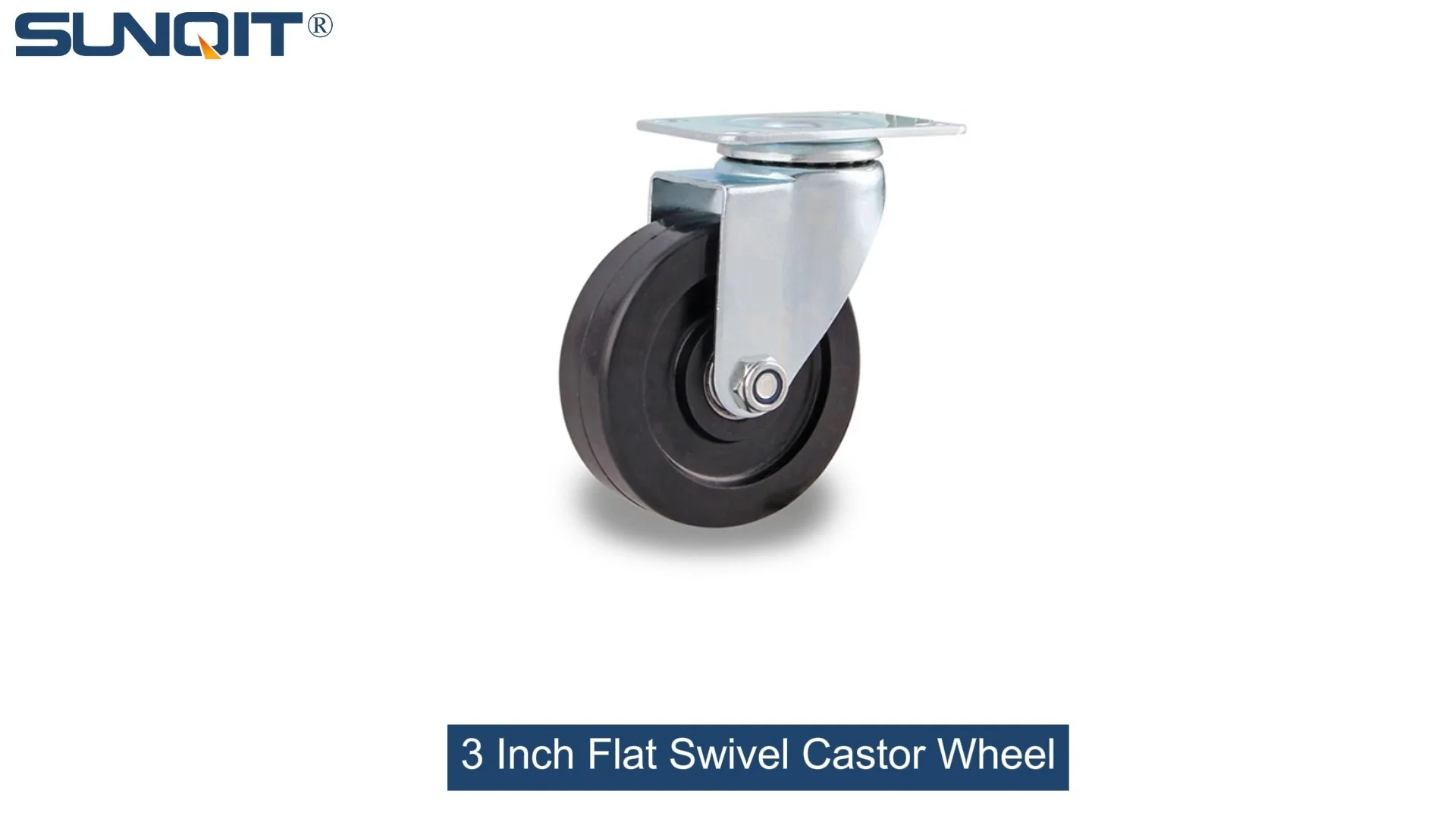
In the bustling world of warehousing, where every second counts and efficiency is the name of the game, the smallest components often play the biggest roles. Think about it: a single delayed shipment, a misplaced item, or a clunky piece of equipment can throw off an entire day's operations. That's why today, we're shining a spotlight on an unsung hero of warehouse mobility: flat swivel castor wheels. Specifically, how these unassuming wheels transform turnover carts into workhorses that keep goods moving, teams productive, and warehouses running like well-oiled machines.
Whether you're managing a small distribution center or a sprawling logistics hub, turnover carts are likely a staple in your daily operations. They ferry parts from material racks to workbenches, transport finished goods to shipping areas, and even serve as mobile storage units during peak seasons. But here's the thing: not all turnover carts are created equal. The difference between a cart that glides smoothly through tight aisles and one that feels like pushing a boulder? It often comes down to the castor wheels. And among the various wheel types available, flat swivel castor wheels stand out for their unique blend of maneuverability, stability, and durability—qualities that make them indispensable in modern warehousing.
In this guide, we'll dive deep into everything you need to know about flat swivel castor wheels for turnover carts. From understanding their design and benefits to choosing the right model for your needs, installing them properly, and maintaining them for long-term performance, we'll cover it all. We'll also explore real-world applications, compare them to other castor types, and even peek into future trends that could further revolutionize warehouse mobility. So, let's roll up our sleeves and get started—your warehouse's efficiency (and your team's sanity) might just depend on it.
Understanding Turnover Carts: The Backbone of Warehouse Mobility
Before we zoom in on the wheels, let's take a moment to appreciate the star of the show: the turnover cart. Also known as utility carts or material handling carts, turnover carts are versatile, wheeled platforms designed to transport goods within a facility. They come in all shapes and sizes—from compact two-tier carts for small parts to large, heavy-duty models that can haul hundreds of pounds of inventory. But regardless of their size, their primary job is simple: to make moving stuff easier.
In warehousing, turnover carts are everywhere. Walk through any facility, and you'll see them shuttling components from material rack b (3 row and 3 floor) to assembly lines, carrying tools between workbenches, or staging orders for pickup. They're especially critical in lean manufacturing environments, where minimizing waste and maximizing flow are priorities. A well-designed turnover cart reduces the need for manual lifting, cuts down on travel time, and ensures that materials are always where they need to be, when they need to be there.
But here's the catch: a turnover cart is only as good as its mobility system. Without reliable wheels, even the sturdiest cart becomes a liability. Imagine trying to navigate a narrow aisle with a cart that won't turn, or hauling a heavy load with wheels that stick or wobble. Not only does this slow down operations, but it also increases the risk of accidents—from strained backs to damaged inventory. That's why choosing the right castor wheels is so important. And when it comes to balance, flexibility, and control, flat swivel castor wheels often rise to the top.
What Are Flat Swivel Castor Wheels, Anyway?
Let's start with the basics: what makes a flat swivel castor wheel different from other types of castors? At first glance, you might mistake them for any other wheel, but a closer look reveals key design features that set them apart.
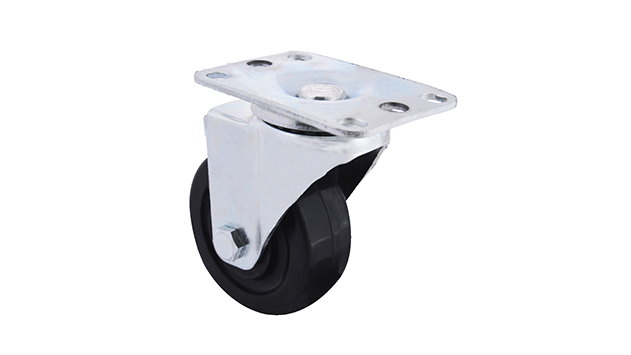
First, the "flat" part. Unlike some castors with curved or recessed mounting plates, flat swivel castors have a flat, low-profile mounting base. This design allows them to sit closer to the cart's frame, lowering the cart's center of gravity. Why does that matter? A lower center of gravity means better stability, especially when carrying uneven loads. It also reduces the risk of the cart tipping over—a crucial safety feature in busy warehouses where corners are rounded and stops are sudden.
Then there's the "swivel" aspect. Swivel castors are mounted on a pivot joint that allows them to rotate 360 degrees. This means the cart can turn on a dime, making it easy to maneuver around obstacles, navigate tight spaces, and change direction without having to backtrack. Flat swivel castors take this a step further with smooth-rolling bearings and precision-engineered swivel heads that minimize friction, ensuring effortless rotation even under heavy loads.
Most flat swivel castor wheels consist of four main components: the wheel itself (made from materials like rubber, polyurethane, or nylon), a swivel head (the pivot mechanism), a mounting plate (the flat base that attaches to the cart), and caster accessories like brakes, bearings, or axle caps. These components work together to create a wheel that's not just mobile, but also durable and adaptable to different warehouse environments.
One of the biggest advantages of flat swivel castors is their versatility. They're available in a range of sizes (from small 2-inch wheels for light-duty carts to large 8-inch wheels for heavy loads), wheel materials to suit various floor types, and load capacities to match your needs. Whether you're moving delicate electronics on a smooth concrete floor or rugged automotive parts across a warehouse with uneven surfaces, there's a flat swivel castor wheel designed for the job.
Why Flat Swivel Castor Wheels Are a Game-Changer for Turnover Carts
Now that we know what flat swivel castor wheels are, let's talk about why they're such a big deal for turnover carts in warehousing. Spoiler: it's not just about making carts easier to push (though that's a huge plus). These wheels offer a host of benefits that directly impact productivity, safety, and cost-efficiency.
1. Unmatched Maneuverability
In a warehouse, space is often at a premium. Aisles are narrow, racks are tightly packed, and there's always someone or something in the way. That's where the 360-degree swivel feature of flat castors shines. Unlike rigid castors (which only move forward and backward) or even some swivel castors with limited rotation, flat swivel castors allow the cart to pivot smoothly, making it easy to navigate around corners, squeeze through tight gaps, and even spin in place if needed. This agility reduces the time it takes to move goods from point A to point B—imagine being able to deliver a cart of parts to a workbench without having to backtrack down a long aisle. Over a full day, those saved minutes add up to significant productivity gains.
2. Enhanced Stability and Safety
Warehouse safety is non-negotiable. Every year, thousands of workplace injuries are caused by manual material handling, many of which involve carts. Flat swivel castors help mitigate these risks in two key ways: lower center of gravity and better load distribution. The flat mounting plate keeps the cart closer to the ground, reducing the likelihood of tipping, even when carrying tall or top-heavy loads. Additionally, the swivel head's design ensures that weight is evenly distributed across the wheels, preventing uneven wear and reducing the strain on the cart's frame. Some models even come with built-in brakes, allowing operators to lock the wheels in place when loading, unloading, or parked on inclines—another layer of safety that can't be overstated.
3. Durability That Stands Up to Warehouse Wear and Tear
Warehouse floors are tough on equipment. Between concrete surfaces, debris, and constant use, wheels take a beating. Flat swivel castors are built to withstand this punishment. Many models feature wheels made from polyurethane or rubber, which are resistant to abrasion, chemicals, and impact. The swivel heads are often constructed from hardened steel or reinforced plastic, with sealed bearings to keep out dust and debris that can cause jamming. This durability means fewer replacements, less downtime, and lower maintenance costs over time—music to any warehouse manager's ears.
4. Quiet Operation for a Better Work Environment
It's easy to overlook noise in a warehouse, but constant clattering and squeaking can take a toll on employee morale and even hearing. Flat swivel castors, especially those with rubber or polyurethane wheels, are significantly quieter than metal wheels or poorly maintained castors. The smooth rotation of the swivel head and the shock-absorbing properties of the wheel material reduce noise levels, creating a more pleasant work environment. Happy employees are more productive employees, and a quieter warehouse is a safer one—less background noise means better communication and fewer missed warnings.
5. Compatibility with a Wide Range of Turnover Carts
Whether you're using a small turnover trolley and rack combo for parts storage or a large, multi-tiered cart for bulk goods, flat swivel castors are adaptable. They come with standard mounting hole patterns that fit most cart frames, making them easy to retrofit onto existing carts. This compatibility is a huge advantage for warehouses looking to upgrade their equipment without replacing entire carts—a cost-effective solution that allows you to extend the life of your current fleet while improving performance.

Choosing the Right Flat Swivel Castor Wheel: Key Factors to Consider
Not all flat swivel castor wheels are created equal, and choosing the wrong one can lead to frustration, inefficiency, and even safety hazards. To ensure you select the best wheel for your turnover cart, there are several key factors to keep in mind. Let's break them down.
Load Capacity: Know What You're Hauling
First and foremost, you need to determine the maximum weight your cart will carry. This includes the weight of the cart itself plus the goods it will transport. Flat swivel castors are rated for specific load capacities, usually listed per wheel or per set (most carts use four wheels). As a general rule, it's best to choose a castor with a load capacity that exceeds your expected maximum weight by 20-30%. This "safety margin" accounts for uneven loading, sudden stops, or occasional overloading, ensuring the wheels don't fail under stress. For example, if your cart typically carries 400 pounds, look for castors with a per-wheel capacity of at least 125 pounds (since four wheels would handle 500 pounds total—giving you that extra buffer).
Wheel Material: Match the Floor and the Load
The material of the wheel affects everything from traction and noise to floor protection and durability. Here's a quick guide to common wheel materials and their best uses:
- Polyurethane (PU): A popular choice for general warehousing. PU wheels are durable, quiet, and provide excellent traction on smooth floors like concrete or tile. They also protect floors from scratches, making them ideal for facilities with polished or painted surfaces. They're resistant to oils and chemicals, though not as much as rubber.
- Rubber: Great for uneven floors or outdoor use (if the cart occasionally goes outside). Rubber wheels absorb shocks, reduce noise, and offer superior grip on wet or slippery surfaces. However, they can leave marks on some floors and may wear faster than PU under heavy loads.
- Nylon: Best for heavy-duty applications. Nylon wheels are extremely durable, heat-resistant, and suitable for rough floors or environments with debris. They're not as quiet as PU or rubber, though, and can be hard on delicate floors.
- Steel: For the heaviest loads (think thousands of pounds). Steel wheels are tough and long-lasting but are noisy, can damage floors, and require smooth surfaces to roll easily. They're less common in standard warehousing but useful for specialized applications.
Wheel Size: Balance Between Speed and Stability
Wheel diameter is another important consideration. Larger wheels (6 inches or more) roll more easily over cracks, debris, or uneven floors, making them better for heavy loads or rough surfaces. Smaller wheels (2-4 inches) are more maneuverable in tight spaces and lower the cart's center of gravity, improving stability for light to medium loads. For most warehouse turnover carts, a wheel size between 3-5 inches is a good balance—large enough to handle typical floor imperfections, small enough to navigate aisles and around equipment.
Swivel Mechanism: Smooth Rotation is Key
The swivel head is the heart of a flat swivel castor, so you want one that rotates smoothly and reliably. Look for castors with precision ball bearings or roller bearings, as these reduce friction and allow for easier swiveling. Sealed bearings are also a plus, as they prevent dust, dirt, and moisture from getting inside and causing jams. Some models feature a "raceway" (the circular track the bearings roll in) made from hardened steel, which increases durability and extends the life of the swivel mechanism.
Brakes: For Safety and Control
While not all carts need brakes, they're a must if you'll be loading/unloading on inclines, parked near workbenches, or transporting unstable loads. There are several brake types to choose from:
- Total lock brakes: Lock both the wheel and the swivel head, preventing movement in any direction.
- Wheel lock brakes: Lock only the wheel, allowing the swivel head to rotate but preventing the cart from rolling.
- Foot brakes: Activated by stepping on a pedal, easy to use while moving the cart.

Installation Guide: Fitting Flat Swivel Castors to Your Turnover Cart
Installing flat swivel castor wheels on a turnover cart is a relatively straightforward process, but it does require some basic tools and attention to detail. Improper installation can lead to wobbly wheels, uneven wear, or even cart failure, so it's important to follow these steps carefully. If you're not comfortable with DIY projects, don't hesitate to ask a maintenance professional for help—safety first!
Tools You'll Need
Gather these tools before you start:
- A drill (with bits matching the size of your mounting bolts)
- A wrench or socket set (to tighten bolts)
- A level (to ensure the cart is even)
- A pencil or marker (to mark mounting holes)
- Screwdrivers (if using screws instead of bolts)
- Optional: A rubber mallet (to gently tap castors into place if needed)
Step 1: Prepare the Cart
Start by flipping the cart upside down so the frame is accessible. If the cart has old wheels, remove them using your wrench or screwdriver. Clean the mounting area on the cart's frame, removing any dirt, rust, or debris that could prevent the castor's mounting plate from sitting flat. If the old mounting holes are stripped or damaged, you may need to drill new ones—just make sure they align with the holes on the new castor's mounting plate.
Step 2: Position the Castors
Place one flat swivel castor on each corner of the cart's frame. If the cart has a specific "front" and "back," check if the castors should be oriented a certain way (some swivel castors have a preferred rotation direction, though most are omnidirectional). Use your pencil to mark the location of the mounting holes on the cart's frame. Double-check that the castors are positioned evenly—if they're off-center, the cart may wobble when loaded.
Step 3: Drill Holes (If Needed)
If the cart doesn't already have holes that match the castor's mounting plate, use your drill to create new ones. Use a drill bit that's slightly smaller than the diameter of the bolts you'll be using—this ensures a tight fit. Be careful not to drill all the way through the frame if it's hollow (you don't want to weaken the structure).
Step 4: Attach the Castors
Align the castor's mounting plate with the holes (either existing or newly drilled). insert the bolts through the plate and into the frame, then tighten them with your wrench or socket set. Make sure the bolts are snug but not over-tightened—over-tightening can strip the threads or warp the mounting plate. Repeat this process for all four castors.
Step 5: Test for Level and Stability
Once all castors are attached, flip the cart right-side up. Place a level on the cart's surface to ensure it's not tilting to one side—if it is, check if the bolts are tightened evenly or if the castors are mounted correctly. Push the cart back and forth to test the swivel action— the wheels should rotate smoothly without sticking. If a wheel wobbles or doesn't swivel, check if the mounting plate is flat against the frame or if the bolt holes are misaligned.
Step 6: Adjust Brakes (If Equipped)
If your castors have brakes, test them to make sure they engage and release properly. Step on the brake pedal to lock the wheel, then try to push the cart—it shouldn't move. Release the brake and ensure the wheel rolls freely. If the brake feels loose or doesn't lock securely, adjust the brake mechanism (refer to the manufacturer's instructions for details).
Maintenance Tips: Keeping Your Flat Swivel Castors Rolling Smoothly
Like any piece of equipment, flat swivel castor wheels require regular maintenance to perform at their best. Neglecting them can lead to squeaky wheels, stiff swivel heads, or premature failure—all of which disrupt workflow and increase costs. The good news is that maintaining castors is simple and doesn't take much time. Here's a quick maintenance routine to keep your wheels in top shape.
Weekly Inspections
Once a week, take a few minutes to inspect each castor on your turnover carts:
- Check for debris: Look for dirt, hair, string, or other debris wrapped around the wheel axle or swivel head. This can cause the wheel to stick or the swivel to jam. Use a brush or a pair of tweezers to remove any buildup.
- Test the swivel: Rotate the wheel by hand— it should spin freely without resistance. If it's stiff, the swivel head may need lubrication.
- Inspect the wheel: Look for cracks, flat spots, or excessive wear on the wheel tread. If the wheel is damaged, replace it immediately— a worn wheel can cause the cart to wobble or damage floors.
- Tighten bolts: Check that the mounting bolts are snug. Vibration from use can loosen them over time, leading to unstable wheels.
Monthly Lubrication
Lubricating the swivel head and wheel bearings prevents rust and keeps the castors rolling smoothly. Use a high-quality lubricant like lithium grease or silicone spray (check the manufacturer's recommendations—some bearings require specific lubricants). Apply a small amount to the swivel joint and around the wheel axle, then rotate the wheel and swivel head to distribute the lubricant evenly. Wipe away any excess to prevent attracting dirt.
Quarterly Deep Cleaning
Every three months, give the castors a more thorough cleaning. Remove the wheels from the cart (if possible) and soak them in warm, soapy water to remove built-up grime. Use a toothbrush or small brush to clean hard-to-reach areas like the swivel bearings. Dry the wheels completely before reattaching them, and apply fresh lubricant. This deep clean helps extend the life of the castors, especially in dusty or dirty warehouse environments.
replace Worn Parts Promptly
Even with proper maintenance, caster accessories like bearings, axles, or brakes will wear out over time. Keep a few spare parts on hand (like replacement wheels, bearings, or brake pads) so you can replace them as soon as they fail. Waiting to replace a worn part often leads to more damage—for example, a seized bearing can cause the wheel to lock up, putting stress on the swivel head and potentially bending the mounting plate.
Real-World Application: How One Warehouse Boosted Efficiency with Flat Swivel Castors
To put all this theory into practice, let's look at a real-world example of how flat swivel castor wheels transformed a warehouse's operations. Meet "Acme Logistics," a mid-sized distribution center that handles electronics components for local manufacturers. Before upgrading their turnover carts, Acme was struggling with several issues: carts were hard to maneuver around their material rack b (3 row and 3 floor) units, employees complained about back strain from pushing heavy loads, and damaged inventory due to tipping carts was costing them thousands of dollars a year.
The problem? Their old carts were equipped with rigid, plastic wheels that offered little maneuverability and poor shock absorption. The wheels often got stuck in the cracks between warehouse floor tiles, and the carts would tip if loaded unevenly. Acme's warehouse manager, Sarah, decided to invest in new flat swivel castor wheels with polyurethane wheels and total lock brakes. Here's what happened next:
- Reduced travel time: Employees could now navigate the narrow aisles between material racks and workbenches in half the time, thanks to the 360-degree swivel action. What used to take 10 minutes to transport parts now took 5—adding up to hours saved each week.
- Fewer injuries: The smoother-rolling wheels reduced the effort needed to push carts, cutting down on employee complaints of back and shoulder pain. Over six months, Acme saw a 40% drop in workplace injury reports related to manual handling.
- Less damaged inventory: The lower center of gravity from the flat mounting plates and the stability of the polyurethane wheels drastically reduced tipping incidents. Damaged goods decreased by 65%, saving Acme over $15,000 in replacement costs.
- Happier employees: Quieter wheels and easier maneuverability made the job less frustrating, leading to higher morale and lower turnover. As one employee put it: "I no longer dread moving carts—I actually look forward to it now that it's not a workout!"
Sarah estimates that the investment in flat swivel castor wheels paid for itself within three months, thanks to the savings in time, injuries, and damaged inventory. "It's amazing how such a small change can make such a big difference," she said. "We should have upgraded years ago."
Comparing Flat Swivel Castors to Other Wheel Types
Flat swivel castors are great, but they're not the only option for turnover carts. Depending on your needs, other castor types might be a better fit. To help you decide, here's a comparison of flat swivel castors with three common alternatives:
| Castor Type | Mobility | Load Capacity | Best For | Pros | Cons |
|---|---|---|---|---|---|
| Flat Swivel Castors | Excellent (360° swivel, smooth rotation) | Medium to heavy (up to 1,500 lbs per set) | General warehousing, tight spaces, uneven loads | High maneuverability, stable, quiet, floor-friendly | May cost more than rigid castors; not ideal for extremely rough terrain |
| Rigid Castors (Non-Swivel) | Poor (only moves forward/backward) | Heavy to extra-heavy (up to 5,000 lbs per set) | Straight-line transport, very heavy loads | Simple, durable, low cost, high load capacity | Hard to maneuver, requires more space to turn |
| Swivel Castors with Kingpin | Good (360° swivel, but may be stiffer) | Medium (up to 1,000 lbs per set) | Light to medium loads, general use | Widely available, affordable | Kingpin can bend under heavy loads; less stable than flat swivel |
| Heavy-Duty Industrial Castors | Good (swivel, but larger and less agile) | Extra-heavy (up to 10,000 lbs per set) | Extremely heavy loads, rough terrain | High load capacity, rugged, suitable for harsh environments | Bulky, expensive, hard to maneuver in tight spaces |
As you can see, flat swivel castors strike a balance between mobility, stability, and cost that makes them ideal for most warehouse applications. Rigid castors are better for straight-line transport, while heavy-duty castors are necessary for extreme loads—but for the day-to-day hustle of a busy warehouse, flat swivel castors are hard to beat.
Future Trends: What's Next for Flat Swivel Castor Wheels?
The world of warehousing is constantly evolving, driven by technology, sustainability, and the need for greater efficiency. So, what does the future hold for flat swivel castor wheels? Here are a few trends to watch:
Smart Castors with IoT Integration
Imagine castors equipped with sensors that track load weight, wheel temperature, or wear and tear. These "smart castors" could send real-time data to a warehouse management system, alerting you when a wheel needs maintenance or when a cart is overloaded. Some might even include GPS tracking to help locate misplaced carts in large facilities. While this technology is still in its early stages, it has the potential to revolutionize predictive maintenance and inventory management.
Eco-Friendly Materials
Sustainability is becoming a priority for many warehouses, and castor manufacturers are taking note. Look for more flat swivel castors made from recycled or biodegradable materials, such as plant-based polyurethane or recycled rubber. Some companies are also exploring energy-efficient production processes to reduce the carbon footprint of castor manufacturing.
Ergonomic Design Innovations
As warehouses focus more on employee well-being, castor design will continue to prioritize ergonomics. This could include lighter-weight materials to reduce cart weight, improved brake mechanisms that require less force to engage, or swivel heads with even lower friction for effortless rotation. The goal? To make pushing carts so easy that it feels like "gliding on air."
Customization Options
Every warehouse is unique, and castor manufacturers are starting to offer more customization options. From custom wheel sizes and colors to specialized tread patterns for unique floor types, you'll be able to tailor flat swivel castors to your specific needs. This level of customization ensures that even niche warehouses (like those handling fragile goods or operating in extreme temperatures) can find the perfect wheel for their carts.
Conclusion: Invest in the Wheels That Move Your Warehouse Forward
At the end of the day, flat swivel castor wheels might seem like a small detail in the grand scheme of warehouse operations. But as we've explored, they're anything but minor. These unassuming wheels are the unsung heroes that keep turnover carts moving, employees safe, and goods flowing—ultimately driving the efficiency and profitability of your entire facility.
From their unmatched maneuverability and stability to their durability and quiet operation, flat swivel castors offer a host of benefits that make them worth every penny. By choosing the right wheel material, load capacity, and size for your needs, installing them properly, and keeping up with regular maintenance, you can ensure your turnover carts remain reliable workhorses for years to come.
So, the next time you're evaluating your warehouse equipment, don't overlook the wheels on your turnover carts. Upgrade to flat swivel castor wheels, invest in quality caster accessories , and watch as productivity soars, injuries decrease, and your team breathes a sigh of relief. After all, in warehousing, it's the little things that keep the big operations moving—and flat swivel castor wheels are one little thing that makes a very big difference.