- Company Articles
- Products and Technology
- Application Cases
- Flat Swivel Castor Wheels in Communication Equipment Manufacturing: Use Cases

Flat Swivel Castor Wheels in Communication Equipment Manufacturing: Use Cases
Related Product
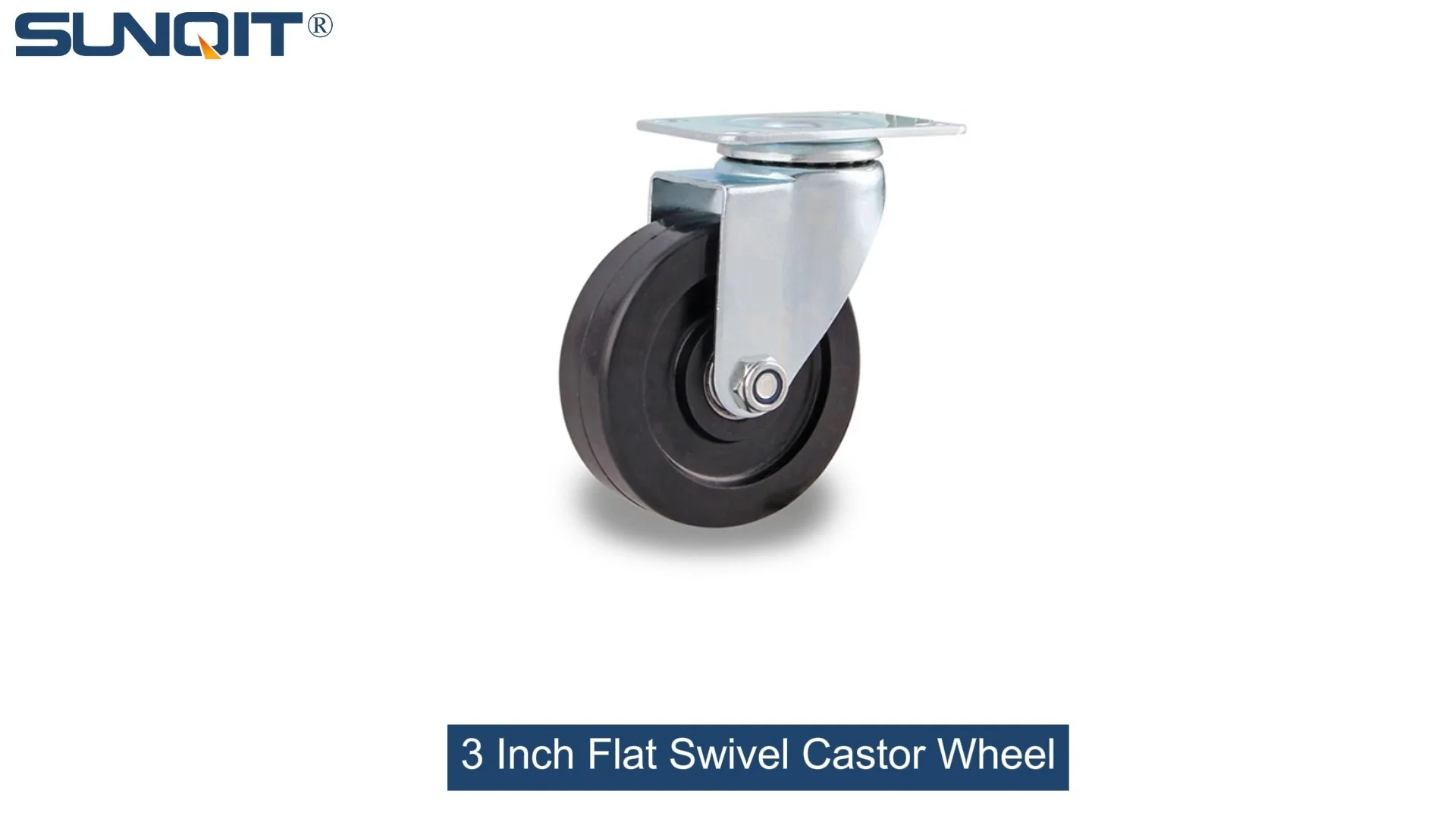
Flat Swivel Castor Wheel
Chair Casters Ball Bearing Wheels Rubber Base. Resistant to abrasion, impact and corrosion. Heavy payload can hold 70-90Kgs per pcs,which can make it works at a stable and smooth status.
In the fast-paced world of communication equipment manufacturing, where precision meets productivity, every component—no matter how small—plays a critical role in keeping operations running smoothly. From assembling intricate circuit boards for 5G routers to testing fiber optic transceivers, the industry demands flexibility, efficiency, and adaptability. One often-overlooked hero in this ecosystem? The flat swivel castor wheel. These unassuming components, designed for mobility and stability, are quietly transforming how workbenches, trolleys, and material racks operate on factory floors. Let's dive into their impact, exploring real-world use cases that highlight why they've become indispensable in modern communication equipment manufacturing.
The Unique Challenges of Communication Equipment Manufacturing
Communication equipment manufacturing is a high-stakes field. Products like routers, switches, and transceivers require microscopic precision—even a tiny misalignment can lead to signal interference or product failure. At the same time, production lines must be agile enough to adapt to rapid technological shifts (think: the transition from 4G to 5G, or the rise of IoT devices). Add to this the pressure to reduce downtime, minimize waste, and ensure worker safety, and it's clear: the manufacturing environment itself needs to be as dynamic as the products being built.
Traditional fixed workstations and static material storage systems often fall short here. Technicians may need to reconfigure assembly lines overnight to accommodate a new product model. Heavy components—like metal chassis or bulk quantities of circuit boards—need to be moved safely and efficiently across the factory floor without disrupting ongoing work. And in cleanroom environments, where dust and static electricity are constant threats, even the tools used to move equipment must meet strict standards.
This is where flat swivel castor wheels step in. Unlike rigid fixed casters or bulky industrial wheels, these castors combine 360-degree mobility with a low-profile, flat design that ensures stability even when supporting heavy loads. Their ability to swivel smoothly and lock securely makes them ideal for environments where precision and flexibility are non-negotiable.
What Are Flat Swivel Castor Wheels?
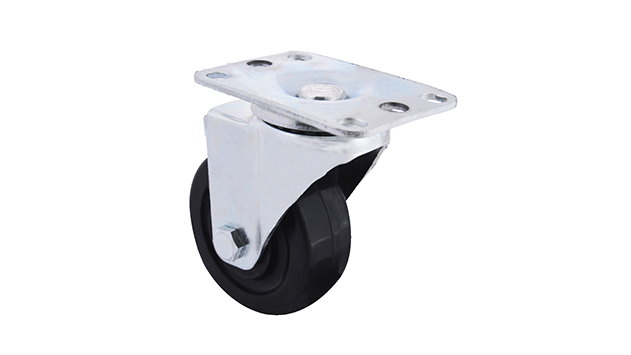
Before diving into use cases, let's clarify what sets flat swivel castor wheels apart. At their core, these are wheel assemblies mounted on a flat plate (the "flat" in their name) that allows them to rotate freely in any direction (the "swivel"). They typically feature a brake mechanism—either a total lock (which locks both the wheel and swivel movement) or a directional lock (which keeps the wheel straight but allows swiveling)—to secure the load in place when needed. The wheels themselves are often made from materials like polyurethane, rubber, or nylon, chosen for their durability, floor protection, and resistance to chemicals or static electricity (critical for ESD-sensitive environments).
What makes them particularly valuable in communication equipment manufacturing is their low center of gravity. The flat plate design sits close to the ground, reducing the risk of tipping even when the load is unevenly distributed—say, a workbench loaded with heavy testing equipment on one side. This stability is crucial when working with delicate components that can't afford to be jostled.
Use Case 1: Agile Workbenches for Dynamic Assembly
Workbenches are the heart of any manufacturing operation, and in communication equipment production, they're where the magic happens. Whether it's soldering surface-mount components onto PCBs, testing signal strength with specialized meters, or inspecting finished products under microscopes, technicians spend hours at these workstations. But with product lines changing quarterly (or even monthly), a fixed workbench can quickly become a liability.
Enter the workbench equipped with flat swivel castor wheels. Imagine a 5G router assembly line where, one week, technicians are building small-form-factor home routers, and the next, they're tasked with larger enterprise-grade switches. With castor-equipped workbenches, the entire setup can be reconfigured in hours instead of days. A technician might wheel their workbench closer to a component storage rack to reduce walking time, or shift it to align with a new testing station. When the line is reconfigured, the workbenches glide into place with minimal effort—no need for forklifts or heavy lifting.
But mobility isn't the only benefit. Many communication equipment components are sensitive to electrostatic discharge (ESD), which can fry delicate microchips. Flat swivel castor wheels designed with conductive materials (like ESD-safe polyurethane) ensure that any static buildup on the workbench is grounded, protecting both the product and the technician. This is especially critical in cleanrooms or ESD-controlled zones, where even a small static spark can lead to costly defects.
Take, for example, a leading manufacturer of fiber optic transceivers. Their assembly workbenches, each fitted with four flat swivel castor wheels (two with total locks), allow technicians to move freely between stations. When soldering, they lock the castors to keep the bench stable; when moving to the next phase (inspection), they unlock and reposition in seconds. The result? A 20% reduction in time spent reconfiguring workstations and a 15% drop in ESD-related product failures.

Use Case 2: Turnover Trolleys and Racks for Seamless Material Flow
In any manufacturing process, material flow is the lifeblood of productivity. Raw materials, subassemblies, and finished goods need to move from storage to assembly to shipping without bottlenecks. In communication equipment manufacturing, where components range from tiny resistors to large metal enclosures, this flow must be both efficient and gentle—rough handling can damage sensitive parts.
Turnover trolley and rack systems, outfitted with flat swivel castor wheels, are revolutionizing this aspect of the workflow. Unlike traditional fixed racks or rigid trolleys, these mobile units can navigate tight spaces, weave between stationary equipment, and even be customized to fit specific component sizes. For instance, a turnover trolley designed to hold bulk quantities of circuit boards might feature dividers to prevent shifting, while a rack for metal chassis could have reinforced shelves—all mounted on castors that glide smoothly over concrete or epoxy floors.
Consider a scenario where a production line runs low on a critical component: say, the plastic bezels used in router casings. Instead of sending a technician to the warehouse to manually retrieve a box (wasting 15-20 minutes round-trip), a turnover trolley loaded with bezels—equipped with flat swivel castors—can be wheeled directly to the assembly line. The castors' swivel function allows the trolley to make sharp turns around corners, even in narrow aisles, and the flat plate design ensures the trolley sits low to the ground, preventing the bezels from tipping during transport.
Another example: finished products ready for quality control (QC). A mobile rack fitted with flat swivel castors can be loaded with routers, then wheeled directly into the QC lab. Technicians there can lock the castors, inspect each unit, and then unlock to move the rack to the packaging station—eliminating the need to transfer products between multiple carts. This not only saves time but also reduces the risk of damage from repeated handling.
In lean manufacturing terms, this is all about eliminating "motion waste"—the unnecessary movement of people or materials. By making turnover trolleys and racks mobile with flat swivel castors, manufacturers cut down on walking time, reduce delays, and keep production flowing at a steady pace.

Use Case 3: Integrating with Lean Systems for Workflow Optimization
Modern communication equipment manufacturing isn't just about making products—it's about making them leanly . Lean systems, which focus on minimizing waste and maximizing value, have become a cornerstone of the industry. From just-in-time (JIT) inventory to continuous improvement (kaizen), lean principles demand that every process add value, and every tool support that goal.
Flat swivel castor wheels align perfectly with this philosophy. By enabling mobility, they turn static workstations and storage systems into dynamic assets that can adapt to changing demands—key for JIT production, where materials and workstations are only brought in as needed. For example, a manufacturer using a lean system might set up a "U-shaped" assembly line, where workers stand in the center and components are delivered to them via mobile trolleys. Flat swivel castors on these trolleys ensure they can circle the U-shape smoothly, keeping components within arm's reach and reducing unnecessary movement.
Another lean principle is "poka-yoke" (mistake-proofing), and flat swivel castors contribute here too. Many models come with visual indicators (like red brake levers) to show when the castor is locked or unlocked, reducing the risk of accidental movement during critical tasks (e.g., soldering or calibration). Some even feature "soft-start" swivel mechanisms, which prevent sudden jerks when moving heavy loads—protecting both the product and the worker.
Let's look at a real-world example of lean integration. A global telecom equipment manufacturer recently reorganized its production floor using lean principles, replacing fixed racks with mobile units on flat swivel castors. They also outfitted their assembly workbenches with the same castors. The result? A 30% reduction in floor space usage (since mobile units can be stored when not in use), a 25% increase in on-time deliveries, and a 10% boost in overall productivity. Workers reported less fatigue from reduced walking, and the company saw a drop in overtime costs as processes became more efficient.
In essence, flat swivel castor wheels act as the "glue" that holds lean systems together. They turn static, rigid environments into flexible, responsive ones where every square foot of floor space and every minute of labor is optimized for value.
Comparing Flat Swivel Castor Wheels to Other Mobility Solutions
To truly appreciate the value of flat swivel castor wheels, it helps to compare them to other common mobility solutions in manufacturing. Let's break down how they stack up against rigid casters, ball transfer units, and heavy-duty industrial wheels in key areas like mobility, stability, and suitability for communication equipment manufacturing.
| Feature | Flat Swivel Castor Wheels | Rigid Casters | Ball Transfer Units | Heavy-Duty Industrial Wheels |
|---|---|---|---|---|
| Mobility | 360° swivel for omnidirectional movement; easy to maneuver in tight spaces. | Only moves forward/backward; difficult to turn in narrow aisles. | All-direction movement but requires manual pushing; not ideal for heavy loads. | Good for straight-line movement but bulky; hard to swivel in tight areas. |
| Stability | Low-profile flat plate design reduces tipping risk; locks securely when needed. | Stable in straight lines but unstable during turns; no swivel lock option. | Prone to wobbling with uneven loads; no locking mechanism. | Stable for heavy loads but high center of gravity increases tipping risk. |
| Load Capacity | Supports 100–500kg per castor (depending on size); ideal for workbenches/trolleys. | Similar load capacity but limited by directional movement. | Low (typically <50kg per unit); not suitable for heavy equipment. | High (1000kg+ per wheel) but overkill for most communication manufacturing needs. |
| ESD Compatibility | Available with conductive wheels for ESD-sensitive environments. | Rarely ESD-rated; rubber/plastic wheels may generate static. | Not designed for ESD control; metal balls can conduct but lack grounding features. | Some ESD options, but bulkiness makes them impractical for workbenches. |
| Suitability for Communication Manufacturing | Excellent: balances mobility, stability, and ESD safety for dynamic lines. | Poor: lacks flexibility for frequent reconfigurations. | Limited: only useful for light, manual material transfer. | Overkill: better for shipping/receiving, not assembly line agility. |
As the table shows, flat swivel castor wheels strike a unique balance that's hard to match. They offer the mobility needed for agile manufacturing, the stability required for precision work, and the adaptability to fit into lean systems—all without the bulk or limitations of other options.
Choosing the Right Flat Swivel Castor Wheels: Key Considerations
Not all flat swivel castor wheels are created equal. To maximize their benefits in communication equipment manufacturing, it's important to select the right model for your specific needs. Here are the key factors to consider:
Load Capacity
Start by calculating the total weight the castors will need to support. This includes the weight of the equipment (e.g., a workbench or trolley) plus the maximum load it will carry (components, tools, etc.). Divide this total by the number of castors (typically 4 per unit) to get the required load capacity per castor. For example, a workbench weighing 100kg that holds 300kg of components needs castors rated for at least 100kg each (400kg total ÷ 4 castors).
Floor Type
The factory floor material matters. For concrete floors, nylon or polyurethane wheels are durable and provide good traction. For epoxy or vinyl floors, rubber wheels are gentler, reducing the risk of scratches. In cleanrooms, where debris must be minimized, sealed-bearing wheels (which prevent dust buildup) are a must.
Brake Type
Most flat swivel castors come with either a total lock (locks wheel and swivel) or a directional lock (locks wheel only). In assembly areas where stability is critical (e.g., soldering), total locks are essential. For trolleys used primarily for transport, directional locks may suffice.
ESD Requirements
If working with ESD-sensitive components (like circuit boards), opt for castors with conductive wheels or grounding plates. These ensure static electricity is dissipated safely to the floor, preventing damage to components.
Environmental Conditions
Consider factors like temperature, humidity, and exposure to chemicals. For high-temperature areas (e.g., near ovens used for curing coatings), heat-resistant wheels (like phenolic resin) are better. In damp environments, stainless steel frames prevent rust.
The Future of Flat Swivel Castor Wheels in Manufacturing
As communication equipment manufacturing continues to evolve—with trends like automation, AI-driven predictive maintenance, and modular production lines—the role of flat swivel castor wheels is only set to grow. Here's a glimpse of what the future might hold:
Smart Castors: Imagine castors embedded with sensors that track movement, load weight, and brake usage. This data could feed into a factory's IoT system, alerting managers to maintenance needs (e.g., a wheel bearing wearing out) or inefficiencies (e.g., a trolley being moved unnecessarily). Smart castors could even integrate with autonomous mobile robots (AMRs), allowing AMRs to "tow" castor-equipped workbenches to new locations automatically.
Eco-Friendly Materials: With sustainability becoming a priority, manufacturers are exploring castor wheels made from recycled plastics or bio-based polymers. These would offer the same durability as traditional materials but with a lower environmental footprint.
Customization: As production lines become more modular, castor wheels may be designed to snap on/off quickly, allowing for easy upgrades or replacements. For example, swapping out a standard wheel for an ESD-safe one in minutes when switching between product lines.
Conclusion: Small Wheels, Big Impact
In the grand scheme of communication equipment manufacturing—where cutting-edge technology and precision engineering take center stage—flat swivel castor wheels might seem like minor players. But as we've explored, their impact is anything but small. They enable the agility needed to keep up with rapid product cycles, the stability required for precision work, and the efficiency that lean systems demand. From workbenches that adapt to new assembly processes overnight to turnover trolleys that keep materials flowing without waste, these wheels are the unsung heroes ensuring that the routers, switches, and transceivers powering our connected world are built better, faster, and safer.
As manufacturing continues to advance, one thing is clear: the humble flat swivel castor wheel will remain a cornerstone of innovation. After all, in a world where every second and every centimeter counts, the ability to move freely—without sacrificing stability—is more than a convenience. It's a competitive advantage.