- Company Articles
- Products and Technology
- Application Cases
- Flat Swivel Castor Wheels in Lean Manufacturing: Supporting Continuous Improvement

Flat Swivel Castor Wheels in Lean Manufacturing: Supporting Continuous Improvement
Related Product
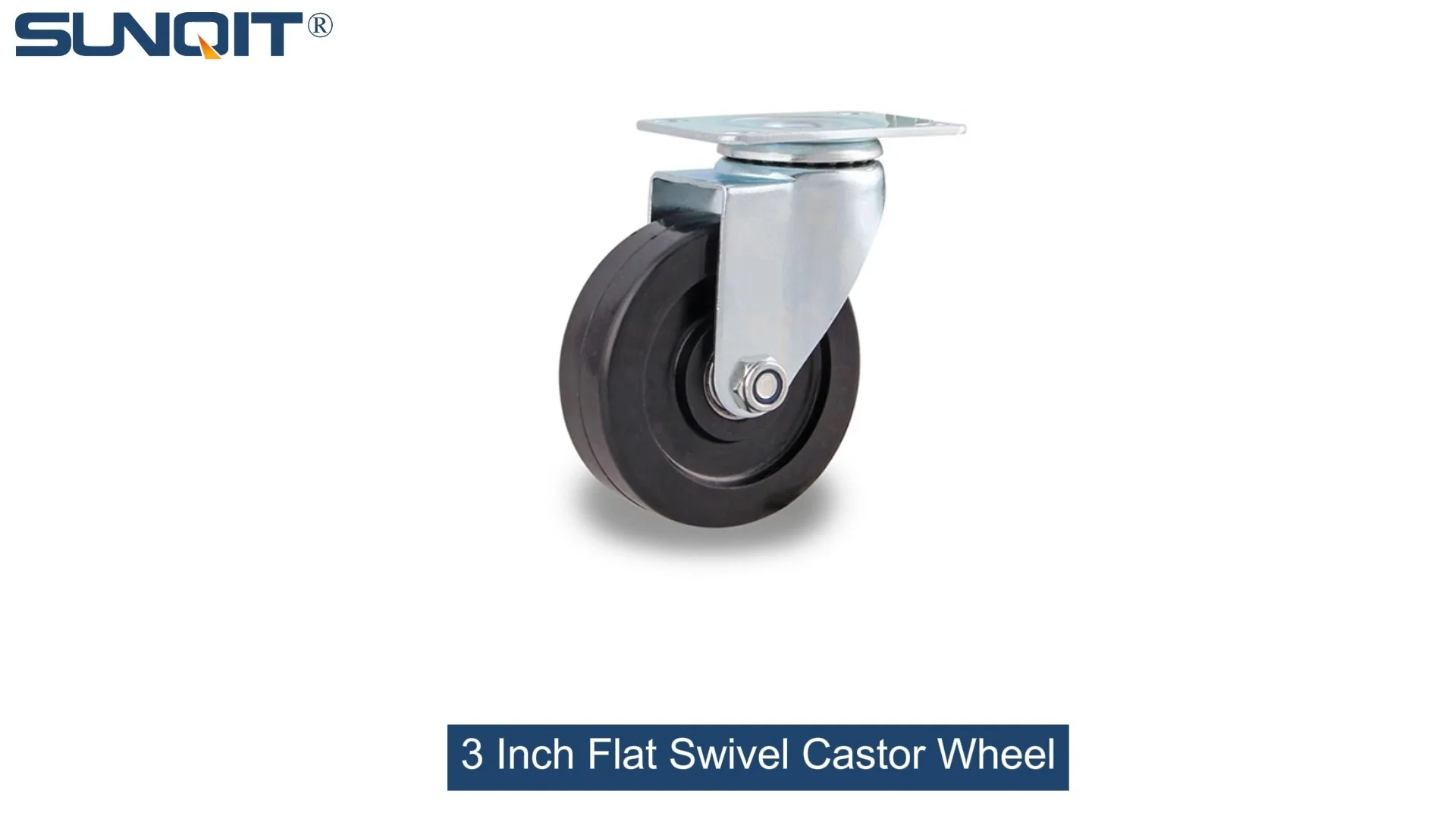
Flat Swivel Castor Wheel
Chair Casters Ball Bearing Wheels Rubber Base. Resistant to abrasion, impact and corrosion. Heavy payload can hold 70-90Kgs per pcs,which can make it works at a stable and smooth status.
In the world of manufacturing, where every second counts and efficiency is the name of the game, lean manufacturing stands as a guiding philosophy. At its core, lean is about stripping away waste, streamlining processes, and fostering a culture of continuous improvement. But here's the thing: lean isn't just about big-picture strategies or high-tech automation. Often, the most impactful changes come from the smallest, most unassuming components—like the wheels that keep your workspace moving. Enter flat swivel castor wheels: a humble yet powerful tool that's quietly revolutionizing how lean systems operate, from the assembly line to the warehouse floor.
If you've ever walked through a well-run factory, you've probably seen them without realizing it: those unobtrusive wheels attached to workbenches, flow racks, and material carts, allowing them to glide smoothly across the floor with a gentle push. These are flat swivel castor wheels, and they're far more than just "wheels on a cart." They're the unsung heroes of mobility, flexibility, and adaptability—three pillars that make lean manufacturing not just a concept, but a daily reality. In this article, we'll dive into why these small components matter, how they integrate with key lean tools like workbenches and flow racks, and why they're becoming indispensable for manufacturers striving to do more with less.
Understanding Lean Manufacturing: Why Mobility Matters
Before we zoom in on castor wheels, let's take a step back to understand the "why" behind lean. Lean manufacturing, born from the Toyota Production System (TPS), is built on the idea of eliminating "muda"—the Japanese term for waste. There are seven classic types of waste in lean: overproduction, waiting, transportation, motion, inventory, defects, and overprocessing. Notice two that stand out here: transportation and motion. These are the wastes of moving people or materials unnecessarily, and they're where mobility becomes a game-changer.
Imagine a traditional factory setup: workbenches bolted to the floor, tools and materials stored in fixed locations, and workers trekking back and forth to retrieve what they need. In this scenario, motion waste is everywhere. A worker might walk 50 feet to grab a part, then 50 feet back—multiply that by hundreds of workers and thousands of parts per day, and you're looking at hours of lost productivity. Transportation waste is just as insidious: if materials are stuck in a static flow rack at one end of the facility, you're burning time and resources moving them to where they're needed.
Lean solves this by flipping the script: instead of making people and processes adapt to fixed infrastructure, it makes infrastructure adapt to people and processes. That's where mobility comes in. When workbenches, flow racks, and carts can move freely, materials go to the worker—not the other way around. Bottlenecks dissolve. Setup times shrink. And suddenly, "continuous improvement" isn't just a buzzword; it's something teams can act on daily, reconfiguring their workspace in minutes to test a new layout or respond to a shift in demand.
Flat Swivel Castor Wheels: Design That Drives Lean
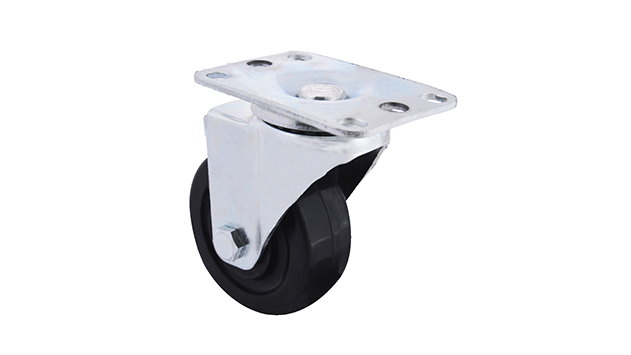
So, what makes flat swivel castor wheels different from your average caster? Let's break it down. First, the "flat" part: these wheels are designed with a low-profile base, which keeps the equipment they're attached to stable and close to the ground. That might not sound exciting, but in a manufacturing setting, stability is non-negotiable—especially when you're moving heavy loads like circuit boards on an ESD workbench or metal parts on a flow rack. A low center of gravity reduces the risk of tipping, which means safer operations and fewer defects (another waste lean aims to eliminate).
Then there's the "swivel" mechanism. Unlike fixed casters, which only roll forward and backward, swivel casters can rotate 360 degrees. This might seem like a small detail, but it's transformative for maneuverability. Picture a workbench loaded with tools: with fixed casters, you'd have to push, pull, and pivot to get it into place, wasting time and effort. With swivel casters, you can glide it around corners, squeeze through tight aisles, and position it exactly where you need it—all with minimal force. That's less motion waste, less physical strain on workers, and more time spent on value-adding tasks.
But the real magic is in the combination of flat design and swivel functionality. Let's say you're running an assembly line for smartphones. Your team needs to switch between assembling two models: Model A, which requires a specific set of tools, and Model B, which needs others. With a static workbench, you'd either clutter the space with tools for both models (inventory waste) or spend 15 minutes swapping out tools between batches (waiting waste). But with a workbench mounted on flat swivel castor wheels? You can have two dedicated workbenches—one for Model A, one for Model B—each pre-loaded with the right tools. When the production run switches, you simply roll in the new workbench and get started. Setup time drops from 15 minutes to 30 seconds. That's lean in action.
Integrating Flat Swivel Castor Wheels with Key Lean Tools
Flat swivel castor wheels don't work in isolation. They're part of a larger ecosystem of lean tools, enhancing the functionality of equipment you already use. Let's look at three key examples: workbenches, flow racks, and lean systems as a whole.
Workbenches: From Static to Dynamic
Workbenches are the heart of any assembly operation. They're where the magic happens—the soldering, the screwing, the inspecting. But a static workbench is a missed opportunity for lean. Enter the mobile workbench: same sturdy surface, same tool storage, but now with flat swivel castor wheels. Suddenly, that workbench isn't just a place to work—it's a portable workstation that can follow the flow of production.
Take an automotive parts manufacturer, for example. Their assembly line produces door handles, and each handle goes through three stages: cutting, drilling, and polishing. In a static setup, workers at each stage are tied to their fixed benches, and parts are passed along via conveyor belts (transportation waste). With mobile workbenches on flat swivel castor wheels, the process flips: the cutting bench moves to the drilling bench, which then moves to the polishing bench. Parts never leave the workbench, reducing the risk of damage (defects) and cutting down on transportation time. Plus, if a new stage is added—say, a quality check—the team can roll in a fourth mobile workbench without rearranging the entire line. That's the flexibility lean thrives on.
Flow Racks: Keeping Materials in Motion
Flow racks are another staple of lean material handling. Designed to hold bins or containers so that materials "flow" to the front as they're used (a practice called FIFO, or first-in-first-out), they're great for reducing inventory waste. But traditional flow racks are fixed to the floor, which means they can only serve one area of the facility. Add flat swivel castor wheels, and suddenly you have a "mobile flow rack"—a self-contained unit that can be wheeled directly to the assembly line when materials run low.
Let's say a warehouse stocks small electronic components: resistors, capacitors, diodes. Normally, these are stored in static flow racks in the warehouse, and line workers have to walk to the warehouse to restock (motion waste). With mobile flow racks on castor wheels, the warehouse team can pre-load racks with the day's needed components and roll them to the assembly line overnight. When workers arrive, the materials are right where they need them. No more walking, no more waiting, no more interruptions. It's a simple change, but it adds up: one study found that mobile flow racks reduced material retrieval time by 40% in a electronics plant, freeing up workers to focus on assembly.
Lean Systems: Building a Culture of Adaptability
At the end of the day, lean is about more than tools—it's about culture. A lean system encourages teams to experiment, iterate, and find better ways to work. But how can a team experiment if their workspace is set in stone? Flat swivel castor wheels break down that barrier by making reconfiguration easy. Want to test a U-shaped assembly line instead of a straight one? Roll the workbenches into place. Need to create a temporary station for a new product launch? Grab a mobile flow rack and a workbench, and you're good to go.
This adaptability fosters ownership. When workers can physically rearrange their workspace to fit their needs, they feel empowered to drive improvement. It's no longer "management's job" to fix processes—it's everyone's. That's the culture of continuous improvement lean is all about, and it starts with tools that make change possible.

The Benefits: Beyond "Just Rolling Around"
So, we've talked about how flat swivel castor wheels work and how they integrate with lean tools. But let's get concrete: what tangible benefits do they deliver? Let's break it down into four key areas.
1. Reduced Waste (The Core of Lean)
At the top of the list is waste reduction. As we've seen, flat swivel castor wheels tackle motion waste (less walking), transportation waste (materials move to workers), waiting waste (faster setup times), and inventory waste (no need to stockpile tools/parts at every station). A study by the Lean Enterprise Institute found that facilities using mobile equipment (including castor-equipped workbenches and racks) reduced overall waste by an average of 22% within six months. For a mid-sized manufacturer, that translates to thousands of dollars saved annually.
2. Improved Ergonomics and Worker Satisfaction
Lean isn't just about efficiency—it's about people. Heavy lifting, awkward bending, and repetitive walking can lead to fatigue, injuries, and high turnover. Flat swivel castor wheels ease these burdens by letting workers position equipment at the optimal height and distance. For example, a workbench on casters can be rolled to a worker's seated position, reducing the need to stand for hours. A flow rack can be adjusted to eye level, eliminating the need to bend down to retrieve parts. Happier, healthier workers are more productive workers—and they stay with the company longer.
3. Faster Response to Change
In today's manufacturing landscape, change is constant. Customer demands shift, supply chains disrupt, and new regulations emerge. Lean systems need to adapt quickly, and flat swivel castor wheels make that possible. During the COVID-19 pandemic, for instance, many manufacturers pivoted to producing PPE. Facilities with mobile workbenches and flow racks were able to reconfigure their lines in days instead of weeks, helping meet the urgent demand. In a world where agility is survival, that's a competitive advantage.
4. Scalability Without Overhead
Growing your business shouldn't mean overhauling your entire workspace. With flat swivel castor wheels, you can scale up (or down) without investing in new infrastructure. Need to add a third assembly line? Roll in a few extra workbenches and flow racks. Seasonal demand spike? Bring in temporary mobile stations. When the season ends, roll them out and free up space. It's lean growth—no wasted square footage, no unnecessary capital expenditure.

Choosing the Right Flat Swivel Castor Wheels: What to Look For
Not all flat swivel castor wheels are created equal. To get the most out of them, you need to choose the right ones for your specific needs. Here are the key factors to consider:
- Load Capacity: How much weight will the wheel need to support? A light-duty workbench with hand tools might only need 250 lbs per wheel, while a flow rack loaded with metal parts could require 1,000 lbs or more. Always check the load rating—overloading casters leads to premature wear and safety risks.
- Floor Type: Are you rolling on concrete, tile, or hardwood? Soft rubber wheels work best on hardwood to prevent scratches, while polyurethane wheels are durable for concrete. For uneven floors, look for wheels with shock-absorbing features to keep loads stable.
- Brake Type: Once you position your equipment, you need it to stay put. Look for casters with reliable brakes—either total-lock (locks both swivel and wheel movement) or directional-lock (locks wheel rotation but allows swiveling). For workbenches, total-lock brakes are a must to prevent movement during assembly.
- Environment: Do you work in a cleanroom, a wet environment, or an area with static electricity (like electronics manufacturing)? Specialized casters exist for these scenarios—ESD-safe wheels for static control, stainless steel wheels for corrosion resistance, and non-marking wheels for cleanrooms.
- Noise Level: A quiet workspace is a productive workspace. Look for wheels with precision bearings and soft treads to reduce rolling noise—your workers (and your sanity) will thank you.
To help visualize this, here's a quick comparison of common flat swivel castor wheel types and their best uses:
| Castor Type | Load Capacity (lbs per wheel) | Wheel Material | Brake Type | Ideal Application | Key Advantage |
|---|---|---|---|---|---|
| Light-Duty Flat Swivel | 200–500 | Rubber | Directional-lock | Small workbenches, tool carts | Quiet, affordable, easy to maneuver |
| Heavy-Duty Flat Swivel | 1,000–2,500 | Polyurethane | Total-lock | Flow racks, industrial workbenches | Durable, handles heavy loads, shock-resistant |
| ESD-Safe Flat Swivel | 500–1,500 | Conductive rubber | Total-lock | Electronics assembly, cleanrooms | Prevents static discharge, protects sensitive components |
| Stainless Steel Flat Swivel | 800–2,000 | Stainless steel | Total-lock | Wet environments, food processing | Corrosion-resistant, easy to clean |
The Future of Lean: Flat Swivel Castor Wheels and Beyond
As manufacturing evolves, so too will the tools that support lean. What does the future hold for flat swivel castor wheels? Here are a few trends to watch:
Smart Casters: Imagine castors embedded with sensors that track movement, measure load weight, and alert maintenance when wheels need lubrication. This data could help optimize workflows—for example, identifying which workbenches are moved most often and repositioning them permanently to reduce motion waste. It's lean meets Industry 4.0.
Modular Systems: Manufacturers are increasingly moving toward modular workspaces, where equipment can be reconfigured in minutes. Flat swivel castor wheels will play a key role here, paired with lightweight aluminum profiles and quick-connect joints to create custom setups on the fly. Need a U-shape one day, a straight line the next? Just roll, connect, and go.
Sustainability: Lean and sustainability go hand in hand—both aim to reduce waste. Future castors may use recycled materials or energy-efficient bearings, aligning with manufacturers' goals to lower their carbon footprint. Some companies are already experimenting with casters made from plant-based rubber, cutting down on plastic waste.
Conclusion: Small Wheels, Big Impact
At the end of the day, lean manufacturing is about the details. It's about asking, "How can we make this 1% better?" Flat swivel castor wheels might not grab headlines, but they answer that question in spades. They turn static workspaces into dynamic hubs, reduce waste in ways that add up, and empower teams to own continuous improvement.
So, the next time you walk through your factory, take a look at those wheels under the workbench or flow rack. They're not just moving equipment—they're moving your lean journey forward. And in the world of manufacturing, where every second and every cent counts, that's more than just progress. It's success.