- Company Articles
- Products and Technology
- Product knowledge
- Flat Swivel Castor Wheels vs. Caster Wheels: Are They Interchangeable?

Flat Swivel Castor Wheels vs. Caster Wheels: Are They Interchangeable?
Related Product
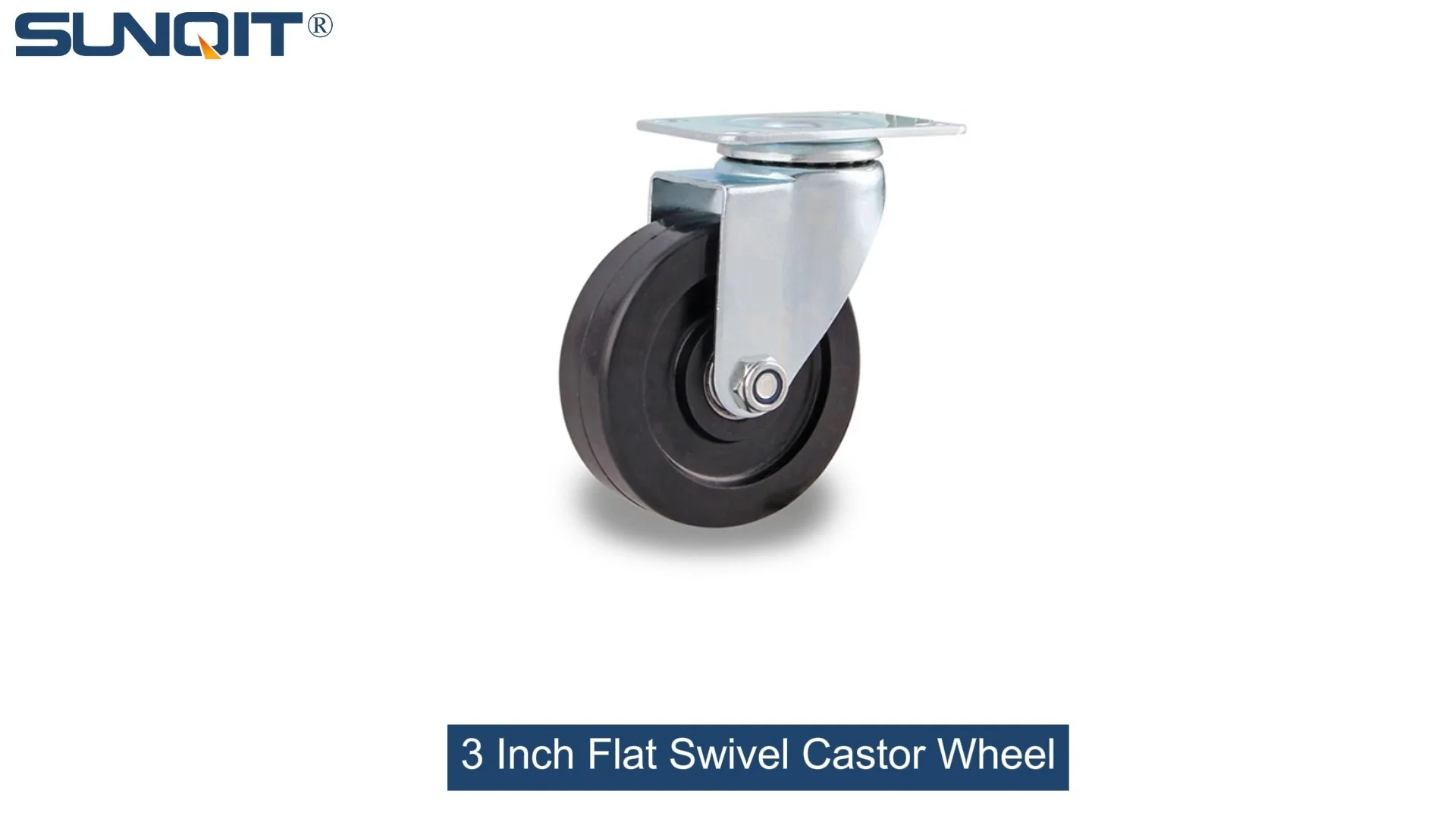
Flat Swivel Castor Wheel
Chair Casters Ball Bearing Wheels Rubber Base. Resistant to abrasion, impact and corrosion. Heavy payload can hold 70-90Kgs per pcs,which can make it works at a stable and smooth status.
Imagine standing in a busy warehouse, surrounded by stacks of boxes and the hum of machinery. Maria, the facility manager, is staring at a broken caster wheel on a critical tool trolley. The maintenance team needs to replace it fast to keep production on track, but the storage room has two boxes labeled: "flat swivel castor wheels" and "caster wheels." She pauses, scratching her head. Are these the same thing? Can she just grab one and bolt it on? If you've ever found yourself in a similar situation—whether in a factory, a hospital, or even your own garage—you know how confusing caster terminology can get. Today, we're diving deep into the world of flat swivel castor wheels and standard caster wheels to answer that burning question: Are they interchangeable?
First Things First: What Even Are Flat Swivel Castor Wheels?
Let's start with the star of the show: the flat swivel castor wheel . Despite the technical-sounding name, these are actually one of the most common caster types you'll encounter in light to medium-duty applications. What sets them apart? Let's break down their design, components, and where they shine.
Design: The "Flat" and "Swivel" in Flat Swivel Castor Wheels
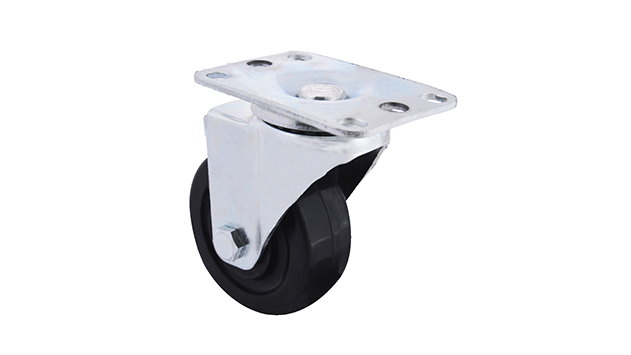
The "flat" in their name refers to their mounting style. Unlike some casters that use a stem (a long rod that inserts into a socket), flat swivel castors attach via a flat, plate-like bracket. This bracket is bolted or screwed directly onto the bottom of equipment—think workbenches, small trolleys, or even office chairs. The "swivel" part? That's the magic that lets the wheel rotate 360 degrees, making it easy to maneuver tight corners or change direction with minimal effort.
Picture a mobile workbench in a electronics assembly line. It needs to glide smoothly between stations, even when loaded with tools and components. A flat swivel castor wheel here would allow the operator to pivot the bench with a gentle push, avoiding collisions with nearby machinery. The flat mounting plate ensures stability, keeping the bench from wobbling as it moves—critical when delicate parts are involved.
Components: More Than Just a Wheel
A flat swivel castor wheel isn't just a wheel on a stick. It's a carefully engineered system with several key parts:
- The Wheel: Usually made of rubber, polyurethane, or nylon. Rubber is quiet and non-marking (great for hospitals or retail spaces), polyurethane balances durability and grip, and nylon handles heavier loads without scuffing floors.
- The Swivel Head: Contains bearings that allow the wheel to rotate. Ball bearings are standard for smooth movement, while roller bearings might be used for heavier applications.
- The Flat Bracket: The metal plate that connects the wheel to the equipment. It's typically made of steel or aluminum, with pre-drilled holes for easy mounting.
- Brakes (Optional): Some models include a brake lever that locks the wheel in place, preventing unwanted movement. Handy for workbenches that need to stay put during use!
Where You'll Find Flat Swivel Castor Wheels
These casters thrive in environments where mobility and precision matter, but heavy lifting doesn't. Common spots include:
- Workbenches and Tables: Mobile workstations in labs, workshops, or assembly lines.
- Light-Duty Trolleys: Carts used to transport tools, medical supplies, or retail inventory.
- Office Furniture: Task chairs, printer stands, or rolling file cabinets.
- Food Service: Small utility carts in restaurants or cafes (often with non-marking rubber wheels to protect floors).
Now, Let's Talk About "Caster Wheels": The Big umbrella Term
Here's where confusion often starts: the term "caster wheel" is a broad category that includes all types of wheeled devices mounted to equipment for mobility. That means flat swivel castor wheels are technically a subset of caster wheels! But when people say "caster wheels" without modifiers, they're usually referring to the more general, all-purpose variety—think of them as the "jack-of-all-trades" of the caster world.
Caster Wheels: A Family of Mobility Solutions
Standard caster wheels come in two main flavors: swivel and rigid. Swivel casters rotate 360 degrees (like flat swivel castors), while rigid casters only roll forward and backward—no turning. They can also have different mounting styles: stem-mounted (the "stick" we mentioned earlier), plate-mounted (similar to flat swivel, but sometimes larger), or even bolt-hole patterns that vary by manufacturer.
What makes them "standard"? Their versatility. You'll find them on everything from a 50-pound toolbox to a 5,000-pound industrial machine. The key difference from flat swivel castors? They're often built for heavier loads, more rugged environments, or specific mobility needs.
Components: Built to Adapt
Like flat swivel castors, standard caster wheels have core components, but with more variety to handle different jobs:
- The Wheel: Materials range from soft rubber (for quiet movement) to forged steel (for heavy machinery). Size matters too—larger wheels (6+ inches) roll over cracks and debris easier, while smaller ones (2-3 inches) are better for tight spaces.
- The Yoke (or Fork): The frame that holds the wheel. For heavy-duty casters, this is often thick steel with reinforced welding to prevent bending under pressure.
- Mounting Style: Stem (hollow or solid), plate (flat or angled), or even threaded for custom installations. This is where things get tricky for interchangeability!
- Locks and Brakes: Some have total-lock brakes (locks both swivel and wheel rotation) for maximum stability, while others have wheel-only locks.
Where Standard Caster Wheels Rule
Standard casters are the workhorses of industries that demand durability and adaptability:
- Heavy Machinery: Forklifts, pallet jacks, and industrial ovens often use large, rigid casters for straight-line stability.
- Medical Equipment: Hospital beds and surgical carts use swivel casters with precision bearings for smooth, quiet movement (you don't want a noisy caster waking a patient!).
- Retail and Warehousing: Pallet racks, delivery trucks, and stockroom trolleys rely on casters that can handle uneven floors and heavy loads.
- Outdoor Use: Construction equipment or garden carts might use pneumatic (air-filled) caster wheels to absorb bumps on rough terrain.
The Critical Differences: Why They're Not Twins
Now that we know what each type is, let's compare them side by side. Spoiler: while they might look similar at first glance, their differences are like night and day in certain scenarios. Here's a breakdown of the key factors that separate flat swivel castor wheels from standard caster wheels:
| Feature | Flat Swivel Castor Wheel | Standard Caster Wheel |
|---|---|---|
| Load Capacity | Light to medium (typically 50-500 lbs per caster) | Light to extra-heavy (50 lbs to 20,000+ lbs per caster) |
| Mounting Style | Flat plate (bolted/screwed directly to equipment) | Plate, stem, threaded, or custom (varies widely) |
| Mobility | 360° swivel (excellent for tight spaces) | Swivel (360°) or rigid (only forward/backward) |
| Best For | Workbenches, small trolleys, office furniture, light medical carts | Industrial machinery, heavy carts, outdoor equipment, hospital beds |
| Durability Needs | Moderate (indoor, smooth floors, occasional use) | High (rough floors, constant use, extreme temperatures) |
Load Capacity: The Breaking Point
One of the biggest deal-breakers for interchangeability is load capacity. A typical flat swivel castor wheel tops out at around 500 pounds per wheel. That's fine for a workbench with a few tools, but if you try to put one on a 2,000-pound industrial mixer? The bracket will bend, the wheel will crack, and you'll be looking at a costly repair (not to mention a safety hazard). Standard caster wheels, on the other hand, are built to handle this—heavy-duty models can support 10,000+ pounds per wheel, thanks to reinforced yokes and thick steel wheels.
Example: A bakery uses a dough mixer on casters to move it between prep tables. If they mistakenly replace a standard heavy-duty caster with a flat swivel castor wheel, the first time they load 500 pounds of dough into the mixer, the caster could collapse. Flour everywhere, a broken mixer, and a delay in production—all avoidable with the right caster.
Mounting: Holes, Stems, and the Problem of Fit
Remember Maria in the warehouse? If her trolley originally had a stem-mounted caster, she can't just bolt on a flat swivel castor wheel—there's no flat surface to attach the plate! Mounting style is often the first barrier to interchangeability. Flat swivel castors require a flat, solid base with pre-drilled holes that match the caster's bracket. Standard casters might use a stem that's 2 inches long, or a plate with a completely different hole pattern.
Even if both are plate-mounted, the hole spacing matters. A flat swivel castor might have holes 3 inches apart, while a standard caster has holes 4 inches apart. Drilling new holes might seem like a quick fix, but it weakens the equipment's frame over time—especially if it's made of thin metal or plastic. Pro tip: Always check the mounting hole pattern (measured center-to-center) before swapping casters!
Mobility: When 360° Isn't Enough (or Too Much)
Flat swivel castors are all about agility—they swivel effortlessly, making them perfect for tight spaces. But what if you need a cart to roll in a straight line for 50 feet without veering off course? That's where rigid standard casters shine. Rigid casters don't swivel, so they keep equipment on track, reducing operator fatigue and the risk of collisions.
Imagine a hospital corridor: a medication cart needs to move smoothly from nurse's station to patient rooms, but it can't drift into oncoming foot traffic. Many carts use a combination: two swivel casters (for turning) and two rigid casters (for straight-line stability). If you replaced the rigid casters with flat swivel castors, the cart would wobble like a shopping cart with a bad wheel—hardly ideal when you're carrying vials of medicine!

So, Can They Be Interchanged? The Short Answer: It Depends.
We've covered the differences, but let's get back to the original question. Are there scenarios where you can swap a flat swivel castor wheel with a standard caster wheel? Yes—but only if a few key conditions are met. Let's break down the "ifs" and "buts."
If… The Load Is Light and the Mounting Matches
Suppose you have a small utility cart that originally came with flat swivel castors, but one broke. You rummage through the storage room and find a standard swivel caster with a flat plate, the same hole pattern, and a load rating of 300 pounds (your cart only carries 100 pounds). In this case, swapping is probably safe! The mounting lines up, the load is well within the caster's capacity, and since both are swivel, mobility won't suffer.
Example: A homebrewer has a cart for transporting ingredients. The original flat swivel castors are worn, but they find a standard swivel caster with the same plate size and hole spacing. The cart only holds 50 pounds of grain, so the standard caster's 200-pound rating is more than enough. This is a textbook case of successful interchangeability.
But… If the Load Is Heavy or the Environment Is Harsh
Now, flip the scenario: your cart carries 800 pounds of auto parts, and the original casters are heavy-duty standard plate casters. You can't replace them with flat swivel castors rated for 500 pounds—even if the mounting holes match. The flat swivel's bracket will bend under the weight, the wheel bearings will burn out, and you'll be replacing casters again in a week (not to mention risking injury).
Environment matters too. Flat swivel castors with rubber wheels are great for smooth, indoor floors, but if you're using the equipment outdoors on gravel or uneven pavement, you need standard casters with pneumatic (air-filled) wheels or large-diameter steel wheels. Rubber wheels on rough terrain will crack, while pneumatic wheels absorb shocks and roll more easily.
The Role of Caster Accessories in Interchangeability
Sometimes, caster accessories can bridge the gap between flat swivel and standard casters. For example, if your equipment has a stem mount but you need a flat swivel castor, a stem-to-plate adapter (a metal plate with a stem that screws into the socket) might work. Or if the hole patterns don't match, spacer washers can help align bolts (though this is a temporary fix, not a permanent solution).
But be cautious: caster accessories add complexity and potential weak points. An adapter might reduce the caster's load capacity by 20%, or a spacer could loosen over time, causing the caster to wobble. When in doubt, consult a caster supplier —they can recommend the right accessory (if any) for your specific setup.

When to Stick with Flat Swivel Castor Wheels
Flat swivel castors aren't just a "light-duty" option—they excel in specific scenarios where their unique design is an advantage. Here are the top reasons to choose them:
- You need precision maneuverability: Think tight aisles, crowded workspaces, or equipment that needs to pivot frequently (like a mobile workbench).
- Weight is under 500 pounds: They're cost-effective for light to medium loads, so no need to overspend on heavy-duty casters.
- Mounting surface is flat and solid: If your equipment has a flat bottom (no curves or recesses), flat swivel castors bolt on easily with minimal modification.
- Quiet operation is key: Rubber or polyurethane wheels on flat swivel castors make less noise than steel wheels—perfect for offices, hospitals, or retail spaces.
When to Choose Standard Caster Wheels
Standard casters are the go-to when you need versatility, durability, or specialized performance. Opt for them if:
- Loads exceed 500 pounds: Heavy-duty standard casters with reinforced yokes and large wheels handle weight without breaking a sweat.
- You need rigid or directional control: Rigid casters keep equipment moving straight, while swivel standard casters with total-lock brakes provide stability when parked.
- Environment is rough: Outdoor use, uneven floors, or exposure to chemicals/extreme temperatures call for rugged materials like steel or high-temp polyurethane.
- Mounting is non-standard: Stem-mounted, threaded, or custom brackets? Standard casters come in more mounting styles to fit unique equipment.
Common Myths About Caster Interchangeability (Busted!)
Before we wrap up, let's debunk a few myths that often lead to caster mix-ups:
Myth #1: "All Casters with Plates Are the Same"
False! A flat swivel castor plate might be 4x4 inches, while a standard caster plate is 6x8 inches. Thickness matters too—flat swivel plates are often 1/8-inch thick, while heavy-duty standard plates are 1/4-inch thick (or more). A thin plate on a heavy load will bend, leading to wobbly equipment.
Myth #2: "Bigger Wheels Are Always Better"
Not necessarily! Larger wheels roll over obstacles easier, but they raise the equipment's center of gravity, making it more likely to tip. For a low-profile workbench, a 3-inch flat swivel castor is safer than a 6-inch standard caster that makes the bench unstable.
Myth #3: "If It Bolts On, It's Fine"
Bolting on a caster that doesn't match the load or mobility needs is a recipe for disaster. We've seen cases where a warehouse swapped flat swivel castors onto a heavy cart "because they fit," only to have the cart collapse mid-transport. Safety first—always prioritize load capacity and environment over "it fits."
Final Thoughts: The Right Caster for the Job
At the end of the day, flat swivel castor wheels and standard caster wheels are both essential tools in the mobility toolbox—but they're not interchangeable in every situation. Flat swivel castors are the agile, light-duty champions of tight spaces and precision movement, while standard casters are the rugged workhorses built for heavy loads and tough environments.
So, what should Maria do with her broken trolley caster? If the original was a flat swivel castor with a 3x3-inch plate, 300-pound rating, and rubber wheel, she should replace it with the same type. If she needs to upgrade to handle heavier loads, she might need a standard caster with a larger plate and steel wheel—but only if the mounting and mobility needs align.
The next time you're faced with a caster replacement, remember: interchangeability isn't about "can I bolt it on?" It's about "will it keep my equipment safe, efficient, and moving smoothly?" When in doubt, reach out to a trusted caster supplier —they'll help you find the perfect match, saving you time, money, and a lot of headaches down the line.
After all, in the world of mobility, the right caster isn't just a wheel—it's the difference between a smooth workflow and a day full of frustrating delays. Choose wisely!