- Company Articles
- Products and Technology
- Product knowledge
- Flat Swivel Castor Wheels with Brake: Safety Features for Medical Trolleys

Flat Swivel Castor Wheels with Brake: Safety Features for Medical Trolleys
Related Product
Flat Swivel Castor Wheel
Chair Casters Ball Bearing Wheels Rubber Base. Resistant to abrasion, impact and corrosion. Heavy payload can hold 70-90Kgs per pcs,which can make it works at a stable and smooth status.
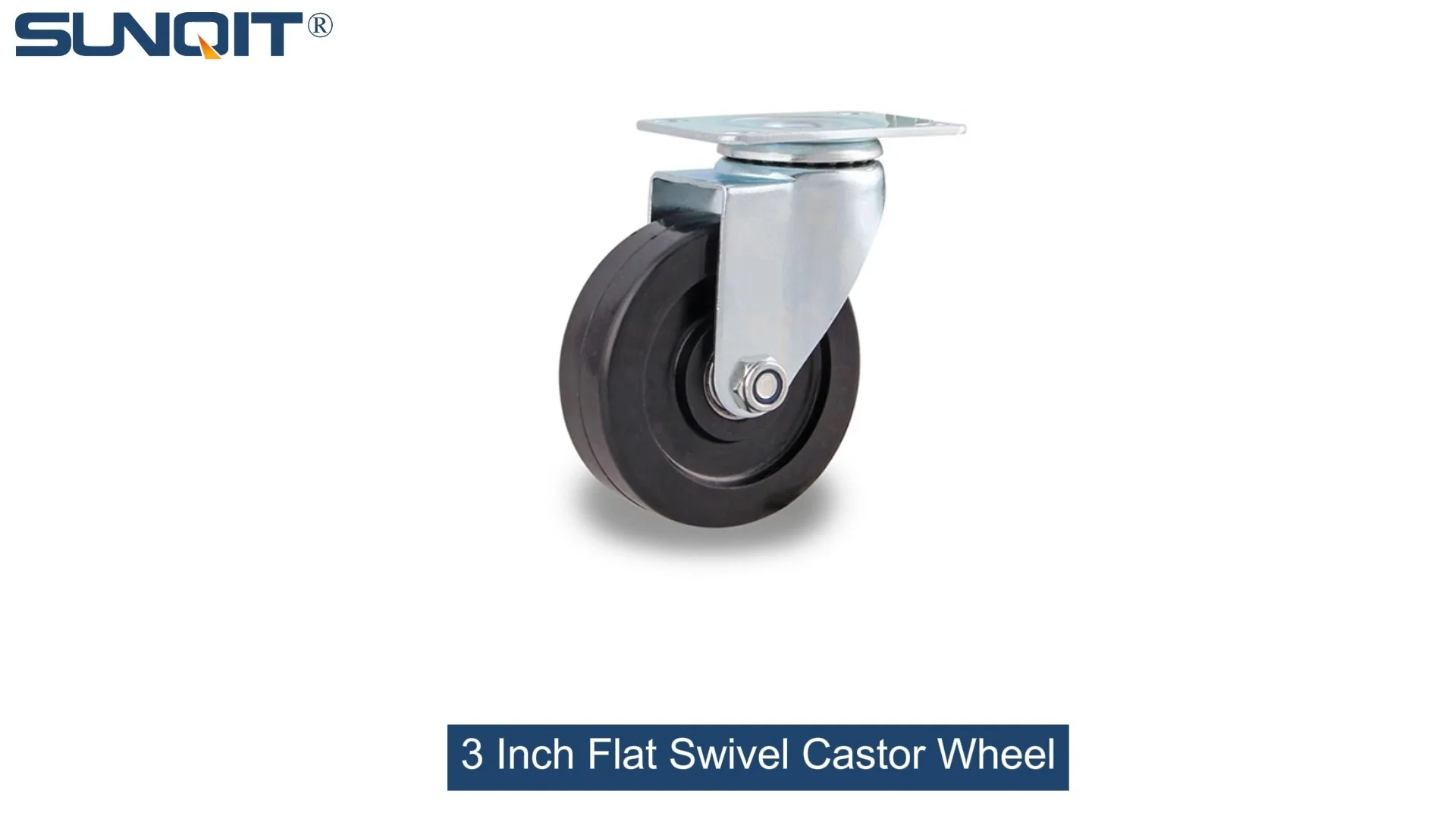
In the fast-paced world of healthcare, every second counts. From emergency rooms to operating theaters, from patient wards to laboratories, medical professionals rely on tools and equipment that keep up with their demands—tools that are not just efficient, but also safe. Among these unsung workhorses are medical trolleys: versatile, mobile units that carry everything from life-saving medications and surgical instruments to diagnostic devices and patient records. But what makes these trolleys truly indispensable isn't just their storage capacity; it's their ability to move smoothly, stop precisely, and stay stable in high-pressure environments. At the heart of this functionality lies a small but critical component: the caster wheel . And when it comes to safety and maneuverability in healthcare settings, few options compare to the flat swivel castor wheel with brake.
The Critical Role of Medical Trolleys in Healthcare
Medical trolleys are the backbone of clinical workflow. Think about a typical day in a hospital: a nurse pushes a trolley loaded with syringes, IV fluids, and medication charts between patient rooms; a surgical technician transports sterile instruments to the OR; a lab technician moves samples from collection points to analyzers. In each scenario, the trolley isn't just a "cart"—it's an extension of the care team. A well-designed trolley reduces physical strain on staff, minimizes the risk of errors (like dropping supplies), and ensures that essential tools are always within reach. But for a trolley to perform these roles effectively, it must balance two conflicting needs: mobility and stability. It needs to glide effortlessly around corners and through narrow corridors, yet lock firmly in place when a nurse is preparing a dose or a surgeon is reaching for a scalpel. This balance is where the choice of caster wheels becomes make-or-break.
Why Caster Wheels Matter More Than You Think
Not all caster wheels are created equal. In industrial settings, a heavy-duty caster might prioritize load capacity over precision. In retail, a focus on quiet movement might take precedence. But in healthcare, the stakes are higher. A trolley that rolls unexpectedly during a procedure could lead to a spilled medication, a dropped instrument, or even a patient injury. A caster that jams or squeaks could disrupt a quiet patient room or distract a surgeon during an operation. And in environments where cleanliness is non-negotiable, wheels that trap dirt or are difficult to disinfect can become breeding grounds for pathogens. This is why medical trolleys demand specialized casters—ones engineered with safety, maneuverability, and compliance in mind. Enter the flat swivel castor wheel with brake: a design that addresses these unique challenges head-on.
What Is a Flat Swivel Castor Wheel with Brake?
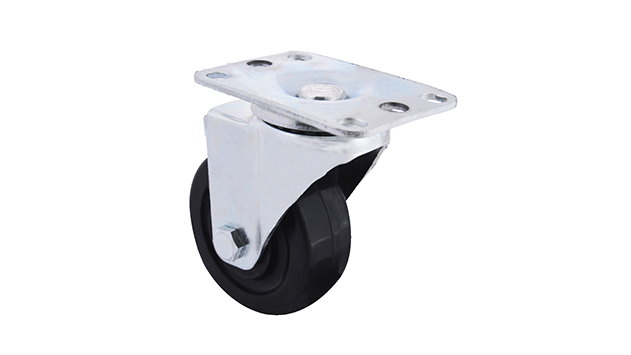
Let's break down the name: "flat swivel castor wheel with brake" tells us three key things about its design. First, "flat" refers to the mounting plate—the part that attaches the caster to the trolley frame. Unlike recessed or angled mounts, a flat plate sits flush against the trolley's base, distributing weight evenly and reducing stress on the frame. This is crucial for stability, especially when the trolley is loaded unevenly (a common scenario when carrying bulky equipment). Second, "swivel" means the wheel can rotate 360 degrees, allowing the trolley to turn on a dime. This is essential in tight spaces like hospital corridors or between patient beds. Finally, "with brake" indicates that the caster includes a mechanism to lock both the wheel's rotation and, in many cases, the swivel function—preventing movement in any direction once engaged.
But beyond these basics, flat swivel castor wheels with brake are engineered with healthcare-specific features. Let's dive into what makes them stand out.
Safety Feature 1: Dual-Lock Braking Systems
The most critical safety feature of these casters is their braking mechanism. Unlike simple wheel locks (which only stop the wheel from rolling), the best flat swivel castor wheels with brake use a "total lock" system that immobilizes both the wheel and the swivel joint. Here's how it works: when the user steps on the brake pedal (typically a large, easy-to-reach lever), two things happen simultaneously. First, a brake pad clamps down on the wheel, preventing it from spinning. Second, a separate mechanism locks the swivel raceway (the part that allows the wheel to rotate), stopping the caster from turning. This dual lock ensures the trolley stays exactly where it's placed—even on sloped floors or when bumped accidentally. Imagine a scenario in an operating room: a surgeon leans against the trolley to steady themselves during a procedure. Without a dual lock, the trolley might shift, throwing off their focus or even endangering the patient. With a flat swivel castor wheel with brake, that risk is eliminated.
Brake pedals are also designed for ease of use in high-stress situations. They're large enough to engage with a quick tap of the foot (no fumbling with small levers), and many models have a bright color contrast (like red or yellow) to make them visible even in dimly lit rooms. Some even include a "brake status indicator"—a small flag or notch that shows at a glance whether the brake is engaged, reducing the chance of human error.
Safety Feature 2: Non-Marking, High-Grip Wheels
Hospital floors are a study in contrasts: smooth, polished surfaces that are easy to clean, but also prone to scuffs and slips. A caster wheel that leaves marks isn't just an aesthetic issue; those marks can trap dirt and bacteria, undermining infection control efforts. Worse, a wheel with poor grip could slide on wet floors (a common hazard near sinks or after cleaning), putting staff and patients at risk of falls. Flat swivel castor wheels for medical trolleys solve this with specialized wheel materials. Polyurethane (PU) is a popular choice: it's soft enough to avoid scuffing floors, yet dense enough to resist wear from constant use. Rubber is another option, prized for its exceptional grip—even on glossy linoleum or tile. Some wheels even feature a tread pattern designed to channel away liquids, reducing the risk of hydroplaning on wet surfaces.
Take, for example, a pediatric ward where floors are cleaned multiple times daily. A trolley with hard plastic wheels might skid when the floor is still damp, forcing the nurse to slow down and exert extra effort to control it. A PU-wheel caster, by contrast, maintains traction, letting the nurse move confidently without worrying about slips. It's a small detail, but one that adds up to less fatigue and fewer accidents over a 12-hour shift.
Safety Feature 3: Load Capacity and Stability
Medical trolleys carry heavy loads—often 50kg or more, when stocked with equipment like defibrillators, oxygen tanks, or stacks of linen. A caster that can't handle this weight will wear out quickly, leading to wobbly movement or even wheel failure. Flat swivel castor wheels with brake are engineered for durability, with reinforced housings and precision bearings that distribute weight evenly. Most models specify a maximum load capacity (e.g., 120kg per caster), and healthcare trolleys typically use four or five casters to spread the weight further. But load capacity isn't just about strength; it's about stability. A caster with a wide wheelbase and a low center of gravity reduces the risk of the trolley tipping over, even when navigating uneven surfaces (like thresholds between rooms) or when loaded with top-heavy items.
Consider a scenario where a trolley is loaded with a stack of patient charts on top and medical supplies below. A caster with poor stability might cause the trolley to sway as it's pushed, increasing the chance of items falling off. A well-designed flat swivel castor, with its sturdy construction and balanced weight distribution, keeps the trolley steady—even when moving at speed.
Safety Feature 4: Easy to Clean and Disinfect
In healthcare, infection control is paramount. Every surface, from bed rails to equipment handles, must be regularly disinfected to prevent the spread of pathogens like MRSA or C. difficile. Casters are no exception—but they're often overlooked. Traditional casters with crevices, seams, or exposed bearings can trap dirt, hair, and bodily fluids, making them impossible to clean thoroughly. Flat swivel castor wheels with brake address this with a "hygienic design." Sealed bearings prevent debris from entering the wheel mechanism; smooth, rounded edges eliminate hiding spots for bacteria; and materials like stainless steel or corrosion-resistant plastics stand up to harsh disinfectants (like bleach or alcohol-based cleaners). Some models even have a "tool-free" design, allowing staff to remove the wheel for deep cleaning without special equipment.
A lab technician once shared a story: after a spill involving a patient sample, their team had to disinfect all equipment, including the trolley. The old casters on the trolley had tiny gaps where fluid had seeped in, requiring hours of scrubbing with a toothbrush to ensure no pathogens remained. After switching to flat swivel castors with sealed bearings, the cleaning process took minutes—freeing up time for more critical tasks.

How Flat Swivel Castor Wheels Integrate with Medical Trolley Design
A caster is only as good as its integration with the trolley itself. Medical trolley manufacturers work closely with caster suppliers to ensure that the mounting, placement, and overall design complement the caster's features. For example, the flat mounting plate of these casters allows for a low-profile design, keeping the trolley's center of gravity low and improving stability. Many trolleys also use a 5-caster configuration (four corners plus one in the center) to enhance balance, especially when the load is unevenly distributed. Additionally, some trolleys pair casters with adjustable leveling feet —a backup stability feature that can be extended to "lock" the trolley in place on extremely uneven floors (like in older hospital buildings with warped tiles). While the caster's brake handles most scenarios, the leveling feet add an extra layer of safety for specialized environments.
Another key consideration is noise. In patient rooms, especially for critical care or pediatric patients, silence is essential for rest and recovery. Flat swivel castor wheels with precision ball bearings minimize squeaking and rattling, ensuring quiet movement even when the trolley is fully loaded. This might seem like a "nice-to-have," but ask any nurse who's tiptoed through a neonatal unit with a medication trolley—quiet casters can make all the difference in patient comfort.

Comparing Flat Swivel Castors with Other Caster Types
To understand why flat swivel castor wheels with brake are the gold standard for medical trolleys, it helps to compare them with other common caster types. Let's break down the options:
| Caster Type | Maneuverability | Braking Capability | Safety in Healthcare | Best For |
|---|---|---|---|---|
| Rigid Casters (Non-Swivel) | Low—only moves forward/backward | Basic wheel lock (no swivel lock) | Poor—hard to navigate tight spaces; risk of tipping when turning | Heavy, fixed-path equipment (e.g., large storage racks) |
| Swivel Casters (No Brake) | High—360° rotation | None | High risk—trolley can roll unexpectedly; unstable during use | Light, temporary use (e.g., food service carts in non-clinical areas) |
| Swivel Casters with Wheel-Only Brake | High | Stops wheel rotation, but swivel joint still moves | Moderate—trolley can shift if bumped (swivel rotates) | Retail or office use (low-stakes environments) |
| Flat Swivel Castor Wheel with Brake | High—360° rotation, tight turning radius | Dual lock (wheel + swivel joint) | Excellent—stable, secure, and maneuverable | Medical trolleys, surgical equipment, lab carts (high-safety environments) |
As the table shows, flat swivel castor wheels with brake excel in the areas that matter most for healthcare: maneuverability (critical for tight spaces), braking capability (essential for stability), and overall safety. While other casters might be cheaper or sufficient for non-clinical use, they fall short in scenarios where a single mistake could have life-altering consequences.
Maintenance: Keeping Casters in Top Condition
Even the best caster wheels need care to perform at their best. In healthcare settings, where equipment is used around the clock, regular maintenance is key to preventing breakdowns. Here's what healthcare facilities should prioritize:
Regular Inspections
Staff should check casters daily for signs of wear: cracked wheels, loose brakes, or debris stuck in the swivel mechanism. A quick visual inspection can catch issues early—like a brake pedal that's starting to stick or a wheel that's wobbling due to a loose axle. In busy units, this can be part of the daily "trolley check" alongside restocking supplies.
Lubrication
Swivel joints and bearings need occasional lubrication to keep movement smooth and prevent rust. However, in healthcare, not all lubricants are safe—some can attract dust or contaminate sterile environments. Facilities should use food-grade or medical-grade lubricants (like silicone-based sprays) that are non-toxic and easy to clean.
Replacing Caster Accessories
Over time, components like brake pads, bearings, or mounting bolts may wear out. The good news is that many flat swivel castor wheels are designed with replaceable parts, making repairs cost-effective. For example, if a brake pad wears down, staff can swap it out without replacing the entire caster. This not only saves money but also reduces downtime—critical in facilities where every trolley is in constant use.
Cleaning Protocols
As mentioned earlier, casters must be cleaned regularly to maintain infection control. This means wiping down wheels and brake pedals with disinfectant wipes or sprays after each use, and performing deep cleaning (e.g., removing wheels to clean axles) on a weekly or monthly schedule. Facilities should train staff on proper cleaning techniques to avoid damaging sensitive components like sealed bearings.
Compliance and Standards: Ensuring Patient and Staff Safety
In healthcare, every product must meet strict regulatory standards—and casters are no exception. In the U.S., the FDA classifies medical trolleys as "medical devices," and their components (including casters) must comply with safety and performance requirements. Internationally, standards like ISO 10993 (biological evaluation of medical devices) and EN 1970 (safety of hospital equipment) set benchmarks for materials, durability, and infection control. Reputable manufacturers of flat swivel castor wheels with brake will provide documentation (like test reports or certificates) proving compliance with these standards. For example, a caster might be tested for "dynamic load capacity" (how much weight it can carry while moving) or "chemical resistance" (how well it stands up to disinfectants). Healthcare facilities should always ask for these documents when selecting casters—cutting corners on compliance isn't worth the risk of equipment failure or regulatory penalties.
Real-World Impact: Stories from the Field
To truly appreciate the value of flat swivel castor wheels with brake, let's look at real examples from healthcare settings:
Case Study 1: Reducing Accidents in the ER
A large urban hospital was struggling with frequent "trolley incidents" in its emergency department—minor collisions, spills, and near-misses caused by trolleys rolling unexpectedly. An audit revealed that many trolleys were using old, swivel casters with faulty brakes or no brakes at all. The hospital replaced these with flat swivel castor wheels with dual-lock brakes. Within six months, trolley-related incidents dropped by 72%. Nurses reported feeling more confident when moving at speed, and staff satisfaction scores for "equipment reliability" increased significantly.
Case Study 2: Enhancing Sterility in the OR
A surgical center was facing challenges with infection control in its operating rooms. Environmental services staff noted that traditional casters on instrument trolleys were difficult to clean, with crevices that trapped lint and debris. The center switched to flat swivel castors with sealed bearings and smooth, rounded housings. Post-switch, environmental testing showed a 40% reduction in bacterial counts on trolley surfaces. Surgeons also reported better stability during procedures, with trolleys staying locked in place even during quick movements.
Future Trends: Innovations in Medical Caster Technology
As healthcare evolves, so too do the tools that support it. The future of flat swivel castor wheels with brake is likely to see innovations focused on three areas:
Smart Casters with Sensors
Imagine a caster that can "talk" to the hospital's inventory system, alerting staff when it needs maintenance (e.g., "brake pad 30% worn") or tracking trolley location in real time. Early prototypes of smart casters include sensors that monitor brake status, wheel wear, and even temperature (to detect overheating bearings). This data can help facilities proactively maintain equipment, reducing downtime and improving safety.
Eco-Friendly Materials
With sustainability becoming a priority in healthcare, manufacturers are exploring greener alternatives for caster materials. Recycled polyurethane, plant-based rubber, and biodegradable lubricants are all in development, aiming to reduce the environmental impact of caster production and disposal.
Enhanced Ergonomics
Healthcare staff face high rates of musculoskeletal injuries, often from pushing heavy trolleys. Future casters may include features like "effort-reducing" bearings that require less force to start moving, or adjustable-height mounts that let staff customize trolley height to their needs. These small changes could significantly reduce strain and improve long-term staff health.
Conclusion: Investing in Safety for Better Patient Care
Flat swivel castor wheels with brake may seem like a small detail in the grand scheme of healthcare equipment, but their impact is profound. They are the difference between a trolley that hinders workflow and one that enhances it; between a near-miss and a preventable accident; between stressed staff and confident caregivers. In a field where safety and efficiency directly affect patient outcomes, choosing the right caster isn't just a purchasing decision—it's a commitment to excellence. So the next time you see a medical trolley glide through a hospital corridor, pause for a moment. Look down at those wheels: quiet, sturdy, and ready to lock in place at a moment's notice. They may not make headlines, but they're saving lives—one brake pedal press at a time.