- Company Articles
- Products and Technology
- Product knowledge
- Flat Swivel Castor Wheels with Total Lock Brake: Full Immobility Feature

Flat Swivel Castor Wheels with Total Lock Brake: Full Immobility Feature
Related Product
Flat Swivel Castor Wheel
Chair Casters Ball Bearing Wheels Rubber Base. Resistant to abrasion, impact and corrosion. Heavy payload can hold 70-90Kgs per pcs,which can make it works at a stable and smooth status.
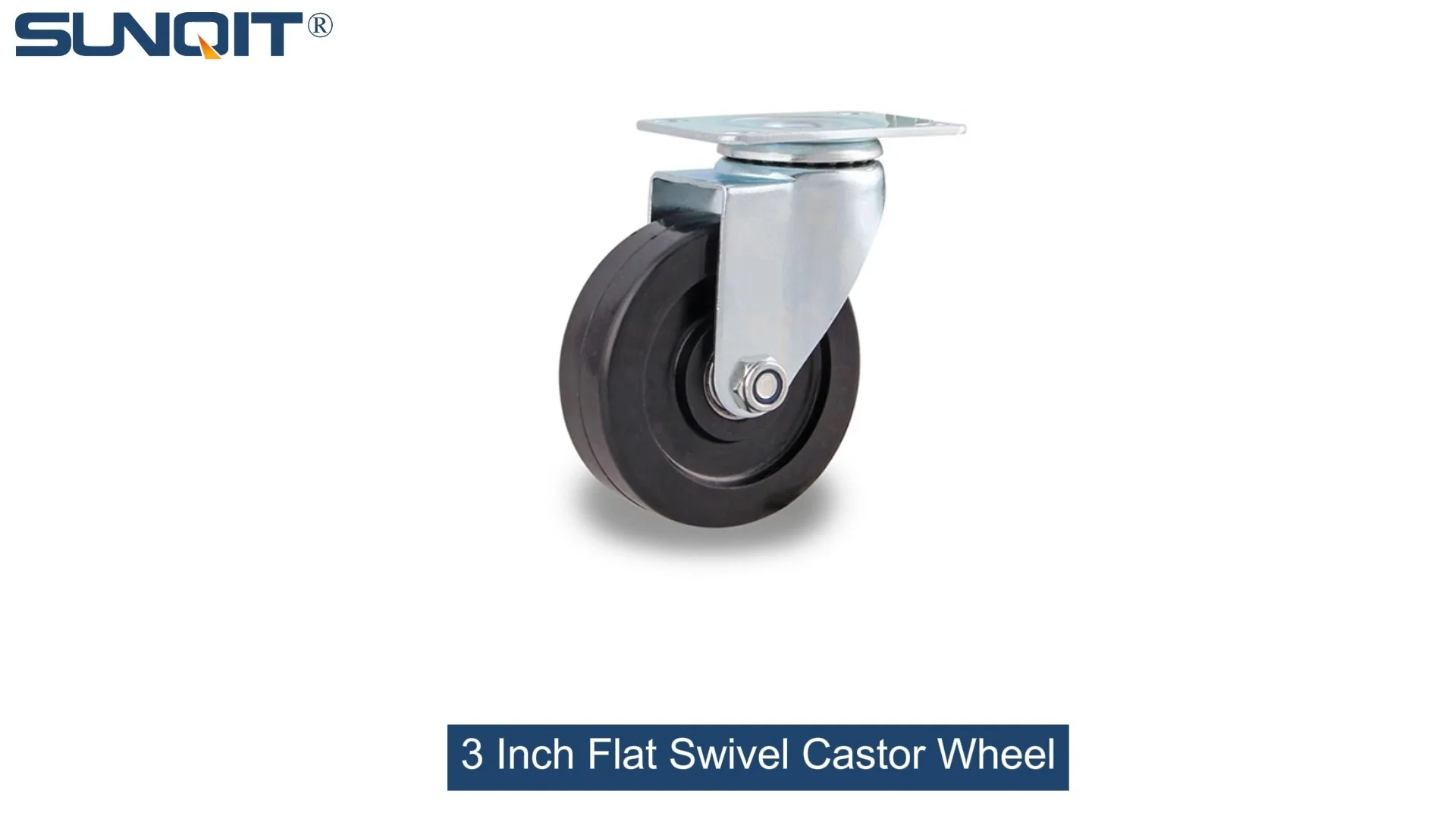
In the hustle of a busy workshop, the hum of machinery, and the constant movement of materials, there's a small component that often goes unnoticed—until it fails. It's the kind of part that doesn't make headlines, but its absence can bring operations to a grinding halt, compromise safety, or turn a smooth workflow into a frustrating battle with instability. We're talking about castor wheels—the quiet workhorses that keep everything from workbenches to heavy trolleys moving, stopping, and staying put when needed. And among these, one design stands out for its ability to balance mobility with unshakable stability: the flat swivel castor wheel with a total lock brake.
Imagine (oops, scratch that—picture this instead) a technician in a manufacturing plant, hunched over a delicate assembly on a rolling workbench. They need to adjust their position, so they give the bench a gentle push. It glides smoothly into place. Now, they lean in to tighten a bolt, and suddenly, the bench shifts—just an inch, but enough to misalign the part. Frustration mounts. Or worse, think of a warehouse worker loading a turnover trolley with heavy boxes. They stop to check the inventory list, and the trolley starts rolling backward down a slight incline. A near-miss, but a wake-up call: not all castors are created equal. The difference between a day of seamless productivity and one filled with close calls often comes down to one feature: the ability to lock fully —both the wheel and the swivel—when stationary. That's where the total lock brake comes in.
What Are Flat Swivel Castor Wheels, Anyway?
Before we dive into the magic of the total lock brake, let's get clear on what makes a "flat swivel castor wheel" unique. At first glance, it might look like any other castor, but its design holds key clues to its performance. Let's break it down:
The "Flat" in Flat Swivel Castors
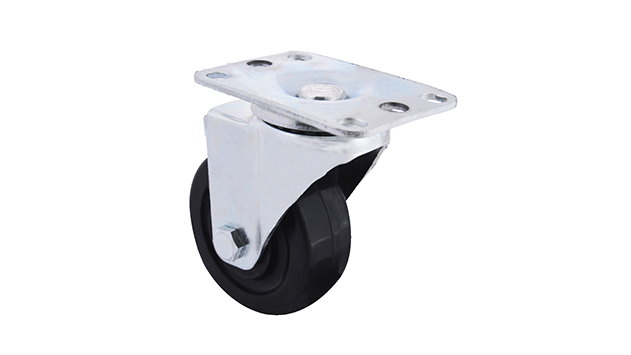
The term "flat" here refers to the mounting plate—the part that attaches the castor to the equipment (like a workbench or trolley). Unlike some castors with recessed or angled plates, flat mounting plates sit flush against the bottom of the equipment, creating a lower profile. This isn't just about aesthetics; a lower mounting height reduces the center of gravity, making the equipment more stable even when moving. It also means the castor takes up less vertical space, which is a godsend in tight work areas where every inch counts—think under-shelf storage or cramped assembly lines.
The "Swivel" Mechanism: Freedom to Move in Any Direction
Swivel castors are designed to rotate 360 degrees, allowing the equipment to move in any direction with minimal effort. This is a game-changer for maneuverability. Compare that to rigid castors, which only roll forward and backward—great for straight-line movement, but clunky when you need to navigate around corners or tight spaces. The swivel mechanism relies on a raceway (a circular track) with ball bearings that let the castor rotate smoothly, even under heavy loads. But here's the catch: that same swivel freedom can become a liability if you can't lock it down when you need stability. Enter the brake.
The Total Lock Brake: How It Turns "Good" Stability into "Unshakable"
Most castors come with some kind of brake, but not all brakes are created equal. Let's start with the basics: a standard wheel brake locks the wheel itself, preventing it from rolling. That's useful for keeping equipment from moving in a straight line, but it doesn't stop the castor from swiveling. So even if the wheel is locked, a bump or a nudge could still make the equipment twist or pivot—hardly ideal for tasks that demand precision, like assembly work or lab experiments. Then there are swivel locks, which lock the castor's rotation but leave the wheel free to roll. Again, better than nothing, but not enough if you need the equipment to stay completely still.
The total lock brake solves this by doing double duty: it locks both the wheel (preventing rolling) and the swivel mechanism (preventing rotation). It's like hitting two locks with one key. When engaged, the brake immobilizes the castor entirely, turning a mobile piece of equipment into a stationary fixture. How does it work? Let's peek under the hood (or under the castor, in this case).
The Mechanics of Total Immobility
A typical total lock brake uses a foot-operated lever (though some are hand-operated for tight spaces). When you press down on the lever, it activates two braking components: one that clamps onto the wheel tread, stopping it from spinning, and another that jams into the swivel raceway, preventing the castor from rotating. The result? Zero movement. Even if you push, pull, or lean on the equipment, it won't budge. Release the lever, and both locks disengage, letting the castor swivel and roll freely again.
This might sound simple, but the engineering behind it is surprisingly nuanced. The brake components need to be strong enough to withstand heavy loads and repeated use without wearing down. For example, the wheel brake might use a rubber pad or steel shoe that grips the wheel tightly, while the swivel lock could use a pin or cam that fits into notches in the raceway. High-quality models often use reinforced steel for the lever and brake arms to prevent bending, and heat-treated components to resist wear over time.
Why Full Immobility Matters (More Than You Think)
You might be thinking, "Do I really need both locks? Isn't a wheel brake enough?" Let's consider a few scenarios where partial locking falls short:
- Precision Work: On an assembly line, even a 1-degree swivel of the workbench can throw off measurements or misalign parts, leading to defects or rework. A total lock brake ensures the bench stays exactly where you position it, so every screw, weld, or glue application is precise.
- Safety During Loading/Unloading: When loading a turnover trolley with heavy items, the last thing you want is for the trolley to shift or pivot mid-load. A total lock brake keeps it anchored, reducing the risk of strains, spills, or dropped materials.
- Uneven Floors: Warehouses and workshops rarely have perfectly flat floors. A wheel-only brake might not be enough to stop a loaded trolley from creeping downhill on a slight incline. Adding a swivel lock eliminates that risk entirely.
- Worker Confidence: When a technician or worker knows the equipment won't move, they can focus on the task at hand, not on stabilizing the work surface. This reduces mental fatigue and increases productivity—small wins that add up over a shift.
Beyond Immobility: The Hidden Benefits of Flat Swivel Total Lock Castors
While the total lock brake is the star feature, flat swivel castors have other tricks up their sleeve that make them a standout choice for industrial, commercial, and even residential use. Let's unpack these hidden benefits:
Durability That Stands Up to the Grind
Workplaces are tough on equipment. Castors endure daily punishment: heavy loads, rough floors, exposure to oils, chemicals, or moisture (in settings like auto shops or food processing plants). Flat swivel castors with total lock brakes are built to take this abuse. Many models feature robust materials like high-grade steel for the mounting plate and raceway, and wheels made from polyurethane, rubber, or nylon—each chosen for specific environments. For example, polyurethane wheels offer a balance of durability, floor protection, and noise reduction, making them ideal for indoor use on concrete or tile. Rubber wheels, on the other hand, grip better on smooth surfaces and absorb shocks, which is useful for delicate equipment.
Load Capacity: Hauling Heavy Without Breaking a Sweat
Not all castors can handle the same weight. A cheap plastic castor might buckle under a few hundred pounds, but industrial-grade flat swivel castors with total lock brakes are designed for heavy lifting. Depending on the size and materials, they can support anywhere from 200 lbs to over 1,000 lbs per castor. When you're outfitting a workbench loaded with tools or a turnover trolley stacked with metal parts, this kind of load capacity isn't just a nice-to-have—it's a safety requirement. Overloading a castor isn't just risky for the equipment; it can lead to catastrophic failure, injuries, or damage to products.
Quiet Operation: Less Noise, More Focus
Ever walked through a warehouse where every castor squeaks like a rusty gate? It's not just annoying—it's distracting. Excessive noise in the workplace can increase stress, reduce concentration, and even mask important sounds (like a colleague calling for help). Flat swivel castors with high-quality wheels (think polyurethane or rubber) are designed to roll quietly, even on hard floors. The swivel raceway, when properly lubricated, also rotates smoothly without the grinding or clicking that comes with cheap bearings. Less noise means a calmer, more productive environment—small, but impactful.
Floor Protection: Keeping Surfaces Scratch-Free
Hard floors (concrete, hardwood, tile) are expensive to install and repair. A castor with a rough, unforgiving wheel can scratch, scuff, or even crack these surfaces over time. Many flat swivel castors come with non-marking wheels, made from materials like polyurethane or rubber, which grip without damaging. This is especially important in settings like retail stores, hospitals, or offices where aesthetics matter, but it's just as crucial in warehouses—damaged floors can create tripping hazards or make rolling equipment harder to move (think of a crack catching a wheel and jolting the load).

Real-World Applications: Where These Castors Shine Brightest
Okay, so we've covered the "why" and the "how"—now let's talk about the "where." Flat swivel castor wheels with total lock brakes aren't a one-trick pony; they excel in a variety of settings where mobility and stability are equally critical. Here are a few places where they're making a tangible difference:
Workbench Setups: Precision Meets Mobility
A workbench is the heart of any workshop, lab, or assembly line. It's where the magic happens—whether that's building circuit boards, repairing machinery, or testing prototypes. But a fixed workbench limits flexibility: if you need to reconfigure the workspace for a new project, you're stuck. Enter the rolling workbench, outfitted with flat swivel castors. With a quick push, you can rearrange the line to optimize workflow. When it's time to work, engage the total lock brake, and the bench becomes as stable as a fixed model. This is a game-changer for small shops with limited space, or large plants that need to adapt to changing production demands. For example, in a electronics manufacturing facility, a rolling workbench with total lock castors allows technicians to move from station to station, then lock down to solder tiny components without worrying about the bench shifting.
Turnover Trolley and Rack: Safe Material Handling, Every Time
Turnover trolleys and racks are the backbone of warehouse and distribution center operations. They carry everything from raw materials to finished products, moving goods from storage to assembly lines, or from loading docks to shipping areas. But loaded trolleys are heavy—sometimes hundreds of pounds—and even a small movement can cause injuries or damage. A turnover trolley equipped with flat swivel total lock castors solves this. When loading or unloading, the operator simply steps on the brake lever, and the trolley stays put, even on uneven concrete or ramps. When it's time to move, release the brake, and the swivel castors make navigating tight aisles a breeze. It's a simple upgrade that reduces accidents and speeds up material handling.
Medical and Lab Equipment: Stability for Sensitive Tasks
In hospitals and labs, precision and sterility are non-negotiable. Mobile carts for medications, lab samples, or surgical tools need to move smoothly between rooms, then lock down securely during use. A sudden movement could spill hazardous chemicals, disrupt a test, or even endanger a patient. Total lock castors provide the stability needed for these high-stakes environments. Their flat mounting plates also make cleaning easier—no crevices for dirt or bacteria to hide, a critical feature in sterile settings.
Retail and Display: Flexibility Without Compromise
Retail stores are always evolving, with seasonal displays, sales events, and layout changes. Mobile shelving and display units let store managers refresh the space quickly, but they need to stay put when customers are browsing. Flat swivel castors with total lock brakes let staff rearrange displays overnight, then lock them down during the day to prevent accidental movement. And because many models have non-marking wheels, they won't scuff the store's polished floors—a win for both functionality and aesthetics.

How Do They Stack Up? Comparing Total Lock Castors to the Competition
To really appreciate the value of flat swivel total lock castors, it helps to see how they compare to other common castor types. Let's break it down with a quick comparison:
| Castor Type | Locking Features | Best For | Limitations |
|---|---|---|---|
| Standard Swivel Castor (No Brake) | None—moves freely | Light, temporary mobility (e.g., small carts in offices) | No stability; rolls/swivels unexpectedly |
| Swivel Castor with Wheel-Only Brake | Locks wheel rotation; swivel still moves | Light loads on flat floors (e.g., utility carts) | Can pivot/swivel when bumped; risky on inclines |
| Swivel Castor with Swivel-Only Lock | Locks swivel; wheel still rolls | Straight-line movement with occasional locking (e.g., warehouse dollies) | Can roll downhill; not stable for precision work |
| Flat Swivel Castor with Total Lock Brake | Locks both wheel and swivel | Heavy loads, precision tasks, uneven floors (e.g., workbenches, turnover trolleys) | Slightly higher cost than basic models (but worth the investment) |
The takeaway? If your operation involves heavy loads, precision work, uneven surfaces, or safety-critical tasks, the extra cost of total lock castors is a small price to pay for peace of mind and productivity. They're not just a "nice upgrade"—they're a necessary one for many workplaces.
Choosing the Right Flat Swivel Total Lock Castor: Key Considerations
So, you're sold on the benefits—now how do you choose the right model for your needs? Here are the key factors to keep in mind:
Load Capacity: Don't Skimp on Strength
Start with the basics: how much weight will the castor need to support? This includes the weight of the equipment itself plus the maximum load it will carry. Castors are rated for a specific weight per wheel, so be sure to calculate the total load and divide by the number of castors (e.g., a 1,000 lb trolley with 4 castors needs castors rated for at least 250 lbs each). It's always smart to add a safety margin—aim for 20-30% above your expected maximum load to account for unexpected bumps or uneven distribution.
Wheel Material: Match the Floor and Environment
As we touched on earlier, wheel material matters. Here's a quick guide to common options:
- Polyurethane: Versatile all-rounder—quiet, non-marking, good grip, and durable on most floors (concrete, tile, hardwood). Ideal for indoor use.
- Rubber: Excellent shock absorption and grip, great for uneven floors or outdoor use. Can be prone to wear on rough surfaces like gravel.
- Nylon: High load capacity and chemical resistance, but noisier and harder on floors. Best for heavy industrial use on concrete.
- Steel: Ultra-durable for extreme loads, but scratches floors and is noisy. Rarely used in non-industrial settings.
Mounting Plate Size: A Secure Fit
The mounting plate is what attaches the castor to the equipment, so it needs to be the right size and shape. Measure the space available on the bottom of your workbench, trolley, or shelving unit, and choose a plate that fits without overhang (which can get caught on obstacles). Most manufacturers list mounting hole patterns, so be sure to match those to your equipment's existing holes (or drill new ones if needed).
Brake Type: Foot-Operated vs. Hand-Operated
Total lock brakes are typically foot-operated, which is convenient for quick, hands-free locking/unlocking. However, in tight spaces (e.g., under low workbenches), a foot brake might be hard to reach. Some manufacturers offer hand-operated brakes as an alternative, though these are less common. Consider your workspace layout when choosing.
Maintenance: Keeping Your Castors Rolling (and Locking) Smoothly
Even the best castors need a little TLC to perform at their best. Neglecting maintenance can lead to squeaky wheels, sticky brakes, or premature wear—problems that undo all the benefits of a total lock design. Here's how to keep your flat swivel total lock castors in top shape:
Regular Cleaning: Keep Debris at Bay
Dirt, dust, and debris love to collect in swivel raceways and brake mechanisms. Over time, this can gum up the works, making swiveling stiff or brakes hard to engage. A quick weekly clean with a brush or compressed air can prevent buildup. For sticky spots, wipe with a damp cloth and mild detergent—avoid harsh chemicals that can damage rubber wheels or plastic components.
Lubrication: Keep It Moving (and Stopping) Freely
Swivel raceways and brake pivot points need lubrication to stay smooth. Use a light machine oil or silicone spray (check the manufacturer's recommendations—some plastics don't play well with oil-based lubes). Apply a few drops to the raceway bearings and brake lever hinges every 3-6 months, depending on usage. Wipe away excess to avoid attracting more dirt.
Brake Checks: Test Before Trusting
The total lock brake is your safety net, so it's critical to test it regularly. Engage and disengage the brake a few times to ensure it moves smoothly and locks firmly. If the brake feels loose, sticky, or doesn't lock completely, inspect the mechanism for debris or wear. replace worn brake pads or springs promptly—don't wait for a failure to happen.
Wheel Inspection: Look for Wear and Tear
Check the wheels for cracks, flat spots, or uneven wear. A damaged wheel can cause wobbling, noise, or poor floor protection. If the wheel is worn, replace it immediately—many manufacturers sell replacement wheels separately, so you don't have to buy a whole new castor.
Wrapping Up: The Total Lock Brake—A Small Feature with Big Impact
At the end of the day, flat swivel castor wheels with total lock brakes might not be the most glamorous piece of equipment in your workplace. They won't win awards for innovation or turn heads at trade shows. But they will do something far more valuable: they'll make your daily operations smoother, safer, and more efficient. They'll turn frustrating battles with unstable workbenches into seamless assembly sessions. They'll turn nerve-wracking trolley movements into confident, controlled transports. They'll let your team focus on what they do best, not on fighting with equipment.
So the next time you're outfitting a new workbench, upgrading a turnover trolley, or simply looking to improve your workspace, don't overlook the castors. Invest in the ones that offer more than just mobility—invest in the ones that offer control . Because in the world of workplace productivity, the difference between good and great often comes down to the details. And when it comes to details that matter, the total lock brake is one detail that delivers.
After all, in a world that's always moving, sometimes the most powerful thing you can do is stop—and stay stopped. The flat swivel castor wheel with a total lock brake doesn't just let you do that; it lets you do it with confidence.