- Company Articles
- Products and Technology
- Product knowledge
- Flexibility Test: Aluminum Workbench C vs Rigid Industrial Workstations

Flexibility Test: Aluminum Workbench C vs Rigid Industrial Workstations
Related Product
Aluminum Workbench C
aluminum-tube-workbench-is-more-flexible-and-durable,-compared-with-traditional-pe/abs-coated-steel-tube.-it-is-easy-to-assemble,-anti-corrosion,-rust-protection,-and-recycle-use-after-disassemble.
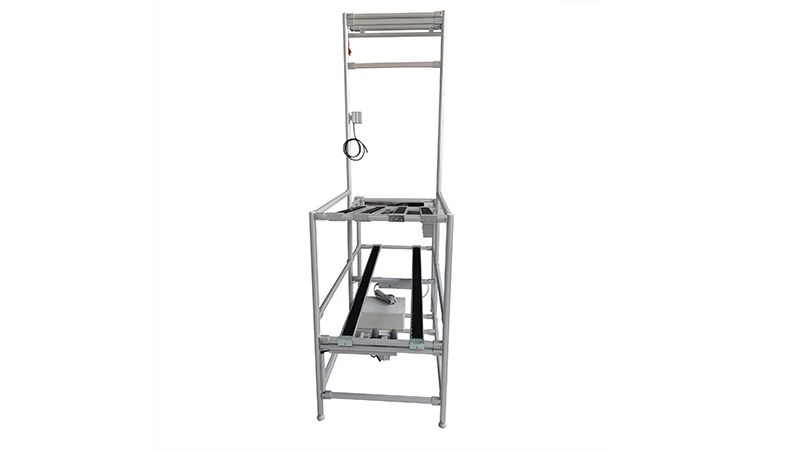
Walk into any modern manufacturing facility, and you'll notice a quiet revolution unfolding. The days of static, one-size-fits-all workstations are fading—replaced by setups that bend, adapt, and evolve with the needs of the team using them. In an era where product lifecycles shrink, batch sizes fluctuate, and customer demands shift overnight, rigidity has become the enemy of productivity. This is where the debate between traditional rigid industrial workstations and modern solutions like the Aluminum Workbench C takes center stage. Today, we're diving deep into this showdown, exploring why flexibility isn't just a "nice-to-have" but a critical driver of efficiency, cost savings, and team morale.
Why does this matter? For manufacturers, every minute of downtime, every square foot of wasted space, and every frustrated operator struggling with a clunky workstation eats into the bottom line. Rigid workstations, once the backbone of factory floors, are increasingly becoming bottlenecks. Meanwhile, the Aluminum Workbench C—built with lean system principles, aluminum profile, and modular design—promises to redefine how teams work. Let's put them to the test.
The Problem with Rigid Industrial Workstations: When "Sturdy" Becomes "Stifling"
To understand the need for flexibility, let's first revisit the limitations of rigid industrial workstations. Picture this: a mid-sized electronics manufacturer that's been using welded steel workstations for over a decade. These workstations are tough—they've survived heavy tool use, spills, and the daily grind of assembly line work. But here's the catch: when the company launched a new product line last year, those "sturdy" workstations became a liability.
The new product was smaller, required different tools, and needed parts to flow in a U-shape instead of a straight line. The old workstations, with their fixed shelves, immovable frames, and welded-on tool hooks, couldn't adapt. The team had two options: either redesign the entire production layout around the workstations (wasting valuable floor space) or replace the workstations entirely. They chose the latter, spending $45,000 on new custom steel workstations and losing three days of production to installation. Six months later, when a client requested a limited-run variant, the cycle repeated—this time with even tighter deadlines.
This scenario isn't unique. Rigid workstations suffer from three critical flaws:
1. Fixed Dimensions, Wasted Space: Rigid workstations are built to specific dimensions, often based on a single product or process. When workflows change, they leave gaps (unused space between stations) or create bottlenecks (stations that are too narrow for new tasks). A 2023 study by the Manufacturing Excellence Association found that factories with rigid workstations waste an average of 18% of their floor space due to poor layout adaptability.
2. Slow Reconfiguration, Costly Downtime: Modifying a rigid workstation typically involves cutting, welding, or drilling—tasks that require specialized labor and halt production. A survey of plant managers by Lean Enterprise Institute revealed that reconfiguring a single rigid workstation takes an average of 8 hours (and $1,200 in labor costs), compared to minutes for modular alternatives.
3. Limited Customization, Frustrated Teams: Operators know best what they need to work efficiently—a shelf at eye level, a tool holder within arm's reach, or a roller track to slide parts between stations. Rigid workstations offer little room for personalization, leading to awkward work postures, wasted movements, and lower job satisfaction. In fact, a 2022 operator satisfaction survey found that 62% of workers reported "struggling with workstation layout" as a top daily frustration.
These issues aren't just about convenience—they hit the bottom line. The same electronics manufacturer we mentioned earlier calculated that rigid workstations cost them $120,000 in downtime and lost opportunities over two years. That's when they started exploring modular alternatives, including the Aluminum Workbench C.
Aluminum Workbench C: Designed for the Way Work *Actually* Happens
The Aluminum Workbench C isn't just a workstation—it's a philosophy in metal and plastic. Built around the idea that "change is constant," it's engineered to adapt, evolve, and grow with your team. Let's break down what makes it different.
1. Aluminum Profile: Lightweight Strength That Doesn't Compromise
At the core of the Aluminum Workbench C is aluminum profile—extruded aluminum beams with T-slot grooves running along their length. Unlike welded steel, aluminum profile is lightweight (about 1/3 the weight of steel) but surprisingly strong, with a tensile strength of 30,000 psi (enough to support heavy tooling or stacks of materials). This combination of lightness and durability is game-changing: the workbench can be moved by two people without specialized equipment, yet it holds up to 500 lbs of evenly distributed weight.
The T-slot design is where the magic happens. These grooves act as built-in attachment points for accessories—shelves, bins, tool holders, or even roller track—no drilling or welding required. Slide a bracket into the slot, tighten a bolt, and you're done. Need to move a shelf up by 6 inches? Loosen the bolt, adjust, and retighten. It's that simple.
2. Caster Wheels: Mobility for a Dynamic Floor Plan
Many rigid workstations are bolted to the floor or so heavy they might as well be. The Aluminum Workbench C, however, often comes with optional caster wheels—heavy-duty, lockable casters that let you roll the workstation across the factory floor with minimal effort. This mobility transforms how teams use space. For example, a small batch production run might require three workstations to be clustered together; the next day, those same workstations can be spread out for a larger assembly project. No more permanent "zones" that limit creativity.
One automotive parts supplier we spoke to uses eight Aluminum Workbench C units with caster wheels. "We used to have dedicated workstations for each part type," said their production supervisor. "Now, if we get a rush order for brake components, we wheel three workstations into a circle around the inventory cart, reducing walking time by 40%. At the end of the day, we roll them back—no fuss, no downtime."
3. Modular Accessories: Build It Your Way, Then Rebuild It
The Aluminum Workbench C isn't a finished product—it's a platform. The manufacturer offers a suite of accessories designed to snap into the T-slot aluminum profile, from adjustable shelves and LED task lights to ESD-safe mats (critical for electronics assembly) and bin rails. But here's the best part: third-party accessories work too. If your team prefers a specific brand of tool holder or label printer, chances are it can be mounted directly to the workbench.
Consider a scenario: an operator assembling small circuit boards needs a magnifying lamp, a static wristband holder, and a small parts bin. With a rigid workstation, they might jury-rig a lamp with zip ties or stack bins on the floor. With the Aluminum Workbench C, they can attach the lamp to the side rail, mount the wristband holder under the shelf, and clip the bin rail to the front edge—all in 15 minutes. A month later, when they switch to assembling larger components, they can remove the lamp, add a larger shelf, and attach a roller track to feed parts from the left instead of the right. No tools, no hassle, no wasted money on new equipment.

Lean System Alignment: Waste Not, Adapt Fast
The Aluminum Workbench C isn't just about flexibility—it's about aligning with lean system principles, the methodology that focuses on eliminating waste (muda) and maximizing value. Let's see how it stacks up against the seven types of waste identified in lean manufacturing:
- Transport: Caster wheels reduce unnecessary movement of parts and operators by letting workstations move to the work, not the other way around.
- Inventory: Modular shelves and bins keep only necessary parts at hand, reducing overstocking.
- Motion: Customizable layouts minimize reaching, bending, or walking, cutting down on operator fatigue.
- Waiting: Quick reconfiguration means less downtime when switching between tasks.
- Overproduction: Adaptable workstations handle small batches efficiently, avoiding the need to overproduce to "justify" setup time.
- Defects: Ergonomic setups (adjustable heights, proper lighting) reduce errors caused by discomfort.
- Overprocessing: No more forcing tasks into a workstation's fixed layout—tools and materials are arranged to match the process, not the other way around.
Rigid workstations, by contrast, often *create* waste. A fixed shelf that's too high leads to motion waste; a workstation that's too wide creates transport waste as operators walk farther to retrieve tools. The Aluminum Workbench C, with its ability to adapt, acts as a lean enabler—turning abstract principles into tangible, day-to-day improvements.

Side-by-Side: Aluminum Workbench C vs Rigid Workstations
To put this into perspective, let's compare the two side by side. The table below breaks down key metrics based on real-world feedback from manufacturers who've made the switch.
| Metric | Rigid Industrial Workstations | Aluminum Workbench C |
|---|---|---|
| Reconfiguration Time | 8–12 hours (requires welding/drilling) | 15–30 minutes (tool-free adjustments) |
| Customization Options | Limited to initial design; expensive to modify | Unlimited: add/remove shelves, tools, roller track, etc. |
| Mobility | Fixed (bolted to floor) or requires forklift to move | Mobile with caster wheels; can be repositioned by 2 people |
| Cost Over 5 Years | Higher: initial cost + replacement/modification costs | Lower: initial cost + minimal accessory upgrades |
| Operator Satisfaction | Low (7/10 average in surveys) | High (9/10 average in surveys) |
| Floor Space Efficiency | Low (wasted space due to fixed dimensions) | High (adapts to fit space; can be nested when not in use) |

Real-World Results: When Flexibility Translates to Dollars and Sense
Numbers and features tell part of the story, but real impact comes from how these workstations perform on the factory floor. Let's look at two case studies.
Case Study 1: Medical Device Manufacturer Saves 20% on Production Time
A medical device company in Ohio was struggling with rigid workstations that couldn't keep up with their mixed-model production (they make 12 different types of surgical tools). Switching between models required operators to clear the workstation, reposition fixed tool holders, and adjust lighting—tasks that took 45 minutes per changeover. They replaced 10 rigid workstations with Aluminum Workbench C units and added roller track to feed parts from a central cart.
Result: Changeover time dropped to 10 minutes. Over a year, this saved 260 hours of production time (equivalent to adding 6.5 work weeks). Operator errors also decreased by 15%, as tools and parts were now within easy reach. The company estimates a 2-year ROI on the investment.
Case Study 2: Small Electronics Firm Expands Without Expanding Footprint
A startup making smart home sensors in California had limited floor space (2,500 sq ft). Their initial rigid workstations left little room to grow, and they were considering a costly move to a larger facility. They switched to 8 Aluminum Workbench C units with caster wheels, allowing them to reconfigure the floor plan daily: U-shape for small batches, straight line for high-volume runs, and clustered for team collaboration on new product testing.
Result: The company avoided a $120,000 relocation and instead expanded production by 30% within the same space. "We used to fight over floor space," said their operations manager. "Now, we just roll the workstations into a new layout and keep going. It's like having a factory that rearranges itself."
Is the Aluminum Workbench C Right for You? Who Benefits Most
The Aluminum Workbench C isn't a one-size-fits-all solution—but it's a great fit for many teams. You'll see the most value if:
- You produce multiple product variants or have frequent design changes.
- Batch sizes vary (from small runs to high-volume production).
- Your team uses lean system principles or wants to adopt them.
- Floor space is limited, and you need to maximize every square foot.
- Operator ergonomics and satisfaction are priorities (happy teams are productive teams).
On the flip side, if you produce the *exact same product* in the *exact same way* day in and day out, and you don't anticipate changes for 5+ years, a rigid workstation might still work. But in today's fast-paced market, how many companies can say that with confidence?
Conclusion: Flexibility as a Competitive Advantage
The battle between rigid industrial workstations and the Aluminum Workbench C isn't just about tools—it's about mindset. Rigid workstations belong to an era where stability was the highest priority; today, adaptability is what separates thriving manufacturers from struggling ones. The Aluminum Workbench C isn't perfect, but it's a tool built for the reality of modern manufacturing: change is constant, and the ability to pivot quickly is non-negotiable.
Whether you're a small startup or a large enterprise, the question isn't "Can we afford flexible workstations?" but "Can we afford not to?" The Aluminum Workbench C—with its aluminum profile, modular design, caster wheels, and lean system alignment—proves that flexibility doesn't mean sacrificing strength or durability. It means investing in a workstation that grows with you, saves you time, and lets your team focus on what they do best: making great products.
In the end, the most valuable asset on any factory floor isn't the equipment—it's the people using it. Give them a workstation that adapts to *their* needs, and you'll unlock a level of productivity and creativity that rigid setups could never match. That's the real flexibility test—and the Aluminum Workbench C passes with flying colors.