- Company Articles
- Products and Technology
- Product knowledge
- Flexible Carts with Gusset ALP 4040: Enhancing Mobility in Production Lines

Flexible Carts with Gusset ALP 4040: Enhancing Mobility in Production Lines
Related Product
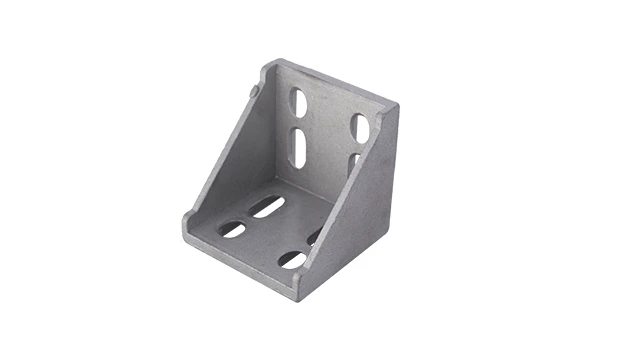
Gusset ALP 4040
The 4040 bracket/Gusset is an external fastening method that creates a 90 degree connection. 4040 means this size is used for 40 series aluminum profile with a quick connection by bolt and nut. It is a lightweight bracket that requires no machining servic
The Daily Grind: When Material Handling Slows You Down
Let's start with a scene that's all too familiar in factories and production facilities around the world. It's 10 a.m. on a Tuesday, and Raj, a line operator at a electronics assembly plant, is staring at a cart stacked with circuit boards. The cart is heavy—its steel frame groans under the weight—and its wheels feel like they're stuck in molasses. He needs to move it from Station A to Station B, a distance of maybe 50 feet, but the path is tight: there's a pallet of boxes near the door, and Maria, another operator, is already maneuvering a different cart in the opposite direction. By the time Raj navigates the obstacles, he's spent extra energy, and the delay means Station B's team is now waiting on parts. "Why can't these carts just… work with us?" he mutters, wiping sweat from his brow.
If this sounds like a regular day at your facility, you're not alone. Material handling—moving parts, tools, and finished goods between workstations—is the unsung backbone of production. But when the equipment itself becomes a bottleneck, it doesn't just slow down the line; it drains morale, increases the risk of errors, and even creates safety hazards. The good news? There's a solution that's quietly transforming floors from chaotic to streamlined: flexible carts reinforced with Gusset ALP 4040. These aren't your grandfather's rigid steel carts. They're adaptable, durable, and designed to move with your team—not against them.
The Problem with "Good Enough" Material Handling Carts
For decades, production lines have relied on two types of carts: heavy steel behemoths built to "last forever" (but rarely lasting long enough) or flimsy plastic models that bend under minimal weight. Both come with a laundry list of frustrations.
Take traditional steel carts first. They're sturdy, sure, but that sturdiness comes with a price: weight. A fully loaded steel cart can weigh 200+ pounds empty, making it hard to push, especially over uneven factory floors. Their rigid frames mean they can't be adjusted if your production needs change—if you need to add a shelf or widen the base, you're stuck welding or buying a whole new cart. And let's not forget corrosion: even with paint, steel carts rust when exposed to moisture or chemicals, turning them into unsightly (and unsafe) hazards over time.
On the flip side, lightweight plastic carts are easy to move but lack durability. Their thin frames warp under heavy loads, and the wheels—often cheap, plastic casters—break or get stuck in cracks, turning a simple trip across the floor into a wrestling match. Worse, they offer no customization: if you need to add a roller track for sliding parts or secure tools with hooks, you're out of luck. They're "good enough" for light duty, but in high-paced production environments, "good enough" quickly becomes "not enough."
The result? Teams waste time fighting with carts instead of focusing on value-adding work. Workers strain their backs pushing heavy loads, leading to more sick days. And when a cart breaks, production grinds to a halt while you wait for a replacement. It's a cycle of inefficiency that flies in the face of lean system principles—principles that demand waste reduction, adaptability, and continuous improvement.

Flexible Carts: Built for the Way You Actually Work
Flexible carts with Gusset ALP 4040 flip the script on traditional material handling. They're designed around a simple idea: your equipment should adapt to your workflow, not the other way around. Let's break down what makes them different, starting with the star of the show: the Gusset ALP 4040.
Meet the Gusset ALP 4040: Small Part, Big Impact
If the flexible cart were a body, the Gusset ALP 4040 would be its core muscle—strong, flexible, and ready to adapt. Made from high-grade aluminum, this small, triangular bracket (or "gusset") is engineered to reinforce the cart's frame at critical joints, like where the vertical posts meet the horizontal shelves. Unlike steel gussets, which add bulk and weight, ALP 4040 is lightweight—aluminum weighs about a third of steel—so the cart stays easy to maneuver even when fully loaded. But don't let the lightness fool you: aluminum's natural corrosion resistance means it won't rust, even in damp or chemical-heavy environments. And because it's part of a modular aluminum profile system, it works seamlessly with other components—think shelves, hooks, and roller tracks—so you can customize the cart to your exact needs.
Here's where it gets really smart: the Gusset ALP 4040 isn't just for reinforcement. Its modular design means you can reconfigure the cart in minutes, no welding or power tools required. Need an extra shelf? Slide in a new aluminum profile, secure it with ALP 4040 gussets, and you're done. Moving to a new layout with tighter spaces? Remove a section of the frame, adjust the gussets, and suddenly your cart is narrower. It's like having a cart that can "learn" and grow with your production line.
Beyond the Gusset: The Power of Quality Components
A great frame is nothing without great parts to support it. Flexible carts pair Gusset ALP 4040 with two other workhorses: heavy-duty caster wheels and smooth-rolling roller track. Let's start with the wheels.
Caster wheels might seem like an afterthought, but they're the difference between a cart that glides and one that fights you. Flexible carts use industrial-grade swivel caster wheels, often with rubber or polyurethane treads that grip floors without leaving marks. Many models come with dual-wheel designs for extra stability, and most have brake levers that lock both the wheel and the swivel mechanism—so when you park the cart at a workstation, it stays put, even on sloped floors. And because the cart's aluminum frame is lightweight (thanks in part to the Gusset ALP 4040), even a fully loaded cart feels easy to push. Raj, from our earlier example, would barely break a sweat moving that 50-foot stretch now.
Then there's the roller track—a feature that turns "lifting" into "sliding." Integrated into the cart's shelves or decks, roller track is a series of small, free-spinning wheels that let materials glide from the cart to a workbench (or vice versa) with minimal effort. Imagine sliding a heavy bin of circuit boards onto the cart at Station A, then pushing the cart to Station B and gently sliding the bin off—no bending, no straining, no dropped parts. It's a small change that adds up to big wins: fewer injuries, faster transfer times, and happier operators.

Traditional vs. Flexible: A Side-by-Side Comparison
Still skeptical? Let's put traditional carts and flexible carts with Gusset ALP 4040 head-to-head. The table below breaks down the key differences that matter most on the production floor:
| Feature | Traditional Steel/Plastic Carts | Flexible Carts with Gusset ALP 4040 |
|---|---|---|
| Weight (Empty) | 150–300 lbs (steel); 30–50 lbs (plastic, but flimsy) | 60–100 lbs (aluminum frame with Gusset ALP 4040 reinforcement) |
| Adaptability | Fixed design—no adjustments without welding or replacement | Modular: Add/remove shelves, adjust width, or reconfigure in minutes |
| Durability | Steel rusts; plastic warps/cracks under heavy loads | Aluminum resists corrosion; Gusset ALP 4040 prevents frame bending |
| Mobility | Stiff wheels; hard to push (steel) or unstable (plastic) | Smooth swivel caster wheels; easy to maneuver even in tight spaces |
| Material Transfer | Requires lifting heavy items over edges | Built-in roller track for easy sliding of materials |
| Cost Over Time | High: Frequent replacements, maintenance (rust removal, wheel repairs) | Lower: Long lifespan, minimal maintenance, no need to replace for new layouts |
Real-World Impact: How Flexible Carts Transform Workflows
Numbers and specs are great, but let's talk about how this actually plays out on the factory floor. Take PrecisionTech, a mid-sized manufacturer of automotive components, for example. A year ago, their production line was struggling with bottlenecks. Operators spent 15% of their shifts just moving materials—pushing heavy steel carts, waiting for paths to clear, and fixing jammed wheels. Quality control checks were delayed because parts took too long to reach inspectors, and turnover was high among new hires who found the physical strain of cart-pushing unbearable.
Then they switched to flexible carts with Gusset ALP 4040. The results? Within three months, material transfer time dropped by 40%. Operators reported less fatigue, and the number of "near-miss" accidents (carts tipping, workers straining) fell by 60%. Because the carts could be reconfigured, PrecisionTech was able to adapt to a new product line without buying new equipment—they just adjusted the shelves and added roller track to the decks. "It's like night and day," said their production manager. "The carts used to be the problem; now they're part of the solution."
Another example: a medical device assembly plant that needed ESD-safe workstations (to protect sensitive electronics from static). Traditional ESD carts were heavy and rigid, but flexible carts with Gusset ALP 4040 could be outfitted with ESD-compliant roller track and shelves—all while staying lightweight and adaptable. The plant reduced static-related defects by 25% and cut down on the time spent grounding carts to workstations.
Why Gusset ALP 4040 Matters for Lean System Success
At the end of the day, flexible carts with Gusset ALP 4040 aren't just about moving materials—they're about embracing lean system principles. Lean manufacturing is all about eliminating waste: waste of time, waste of effort, waste of resources. Traditional carts create waste in spades: the time spent fighting with stiff wheels, the effort wasted on lifting heavy items, the resources tied up in replacing broken equipment.
Flexible carts attack that waste head-on. Their adaptability means you're not buying new carts every time your production line changes—you're reusing what you have. Their lightweight design cuts down on the physical effort (and fatigue) that leads to slowdowns. And their durability means fewer replacements, reducing both cost and environmental impact. In short, they let your team focus on what matters: building quality products, not wrestling with tools.
Raj, Maria, and the rest of your team deserve equipment that works as hard as they do. Flexible carts with Gusset ALP 4040 don't just move materials—they move the needle on productivity, safety, and morale. So the next time you see an operator struggling with a cart, remember: it doesn't have to be that way. The future of material handling is here, and it's flexible.