- Company Articles
- Products and Technology
- Product knowledge
- Flexible Conveyors: Turning Angle Code 2020 Application and Benefits

Flexible Conveyors: Turning Angle Code 2020 Application and Benefits
Related Product
Urning Angle Code 2020
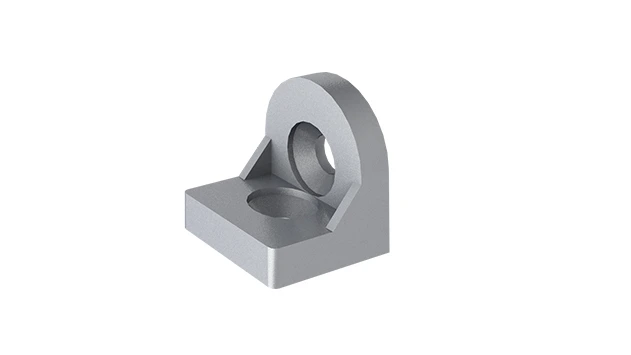
The turning angle aluminum profile connector provides a 90 degree hidden corner connection. 2020 it is means this size is used for 20 series aluminum profile.The corner code comes with set screws that allow for quick, easy connections.
How a simple component is revolutionizing manufacturing workflows
The Hidden Challenge in Modern Manufacturing
Walk into any manufacturing plant today, and you'll likely see a flurry of activity: workers hurrying to assemble products, machines humming in the background, and materials moving from one station to the next. But beneath this busy surface, there's a quiet struggle that many production managers face daily: rigidity. Traditional conveyor systems, once the backbone of assembly lines, are increasingly becoming a bottleneck. They're fixed in place, hard to modify, and when production needs change—whether it's a new product line, a seasonal demand spike, or a shift in workflow—reconfiguring them feels like trying to rearrange furniture with your hands tied.
Take Maria, a production supervisor at a mid-sized electronics factory in Ohio. Last year, her team was tasked with launching a new smartphone model. The existing conveyor system, built for larger devices, couldn't handle the smaller components efficiently. "We spent three weeks modifying the old metal conveyors," she recalls. "Cutting, welding, repositioning—all while production slowed to a crawl. By the time we were done, we'd lost valuable time and missed our initial launch target."
Stories like Maria's are all too common. In an era where agility is everything, manufacturers need systems that can keep up. That's where flexible conveyors come in—and at the heart of their adaptability lies a small but mighty component: the Turning Angle Code 2020.
What Are Flexible Conveyors, Anyway?
Flexible conveyors are exactly what they sound like: material handling systems designed to be reconfigured, extended, or modified with minimal effort. Unlike their rigid predecessors, which are often bolted to the floor and made of heavy steel, these modern systems use lightweight, modular components that snap together (or apart) as needed. Think of them as the "Lego sets" of manufacturing—versatile, user-friendly, and ready to adapt to whatever the day throws at them.
At the core of most flexible conveyors are two key elements: aluminum profile and roller track . Aluminum profile, with its T-slot design, allows for easy attachment of accessories like brackets, guides, and work surfaces. Roller track, on the other hand, ensures smooth, friction-free movement of materials—whether it's a circuit board, a automotive part, or a package. Together, they form a foundation that's both strong and flexible.
But what truly sets flexible conveyors apart is their ability to navigate corners and tight spaces without losing efficiency. That's where components like the Turning Angle Code 2020 come into play. This small connector, often made of durable plastic or aluminum, allows roller track sections to pivot and bend at precise angles—making it possible to create custom paths that snake around obstacles, fit into tight floor plans, or even split into multiple lines as needed.
Fun Fact: The average manufacturing plant reconfigures its production line 4-6 times per year. With traditional conveyors, each reconfiguration can take days (or weeks) and cost tens of thousands of dollars. Flexible conveyors? They can often be adjusted in hours—if not minutes.

The Turning Angle Code 2020: Small Part, Big Impact
Let's zoom in on the star of the show: the Turning Angle Code 2020. At first glance, it might look like just another piece of hardware—a small, L-shaped connector with holes for screws and a pivot point. But its design is deceptively clever. Unlike fixed-angle joints, which lock conveyor sections at 90 degrees or 45 degrees, the Turning Angle Code 2020 allows for incremental adjustments. Need a 37-degree bend to avoid a support column? No problem. Want to create a gentle curve to reduce material jams? It can do that too.
"We used to avoid sharp turns on our old conveyors because products would get stuck," says Raj, a line operator at a Michigan-based automotive parts plant. "Now, with these angle codes, we can shape the roller track like a river—following the natural flow of our workspace. Last month, we had a rush order for a new part, and we rearranged the conveyor in under two hours. On the old system, that would've taken a full day of welding."
But the Turning Angle Code 2020 isn't just about bending tracks. It's about integration. Most models are compatible with standard aluminum profile, meaning they can be attached directly to workbenches, racks, or even mobile carts (thanks to caster wheels for easy movement). This seamless connection turns standalone conveyors into part of a larger, interconnected workflow—where materials move from storage to assembly to packaging without ever hitting a "dead end."

Applications Across Industries
Flexible conveyors with Turning Angle Code 2020 aren't limited to one type of factory. Their adaptability makes them a fit for almost any industry where materials need to move efficiently. Here are just a few examples:
- Electronics Manufacturing: Circuit boards and small components are delicate—rough handling can damage them. Roller track with adjustable angles ensures smooth, gentle transport, while the lightweight aluminum profile keeps the system from adding unnecessary vibration.
- Food and Beverage: Production lines here often need to switch between packaging sizes (think: small soda cans vs. large bottles). The Turning Angle Code 2020 lets operators quickly adjust conveyor paths to accommodate different container shapes without tools.
- Logistics and Warehousing: Order fulfillment centers thrive on speed. Flexible conveyors with caster wheels can be moved to temporary packing stations during peak seasons, then stored away when demand slows—maximizing floor space.
- Medical Device Assembly: Cleanrooms require strict organization, and every inch of space counts. The Turning Angle Code 2020 allows conveyors to navigate around sterile workbenches and equipment, ensuring materials reach assembly stations without cross-contamination risks.
The Benefits: More Than Just "Flexibility"
Sure, flexibility is the main draw—but the benefits of flexible conveyors with Turning Angle Code 2020 go far beyond that. Let's break them down:
1. Reduced Downtime, Increased Output
When production lines need to change, every minute counts. Traditional conveyors often require specialized labor (like welders or electricians) to modify, and each adjustment means shutting down the line. With flexible systems, operators can reconfigure the roller track themselves using basic tools. A 2023 study by the Manufacturing Excellence Association found that plants using flexible conveyors reported 40% less downtime during reconfigurations compared to those with traditional systems.
2. Lower Costs Over Time
It's true: flexible conveyors can have a higher upfront cost than basic metal conveyors. But the long-term savings are undeniable. Consider this: a single reconfiguration of a traditional conveyor can cost $5,000-$10,000 in labor and materials. With flexible conveyors, that cost drops to a few hundred dollars (mostly in time). Over 5 years, the average plant saves $75,000-$100,000—even more for high-volume facilities.
3. Happier, More Productive Teams
It's easy to overlook the human element, but rigid systems create frustration. Workers waste time walking around blocked paths, fixing jams, or waiting for materials. Flexible conveyors reduce these pain points. "I used to spend an hour every morning unjamming the old conveyor," says Lisa, a packager at a California cosmetics company. "Now, the roller track flows smoothly, and I can focus on my actual job—packing orders. My stress levels are way down, and I'm getting more done." Happier workers are also more likely to stay, reducing turnover and training costs.
Traditional vs. Flexible Conveyors: A Quick Comparison
| Feature | Traditional Conveyors | Flexible Conveyors (with Turning Angle Code 2020) |
|---|---|---|
| Reconfiguration Time | Days to weeks | Hours to minutes |
| Adjustable Angles | Fixed (90°, 45°) | Infinite (0°-180°) |
| Integration with Workspaces | Limited (often standalone) | Seamless (attaches to workbenches, racks, carts) |
| Cost per Reconfiguration | $5,000-$10,000+ | $200-$500 (mostly labor) |
| Worker Satisfaction | Often low (frequent jams, rigid paths) | High (smooth flow, reduced frustration) |
Case Study: How XYZ Electronics Boosted Throughput by 35%
XYZ Electronics, a mid-sized manufacturer of smart home devices, was struggling with its outdated production line. The factory floor was cramped, and the fixed conveyor system forced workers to move in inefficient loops. In 2022, they invested in a flexible conveyor system with Turning Angle Code 2020, aluminum profile workbenches, and caster wheel-equipped mobile carts.
Results? Within 6 months:
- Throughput increased by 35% (more products assembled per day)
- Material handling errors (like dropped components) decreased by 60%
- Worker overtime reduced by 25% (fewer delays meant less need for extra hours)
"We used to think of conveyors as 'set it and forget it'," says Mike, XYZ's production manager. "Now, they're a tool we adjust daily to meet our needs. The Turning Angle Code 2020 was the missing piece—suddenly, our factory felt like a puzzle where all the pieces finally fit."
Beyond the Angle Code: Building a Complete Lean System
The Turning Angle Code 2020 is powerful, but it's just one part of a larger lean system . To truly transform manufacturing workflows, it needs to work alongside other components:
Aluminum Profile: The Backbone
Lightweight yet strong, aluminum profile forms the frame of flexible conveyors, workbenches, and racks. Its T-slot design lets you attach accessories (like the Turning Angle Code 2020) anywhere—no drilling required. "We built a custom workbench last week by bolting aluminum profile to a conveyor," says Sarah, a plant engineer. "It took 30 minutes, and now materials slide directly from the track to my workstation. No more bending over to pick up parts!"
Roller Track: Smooth Material Flow
At the heart of any conveyor is the roller track. Modern roller tracks use high-quality plastic or steel wheels that reduce friction, ensuring materials glide along without sticking. When paired with the Turning Angle Code 2020, they create paths that adapt to your workflow, not the other way around.
Caster Wheels: Mobility Matters
Not all conveyors need to be fixed to the floor. Adding caster wheels turns static systems into mobile ones—perfect for temporary lines, seasonal demand, or cleaning days. "During our annual deep clean, we roll the conveyors out of the way in 10 minutes," says Tom, a facilities manager. "On the old system, we had to work around them, which took twice as long."
The Future of Flexible Conveyors
As manufacturing continues to evolve—with trends like small-batch production, customization, and automation—flexible conveyors will only grow in importance. We're already seeing innovations like sensor-equipped roller tracks that adjust speed based on material weight, and "smart" Turning Angle Code 2020 variants with built-in locks to prevent accidental movement. In the next decade, we might even see conveyors that self-reconfigure using AI, adapting to real-time production data.
But even without these high-tech additions, the current generation of flexible conveyors is changing the game. They're not just tools—they're enablers. Enablers of creativity, of adaptability, and of a manufacturing future where plants can pivot as quickly as market demands.
Final Thoughts: It's Time to Get Flexible
Manufacturing has always been about progress—finding better, faster, smarter ways to build things. For too long, conveyors were stuck in the past: rigid, unforgiving, and resistant to change. The Turning Angle Code 2020, paired with aluminum profile, roller track, and caster wheels, is changing that.
Whether you're a small shop looking to expand or a large plant struggling with inefficiencies, the message is clear: flexibility isn't a luxury anymore. It's a necessity. And it all starts with a small, unassuming component that lets your conveyor bend—not break—with the demands of modern manufacturing.
So, the next time you walk through your factory, take a look at your conveyors. Are they holding you back? Or are they ready to flow?