- Company Articles
- Products and Technology
- Product knowledge
- Flexible Line Optimization: Role of Flat Swivel Castor Wheel with Brake in Layout Changes

Flexible Line Optimization: Role of Flat Swivel Castor Wheel with Brake in Layout Changes
Related Product
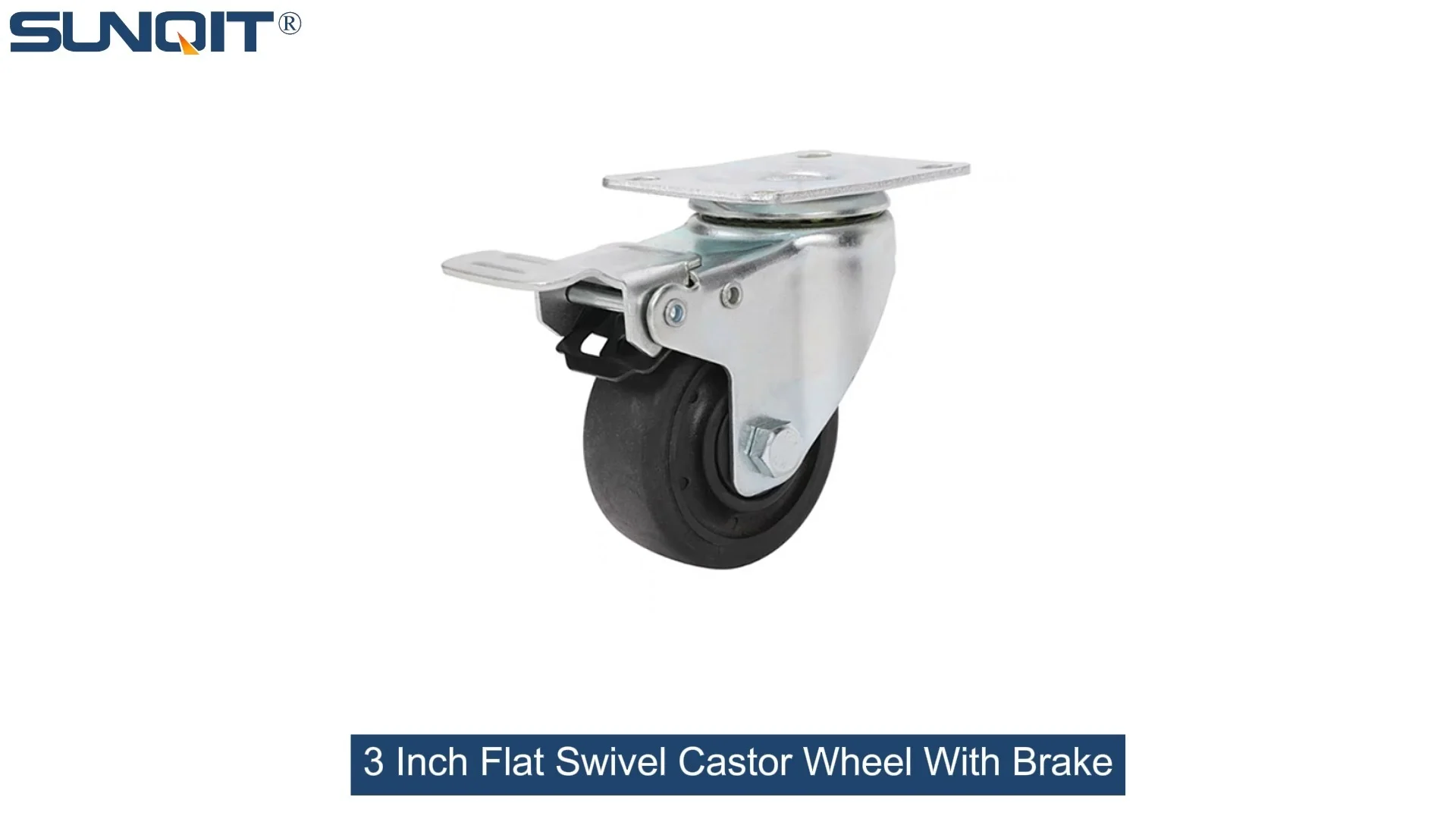
Flat Swivel Castor Wheel With Brake
Chair Casters Ball Bearing Wheels Rubber Base with brake design. Resistant to abrasion, impact and corrosion. Heavy payload can hold 70Kgs per pcs,which can make it works at a stable and smooth status.
In today's fast-paced manufacturing landscape, where customer demands shift overnight and production runs get shorter by the quarter, the ability to adapt quickly isn't just a competitive advantage—it's a survival skill. Walk into any factory floor, and you'll see the same challenge playing out: rigid, fixed production lines that struggle to keep up with new orders, design changes, or sudden spikes in demand. Machinery bolted to the floor, workbenches welded in place, and material racks that might as well be part of the building's foundation—these static setups were once the norm, but they're now holding businesses back. The solution? Flexible line optimization: a approach that transforms production spaces into dynamic, adaptable environments. And at the heart of this transformation lies an unsung hero: the flat swivel castor wheel with brake . In this article, we'll explore how this small but mighty component, paired with lean system essentials like workbenches, flow racks, and conveyors, is revolutionizing layout changes and redefining what modern manufacturing can achieve.
The Cost of Static Layouts: Why Rigidity Hurts Modern Production
Let's start with the problem: static layouts. For decades, manufacturers built production lines with permanence in mind. Why? Because stability meant consistency, and consistency meant quality. But that was before product lifecycles shrank from years to months, before customization became the expectation, and before global supply chain disruptions forced factories to pivot overnight. Today, a fixed layout is a liability.
Consider a typical electronics assembly plant. Last quarter, they were producing smartphone chargers; this quarter, they've shifted to wireless earbud cases. The old layout, designed for charger assembly, has workbenches spaced for larger components, conveyors angled for linear workflows, and flow racks loaded with charger-specific parts. To switch to earbuds, the team must rearrange everything: move workbenches closer together, reposition conveyors to handle smaller parts, and rebuild flow racks to store tiny circuit boards. With fixed equipment, this process takes days—if not weeks. Downtime piles up, deadlines slip, and the factory misses out on early market share for the new product.
Or take a automotive parts supplier. When a client suddenly increases an order for brake calipers, the factory needs to expand production capacity. But their current layout has the caliper assembly line wedged between two fixed welding stations—no room to add more workbenches or speed up conveyors. The result? They either turn down the order or invest in expensive renovations, both costly outcomes.
The numbers tell the same story. According to the Lean Enterprise Institute, factories with rigid layouts spend 20-30% more on changeover time than those with flexible setups. Worse, 60% of manufacturers report that layout inflexibility is their top barrier to scaling production up or down. Static setups also waste space: 35% of factory square footage in fixed layouts is underutilized, as equipment can't be repositioned to adapt to varying workflow needs.
The root cause? Most production tools—workbenches, flow racks, even conveyors—weren't designed to move. They're heavy, awkward, or permanently anchored, making layout changes a logistical nightmare. But what if these tools could move? What if a workbench could glide across the floor with a push, a flow rack could swivel into a new position in seconds, and a conveyor could be reangled without calling in the maintenance crew? That's where flexibility begins—and it starts with the right wheels.
Lean Systems: The Foundation of Flexible Line Optimization
Before diving into castor wheels, let's clarify what we mean by "flexible line optimization." At its core, it's about building production systems that can adapt quickly to change—whether that's a new product, a higher volume, or a shifted workflow—without sacrificing efficiency, safety, or quality. And the best way to achieve this is through lean system principles: eliminating waste, streamlining processes, and prioritizing continuous improvement. Lean systems are all about doing more with less, and flexibility is a natural byproduct of that mindset.
But lean systems don't work in a vacuum. They rely on physical tools designed to support adaptability. Three of these tools are non-negotiable:
1. Workbenches: The Heart of the Production Line
Workbenches are where the magic happens—assembly, testing, packaging, you name it. In a static setup, they're fixed to the floor, with power outlets and tool racks bolted nearby. In a lean system, workbenches need to be mobile. Imagine a workbench e (single deck-without caster) —a sturdy, single-level surface designed for precision tasks like circuit board assembly. By adding the right castors, this workbench transforms from a stationary desk into a movable workstation. Suddenly, it can be wheeled to the conveyor when parts arrive, shifted closer to a colleague for collaborative tasks, or stored against the wall when not in use. Mobility turns workbenches into chameleons, adapting to whatever the day's production schedule demands.
2. Flow Racks: Keeping Materials Where They're Needed
Materials are the lifeblood of production, and flow racks keep that blood flowing. These racks use gravity or rollers to feed parts directly to workers, reducing the time spent walking to fetch supplies. But in a static layout, flow racks are placed once and forgotten—even if the workflow changes. A flow rack loaded with plastic components might sit 20 feet from the new assembly station, forcing workers to waste steps. With mobility, though, that same rack can be positioned right next to the workbench, cutting down material retrieval time by 50% or more. Flow racks with castors become "material delivery systems" that follow the work, not the other way around.
3. Conveyors: Connecting Workflows Without Constraints
Conveyors move parts between stations, but traditional belt or roller conveyors are often fixed in place, with motors and frames bolted to the floor. When the workflow changes—say, from a linear assembly line to a U-shaped cell—fixed conveyors become obstacles. Enter mobile conveyors: modular systems that can be extended, shortened, or reangled as needed. Paired with the right casters, these conveyors can be rolled into place, connected, and powered up in hours, not days. They turn production lines into puzzle pieces that can be rearranged to fit any product or volume.
Workbenches, flow racks, conveyors—these are the building blocks of a lean, flexible system. But there's one more component that ties them all together: the castor wheel. Specifically, the flat swivel castor wheel with brake. Without it, even the most well-designed workbench or flow rack is just another heavy, immovable object. With it, they become tools of adaptability.
The Unsung Hero: How Flat Swivel Castor Wheels with Brake Enable Layout Freedom
Let's talk about castor wheels. Not the cheap, wobbly ones you find on office chairs, but industrial-grade, heavy-duty wheels designed for factory floors. Most people don't think about castors until they break—but in flexible line optimization, they're the difference between a layout that adapts and one that stalls.
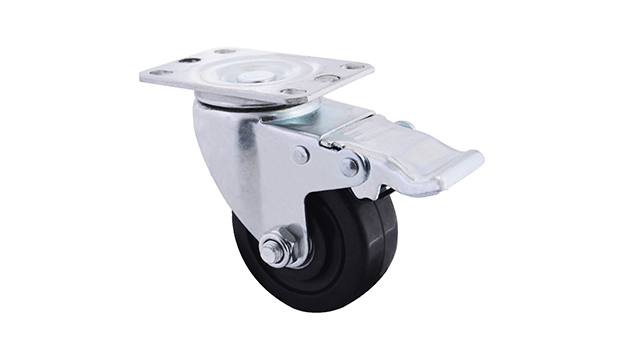
So why flat swivel castor wheel with brake ? Let's break it down:
The "Flat" Design: Compatibility and Stability
First, the "flat" part. Unlike traditional castors with bulky mounting plates, flat castors have a low-profile design that sits close to the ground. This matters because it keeps workbenches and flow racks stable. Imagine a tall flow rack loaded with heavy metal parts: if its castors are too tall, it might wobble when moved, risking spills or injuries. Flat castors lower the center of gravity, making even top-heavy equipment steady. They also fit seamlessly with standard workbench frames, like the "workbench e" model mentioned earlier—no need for custom adapters or modifications. Just bolt them on, and you're ready to roll.
Swivel for Maneuverability: Turning Tight Spaces into Opportunities
Next, "swivel." A good swivel castor rotates 360 degrees, letting equipment move in any direction—forward, backward, sideways, even diagonally. This is game-changing in tight factory spaces. Picture a production floor with machines, workers, and material carts all vying for room. A workbench on fixed casters can only move straight, requiring wide aisles and careful planning. A swivel castor workbench? It can pivot around corners, squeeze through narrow gaps, and slide into tight spots. This isn't just about convenience; it's about space utilization. Factories with swivel castor equipment report using 25% more of their floor space effectively, as workbenches and racks can be nested together when not in use or rearranged to fit irregular layouts.
The Brake: Safety and Stability When You Need It Most
Finally, the "with brake" feature—and this might be the most critical part. What good is a mobile workbench if it rolls away while someone's assembling delicate parts? Or a flow rack that shifts mid-operation, spilling components? The brake solves this by locking the wheel in place, turning a mobile tool into a stationary one in seconds. Most industrial castor brakes are foot-operated, so workers can engage them without bending down or stopping their tasks. Some even have dual-locking brakes that lock both the wheel and the swivel, preventing movement in any direction. In safety audits, factories using braked castors report 40% fewer incidents related to equipment movement, from minor spills to more serious collisions.
To put this in perspective, let's compare three common castor types:
| Castor Type | Maneuverability | Stability (Unlocked) | Stability (Locked) | Best For |
|---|---|---|---|---|
| Fixed (Non-Swivel) | Low (Only forward/backward) | High (No swivel wobble) | High (Wheel locks) | Heavy, rarely moved equipment |
| Swivel (No Brake) | High (360° movement) | Low (May roll accidentally) | N/A (No brake) | Temporary, light-duty tasks |
| Flat Swivel with Brake | High (360° movement) | Medium (Low profile reduces wobble) | Very High (Wheel + swivel lock options) | Daily-use, mobile workbenches/flow racks |
The verdict? For flexible line optimization, flat swivel castor wheels with brake are the gold standard. They balance mobility, stability, and safety in a way no other castor type can—and when paired with workbenches, flow racks, and conveyors, they turn static layouts into dynamic, responsive ecosystems.

From Theory to Practice: Real-World Impact of Castor-Powered Layout Changes
Numbers and features are one thing, but real change happens on the factory floor. Let's look at two case studies where flat swivel castor wheels with brake transformed layout flexibility—and bottom-line results.
Case Study 1: Automotive Parts Plant Cuts Changeover Time by 65% with Mobile Workbenches
A mid-sized automotive parts manufacturer in Michigan specializes in custom brackets for trucks and SUVs. Their challenge? Each client order has unique bracket designs, requiring different assembly steps and tooling. Before 2023, their layout was fixed: 10 workbenches bolted to the floor, each dedicated to a specific bracket type. When a new order came in, they'd spend 3-4 days reconfiguring: unbolting workbenches, moving them with forklifts (risking damage), and re-wiring power tools. Changeover downtime cost them $15,000 per week on average.
In early 2023, they switched to workbench e (single deck-without caster) models fitted with flat swivel castor wheels with brake. The results were immediate. Now, when a new order arrives, the team simply unlocks the castors, rolls the workbenches into a U-shape (ideal for bracket assembly), and locks them in place. Tooling is mounted on mobile carts (also with castors), so it moves with the workbenches. What took days now takes hours: changeover time dropped from 72 hours to 25 hours per order. Over six months, they saved $180,000 in downtime—and won two new clients who valued their ability to deliver quickly.
Case Study 2: Electronics Factory Boosts Productivity with Mobile Flow Racks and Conveyors
A consumer electronics factory in Vietnam produces smartwatch bands, with production runs as short as 5,000 units. Their biggest headache? Material handling. Workers spent 20% of their day walking to flow racks across the factory to fetch silicone straps, metal buckles, and adhesive pads. The racks were fixed, so even if the assembly line moved, the materials stayed put.
In 2024, they invested in mobile flow racks (fitted with flat swivel castor wheels with brake) and modular conveyors with compatible castors. Now, when the assembly line shifts to a new watch band design, the flow racks are wheeled right next to the workbenches, and conveyors are reconfigured to bridge gaps between stations. Material retrieval time dropped by 70%, freeing workers to focus on assembly. Productivity increased by 18% in the first quarter alone, and employee satisfaction scores rose—no one likes walking back and forth with heavy bins.
These aren't isolated stories. From food packaging plants to medical device manufacturers, the message is clear: when workbenches, flow racks, and conveyors can move, production lines become adaptable. And when those mobile tools are equipped with flat swivel castor wheels with brake, they become safe, stable, and ready for anything.

Choosing the Right Components: Why Partnering with a Lean System Supplier Matters
So, you're convinced: flexible line optimization is the way forward, and flat swivel castor wheels with brake are key. Now what? The next step is choosing the right components—and that starts with partnering with a reliable lean system supplier . Not all castors, workbenches, or flow racks are created equal, and mixing and matching parts from different suppliers can lead to compatibility headaches, safety risks, and wasted money.
A good lean system supplier doesn't just sell parts—they design solutions. They'll work with you to understand your production needs, floor layout, and budget, then recommend components that work together seamlessly. For example, if you're using "material rack b (3 row and 3 floor)" flow racks, they'll ensure the castors you buy can handle the rack's weight when fully loaded (typically 500-800kg). They'll match the castor's mounting plate to the workbench's frame, so you don't have to drill custom holes. And they'll stand behind their products, offering warranties and support if something goes wrong.
What should you look for in a supplier? Start with experience: a supplier who's worked with factories in your industry will know the unique challenges you face (e.g., cleanroom requirements for medical device makers, high-temperature resistance for automotive plants). Next, check their product range: do they offer not just castors and workbenches, but also the accessories that tie them together, like roller track connectors or caster accessories? Finally, ask about customization: can they modify a standard workbench or flow rack to fit your specific needs? Flexibility in components starts with a supplier who's willing to adapt.
The Future of Flexible Line Optimization: Beyond the Castor Wheel
As manufacturing continues to evolve, so too will the tools that power it. What's next for flexible line optimization? We're already seeing hints: smart castors with sensors that track movement and alert maintenance teams when wheels need lubrication or brakes need adjustment. Modular workbenches with built-in power and data ports that can be reconfigured in minutes, thanks to quick-connect castors. Even AI-powered layout planning tools that use real-time production data to suggest optimal workbench and flow rack positions—all enabled by the mobility that castors provide.
But even as technology advances, the core principle remains the same: flexibility wins. And at the heart of that flexibility will always be the basics: well-designed workbenches that move, flow racks that follow the work, conveyors that adapt, and castor wheels that make it all possible. The flat swivel castor wheel with brake may not be the flashiest piece of equipment on the factory floor, but it's the foundation upon which the future of manufacturing is being built.
Conclusion: Small Wheels, Big Impact—The Power of Adaptable Layouts
In the end, flexible line optimization isn't just about moving equipment around. It's about empowering manufacturers to respond to change with confidence, to turn challenges into opportunities, and to create production lines that work for their people—not against them. And it all starts with the right tools: lean systems that prioritize efficiency, workbenches and flow racks that adapt to the task, conveyors that connect workflows without constraints, and flat swivel castor wheels with brake that make movement safe, simple, and effective.
So, the next time you walk onto a factory floor, take a closer look at the wheels under those workbenches and racks. They might seem small, but they're carrying the weight of modern manufacturing's biggest challenge: staying flexible in a world that never stops changing. And with the right components and a partner who understands lean systems, there's no limit to how far that flexibility can take you.