- Company Articles
- Products and Technology
- Application Cases
- Flexible Production Equipment: 2060 EU Standard Aluminum Profile Case Studies

Flexible Production Equipment: 2060 EU Standard Aluminum Profile Case Studies
Related Product
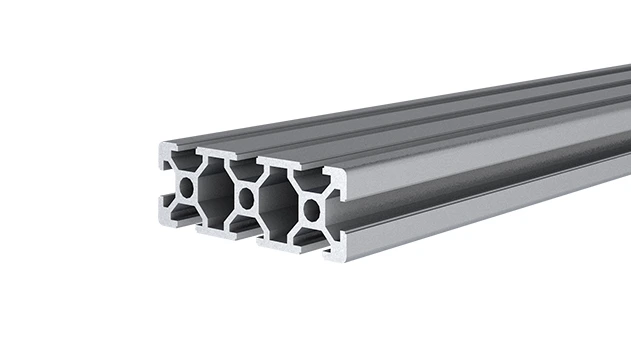
2060 EU Standard Aluminum Profile
2060 is a 2.00 x 4.00CM fractional 20 series square extrusion T-slot profile with four open T-slots, two side with 2.00cm face, the other side with 6.00cm face. The profile has align-a-grooves to assist in aligning connecting profiles.
In today's fast-paced manufacturing landscape, the ability to adapt is no longer a luxury—it's a necessity. Production lines that once thrived on rigid, one-size-fits-all setups now struggle to keep up with shifting consumer demands, shorter product lifecycles, and the need for rapid innovation. This is where flexible production equipment steps in, and at the heart of this revolution lies a seemingly unassuming component: the 2060 EU standard aluminum profile. Lightweight yet robust, modular by design, and compatible with a vast array of aluminum profile accessories, this material has become the backbone of modern manufacturing flexibility. In this article, we'll explore real-world case studies where 2060 EU standard aluminum profiles transformed inefficiencies into opportunities, proving that the right equipment doesn't just support production—it empowers it.
Case Study 1: Automotive Parts Assembly Workbench – Adapting to Diverse Component Sizes
When a mid-sized automotive parts manufacturer approached us, their challenge was clear: their assembly line workbenches were holding them back. Producing over 50 different types of engine brackets—ranging from small, lightweight components to heavy, multi-part assemblies—their existing wooden workbenches were failing on multiple fronts. They couldn't support the weight of pneumatic tools without wobbling, took days to reconfigure for new bracket sizes, and lacked the electrostatic discharge (ESD) protection needed for sensitive electronic components. worst of all, downtime during reconfigurations was costing them an estimated $12,000 per week in lost productivity.
Our team began by auditing their workflow. We observed that each workbench needed to accommodate not just the brackets themselves, but also tool holders, LED task lighting, and ESD-safe storage bins. The solution had to be strong enough to support 200kg of tools and components, easy to adjust without specialized tools, and compatible with ESD materials. Enter the 2060 EU standard aluminum profile. Chosen for its optimal balance of strength (with a tensile strength of 200 MPa) and lightweight design, the 2060 profile served as the perfect frame. We paired it with aluminum profile accessories like internal rotary joints, which allowed for 360-degree adjustments, and ESD-compliant workbench tops made from conductive laminate. End caps and rubber strips were added to smooth edges, preventing component damage and improving operator safety.
The transformation was striking. The new workbenches, built with 2060 profiles, could be reconfigured in under 30 minutes using nothing more than an Allen key—down from 8 hours with the old wooden setups. The modular design meant operators could add or remove shelves, adjust the height of tool rails, and even reposition lighting by simplying a joint and sliding the profile into place. The ESD workbench tops eliminated static-related component failures, which had previously caused a 5% defect rate. Six months after installation, the manufacturer reported a 40% reduction in setup time, a 90% drop in static-related defects, and a 15% increase in operator satisfaction. "We used to dread product changeovers," said their production manager. "Now, we can switch from a small bracket to a large assembly before lunch—and still hit our daily targets."
Case Study 2: Electronics Manufacturing Material Flow System – Eliminating Bottlenecks with Roller Track
A leading electronics contract manufacturer faced a different kind of challenge: material flow bottlenecks. Producing printed circuit boards (PCBs) for smartphones, their factory floor was a maze of manual carts transporting components from the warehouse to the SMT (surface-mount technology) line. With components arriving in varying batch sizes—from 100-unit orders for prototype PCBs to 10,000-unit runs for mass production—their static conveyor system couldn't keep up. Bottlenecks at the SMT line entrance were common, with operators spending up to 2 hours per shift just moving carts and sorting components. The inefficiency wasn't just costly; it was creating ergonomic issues, as workers strained to lift heavy component trays onto the conveyor.
Our solution centered on integrating roller track technology with 2060 EU standard aluminum profiles. The goal was to create a dynamic material flow system that could adapt to batch sizes, integrate with existing warehouse racks, and reduce manual handling. We started by designing a modular roller track system where 2060 aluminum profiles served as the support structure. Using roller track and accessories like plastic roller track guide rails (in yellow for high-visibility paths) and placon mount connectors, we built a gravity-fed track that sloped gently from the warehouse to the SMT line. The 2060 profiles were chosen for their ability to span 2-meter gaps without sagging, ensuring the roller track remained level and components glided smoothly. Adjustable feet on the aluminum frame allowed us to fine-tune the slope angle—steeper for lightweight trays, gentler for heavier loads—to prevent jams.
To handle variable batch sizes, we added "merge points" where secondary roller tracks fed into the main line, using 2060 profile T-joints and swivel roller balls (1-inch diameter) to redirect trays without manual intervention. We also installed aluminum guide rails along the track edges to keep trays centered, even when moving at speed. The results spoke for themselves: material transfer time from warehouse to SMT line dropped from 45 minutes to 15 minutes, and manual cart handling was reduced by 70%. Operators reported less fatigue, and the SMT line's uptime increased by 18%. "We used to have three people just moving carts," said the plant supervisor. "Now, those same people are inspecting PCBs and troubleshooting—tasks that actually add value." Perhaps most impressively, when the manufacturer secured a contract for a new PCB model requiring wider trays, they expanded the roller track in a single day by adding 2060 profile extensions and wider guide rails—no welding or heavy machinery needed.

Case Study 3: Lean System for Medical Device Production – Compliance and Small-Batch Flexibility
Medical device manufacturing is a world of strict regulations, small production runs, and zero tolerance for error. For a manufacturer of surgical instruments, these challenges were compounded by their growth: in just two years, they'd expanded from 3 product lines to 12, each with unique assembly steps and compliance requirements. Their existing production area, a mix of fixed steel racks and custom-built workstations, was struggling to keep up. Work-in-progress (WIP) inventory was piling up, traceability was difficult, and changeovers between products required full shifts of teardown and rebuild. Worse, their quality team was spending 20% of their time verifying that workstations met FDA guidelines for cleanliness and process standardization.
We knew a lean system was the answer, but not the rigid, one-time lean implementations of the past. This manufacturer needed a lean system that could evolve with their product line while maintaining compliance. The 2060 EU standard aluminum profile was the ideal foundation. Its smooth, non-porous surface (when paired with anodized finishes) was easy to sanitize, meeting FDA requirements for medical device production. We designed a U-shaped lean cell with 2060 profile workstations, each equipped with adjustable shelves, tool hooks, and turnover trolleys for WIP. Aluminum profile accessories like gusset plates reinforced the structure, ensuring stability even when loaded with heavy sterilization equipment.
The key to compliance was standardization. Each workstation featured color-coded aluminum guide rails (yellow for clean zones, grey for non-sterile tools) and labeled slots for tools, ensuring operators followed the correct sequence. The modularity of the 2060 profiles meant that when a new surgical instrument was added—a specialized forceps requiring a longer assembly area—we extended the workstation by 60cm in under 2 hours, using pre-cut 2060 sections and internal rotary joints. Traceability was improved by mounting barcode scanners on adjustable aluminum arms, positioned at ergonomic heights for operators. WIP inventory dropped by 35% as the lean cell's flow reduced bottlenecks, and quality audits became faster, with inspectors able to verify workstation setup in minutes rather than hours.
One unexpected benefit was scalability. When the manufacturer opened a second production line for dental instruments, they replicated the lean cell using the same 2060 profiles and accessories, ensuring consistency across sites. "Compliance used to feel like a straightjacket," said the quality manager. "Now, with the aluminum profiles, it's built into the system. We don't have to 'fix' compliance—we just configure the cell correctly, and compliance follows."
| Challenge | Traditional Solution | 2060 Aluminum Profile Solution | Key Improvement |
|---|---|---|---|
| Workbench reconfiguration time | 8 hours (wooden workbenches) | 30 minutes (2060 profiles + internal rotary joints) | 96% reduction in downtime |
| Material transfer time (warehouse to SMT line) | 45 minutes (manual carts) | 15 minutes (roller track + 2060 profile frame) | 67% faster material flow |
| WIP inventory levels (medical device production) | High (fixed steel racks) | 35% reduction (lean cell with turnover trolleys) | Reduced waste and storage costs |
| Operator fatigue (material handling) | High (manual cart lifting) | 70% reduction (gravity-fed roller track) | Improved ergonomics and morale |
| New product setup time | 3 days (custom steel fabrication) | 1 day (2060 profile extensions + accessories) | 67% faster time-to-market |
Case Study 4: Aerospace Component Testing Station – Balancing Rigidity and Adaptability
Our final case study takes us to the aerospace industry, where precision is non-negotiable. A manufacturer of aircraft engine valves needed a testing station to measure pressure resistance, temperature tolerance, and structural integrity of their components. The challenge? Each valve model—from small fuel valves to large turbine inlet valves—required different testing fixtures, and the station had to withstand extreme conditions: temperatures from -40°C to 150°C, and pressure testing up to 5000 psi. Their old testing rig, a custom-welded steel frame, was so rigid that modifying it for a new valve model required cutting and rewelding, a process that took 2 weeks and risked compromising the frame's structural integrity.
The 2060 EU standard aluminum profile was chosen here for its unique combination of rigidity and modularity. While aluminum is often associated with lightweight applications, the 2060 profile's rectangular cross-section (20mm x 60mm) and thick walls (2mm) provide exceptional torsional stiffness—critical for maintaining alignment during high-pressure tests. We designed a base frame using 2060 profiles connected with heavy-duty aluminum joints, reinforced with gusset plates for extra stability. The testing fixtures themselves were mounted on sliding rails made from 2060 profiles, allowing operators to adjust their position horizontally with millimeter precision. Aluminum profile accessories like T-slot nuts and bolts secured the fixtures in place, ensuring no movement during testing.
To handle temperature extremes, we used anodized 2060 profiles, which resist corrosion and maintain their strength across the test range. For pressure testing, we integrated aluminum honeycomb panels into the frame to dampen vibration, preventing false readings from equipment movement. When a new valve model required a taller fixture, we simply added 2060 profile extensions to the vertical supports and adjusted the sliding rails—no welding, no cutting. The entire modification took 4 hours, not 2 weeks. Testing accuracy improved, with measurement variability dropping from ±0.5% to ±0.2%, and the station's lifespan was extended by an estimated 10 years, thanks to the aluminum's resistance to corrosion and fatigue. "We used to avoid bidding on small-batch valve contracts because setup time was too high," said the engineering manager. "Now, we can take on those projects profitably—all because the aluminum profiles let us adapt without sacrificing precision."
These case studies share a common thread: 2060 EU standard aluminum profiles don't just solve problems—they redefine what's possible. Whether it's reducing workbench reconfiguration time from hours to minutes, speeding up material flow by 67%, or turning a rigid testing rig into a flexible tool, the key lies in the material's inherent properties: strength without weight, modularity without complexity, and compatibility with a universe of aluminum profile accessories. In an era where manufacturing success depends on agility, the 2060 profile is more than equipment—it's a strategic advantage. It's proof that the most powerful production tool isn't the one that does one job perfectly, but the one that does any job well, adapts when needed, and grows with your business. As these manufacturers discovered, flexibility isn't just about surviving change—it's about thriving because of it.